Why a Containerized MBR Fits Busan Residential and Camp Projects
Busan developers face two pressures that push them toward containerized membrane bioreactors (MBR): tight land envelopes in dense用地 near Haeundae, Centum, or Suyeong, and proximity to the Nakdong River watershed, which holds the city's drinking-water source and drives the strictest effluent targets on the southern coast. A packaged MBR mounted inside an ISO 20-ft or 40-ft frame lands on a concrete pad in days rather than months, runs submerged flat-sheet cassettes that physically block solids, and produces a near-reuse effluent without a tertiary clarifier.
The submerged MBR configuration held 67.9% of the global market share in 2024, with the report attributing that lead to energy efficiency and easy integration into skids and containers (market.us). Flat-plate submerged MBR operates at 6,000–12,000 mg/L mixed-liquor suspended solids, much higher than the 2,000–4,000 mg/L typical of a settling clarifier, and that high biomass is what compresses the footprint of a HydropureWater integrated MBR system down to a single ISO container (Sigmadaf).
MBR is not always the right call. If a site has cheap land, modest reuse demand, and a thin O&M budget, a moving-bed biofilm reactor (MBBR) or sequencing batch reactor (SBR) will be cheaper over a 20-year life (Studio Matrx, 2025–2026). If reuse is genuine, footprint is constrained, and the Busan reviewer applies a discharge permit tighter than the national Water Environment Conservation Act minimum, MBR is often the lowest lifecycle-cost option (Studio Matrx, 2025–2026). Use the checklist in the final section of this article to decide which side your project sits on.
Step 1: Convert Occupants into a Design Flow (KLD) for Busan
The KLD figure on your datasheet must be defensible. A reviewer from the Busan Eco-Metro City water utility or a Busan Metropolitan City environmental reviewer will ask how the number was built; if the answer is "I assumed 200 L per person per day," the permit stalls. Document every assumption.
Use these planning bands as a starting point, then confirm with the Busan water utility before procurement: residential apartments at 200–250 L per person per day; dormitory and worker camps at 150–180 L per person per day. These are planning envelopes, not Busan-mandated figures, so the engineer should request the current local figure from the utility's planning office before locking the design basis.
Apply a diurnal peaking factor of 1.3–1.5 to capture the morning and evening peaks that arrive at the headworks of a residential block or a shift-change camp. The supplied research does not state a Korea-specific peaking factor, so the engineer should request the local authority's recommended value alongside the per-capita flow. Worked example: a 120-person construction camp at 165 L per person per day produces 19.8 m³/day average; multiplied by a 1.4 peak factor, the design flow is 27.7 m³/day — this is the KLD number that drives the equipment selection. Add 10–20% contingency if the camp will operate year-round or if the developer plans phased expansion, since a containerized MBR is modular and additional cassettes can be paralleled in a second container later.
| Project type | Occupants | Per-capita flow | Average flow | Peak flow (×1.4) | With 15% contingency |
|---|---|---|---|---|---|
| Construction camp | 120 | 165 L/p·d | 19.8 m³/d | 27.7 m³/d | 31.9 m³/d |
| Worker dormitory | 300 | 170 L/p·d | 51.0 m³/d | 71.4 m³/d | 82.1 m³/d |
| Residential block (200 units) | 520 | 220 L/p·d | 114.4 m³/d | 160.2 m³/d | 184.2 m³/d |
| Mid-rise apartment (350 units) | 900 | 220 L/p·d | 198.0 m³/d | 277.2 m³/d | 318.8 m³/d |
Note that the peaking factor and per-capita values above are planning envelopes drawn from the supplied research; the Busan utility's current planning letter overrides any of them.
Step 2: Match the KLD to a 20-ft or 40-ft Container
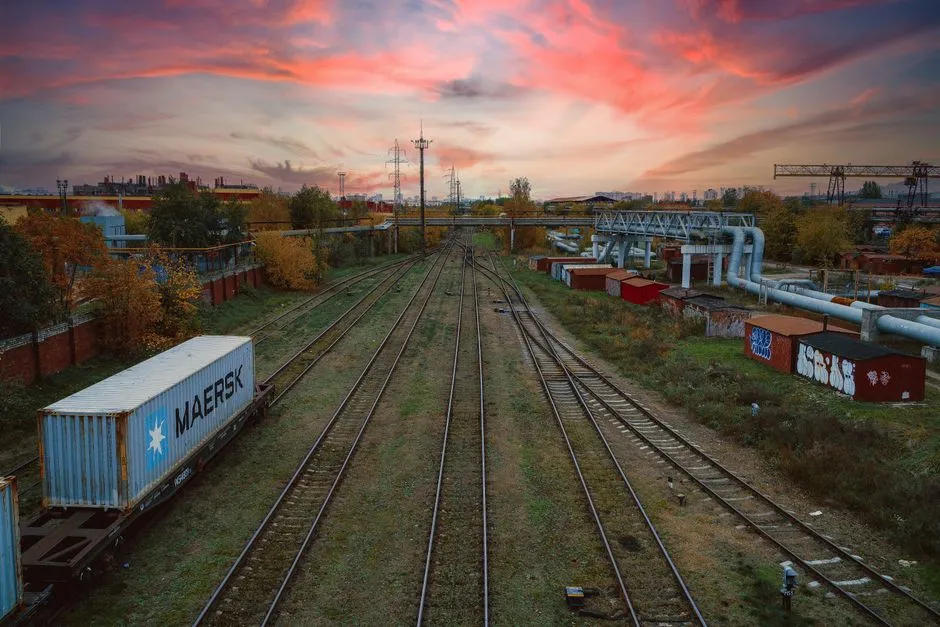
Once the KLD is fixed, the next decision is the container envelope. A 20-ft ISO container has roughly 28 m³ of internal volume, which fits MBR packages up to about 50 m³/day; a 40-ft container has roughly 56 m³ of internal volume, which fits MBR packages up to about 200 m³/day when fully fitted with submerged cassettes. Confirm the exact skid layout with the vendor, because cassette footprint, aeration blower size, and the permeate pump skid all eat into the available length.
DF series flat-sheet cassettes are rated at 32–135 m³/day each across the 80–225 m² membrane area band, so a 30 m³/day camp plant needs a single DF-80 cassette, while a 120 m³/day residential block needs a single DF-200 or two DF-125 cassettes in parallel. The cassettes are mounted vertically inside the aeration tank, with air scoured from below to keep the membrane surface clear and the mixed liquor in motion; a self-priming permeate pump pulls treated water through the membrane, which has a 0.2 µm average pore size and physically excludes suspended solids (Sigmadaf). A single 20-ft ISO container can be crane-lifted onto a prepared pad, plumbed to the influent and effluent lines, and commissioned in days rather than the months a civil-built MBR requires (Sigmadaf).
| Design flow (m³/d) | Container envelope | Cassette choice | Typical application |
|---|---|---|---|
| 20–30 | 20-ft ISO | 1 × DF-80 | Small construction camp, dormitory |
| 30–80 | 20-ft ISO (extended) | 1 × DF-125 or DF-160 | Worker camp, small apartment block |
| 80–150 | 40-ft ISO | 1 × DF-200 or 2 × DF-125 | Residential block, school, small hotel |
| 150–200 | 40-ft ISO (full fit) | 2 × DF-160 or 2 × DF-200 | Mid-rise apartment, mixed-use |
Reserve container length for the anoxic pre-chamber, the aeration tank, the membrane cassette, the permeate pump, the clean-in-place (CIP) tank, and the control panel. When total nitrogen is on the permit, the anoxic pre-chamber is required, and Sigmadaf confirms that this configuration is the standard build for high-nitrogen influent. Browse DF series flat-sheet MBR cassettes for the exact membrane area and flow rating per cassette before you commit to a layout.
Step 3: Confirm Korean Effluent Targets Before You Finalize the Design
Effluent limits drive the MBR configuration as much as the flow does. South Korea's Water Environment Conservation Act and the Nakdong River basin-specific rules typically drive BOD ≤ 5 mg/L, COD ≤ 20 mg/L, SS ≤ 5 mg/L, T-N ≤ 20 mg/L, and T-P ≤ 0.5–2 mg/L for sites discharging to sensitive waters. The supplied research does not state exact 2026 Korean statutory figures, so the engineer must request the current Busan discharge permit conditions from the local office before locking the design.
A submerged MBR with a 0.2 µm pore size consistently meets BOD ≤ 5 mg/L and SS ≤ 5 mg/L without tertiary polishing (Sigmadaf). If T-N ≤ 20 mg/L is in the permit, specify an anoxic pre-chamber for simultaneous nitrification-denitrification; Sigmadaf confirms this is the standard configuration for high-nitrogen influent and is built into most containerized MBR packages. If T-P is also tight, budget for a chemical precipitation stage downstream of the MBR, since biological phosphorus removal alone is rarely enough to hit 0.5 mg/L — an automatic chemical dosing system tied to a phosphate analyzer is the typical fix.
One practical note: the Nakdong River watershed overlay can override the default Water Environment Conservation Act numbers, so for any project that drains toward the Nakdong or one of its tributaries, request the basin's TMDL letter from the Busan regional environmental office before you sign the purchase order. For ammonia-specific monitoring, the online ammonia nitrogen analyzer selection guide covers sensor placement and CIP integration.
Step 4: Power, Membranes, and the Real Operating Cost Envelope
MBR opex is dominated by three line items: aeration power, periodic membrane replacement, and the annual maintenance contract. The aeration power for a submerged MBR is 0.8–1.2 kWh per m³ of sewage treated, roughly double the lower end of conventional activated sludge (The MBR Site, cited in Studio Matrx, 2025–2026). The supplied research does not state a 2026 Busan commercial electricity tariff, so the engineer should request the current KRW/kWh figure from KEPCO before running the opex model; this is the single largest monthly line on the plant.
Good PVDF flat-sheet membranes last 5–7 years with proper pre-treatment, and 3–5 years under poor operation; replacement is a single hit at 15–25% of the original equipment cost (Studio Matrx, 2025–2026). Annual maintenance contracts run 8–12% of equipment cost, and MBR sits at the upper end because membrane cleaning and CIP chemicals are non-negotiable (Studio Matrx, 2025–2026). Smart monitoring with online pH, turbidity, and BOD sensors can cut energy 15–20% (market.us), which is worth specifying for a Busan camp that will run with a small, possibly non-resident, O&M team. Browse PVDF membrane elements for the replacement-cycle math.
| Opex line | Driver | Planning envelope | Frequency |
|---|---|---|---|
| Aeration power | Blower duty, 0.8–1.2 kWh/m³ | Largest monthly line | Continuous |
| Membrane replacement | 15–25% of equipment cost | Single hit every 5–7 years | Periodic |
| Annual maintenance contract | 8–12% of equipment cost | Upper end for MBR | Annual |
| CIP chemicals | Chlorine, citric acid, caustic | Modest but recurring | Monthly–quarterly |
| Smart-monitoring energy saving | 15–20% energy cut (market.us) | Optional but worthwhile | Continuous |
For a Busan project, the smart-monitoring line is the easiest to defend in a budget review: the 15–20% energy cut documented by market.us directly offsets the sensor cost over the first two years of operation.
Busan Sizing Checklist Before You Send the Inquiry
Tick these off before you ask a vendor for a quote, so the price you receive is realistic and the lead time is honest.
- Design basis: population served, per-capita flow assumed, peaking factor applied, design KLD with contingency — all written down, not in your head.
- Effluent targets: BOD, COD, SS, T-N, T-P pulled from the Busan discharge permit, not assumed from a brochure.
- Footprint constraint: maximum 20-ft or 40-ft container envelope, location of the concrete pad, crane access for delivery, and the noise setback from the nearest residential receptor.
- Pre-treatment: coarse screening and grit removal upstream of the container; the MBR cannot accept rags, hair, fats, or oils (Sigmadaf), so a GX series rotary mechanical bar screen and a grease trap are mandatory.
- Sludge handling: containerized MBR produces low waste-activated sludge that still needs dewatering; budget for a small plate-frame filter press or scheduled tanker removal.
| Item | What to confirm | Owner |
|---|---|---|
| Per-capita flow (L/p·d) | Busan water utility's current planning letter | Design engineer |
| Peaking factor | Local authority recommendation | Design engineer |
| Effluent permit | Busan regional environmental office | Permit lead |
| Container pad | Crane access, setback, noise | Site civil |
| Pre-treatment | Bar screen + grease trap upstream | Vendor / contractor |
| Sludge handling | Plate press or tanker contract | Facility manager |
For a parallel reference on headworks design across another dense Asian coastal city, the mechanical screening design for wastewater headworks guide covers bar spacing, grit volumes, and BOD screening penalties.
Frequently Asked Questions
What is a realistic KRW budget envelope for a 30 m³/day containerized MBR in Busan?
The supplied research does not state a 2026 Korean equipment price per KLD, so any number offered now would be invented. Request a written quote from at least three vendors that specifies the cassette model, the anoxic pre-chamber, the CIP skid, the control panel, delivery to Busan, and commissioning. Ask each vendor to break out the membrane replacement reserve as a separate line so the 20-year lifecycle cost is visible to your finance team.
How do I pick the right MBR supplier for a Busan residential or camp project?
Ask each bidder for two references on submerged flat-sheet MBR installations in Korea or in a comparable dense-coastal context, plus a written confirmation that the cassette model offered is rated for the Busan effluent targets (BOD, T-N, T-P) in your discharge permit. Confirm that the vendor provides a CIP skid, a control panel with remote telemetry, and a local service partner in the Busan–Gyeongnam region. Cross-check the cassette rating against the containerized MBR sizing for Cebu projects workflow so you can compare cassette count, not just headline price.
How long does delivery and commissioning take for a containerized MBR in Busan?
A containerized MBR is delivered fully assembled and pre-tested, which simplifies and speeds up installation and commissioning (Sigmadaf). The exact lead time depends on cassette count and the anoxic pre-chamber build, so request a written delivery window from the vendor that is tied to the cassette model and the CIP skid, not a generic "8–12 weeks."
Does a Busan construction camp need a permit beyond the standard Water Environment Conservation Act?
Often yes. Sites draining to the Nakdong River watershed or near a TMDL-listed tributary can be subject to basin-specific effluent limits that override the national minimums. The supplied research does not state exact 2026 Busan statutory figures, so the engineer must request the current discharge permit conditions from the Busan regional environmental office before specifying the MBR configuration. The 0.5–2 mg/L T-P band referenced in the design workflow is a planning envelope, not a permit value. For a peer reference on tropical-coastal MBR permitting, the containerized MBR sizing for Manila residential and camp projects guide covers a similar regulatory workflow.