What Sizing a Containerized MBR STP in Singapore Actually Means
A containerized MBR STP is a prefabricated integrated MBR wastewater treatment system that combines activated-sludge aeration with submerged membrane filtration, delivered inside an ISO container or on a skid (SIGMADAF, MENA-Water). Sizing one for a Singapore residential block, HDB cluster, private estate or foreign-worker camp requires more than generic MBR calculations. The site constraints — tight footprint, noise-sensitive neighbors, humid coastal air, and PUB's used-water and trade-effluent framework — push the engineer toward a packaged plant whose hydraulic, organic, and compliance envelopes are defined simultaneously. This guide converts a design population into a defensible design flow, daily load, aeration- and membrane-tank volume, and container format, aligning that envelope with PUB's discharge or reuse expectations for the site.
This guide does not provide a turnkey quotation. Containerized MBRs are configured per influent matrix, and Singapore-specific per-capita flows, peak factors and discharge thresholds are not stated in the published sources available to this review. Where specific numbers are unavailable, the guide flags the input the engineer must request from the brief, the membrane supplier, or PUB.
Step 1 — Convert Population and Camp Type to Design Flow
Design flow is derived from the project population rather than generic assumptions. For a condominium or private estate, multiply unit count by the design occupancy stated in the project brief. For a foreign-worker camp, multiply bed count by the planned occupancy rate; the kitchen, laundry and food-court loadings must be included, as they raise the per-capita flow above a pure-domestic assumption. The next step is to apply a per-capita wastewater flow appropriate to the project type — the supplied research does not provide a Singapore-specific figure, so the engineer must confirm this value against the project brief and PUB's current used-water guidance before locking the design.
Average daily flow (ADF) is the product of design population and per-capita flow. From ADF, apply a peak factor to determine peak daily flow, and a higher peak factor for peak hourly flow. Tropical Singapore conditions — high ambient temperature, sudden rain-driven inflow, and diurnal peaks from morning and evening wash cycles — generally justify peak factors above temperate defaults, though the supplied sources do not state a Singapore-specific number. This input must be requested from the project's M&E consultant or the membrane supplier. The output of Step 1 is two numbers: ADF in m³/day for tank sizing, and peak hourly flow in m³/hr for hydraulic-line and pumping checks.
Step 2 — Estimate BOD and Nutrient Loading
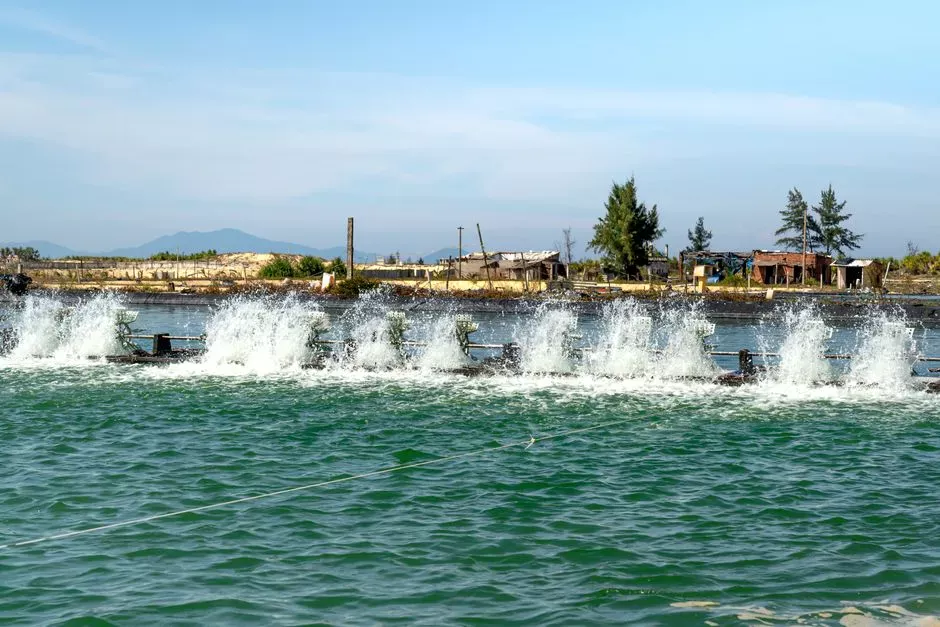
Organic and nitrogen loads dictate the aeration tank volume, blower duty and the requirements for an anoxic chamber. Convert per-capita BOD, COD, TSS and TKN loadings (g/capita/day) to kg/day using the design population, then back-calculate influent concentrations in mg/L by dividing by ADF. The resulting table provides the input the membrane supplier will use to confirm aeration tank volume and oxygen demand.
If the camp or estate includes a canteen, food court or commercial kitchen, the loadings shift; kitchen grease, oil and surfactants are harmful to MBR membranes, and upstream pretreatment must be sized to keep fats, oils and hair out of the reactor. If the project targets PUB's nitrogen expectations, plan an anoxic pre-chamber from the outset: SIGMADAF describes this configuration for simultaneous COD and nitrogen removal via nitrification–denitrification when total nitrogen is a constraint. Output of Step 2 is a load table for the supplier's process guarantee.
| Parameter | Unit | Output of Step 2 | Source / input owner |
|---|---|---|---|
| Design population | persons | From project brief | Client / M&E consultant |
| BOD load | kg/day | Per-capita BOD × population (engineer to confirm per-capita value) | Project brief |
| COD load | kg/day | Per-capita COD × population | Project brief |
| TSS load | kg/day | Per-capita TSS × population | Project brief |
| TKN load | kg/day | Per-capita TKN × population | Project brief |
| Influent BOD concentration | mg/L | BOD load ÷ ADF | Calculated |
| Kitchen / laundry adjustment | — | Add grease, oil and surfactant loadings if applicable | Project brief / F&B operator |
| Nitrogen-removal configuration | — | Anoxic pre-chamber if PUB TN limit applies | PUB / project brief |
Step 3 — Size the Aeration Tank and Membrane Tank
Aeration tank volume is determined by hydraulic retention time (HRT) and the mixed-liquor suspended solids (MLSS) concentration. SIGMADAF states that biomass of 6,000–12,000 mg/L is achievable in an MBR — significantly higher than a conventional clarifier-based plant, allowing for a smaller tank. The membrane tank volume and module count are derived from design flow divided by sustainable flux. The supplied sources do not state a specific flux value, so the engineer must request the membrane supplier's net flux curve at Singapore's mixed-liquor temperature, as flux drops as viscosity rises.
Aeration demand is the final calculation required for this stage. BOD load plus endogenous respiration sets the standard oxygen demand, and the blower must be sized to satisfy the larger of (a) oxygen demand and (b) membrane air-scour flow. Atlas Copco Singapore notes that diffused aeration blowers supply oxygen and that efficiency depends on diffuser design; specify this for the blower, as diffuser type drives both energy cost and the membrane air-scour regime. The chemical-cleaning regime is also sized here: SIGMADAF describes both air-scour backwash and periodic chemical cleaning with chlorine, citric acid or caustic, and a dosing package must be specified alongside the membrane module. The output of Step 3 is aeration tank volume (m³), membrane area (m²), blower airflow (m³/hr) and cleaning-chemical demand, which together set the container envelope.
| Parameter | Unit | Value or input | Source / input owner |
|---|---|---|---|
| MLSS in aeration tank | mg/L | 6,000–12,000 | SIGMADAF |
| Membrane nominal pore size | μm | 0.2 (average), 0.4 (max) | SIGMADAF |
| Effluent suspended solids | mg/L | < 1 | Chapman et al. (sswm.info) |
| Effluent turbidity | NTU | < 0.2 | Chapman et al. (sswm.info) |
| Sustainable flux at site temperature | L/m²·hr | Request from membrane supplier | Membrane supplier |
| Aeration HRT | hr | Request from process design | Membrane supplier / M&E consultant |
| Blower airflow | m³/hr | Max(oxygen demand, membrane air-scour) | Atlas Copco Singapore |
| Cleaning chemicals | — | Chlorine, citric acid, caustic, detergent | SIGMADAF |
Step 4 — Match the Sized Plant to an ISO Container Format
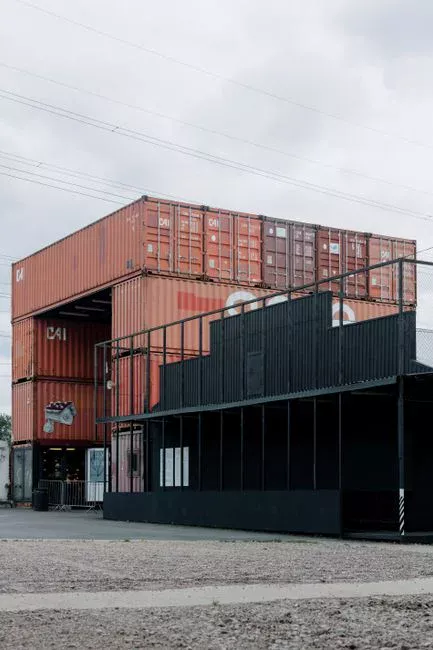
The container format is a site logistics decision rather than a process requirement. MENA-Water states that more than 1,200 m³/day can be filtered in a single 40-foot ISO container, with internal tanks in stainless steel suitable for humid or coastal air. This 1,200 m³/day figure represents the upper limit of a single 40-ft unit; below this capacity, the engineer chooses between a 20-ft ISO container, a 40-ft ISO container, multi-container configurations, or MENA-Water's I-Version skid for mobile or relocatable deployment.
The decision matrix below is built around flow band, footprint, transport access to the site and the need for relocation. For a small worker camp under 200 m³/day, a 20-ft container or a trailer skid usually fits; for a residential estate between 200 and 1,200 m³/day, a 40-ft container is the standard; above 1,200 m³/day, multi-container trains or a built-in-place package are the primary options. Container IP rating, factory pre-testing and plug-and-play commissioning should be confirmed in the supplier's submittal. The output of Step 4 is the selected container format and a one-line justification for the design basis.
| Format | Indicative flow band | Footprint | Transport access | Relocatable | Typical use |
|---|---|---|---|---|---|
| 20-ft ISO container | Low (engineer to confirm with supplier) | Smallest | Standard lorry | Yes | Small camps, single blocks |
| 40-ft ISO container | Up to 1,200 m³/day (MENA-Water) | Compact | Standard lorry | Yes | Mid-size residential / HDB cluster |
| Multi-container train | Above 1,200 m³/day | Larger | Multiple deliveries | Partial | Large estate or multi-block |
| Trailer skid (I-Version) | Low to mid | Open skid | Trailer-towed | Yes — mobile | Temporary camps, relocatable projects |
Step 5 — Pretreatment, Sludge and Reuse Interface
MBR sizing requires integration with upstream and downstream processes to ensure operational longevity. Upstream, the engineer must specify screening and grit removal to protect the membranes. SIGMADAF states that fats, oils and hair must be kept out of the reactor, making a rotary mechanical bar screen and a grease trap mandatory for projects with kitchens or shower blocks. Equalization buffer must be sized to dampen diurnal peaks so the MBR receives a near-constant feed; as the supplied research does not provide a specific HRT for this buffer, the engineer must request the supplier's recommendation.
Sludge handling follows as the secondary interface. SIGMADAF notes that sludge production from this reactor type is minimal, but occasional blowdown is necessary, requiring a sludge holding tank and a dewatering path, such as a plate-frame filter press. The downstream path is the final consideration: PUB used-water collection, on-site irrigation reuse, or further polishing (UF/RO) for higher-grade reuse. The supplied sources do not state Singapore-specific limits, so this must be verified with PUB before procurement.
Singapore Compliance and Procurement Checklist

The sized concept must be checked against PUB's requirements and the supplier's commercial scope before finalizing the price. Confirm the discharge or reuse pathway with PUB first; the supplied research does not provide Singapore-specific numeric limits, so the engineer must request current PUB used-water or trade-effluent thresholds for the specific site. Validate the membrane cleaning regime — SIGMADAF describes both air-scour backwash and periodic chemical cleaning with chlorine, citric acid or caustic — and budget for the necessary chemicals and downtime.
Confirm blower redundancy and control scope: Atlas Copco Singapore notes that aeration is the primary energy cost and a potential failure point if the blower is undersized, so specify duty/standby configuration and an automatic chemical dosing system for the cleaning regime. Ask the supplier for factory acceptance test (FAT) records, the container's IP rating for Singapore's climate, and a layout drawing showing the clearances needed to withdraw membrane modules on a confined site. Finally, if the downstream path includes a polishing or disinfection step, specify a UV sterilizer or equivalent to close the reuse loop within the supplier's scope. Engineers sizing for similar tropical conditions can compare against a containerized MBR STP sizing guide for Cebu or a containerized MBR STP sizing guide for Manila to cross-check envelope assumptions.
Frequently Asked Questions
What is a realistic budget range for a containerized MBR STP in Singapore?
The supplied research does not publish a Singapore-specific price for a containerized MBR STP, so a budget cannot be quoted here. The engineer should request a written quotation from at least two suppliers using identical design flow, load and discharge targets, and
Frequently Asked Questions
How do I size a containerized MBR STP for a residential or camp project in Singapore?
Sizing is primarily based on the estimated daily sewage generation rate per person, typically calculated at 150 to 200 liters per capita per day (lpcd) for residential or camp settings in accordance with Singapore's Code of Practice on Sewerage and Sanitary Works. You must multiply the total expected occupancy by this factor, then add a peak factor of 2.0 to 3.0 to account for diurnal flow variations to ensure the biological reactor and membrane surface area are not overwhelmed during morning and evening peak hours.
What flow rate can a 20-ft or 40-ft ISO container MBR handle?
A 20-ft containerized MBR unit typically handles a daily flow rate of 10 to 30 cubic meters per day (m³/day), depending on the membrane packing density and hydraulic retention time (HRT). A 40-ft ISO container can accommodate larger membrane skids, typically supporting flow rates between 50 and 100 m³/day, assuming a standard Mixed Liquor Suspended Solids (MLSS) concentration of 8,000 to 12,000 mg/L.
How much does a containerized MBR STP cost in Singapore for a 500-person camp?
For a 500-person camp generating approximately 75 to 100 m³/day of wastewater, the capital expenditure (CAPEX) for a containerized MBR system typically ranges from SGD 250,000 to SGD 450,000. This estimate includes the membrane filtration system, aerobic/anoxic tanks, blowers, PLC controls, and chemical dosing systems, but excludes site-specific civil works, piping connection to the public sewer, and long-term membrane replacement costs.
Does a containerized MBR STP in Singapore need PUB approval, and what effluent limits apply?
Yes, any sewage treatment plant in Singapore must obtain written approval from the Public Utilities Board (PUB) for the design and discharge. The system must meet the Trade Effluent Regulations for discharge into the public sewer, which typically requires a Biochemical Oxygen Demand (BOD) of less than 250 mg/L and Total Suspended Solids (TSS) of less than 400 mg/L, though MBR technology often achieves significantly higher quality effluent suitable for non-potable reuse.
Can a containerized MBR STP be relocated if the camp site changes?
Yes, containerized MBR units are designed for modularity and portability. Because the entire treatment process is housed within standard ISO shipping containers, the system can be disconnected from site utilities, drained, and transported via standard flatbed trucks to a new location, provided the new site has the necessary power supply and influent/effluent piping infrastructure to accommodate the system's footprint.