The Three Pretreatment Layers That Bind a Pasadena Organic Chemicals Plant
Industrial organic chemicals plants near Pasadena operate inside a three-layer pretreatment framework defined in 40 CFR Part 403. The first layer is EPA's national categorical pretreatment standards under 40 CFR Chapter I, Subchapter N, which set technology-based pollutant ceilings for individual industry subcategories, including the organic chemicals subcategory. The second layer is the General and Specific Prohibitions at 40 CFR Part 403.5, which block any discharge that would pass through or interfere with the receiving POTW, including impacts on sludge handling and disposal. The third layer is site-specific local limits, numeric, narrative, or BMP-based, imposed by the Control Authority at the IU–POTW connection under 40 CFR Part 403.5(c). When multiple provisions apply, the Control Authority applies the most stringent combination (EPA, "Pretreatment Standards and Requirements-Applicability").
The categorical standards are expressed as daily maximum and monthly average limits and are independent of where the plant discharges; the prohibitions are discharge-behavior rules that apply to every IU; and the local limits are derived from the specific hydraulic, organic, and sludge-handling capacity of the receiving POTW. A Pasadena organic chemicals plant has to track all three in parallel and document compliance against whichever number is tightest for each pollutant at any given time.
How SIU and CIU Status Is Determined Near Pasadena
Significant Industrial User (SIU) status is the trigger for sampling, self-monitoring, and reporting duties under 40 CFR 403.3(v). A user is an SIU if it is subject to categorical pretreatment standards, or if it discharges an average of 25,000 gpd or more of process wastewater (excluding sanitary, noncontact cooling, and boiler blowdown), or if its process wastestream makes up 5 percent or more of the POTW's average dry-weather hydraulic or organic capacity (EPA, "Pretreatment Standards and Requirements-Applicability"). The Control Authority can also designate an IU as SIU on a reasonable-potential basis under 40 CFR 403.8(f)(6). Categorical Industrial Users (CIUs) are IUs subject to national categorical pretreatment standards; in the Pasadena corridor, organic chemicals manufacturers typically fall into the organic chemicals category under 40 CFR Chapter I, Subchapter N.
For an organic chemicals plant, the practical first step is to compute the process-wastewater flow after excluding sanitary, noncontact cooling, and boiler blowdown, and to compare it against the 25,000 gpd threshold. The second calculation is the 5% test against the receiving POTW's average dry-weather hydraulic and organic capacity. The third check is whether the plant is a CIU under the organic chemicals subcategory. A "yes" to any of the three lifts the plant into SIU status and pulls in the full suite of 40 CFR 403.6 reporting and 40 CFR 403.12 monitoring duties, regardless of which test triggered the designation.
| SIU Trigger (40 CFR 403.3(v)) | What the Engineer Counts | Exclusions | Resulting Duty |
|---|---|---|---|
| Subject to categorical standards | Applicability of organic chemicals subcategory under 40 CFR Chapter I, Subchapter N | N/A | CIU + SIU status; full 40 CFR 403.6 reporting |
| Process wastewater ≥25,000 gpd | Average daily flow, process streams only | Sanitary, noncontact cooling, boiler blowdown | SIU status; baseline monitoring, BMP plan |
| 5% of dry-weather hydraulic or organic capacity | Process wastestream flow / load vs. POTW ADWHC and ADWOC | Sanitary, noncontact cooling, boiler blowdown | SIU status; CIU-equivalent reporting |
| Reasonable-potential designation | Control Authority's 40 CFR 403.8(f)(6) finding | N/A | SIU status imposed by Control Authority |
The Gulf Coast Authority POTW and Why Local Limits Decide the Tightest Number

Gulf Coast Authority (gcatx.org) operates the receiving POTW infrastructure for the Pasadena, Texas industrial corridor, which makes it the typical Control Authority for organic chemicals plants discharging to sanitary sewer in the area (gcatx.org, "GCA Facilities"). Under 40 CFR Part 403.5(c), certain POTWs must develop local limits, and EPA's local-limits guidance covers maximum allowable loadings, data collection, pollutants of concern, and annual reviews (EPA, "Pretreatment Standards and Requirements-Local Limits"). Local limits are site-specific and can be more stringent than the categorical baseline, which is why the engineer's first action is to obtain the local-limits document from the Control Authority rather than back-calculating from the ELG.
Local limits exist to protect the POTW from pass-through, defined at 40 CFR 403.3(p) as a discharge that exits the POTW in quantities or concentrations that cause a violation of the POTW's NPDES permit, and from interference, defined at 40 CFR 403.3(k) as a discharge that disrupts POTW processes, sludge processes, sludge use, or sludge disposal (EPA, "Pretreatment Standards and Requirements-Local Limits"). For an organic chemicals plant, that means BOD/COD, TSS, oil and grease, pH, and any specific toxics flagged in the local-limits study, plus the implicit constraint that residual pollutants cannot damage POTW sludge management or use/disposal pathways. The local-limits number is almost always the binding number on a parameter-by-parameter basis, and the engineer's compliance program has to be sized to it.
Matching Unit Operations to the Pollutants the Limits Target
The process flow for a Pasadena organic chemicals plant follows the same general sequence used across the sector: equalization and pH adjustment first, then primary separation, biological treatment, and tertiary polishing, with disinfection where the local limits call for it. Equalization stabilizes feed to chemical dosing and protects downstream biology, and it is foundational for any NPDES-aligned program under Section 402 of the Clean Water Act (Dober, "Wastewater Treatment Chemicals"). The next step is a DAF system for organics and FOG removal, which handles suspended solids, free and emulsified oils, and colloidal matter in a single step and is well suited to organics-laden streams with emulsified loadings. PLC-controlled coagulant and pH adjustment ahead of the DAF is delivered through an automatic chemical dosing system for coagulant and pH correction.
Biological treatment (typically activated sludge, with anaerobic upstream for very high-COD streams) targets dissolved organics that both the categorical standards and BOD/COD-based local limits focus on. The clarifier or DAF downstream of the biology step handles biomass separation. Tertiary polishing is then chosen based on the residual that threatens the limit: multi-media filtration for tertiary polishing handles residual TSS, and where colloidal carryover threatens the local number, 0.03 μm UF for colloidal carryover is the next step, using PVDF membranes rated for feeds up to roughly 300 ppm turbidity depending on the unit selected. On-site disinfection with a chlorine dioxide generator for effluent disinfection addresses any microbiological local limits; ClO₂ generation up to 20,000 g/h is available for industrial effluent duty. Headworks screening ahead of equalization, including mechanical screening at wastewater headworks, protects downstream equipment. For a related site-to-site comparison, see this DAF vs clarifier for chemicals wastewater factory guide, and for an adjacent corridor's compliance program, this chemicals-plant pretreatment compliance near Covington guide.
| Unit Operation | Pollutants Targeted | Limits It Supports | Link |
|---|---|---|---|
| Equalization + pH adjustment | Flow surges, pH excursions | Stabilizes downstream biology and dosing | — |
| DAF (coagulation/flocculation upstream) | TSS, FOG, emulsified and colloidal organics | Categorical TSS/FOG, local-limits TSS and oil & grease | DAF system |
| Biological (activated sludge, optional anaerobic) | Dissolved BOD/COD | Categorical BOD/COD, BOD/COD local limits | — |
| Multi-Media Filtration | Residual TSS after biology | Stringent TSS local limits, reuse pre-treatment | Multi-Media Filter |
| UF (0.03 μm PVDF) | Colloidal carryover, high-turbidity feeds | Tight colloidal or turbidity local limits | UF system |
| ClO₂ disinfection | Microbiological indicators | Microbiological local limits | ClO₂ generator |
How a Pasadena Plant Builds the Day-to-Day Compliance Program
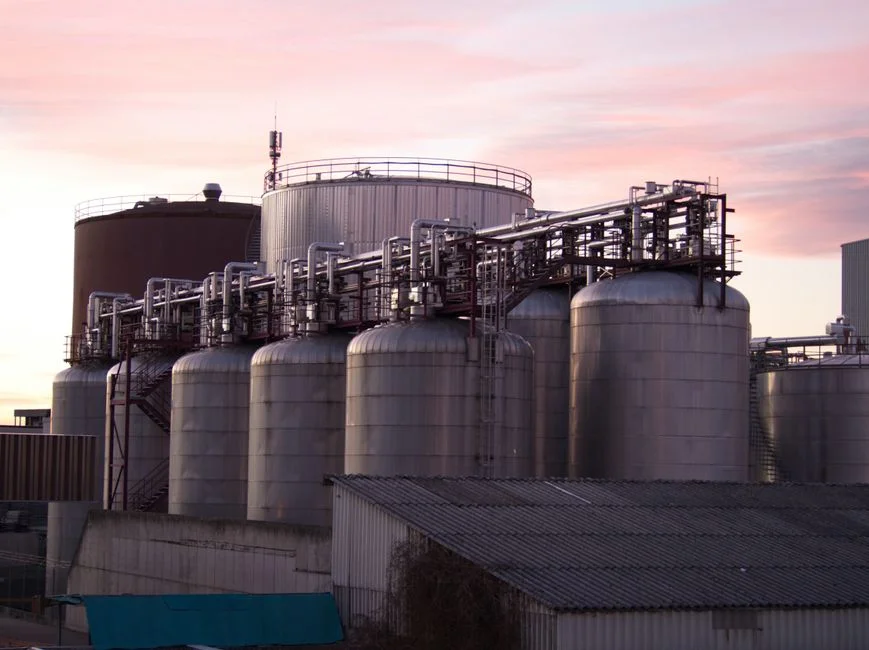
Sampling, self-monitoring, and reporting cadence is dictated by SIU/CIU status, not by internal preference: 40 CFR 403.3(v) sets the trigger, and 40 CFR 403.6 sets the reporting structure (EPA, "Pretreatment Standards and Requirements-Applicability"). Best Management Practices (BMPs) are an enforceable component of pretreatment standards per EPA's applicability framing, so SOPs, chemical-handling controls, and training records are auditable, not optional. Slug-control plans and spill prevention are required where a discharge could pass through or interfere with the POTW under 40 CFR Part 403.5; for an organic chemicals plant, that means floor drains, secondary containment, and tank-farm procedures all live inside the pretreatment program.
The proposed 2026 Multi-Sector General Permit adds stormwater and PFAS monitoring obligations; the compliance program has to integrate these into the same sampling schedule rather than run them in parallel (Dober, "Wastewater Treatment Chemicals"). The practical effect is one consolidated sampling calendar, one chain-of-custody procedure, and one report package that covers categorical, local-limits, BMP, slug-control, and stormwater/PFAS obligations together, because the auditor and the Control Authority will read it as one program.
Data the Engineer Must Pull From the Control Authority Before Sizing
Before any equipment is quoted, the engineer needs the categorical standard text for the plant's organic chemicals subcategory under 40 CFR Chapter I, Subchapter N, including the applicable daily maximum and monthly average limits, because the categorical number sets the floor and the local limits tighten it. The second document is the Control Authority's local-limits study, including the allocation method (headwork-based vs. uniform concentration), per 40 CFR Part 403.5(c) guidance (EPA, "Pretreatment Standards and Requirements-Local Limits"). The third input is the plant's current process-wastewater flow in gpd, a process-wastestream characterization, and the percent of the receiving POTW's average dry-weather hydraulic and organic capacity, to confirm or rule out SIU status under 40 CFR 403.3(v). The fourth is the proposed 2026 Multi-Sector General Permit text and the plant's stormwater outfall map, so PFAS and stormwater monitoring can be merged into the same sampling schedule (Dober, "Wastewater Treatment Chemicals").
Without these four documents, the engineer is sizing blind: equipment rated for the wrong daily maximum, the wrong monthly average, or the wrong local-limits allocation. The audit risk is not abstract, since SIU reclassification under 40 CFR 403.8(f)(6) is an enforcement action the Control Authority can impose on a reasonable-potential finding, and the equipment sizing has to hold against the tightest number from any of the three layers.
| Input to Request | Source | Used For |
|---|---|---|
| Categorical standard text (organic chemicals subcategory) | 40 CFR Chapter I, Subchapter N | Floor of daily-max / monthly-avg limits |
| Local-limits study and allocation method | Control Authority (GCA), per 40 CFR 403.5(c) | Tightest site-specific numeric limits |
| Process wastewater flow (gpd) and wastestream characterization | Plant records | SIU/CIU determination under 40 CFR 403.3(v) |
| % of POTW average dry-weather hydraulic and organic capacity | Control Authority (GCA) | 5% test for SIU trigger |
| 2026 Multi-Sector General Permit draft + stormwater outfall map | EPA, plant engineering | Integrated stormwater and PFAS monitoring |
Frequently Asked Questions
What categorical standard applies to an organic chemicals plant near Pasadena?
The applicable standard sits in 40 CFR Chapter I, Subchapter N under the organic chemicals category, and the engineer must confirm the specific subcategory with the Control Authority (GCA) because subcategory rules drive which daily maximum and monthly average limits apply (EPA, "Pretreatment Standards and Requirements-Applicability").
What treatment equipment should a Pasadena organic chemicals plant specify first to meet local limits?
The starting sequence is a DAF for organics and FOG removal, followed by biological treatment for dissolved BOD/COD, then multi-media filtration for residual TSS, and UF where colloidal carryover threatens the local limit; disinfection with on-site ClO₂ generation is added where microbiological limits apply.
Which flow and load numbers must the engineer collect before quoting equipment?
The engineer must request average process-wastewater flow in gpd (excluding sanitary, noncontact cooling, and boiler blowdown), the plant's percent of the receiving POTW's average dry-weather hydraulic and organic capacity for the 5% test, and the Control Authority's local-limits document with its allocation method, because these three numbers determine both SIU status and the binding numeric limits.
What happens if the plant crosses the 25,000 gpd or 5% threshold and is reclassified as SIU?
Reclassification under 40 CFR 403.3(v) attaches the full 40 CFR 403.6 reporting and 40 CFR 403.12 monitoring duties, and the Control Authority can also impose SIU status on a reasonable-potential basis under 40 CFR 403.8(f)(6), which means the compliance program, not just the equipment, has to be audit-ready before the threshold is crossed (EPA, "Pretreatment Standards and Requirements-Applicability").
How does the proposed 2026 Multi-Sector General Permit change the pretreatment program in 2026?
The proposed 2026 MSGP adds stormwater and PFAS monitoring obligations on top of the categorical and local-limits program, so the engineering action is to merge the new sampling points into the existing SIU monitoring schedule rather than run two parallel programs, and to confirm with the Control Authority how the stormwater data will be reported alongside categorical compliance (Dober, "Wastewater Treatment Chemicals").