Why Meridian EV/Auto Plants Are Re-Evaluating Primary Clarification in 2026
For EV and auto component factories in Meridian, Idaho, selecting between a dissolved air flotation (DAF) system and a conventional or lamella clarifier for 2026 capital expenditure depends primarily on wastewater composition. DAF systems use 30 to 50 micron micro-bubbles to float suspended solids, fats, oils, and greases (FOG) to the liquid surface for skimmed removal, whereas lamella clarifiers rely on inclined-plate gravity settling for heavy inorganic solids. Facilities with elevated FOG levels from coolants and coating washwater require DAF, whereas high-TSS inorganic streams benefit from lamella clarification. Many plants install a combined treatment train or a COMPACT DAF skid for flows under 66 GPM to meet local pretreatment requirements.
Industrial wastewater streams from electric vehicle (EV) battery and Tier-1 automotive component manufacturing combine machining coolants, stamping lubricants, paint booth overspray, and battery washwater that generate both floating fats, oils, and grease (FOG) and heavy suspended solids within a single discharge line. When specifying primary clarification equipment for 2026 capital budgets, plant engineers around Meridian, Idaho must satisfy stringent Idaho Department of Environmental Quality (DEQ) industrial pretreatment limits and local Publicly Owned Treatment Works (POTW) sewer use ordinances, alongside federal categorical standards under 40 CFR Part 433 for metal finishing operations.
Vendor engineering proposals increasingly cite dissolved air flotation as the preferred primary clarification stage over conventional gravity settlers, despite a higher initial capital expenditure. This equipment shift occurs because flotation directly addresses low-specific-gravity contaminants, emulsified oils, and fine flocculated particles that settle poorly or remain suspended in gravity clarifiers. Evaluating primary clarification equipment requires balancing sticker prices against operational reliability and future production flexibility. Over a 3-to-5-year operational window, adding a new battery electrode coating line or expanding paint booth operations shifts the ratio of floating FOG to settleable total suspended solids (TSS), making primary clarification choice pivotal for long-term compliance. Facilities seeking broader compliance strategies can reference our EV/auto 2026 pretreatment compliance guide.
Engineers drafting request-for-quotation documents should weigh site constraints that determine the final selection between DAF and lamella clarification. Floor space inside existing manufacturing halls is often at a premium in EV battery plants, where cleanroom adjacent zones and battery formation areas compete for square footage. Lamella clarifiers pack a large effective settling area into a short vertical envelope, which suits retrofits inside low-bay buildings where circular clarifiers cannot be installed. Conversely, a DAF unit typically demands a longer footprint but a smaller plan area per unit flow, which fits linear pipe-rack layouts common along paint-shop discharge trenches. Hoist availability, chemical dosing room adjacency, and slab load ratings are equally important selection criteria that an experienced process engineer should verify before signing a purchase order.
Practical considerations include operator skill level and the existing maintenance culture on site. DAF systems rely on a saturated recycle pump, air-to-water ratio tuning, and consistent skim paddle speed, which require trained wastewater operators familiar with pressurized saturation vessels. Lamella clarifiers have fewer moving parts and tolerate wider swings in influent quality, but they need periodic plate cleaning to prevent biofilm buildup and scaling from hard-water makeup. Procurement teams should request that vendors provide a recommended spare-parts list, a recommended operator training syllabus, and a control narrative that the plant's existing SCADA integrator can implement without extensive reprogramming.
How a DAF Clarifier Works in an EV/Auto Line
Dissolved air flotation pressurizes a recycled stream of clarified water with air at high pressure, releasing it into the flotation chamber to form micro-bubbles sized between 30 and 50 microns that attach to flocculated contaminants (Clearwater Industries, April 2026).
As these micro-bubbles attach to suspended particulate matter, emulsified oils, and FOG, they decrease the net density of the agglomerated particles, driving them rapidly to the basin surface. A top-mounted paddle skimmer continuously scrapes the accumulated floating sludge blanket into a discharge trough, while heavy settleable solids drop into a v-bottom hopper and are evacuated via a bottom auger system (Clearwater Industries, April 2026). This dual-action design allows DAF units to manage wastewater streams containing both floating and settleable fractions.
To operate effectively, DAF technology requires chemical pre-treatment via coagulation and flocculation. Chemical conditioning increases floc size, maximizing the probability of contact with micro-bubbles. Facilities integrate serpentine flocculator mix tubes, providing 15 to 45 seconds of intense flash mixing for coagulant and polymer dosing, or deploy impeller-driven chemical mix tanks when extended retention time is needed for pH adjustment and chemical reaction, determined through jar testing (Clearwater Industries, April 2026). For high-FOG automotive streams containing coolant emulsions, micro-bubble flotation prevents grease carryover into downstream processes. Operating units such as the HydropureWater DAF system (4–300 m³/h, 13 standard models) are constructed from 304 stainless steel as standard, with 316 stainless steel or polypropylene options available to resist chemical attack from corrosive battery washwater containing nickel or cobalt salts (Clearwater Industries, April 2026).
Plant operators monitor three key parameters to keep a DAF unit performing within design intent: hydraulic loading rate across the flotation surface, air-to-solids ratio within the saturation tank, and polymer dose relative to feed TSS. The hydraulic loading rate governs the rise rate that the micro-bubbles must overcome; if surface overflow exceeds design, fine floc is lost over the effluent weir and TSS breakthrough occurs. The air-to-solids ratio dictates the buoyancy of the particle-bubble agglomerate, and under-aeration produces a thin, watery float layer that the skimmer cannot capture. Finally, polymer activity depends on feed water temperature and mixing energy, so operators typically adjust emulsion polymer make-down units seasonally to compensate for viscosity changes in winter and summer.
Maintenance access is a design point that experienced engineers evaluate before issuing a purchase order. A well-designed DAF basin will include a hinged or removable access cover over the saturation vessel, a sight glass on the recycle line, and a quick-disconnect header for the skimmer drive so that a maintenance crew can swap wear parts without draining the entire tank. Sludge withdrawal lines benefit from a manual isolation valve plus an automatic blow-down valve sequenced by the PLC, allowing operators to purge settled grit without interrupting skim removal. These details are the difference between a unit that runs for years and one that becomes a bottleneck during a production campaign.
How a Conventional or Lamella Clarifier Handles the Same Wastewater
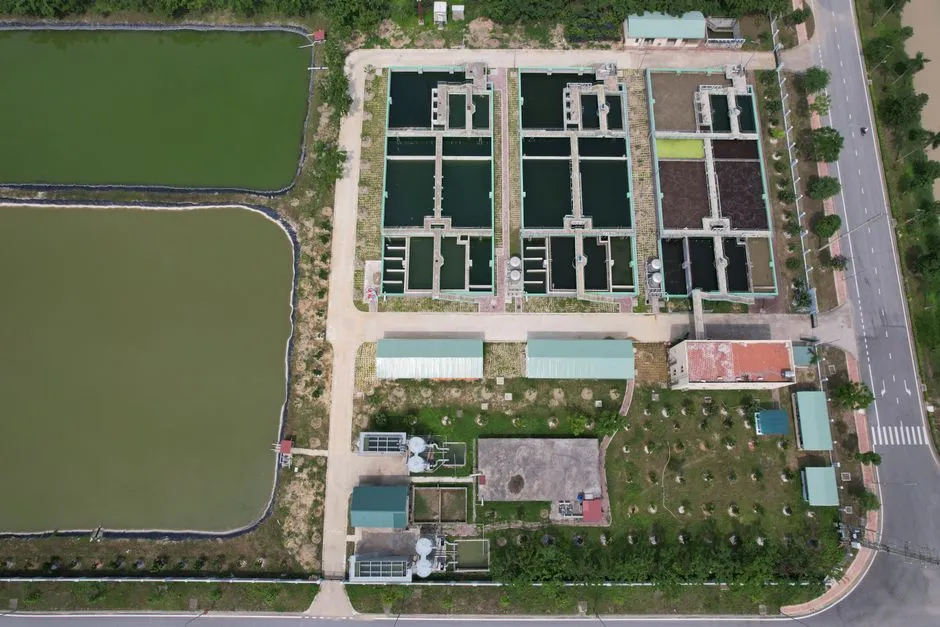
Conventional gravity clarifiers isolate suspended solids through density sedimentation, requiring particles to possess a high enough specific gravity to overcome the upward liquid velocity inside the tank.
Lamella clarifiers improve upon traditional gravity settling by incorporating parallel inclined plates set at a fixed angle. These plates multiply the effective surface settling area, allowing high-efficiency sedimentation units to achieve high surface loading rates of 20 to 40 m/h within a footprint up to 80% smaller than conventional circular settling basins. Integrated lamella designs combine internal sludge recirculation, targeted flocculation, and inclined plate separation inside a single compact structure, reducing coagulant and flocculant chemical consumption by up to 30% under stable influent conditions.
In automotive parts and metal-forming operations, inclined plate settlers remove heavy iron-rich swarf, stamping fines, and grinding dust that originate from machining cells and press shops. These inorganic solids typically settle rapidly when flocculated with a low-molecular-weight coagulant, because the particle density is several times that of water and the bubbles inside a DAF tank are not required for separation. For a Meridian facility that runs a high volume of stamping and blanking lines but relatively low FOG load, a lamella clarifier often produces a drier, denser sludge that dewaters more easily on a downstream belt press, reducing hauling cost to the local landfill. By contrast, a paint-shop or battery-coating washwater stream with significant surfactant content does not separate cleanly by gravity, because emulsified oil resists coalescence and remains suspended regardless of plate angle.
Engineers specifying a lamella unit should evaluate the influent distribution system, which determines whether the inclined plates operate at their design efficiency. A poorly designed inlet allows short-circuiting, where dense sludge slides down the first few plates while later plates operate on near-clear water, wasting much of the installed surface area. Reputable designs include a baffled influent well, a full-width perforated distribution channel, and an effluent weir that maintains a stable water level above the plate pack. Plate spacing, typically between 50 and 80 millimeters, is another specification variable that affects both capture rate and cleanability; wider spacing tolerates higher TSS spikes without plugging but requires a longer plate pack to maintain the same effective area. Buyers should request confirmation that plate spacing, plate angle, and plate material have been selected for their specific influent matrix rather than copied from a generic catalog drawing.
Related Equipment
- HydropureWater lamella clarifier (20–40 m/h surface loading) — specifications, capacity range, and technical data
- PLC-controlled coagulant and flocculant dosing skid — specifications, capacity range, and technical data
Further Reading
Frequently Asked Questions
For an EV/auto plant in Meridian, ID, is a DAF or a lamella clarifier the better primary clarifier in 2026?
For modern EV manufacturing in Meridian, a Dissolved Air Flotation (DAF) unit is generally superior for primary treatment due to the high concentration of emulsified oils, surfactants, and light-density solids common in EV parts-washing and battery-casing production. While lamella clarifiers excel at removing heavy metal hydroxides, they struggle with the low-density contaminants typical of 2026 EV processes, often resulting in surface skimming issues that a DAF system mitigates through pressurized micro-bubble aeration.
What flow rate range does a DAF skid cover versus a lamella clarifier, and how do I size one for a 50 GPM EV parts-washing stream?
DAF skids typically cover flow ranges from 10 GPM to 500 GPM, whereas lamella clarifiers are often scaled for higher continuous flows from 50 GPM to over 2,000 GPM. For a 50 GPM EV parts-washing stream, you should size a DAF based on a hydraulic loading rate of 1.5 to 3.0 GPM/ft² of effective surface area; assuming a conservative 2.0 GPM/ft², a unit with at least 25 square feet of flotation area is required to ensure adequate retention time for chemical flocculation.
How much FOG and TSS can a DAF remove compared to a conventional clarifier in an automotive wastewater line?
A properly operated DAF system can achieve 90% to 98% removal of Fats, Oils, and Grease (FOG) and 85% to 95% removal of Total Suspended Solids (TSS) in automotive streams. In contrast, conventional or lamella clarifiers typically remove only 60% to 75% of FOG, as lighter oil droplets often remain buoyant and bypass the settling zone, necessitating a secondary skimming stage that the DAF performs inherently.
What is the typical lead time and budget range to specify a COMPACT DAF skid versus a lamella clarifier for a new Meridian EV facility in 2026?
As of 2026, a compact, stainless steel DAF skid typically requires a lead time of 12 to 18 weeks and costs between $85,000 and $160,000 depending on automation features and chemical dosing integration. Lamella clarifiers offer shorter lead times of 8 to 12 weeks but have a wider budget variance of $60,000 to $200,000, heavily dependent on the material of construction and the inclusion of integral sludge thickening equipment.
Will a DAF or a clarifier help my Meridian plant meet 40 CFR Part 433 and local POTW pretreatment limits for metal-finishing wastewater?
Both systems are essential for compliance with 40 CFR Part 433, but they serve different roles: the DAF is critical for removing organic-bound metals and oils that would otherwise interfere with downstream chemical precipitation, while the lamella clarifier is the industry standard for final settling of heavy metal hydroxide precipitates (such as zinc, nickel, or chromium). In Meridian, a combined approach using a DAF for primary oil/solids removal followed by a clarifier for polished metal removal is the most reliable strategy to meet stringent local POTW pretreatment limits.