Which Federal Rules Cover a Fabricated Metals Plant Near Noblesville
A fabricated metals shop that sends wastewater to a publicly owned treatment works (POTW) rather than to a stream is an indirect discharger under the EPA Pretreatment Program. Federal effluent guidelines at 40 CFR Part 433 (Metal Finishing) and 40 CFR Part 421 (Nonferrous Metals Manufacturing) are incorporated into the POTW's permit or local control mechanism, not an NPDES permit issued directly to the shop.
EPA's effluent guidelines page on metal finishing (epa.gov/eg/metal-finishing-effluent-guidelines) states that if a plant performs any of six core metal-finishing operations, then discharges from all 46 operations listed in 40 CFR 433.10(a) are covered by the Part 433 standards — a single-trigger test that pulls an entire facility's drain network into the rule once one trigger operation is performed. The same applies to nonferrous shops: 40 CFR Part 421 covers 31 subcategories of smelter and refining wastewater, while post-extraction forming operations (rolling, drawing, extruding, foil fabrication) sit under 40 CFR Part 471, Part 467 (Aluminum Forming), or Part 468 (Copper Forming) per the EPA NFMM guidance (epa.gov/eg/nonferrous-metals-manufacturing-effluent-guidelines, undated retrieval). Any plant performing chromium plating, chromium anodizing, chromic acid etching, or chromate conversion coating is also inside the "chrome finishing facility" definition EPA used in the Multi-Industry PFAS Study and the live rulemaking at docket EPA-HQ-OW-2022-0869, because PFAS is used in those operations to control hexavalent chromium emissions.
| Operation type at the plant | Applicable 40 CFR subpart | PFAS rulemaking (EPA-HQ-OW-2022-0869) in scope? |
|---|---|---|
| Any of six core metal-finishing operations triggers all 46 listed operations on site | 40 CFR Part 433 — Metal Finishing | Only if a chrome operation is performed |
| Nonferrous smelting, refining, or secondary processing (31 subcategories) | 40 CFR Part 421 — Nonferrous Metals Manufacturing | No, unless chrome operations overlap |
| Aluminum forming (rolling, drawing, extruding) | 40 CFR Part 467 — Aluminum Forming | No |
| Copper forming | 40 CFR Part 468 — Copper Forming | No |
| Other nonferrous forming and metal powders | 40 CFR Part 471 | No |
Shop owners working through the same trigger logic for a different region can cross-reference the sister guide on Oxford-area fabricated metals pretreatment for the parallel UK/EU framing.
The Noblesville Region's Layered Compliance Regime
A Noblesville-area shop faces three stacked layers of regulation: federal effluent guidelines (40 CFR Parts 421, 433, 467, 468, 471), the Indiana NPDES delegation and pretreatment program oversight, and the receiving POTW's local sewer-use ordinance and discharge limits. The EPA effluent guidelines page for metal finishing is explicit that the standards are incorporated into "permits or other control mechanisms for indirect dischargers" (see Pretreatment Program), meaning the binding number at the discharge manhole is almost always the local limit, not the categorical standard. In practice, local limits vary by POTW, but indirect discharge permits typically set site-specific numerical limits for lead, cadmium, total chromium, copper, nickel, zinc, pH, oil and grease, and total suspended solids — and increasingly for PFAS parameters at any shop that runs a chrome operation inside the EPA-HQ-OW-2022-0869 scope. Categorical standards under 40 CFR 433 are enforced through the local control mechanism, and a POTW may impose stricter local limits where its biosolids program, headworks loading, or receiving-stream capacity demands additional protection. Before sizing equipment, the engineer should request the receiving POTW's current sewer-use ordinance, any recent enforcement summaries, and the categorical standards table — local limits typically drive unit-operation selection more than the federal baseline.
What Comes Out of a Fabricated Metals Shop — and Why It Matters
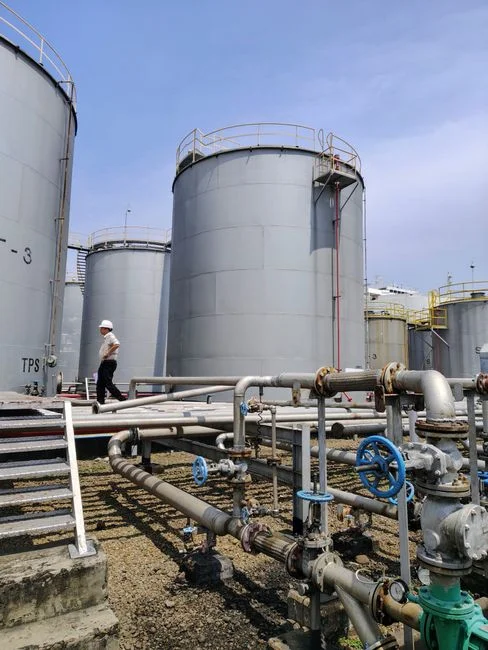
Wastewater from a fabricated metals plant consists of distinct streams that must be mapped before any unit operation is sized. Per the EPA NFMM guidance, metal manufacturing wastewater generally derives from rinsing of materials and spent process solutions, plus equipment cooling and air pollution controls (wet scrubbers); for a fabricated metals shop the equivalent streams are drag-out from plating, pickling rinses, cleaning baths, cooling-tower blowdown, and wet scrubber liquor. EPA explicitly lists cooling-tower blowdown and wet scrubber liquor as regulated wastewater sources, and both are commonly routed to pretreatment rather than discharged raw because they accumulate dissolved solids and trace metals. The ORNL survey of 315 metals facilities (Sharma, Lemar, and Nimbalkar, "Opportunities for iron and steel industrial wastewater treatment and reuse in the United States," Water Resources and Industry 34, 2025, 100298) documents that typical I&S process contaminants include suspended solids, oil and grease, heavy metals, chemical residues, carbon and sulfur compounds, ammonia, cyanide, and polycyclic aromatic hydrocarbons, and that chemical precipitation and adsorption stages achieve more than 80% removal for copper, zinc, chromium, nickel, phenols, ammonia, and cyanides in the surveyed operations. The same ORNL dataset records the following process-water TDS targets that confirm dissolved solids as a routine pretreatment target: coking <500 mg/L, blast furnace <1500 mg/L, BOF/EAF <500 mg/L, hot/cold rolling <300 mg/L, painting/coating <1000 mg/L, and pickling/electroplating <1000 mg/L.
The Treatment Train That Gets a Shop Under Its Limits
The defensible process flow for a small-to-mid fabricated metals shop is a staged train, not a single black box. The sequence starts with a rotary mechanical bar screen as headworks to remove rags, plastics, and coarse solids that would otherwise blind downstream equipment. From there, flow equalization dampens shock loads from batch rinses, and pH adjustment via an automatic chemical dosing system sets the chemistry that the precipitation step needs. For any chrome operation in scope of EPA-HQ-OW-2022-0869, hexavalent chromium is reduced to trivalent under low pH using a reducing agent, then precipitated as the hydroxide — the standard sequence inside the chrome-finishing scope. Heavy-metal precipitation and clarification follow: hydroxide or sulfide precipitation plus a dissolved air flotation system or a lamella clarifier removes precipitated metal hydroxides and any emulsified oils, and lamella designs are specified because they achieve high surface loading rates and reduce coagulant consumption. Tertiary polishing uses a multi-media filter for residual organics and trace metals, with the ORNL survey listing adsorption, hydrogen peroxide plus UV, demulsification, and electrocoagulation as documented finishing options. Sludge handling closes the loop: precipitated metal hydroxide sludge is dewatered with a plate-and-frame filter press (a small-to-mid shop's most operationally simple dewatering option) to reduce disposal volume.
| Unit operation | Pollutant it targets | Role in the train |
|---|---|---|
| Rotary mechanical bar screen | Rags, plastics, coarse solids | Headworks protection for downstream equipment |
| Flow equalization + pH adjustment (automatic chemical dosing) | Shock loads, pH excursions | Stabilizes feed for precipitation |
| Hexavalent chromium reduction (chrome operations only) | Cr(VI) | Required inside the EPA-HQ-OW-2022-0869 scope |
| Hydroxide or sulfide precipitation + DAF or lamella clarifier | Dissolved heavy metals (Cu, Zn, Ni, Cr, Pb, Cd), emulsified oils | Bulk removal — >80% for Cu, Zn, Cr, Ni per the ORNL 2025 survey |
| Multi-media filter (activated carbon / sand / multimedia) | Residual organics, trace metals | Polishing before discharge |
| Plate-and-frame filter press | Metal hydroxide sludge | Volume reduction for disposal |
The same precipitation-plus-flotation logic is unpacked for COD loadings in the electroplating wastewater COD removal guide.
Choosing Between In-House Treatment and Contract Hauling
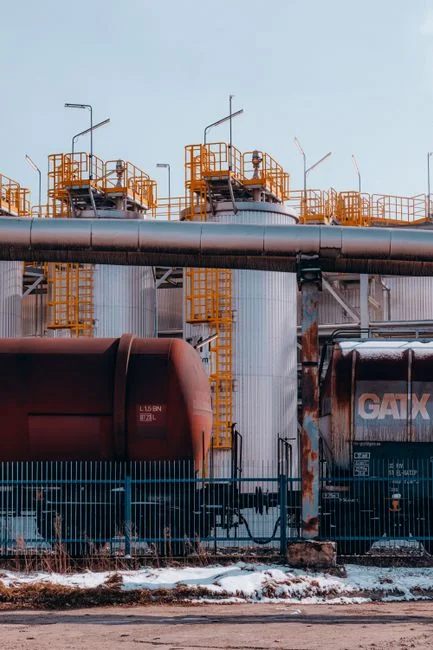
The ORNL 2025 survey of 315 metals facilities found that "meeting discharge criteria" was ranked as the top water-management priority, above treatment-process optimization, water quality, and water supply. In-house treatment tends to win once a shop has continuous flows above the threshold where hauling labor, manifest fees, and liability exceed the annualized capital plus operating cost of a skid-mounted pretreatment system, which is the typical case for shops running multiple rinse lines and any chrome operation inside the EPA-HQ-OW-2022-0869 scope. Hauling still makes sense at very low flows, batch operations that produce waste only weekly, or shops with no floor space for a treatment skid and no room for a sludge roll-off. Before deciding, the engineer should gather: average and peak daily flow; hourly influent concentrations for the regulated metals and any local-limit parameters; available footprint and ceiling height; the local POTW tariff for hauled-waste acceptance; and PFAS monitoring obligations for any chrome operation. Cost framing matters here — do not lock in a CAPEX number without these inputs. The defensible request to a supplier is an itemized CAPEX (skid, tanks, instrumentation, installation), an itemized OPEX (chemicals, power, labor, sludge disposal), and a parallel quote from a local hazardous-waste hauler so the two scenarios are compared on the same basis.
Frequently Asked Questions
What budget should a fabricated metals shop near Noblesville plan for an in-house pretreatment skid in 2026?
No publicly available benchmark price exists for a 2026 Noblesville-area pretreatment skid. The defensible move is to request itemized CAPEX (skid, tanks, instrumentation, installation), itemized OPEX (chemicals, power, labor, sludge disposal), and a parallel hauled-waste quote so both scenarios are priced on the same basis before committing to a number.
How do I pick a pretreatment equipment supplier without getting locked into the wrong skid?
Ask for a written process guarantee tied to your POTW's local limits (not just the federal categorical standards), a reference list of operating fabricated-metals or chrome installations, and a clarifier or DAF sizing calculation that names the surface loading rate and the coagulant dose. Suppliers who cannot produce those three items are not yet qualified to bid your train.
If my shop only runs a single chrome plating line, am I still inside the EPA PFAS rulemaking?
Yes. Per EPA's metal finishing effluent guidelines page, any facility performing chromium plating, chromium anodizing, chromic acid etching, or chromate conversion coating is a "chrome finishing facility" inside the scope of the PFAS rulemaking at docket EPA-HQ-OW-2022-0869, which is independent of the 40 CFR 433 single-trigger test.
Which unit operation actually drops copper, zinc, and nickel below the local limit?
Hydroxide or sulfide precipitation followed by a DAF or lamella clarifier, with the ORNL 2025 survey of 315 metals facilities reporting greater than 80% removal for copper, zinc, chromium, and nickel when chemical precipitation and adsorption are combined in the train.