Why Yanbu Industrial City Needs a Custom-Engineered ETP
Yanbu Industrial City is one of the Saudi industrial hubs where the National Center for Environmental Compliance (NCEC) enforces strict treatment requirements for industrial and commercial discharge (Source: optimawater.co.in, Effluent Treatment Plant Saudi Arabia page). Refinery and petrochemical operations inside the city generate high-salinity, hydrocarbon- and phenol-bearing effluent that requires ETP systems customized to specific effluent characteristics rather than generic designs. Two regulators set the discharge envelope: NCEC at the national level and the Royal Commission at Yanbu (RCJY) at the city level, with operating licenses tied to the facility's specific effluent profile.
For a refinery or petrochemical plot, that profile typically includes high TDS, free and emulsified oil, total petroleum hydrocarbons, phenol, sulphide, ammonia, and a heavy-metal panel—a combination that rules out packaged domestic-grade units and necessitates physico-chemical primary treatment followed by a halotolerant biological stage. The biological stage relies on the documented biodegradation of phenol by a moderately halophilic bacterial consortium (Environmental Progress & Sustainable Energy, doi:10.1002/ep.12834), which provides a defensible reference when justifying a salt-tolerant biomass to a Royal Commission reviewer. Because every Yanbu plot draws on a different mix of crude, reformer, and downstream units, the ETP must be engineered from a current effluent analysis rather than selected from a catalogue.
Influent Parameters to Lock Down Before Sizing the Plant
The standard ETP commissioning flow requires a site-specific dataset—specifically BOD, COD, TSS, heavy metals, and pH—before any tank sizing (Source: optimawater.co.in). For a Yanbu refinery or petrochemical plant, this list must expand to include TDS/salinity, temperature, oil & grease, total petroleum hydrocarbons (TPH), phenol, sulphide, ammonia, and the heavy-metal panel (As, Cd, Cr, Cu, Hg, Ni, Pb, Zn). Without this expanded panel, neither the biological stage sizing nor the polishing membrane selection will withstand an NCEC audit.
Sampling discipline is as critical as the parameter list. Use 24-hour composite samples and repeat across at least three operating modes—normal steady-state, startup, and turnaround—because salinity and hydrocarbon peaks during unit depressurization routinely exceed the normal operating envelope and can stall a non-halotolerant biomass. Where historical data is missing, request that the supplier design against a stated assumed envelope and hold the price valid subject to jar-test verification on the first composite; do not accept a fixed quote based on assumed influent. Maintain a split of each composite so that the factory acceptance test in the country of manufacture and the site commissioning in Yanbu can be repeated against the same source water.
| Parameter | Why it matters for Yanbu sizing | Typical method |
|---|---|---|
| pH, temperature | Defines equalisation and corrosion allowance | On-line probe + daily grab |
| BOD, COD | Sizes biological stage and F/M ratio | 24-h composite, lab BOD₅ / CODCr |
| TSS, TDS / salinity | Drives clarifier sizing and halotolerant selection | 24-h composite, gravimetric / conductivity |
| Oil & grease, TPH | Sets DAF and skimmer duty upstream of biology | Grab + hexane extract, GC for TPH |
| Phenol, sulphide, ammonia | Defines biological loading and toxic-shock margin | 24-h composite, distillation + colorimetry |
| Heavy metals (As, Cd, Cr, Cu, Hg, Ni, Pb, Zn) | Required for sludge classification and NCEC discharge | 24-h composite, ICP-MS |
Process Trains That Fit Yanbu Effluent Profiles
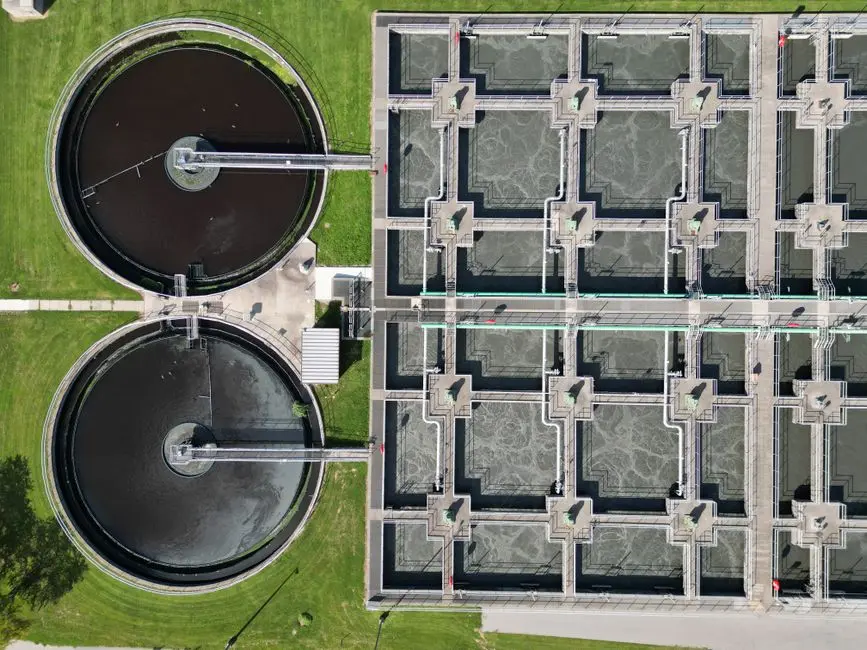
Industrial ETPs utilize a standard toolkit consisting of physico-chemical treatment, biological treatment, advanced oxidation, and membrane filtration (Source: optimawater.co.in). The engineering challenge is matching the combination of technologies to the Yanbu influent and the specific discharge target, such as Red Sea disposal, cooling-tower makeup, or boiler-feed pre-RO. To assist in this selection, the following table maps four realistic process trains against these targets, while the 2026 COD removal engineering guide provides further technical detail on chemical reduction.
For discharge-only targets, a physico-chemical primary stage (typically a DAF unit for oil and grease removal) followed by an activated sludge basin provides the lowest-CAPEX baseline. For high-salinity streams, the biomass must be halotolerant, and the published work on a moderately halophilic bacterial consortium degrading phenol (Environmental Progress & Sustainable Energy, doi:10.1002/ep.12834) serves as the necessary design basis citation. For reuse targets, nanofiltration is a proven technique to polish WWTP effluent to standards suitable for agricultural or potable reuse (Schrader, University of Twente PhD thesis, doi:10.3990/1.9789036523325). Where land is available inside the Royal Commission plot, peer-reviewed research on constructed wetlands for micropollutant removal (Lei, Wageningen University PhD thesis, 2022, doi:10.18174/575408) supports the use of a tertiary polishing wetland as a buffer before final discharge.
| Process train | Best fit for | Key unit operations | Main risk |
|---|---|---|---|
| Physico-chemical + activated sludge | Discharge to Red Sea, low reuse | DAF → equalisation → aeration → clarifier | Salinity shock if biomass not halotolerant |
| Physico-chemical + MBR | Reuse for cooling-tower makeup | DAF → MBR → UF polishing | Membrane fouling on hydrocarbon upsets |
| Physico-chemical + biological + NF/RO | Boiler-feed pre-RO, highest purity | DAF → halophilic biology → NF → RO | NF scaling on TDS; CIP frequency |
| Biological + constructed-wetland polish | Plot with land, low OPEX preference | DAF → biology → VF/HF wetland → UV | Land take; seasonal performance variance |
Procurement Path: Containerised vs Skid-Mounted vs Built-On-Site
Container shipping to Saudi Arabia takes several weeks depending on the route and customs clearance, with containerized systems becoming operational shortly after arrival. The core procurement decision is whether the influent envelope is generic enough to fit a standard skid, as refinery desalter waste or petrochemical splitter bottoms streams rarely are. Consequently, a dissolved air flotation system for oil and grease removal is almost always the first unit, regardless of whether the rest of the train is skid-mounted or built on-site.
Specify Yanbu Commercial Port in the Incoterms to ensure the supplier quotes sea-freight directly to the city, avoiding costly drayage from Jeddah or Dammam. Remote commissioning is standard for containerized systems, whereas on-site engineering support is typically reserved for larger or custom-engineered Saudi installations (Source: optimawater.co.in). For reuse projects, the polishing stage often uses an integrated MBR membrane bioreactor for Yanbu reuse projects, which minimizes the civil footprint and shortens the commissioning window. Supplier pre-qualification must verify ISO 9001:2015 certification and a reference list of comparable-effluent installations; current industry standards include ISO 9001:2015 certification with a proven track record of exports (Source: optimawater.co.in).
NCEC and Royal Commission Compliance: The Audit Trail
NCEC enforces strict treatment requirements for industrial and commercial discharge inside Yanbu Industrial City (Source: optimawater.co.in), requiring the ETP design report to demonstrate compliance at the final discharge point. The Royal Commission at Yanbu mandates specific requirements for plot setbacks, chemical storage bunding, and sludge handling, which must be included in the supplier's initial civil drawing submission. For context on regulatory compliance in Saudi coastal industrial cities, the 2026 Dammam ETP buyer's guide outlines the NCEC and local-authority split.
Establish operating records from the outset rather than during renewal: maintain influent and effluent 24-hour composite logs, calibration records for online pH, conductivity, and TOC probes, sludge manifests, and a written shutdown and turnaround contingency plan. The supplier's scope should explicitly include the documentation required for NCEC permit renewal rather than just initial commissioning. Confirm this requirement in the purchase order, as verbal commitments are not enforceable during an audit.
Shortlisting Export Suppliers for a Yanbu ETP
Use a weighted scoring matrix based on five axes: documented experience with the specific influent type, in-house fabrication versus assembly-only, ISO 9001:2015 certification, willingness to factory-test in the country of manufacture, and the ability to support commissioning in Yanbu. Proven design experience across a wide range of industrial effluent types often outweighs the headline price when selecting a partner for a Yanbu refinery scope (Source: optimawater.co.in).
Request a reference plant operating on a comparable influent—matching salinity, COD, and hydrocarbon range—and contact the reference directly. Lock the technical scope, Incoterms to Yanbu Commercial Port, and documentation requirements into the purchase order before signing; items left to verbal agreement often reappear as variation orders during commissioning, creating unnecessary project delays.
Frequently Asked Questions
What influent data does a Yanbu ETP supplier need before quoting?
The supplier requires pH, temperature, BOD, COD, TSS, TDS/salinity, oil and grease, TPH, phenol, sulphide, ammonia, and a heavy-metal panel (As, Cd, Cr, Cu, Hg, Ni, Pb, Zn), provided as 24-hour composites across normal, startup, and turnaround operating modes (Source: optimawater.co.in). Without this data, quotes remain indicative only.
How long does a containerised ETP take to reach Yanbu and run?
Container shipping to Saudi Arabia takes several weeks; standard systems can be operational within days of arrival at Yanbu Commercial Port, though custom-engineered systems require longer installation periods (Source: optimawater.co.in). Buyers should fix Incoterms to Yanbu to avoid Jeddah or Dammam drayage.
How do I choose between a local Yanbu fabricator and an imported ETP supplier?
Prioritize documented experience with the specific influent type over headline price, as proven design experience across diverse industrial effluents is critical for successful Yanbu operations (Source: optimawater.co.in). Verify ISO 9001:2015 certification, request a reference plant on a comparable influent, and contact that reference before signing.
What NCEC and Royal Commission documents should the supplier deliver?
The supplier’s scope must include the documentation pack required for NCEC permit renewal—design reports, 24-hour composite logs, instrument calibration records, sludge manifests, and contingency plans—alongside civil drawings that address Royal Commission requirements for setbacks, bunding, and sludge handling (Source: optimawater.co.in). Formalize these requirements in the purchase order to ensure enforceability at audit.