DAF vs Clarifier: Why the Question Is Misframed for Fabs
A dissolved air flotation (DAF) unit is a flotation clarifier: pressurised water releases 30-50 micron microbubbles that attach to suspended solids, oils and FOG and lift them to the surface, where paddle skimmers remove the float layer (Clearwater/Sigmadaf, 2026-04). A conventional clarifier is a gravity-driven settler; lamella (inclined-plate) variants stack plates inside a small footprint to multiply the effective settling area. Both are sold as "primary clarification," and most vendor literature frames the choice as a binary swap.
In a semiconductor fab, that framing collapses. A fab drain sees CMP slurry (colloidal silica, alumina, ceria), photoresist and developer organics, acid/alkaline rinses, and fluoride-bearing etchants — a mix of light colloids, free oil, and dissolved species that no single unit can optimise. The defensible 2026 specification for an Orlando fab is a configuration, not a part number: a primary step that knocks down the colloidal and FOG load, followed by a polishing step that handles settleables and prepares the stream for fluoride and metals removal. The relevant question is which step plays which role, and how the two are sized against the chemistry and flow an Orlando plant actually runs. Treat the rest of this article as a decision framework for that configuration, anchored in the semiconductor discharge limit guidance your EHS team will use as a check.
What Semiconductor Wastewater in Orlando Puts on the Clarifier
Four stream families dominate fab primary clarification: CMP slurry wastewater (colloidal silica, alumina and ceria particles in the sub-10 µm range, often with stabilising surfactants); photoresist and developer drain (TMAH-based developers, organic solvent residues, stripper by-products); acid/alkaline rinses (HF, H₂SO₄, NH₄OH, with carry-over of process metals); and fluoride-bearing etchant streams. The first two are the ones that decide the clarification train, because they carry light colloids and FOG that a pure gravity settler struggles with.
The downstream constraint that frames the whole train is fluoride. The China benchmark cited in the HydropureWater semiconductor discharge article 3490 targets fluoride polishing below 15 mg/L; clarification protects the precipitation/ion-exchange step that hits that number by removing the particles that would otherwise blind the resin or consume excess lime. Orlando's operating context reinforces one practical point: the site is hot, humid and subject to heavy summer rainfall events, which means storm-driven infiltration and temperature swings on equalisation basins. That argues for covered, skidded units with stable hydraulic loading rather than open basins whose surface loading drifts with the weather. Orlando wastewater treatment cost engineering is driven by that hydraulic stability, not by nominal flow alone.
Side-by-Side: DAF vs Conventional Clarifier on Fab Parameters
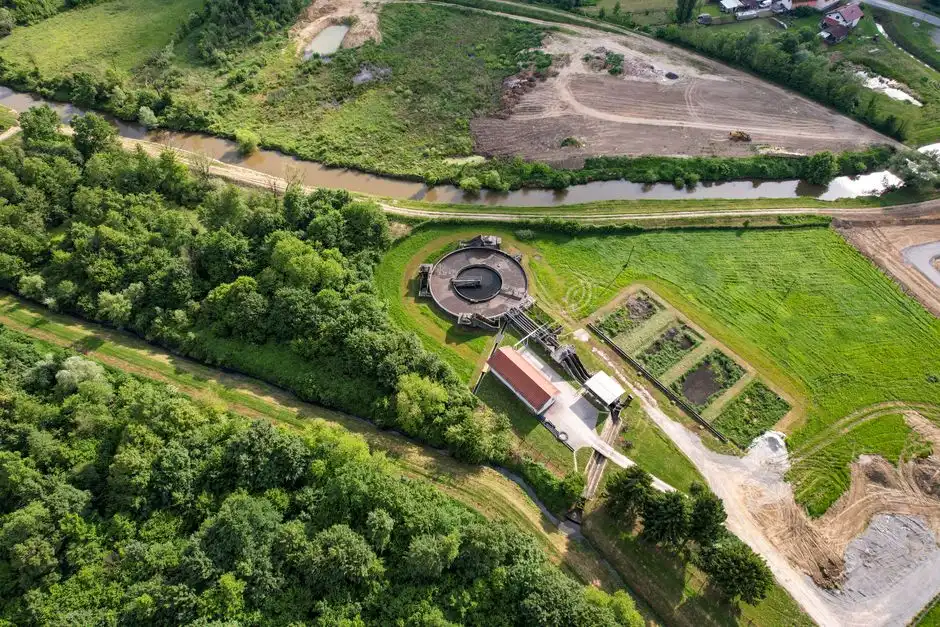
The matrix below is the one to paste into a design-review memo. DAF's mechanism is pressurised-air flotation using 30-50 µm bubbles, with skimmers removing the float and an auger taking the heavier settled fraction (Clearwater/Sigmadaf, 2026-04). A conventional clarifier relies on gravity settling; lamella/inclined-plate designs increase surface loading inside a small tank. The two are not equivalent on fab influent: DAF paired with coagulation/flocculation is reported to reach around 90% oil removal (Hahn, 2010, S3), and a plain gravity clarifier underperforms on light FOG and colloidal particles that don't settle readily.
Because footprint is the parameter Orlando fabs feel first, understanding the physical requirements of each unit is essential for integration. A DAF system for fab primary clarification is compact for a given hydraulic load and integrates skimming in the same vessel, which suits a tool-room or sub-fab retrofit. A lamella clarifier for secondary settling is the typical polish step, taking the chemically conditioned effluent and dropping residual settleables before fluoride removal. Materials of construction matter for the low-pH and fluoride streams upstream of clarification: standard DAF builds use 304SS, with 316SS and polypropylene available where chemistry warrants (Clearwater/Sigmadaf, 2026-04). DAF performance is also more sensitive to operating variables — air/solids ratio, hydraulic loading, and chemical conditioning — which is why equalisation upstream is essentially mandatory on a fab drain, per the operating-parameter work in Hahn (2010, S3).
| Parameter | Dissolved Air Flotation (DAF) | Conventional / Lamella Clarifier |
|---|---|---|
| Separation mechanism | Microbubble flotation, 30-50 µm bubbles (Clearwater/Sigmadaf, 2026-04) | Gravity settling, with inclined plates in lamella designs |
| Strength on FOG and light colloids | ~90% oil removal with coagulation/flocculation (Hahn, 2010, S3) | Underperforms on light FOG and colloidal particles |
| Strength on heavy settleables | Handles via bottom collection; not the design sweet spot | Strong on dense, settleable solids |
| Footprint for a given hydraulic load | Compact, skidded, integrated skimming | Lamella variants are compact; conventional rectangular basins are not |
| Standard materials | 304SS standard; 316SS and polypropylene available (Clearwater/Sigmadaf, 2026-04) | Typically coated carbon steel or 304SS; PP/FRP for corrosive service |
| Sensitivity to flow/load swings | Tolerates variable loads when paired with equalisation (Hahn, 2010, S3) | Surface loading drifts; performance drops with hydraulic surges |
| Chemical demand | Coagulation + flocculation required to realise rated removal (Clearwater/Sigmadaf, 2026-04) | Often lower; polymer aid optional for lamella polish |
| CAPEX/OPEX posture | Higher unit CAPEX; chemical and air-system OPEX | Lower unit CAPEX; simpler operation |
When a DAF Wins, When a Clarifier Wins, When You Need Both
DAF is the right primary step when the drain carries meaningful FOG, when particles are colloidal or low-density (CMP slurry, photoresist residues, surfactant-stabilised suspensions), and when flow and concentration swing with the production schedule. A DAF with a properly sized equalisation tank tolerates those swings, because the microbubble attachment step is forgiving as long as air/solids ratio and floc condition are held in range (Hahn, 2010, S3).
A conventional or lamella clarifier is the right primary step when the stream is already low in FOG and dominated by heavy settleables — think a segregated acid rinse drain or a metals-bearing stream that has been pre-conditioned. It is also the right choice when the design driver is the lowest CAPEX and simplest operation, and when the downstream polishing step can absorb the residual load. The trade-off is honest: a plain gravity clarifier will leave light FOG and colloids in the overflow, which then loads the fluoride-removal step and increases chemical consumption there.
Most 2026 fab trains in Orlando are designed as hybrids: a DAF system for fab primary clarification that knocks out FOG and colloids, followed by a lamella clarifier or chemical precipitation stage that takes out settleables and conditions the water for fluoride and metals polishing. A design review that expects this configuration — rather than a single-unit swap — is reviewing the right system.
Decision Framework for Orlando Semiconductor Plants in 2026
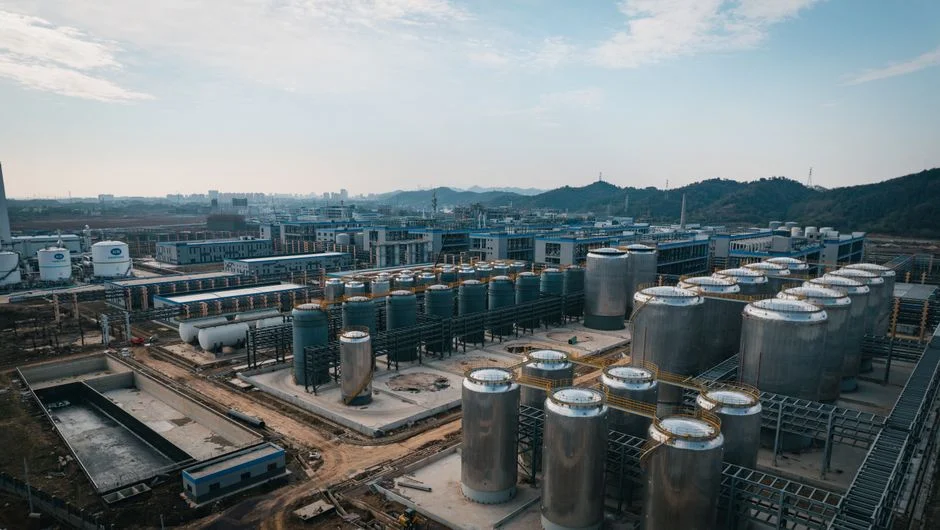
The equipment choice relies on three questions, in this order. What is the dominant particle density of the stream that actually reaches the primary clarifier — light colloids and FOG, or heavy settleables? What share of the load is FOG, and does it arrive in slugs? What is the fluoride limit the downstream step must hit, and how much solids loading can that step tolerate before it blinds or consumes excess reagent? The answers map directly to a configuration: high FOG plus colloids points to DAF primary; heavy settleables with negligible FOG points to a lamella clarifier; a mixed profile — which is the typical Orlando fab drain — points to DAF primary followed by lamella polish or chemical precipitation.
Two engineering habits keep this defensible. First, document the chosen configuration against 2026 Orlando discharge and pretreatment expectations before pilot testing, so the pilot goals are anchored to a permit number, not a generic brochure curve. Second, pre-size both the DAF and the lamella polish using jar testing on the actual fab drain, not catalogue surface-loading values, because the colloidal fraction in CMP wastewater behaves differently from the municipal wastewater most DAF curves assume. The framework below summarises the mapping.
| Influent Profile | FOG Share | Dominant Particle Density | Downstream Fluoride Target | Recommended 2026 Configuration |
|---|---|---|---|---|
| CMP + photoresist mixed drain | Moderate to high | Light colloids | < 15 mg/L (China benchmark, article 3490) | DAF primary → lamella polish → fluoride precipitation |
| Acid/alkaline rinse with metals | Low | Mixed (some settleable hydroxides) | < 15 mg/L | Neutralisation → lamella clarifier → fluoride removal |
| Segregated photoresist / developer drain | High | Light organics and colloids | Site-specific; check local FOG limits | Equalisation → DAF primary → equalisation → biological or chemical polish |
| Low-FOG, low-colloid general rinse | Negligible | Heavy settleables | < 15 mg/L | Lamella clarifier primary → fluoride removal |
For project context and a 2026 fab reading list that supports this decision in a design review, see the 2026 chip-fab wastewater reading list. The DAF-vs-sedimentation trade-off is also walked through in more general industrial terms in DAF vs sedimentation for industrial wastewater.
Frequently Asked Questions
Is DAF or a clarifier cheaper for a 2026 Orlando fab primary step?
Unit CAPEX for a DAF is generally higher than a comparable-capacity gravity clarifier, but a DAF often reduces OPEX downstream by protecting the fluoride-removal step from colloidal blinding. Request itemised CAPEX for the DAF skidded unit, the lamella clarifier, and the equalisation tank from shortlisted vendors, and request OPEX quotes for polymer, compressed air, and sludge handling on your actual fab drain.
What supplier questions should we put on the RFQ for a fab primary clarifier in 2026?
Ask each bidder for documented experience on semiconductor or electronics wastewater, materials of construction options (304SS, 316SS, polypropylene) for low-pH and fluoride service (Clearwater/Sigmadaf, 2026-04), in-house pilot or jar-testing capability, PLC/SCADA integration with fab EHS reporting, and a lead-time commitment tied to your 2026 capital schedule.
How do we decide between DAF primary and lamella primary without a pilot?
Use a jar test on the actual fab drain with the vendor present, and measure TSS, FOG, turbidity, and particle-size distribution across coagulant and flocculant doses. The dose-response curve tells you whether coagulation and flocculation are doing enough work to make flotation the dominant mechanism; if they are, DAF primary is the right call.
What routine maintenance does a fab DAF or clarifier need in 2026?
Plan for daily skimmer and sludge-line checks, weekly nozzle and pressure-gauge inspections on the air-saturation system, monthly polymer-pump calibration, and an annual tank inspection with liner and skimmer-bearing review. The full