Why Iztapalapa Data Centers Cannot Default to Discharge in 2026
The Cutzamala system, which supplies roughly 16% of the Mexico City Metropolitan Area's potable water from the northwest, fell below 39% of operating capacity during the 2024–2025 dry season (Feb–May), triggering SACMEX industrial allocation tightening that has carried into the 2026 allocation cycle (SACMEX, 2025; S4). Hyperscale developers planning 40–80 MW campuses in Iztapalapa can no longer treat discharge as the baseline operating mode: 97% of data center on-site water globally comes from public systems, and the Iztapalapa-relevant supply is precisely the catchment under stress (CRS R49057, 2025; S4). A second economic line compounds the case — discharge fees in water-stressed basins add $5–15 per thousand gallons on top of compliance-driven blowdown treatment CAPEX, reinforcing a reuse-first posture in any Cutzamala-dependent catchment (S4). The 2026 design default is therefore a SACMEX non-potable reuse concession with on-site treatment to cooling-makeup quality, not a CONAGUA Title discharge path.
The Two Streams a Data Center in Iztapalapa Must Treat Separately
A hyperscale campus in the Valley of Mexico produces two physically and chemically distinct streams that converge at the discharge point but require separate trains. Stream 1 is cooling-tower blowdown — the bleed cycle that holds cycles of concentration (CoC) at 4–6 to prevent scale. At 4–6 CoC, expect 1,500–2,500 mg/L TDS, 400–800 mg/L CaCO₃ total hardness, 5–50 mg/L free chlorine residual, and 5–20 mg/L TSS; CDMX's lower ambient dust load pulls the TSS band below the 5–30 mg/L range typical for arid sites (S4). Stream 2 is domestic sewage from staff, cafeteria, and restrooms, running 50–100 L/person/day at a hyperscale site, with BOD 150–300 mg/L, TSS 150–250 mg/L, and NH₃-N 20–40 mg/L (S4).
Blowdown contains silica, calcium carbonate, and calcium sulfate that limit conventional brackish RO to 75–80% recovery before scaling becomes unmanageable; pushing higher with traditional designs usually requires additional stages, booster pumps, and recirculation loops, which is why high-recovery CTBD systems use controlled salt precipitation or dynamic RO operation rather than more membrane area (IDE Tech, 2026; S2). Blowdown volume follows Blowdown = Makeup / (CoC − 1), which at 4–6 CoC gives 0.3–0.8% of makeup; for a 40 MW campus at PUE 1.4 with an adiabatic/economizer hybrid, that lands at 60–240 m³/day of blowdown on top of 50–80 m³/day of sanitary flow (S4). Both streams must be routed to separate treatment trains because the biocide and isothiazolinone residuals in blowdown trigger toxicity caps that the BOD/TSS envelope on sanitary does not (S4).
| Parameter | Cooling-Tower Blowdown (4–6 CoC) | Domestic Sewage (staff/cafeteria) |
|---|---|---|
| Flow (40 MW campus) | 60–240 m³/day | 50–80 m³/day |
| TDS | 1,500–2,500 mg/L | — |
| Total hardness (as CaCO₃) | 400–800 mg/L | — |
| Free chlorine residual | 5–50 mg/L | — |
| TSS | 5–20 mg/L (CDXM dust profile) | 150–250 mg/L |
| BOD | — | 150–300 mg/L |
| NH₃-N | — | 20–40 mg/L |
| Per-person load | — | 50–100 L/person/day |
| Treatment driver | Biocide/isothiazolinone toxicity caps | BOD/TSS reuse envelope |
Iztapalapa Climate and Water Math: CoC and Make-up Sizing at 2,240 m
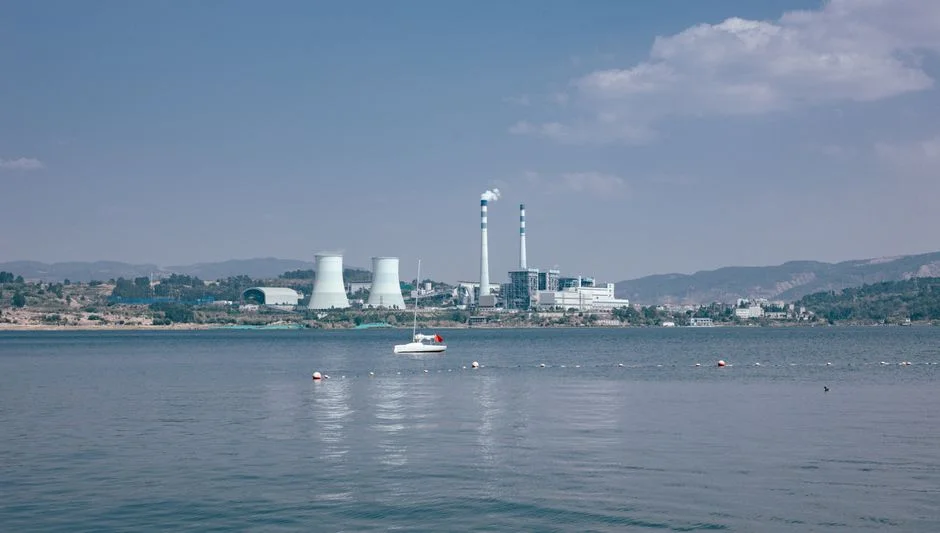
Valley of Mexico elevation 2,240 m, mean annual temperature around 16 °C, and a rainfall pattern of approximately 1,200 mm wet-season versus 400 mm dry-season produce a milder wet-bulb envelope than coastal Mexico (S4). CDMX's mean wet-bulb of 13–15 °C is low enough that a well-designed adiabatic loop can push CoC to 6–8 with side-stream RO — 1–2 cycles higher than a coastal site at the same nominal ambient temperature (S4). The dry shoulder runs November through April, which is also when the Cutzamala system hits its lowest allocation; that alignment is what makes the cooling-tower design constraint a water-rights constraint, not just an energy-budget constraint (S4).
Without side-stream RO, target 4–6 CoC to keep blowdown TDS manageable for discharge under NOM-001-SEMARNAT-1996; with side-stream RO and lime-soda softening, push to 7–8 CoC in Tier 2 and 7–10 CoC in Tier 3, recovering more than 75% of blowdown as reuse water (S4). The practical sizing rule: design makeup for 200–800 m³/day across a 20–80 MW campus running an adiabatic/economizer hybrid at PUE 1.3–1.5, and treat the 2 million L/day-for-100-MW figure as the upper bound rather than the design point (IDE Tech, 2026; S2; S4).
NOM-001, SEDEMA, and the SACMEX Reuse Concession in Practice
NOM-001-SEMARNAT-1996 sets the federal discharge envelope: pH 5–9, BOD ≤ 120 mg/L to sewer (or ≤ 60 mg/L to receiving waters), oils and greases ≤ 50 mg/L, free chlorine residual ≤ 0.5 mg/L at the point of discharge, and explicit toxicity caps for biocides (S4). CONAGUA enforces the standard through Title concessions, and a data center blowdown line must be covered by an active Title before any discharge to the municipal sewer (S4). On top of NOM-001, SEDEMA layers tighter load-based caps for TDS, chlorides, and sulfates in aquifer-recharge sub-basins, and those caps tighten again during dry-season months when Cutzamala allocation is constrained (S4). The standard permit approach for blowdown is a 24–48 h hold-and-decay tank paired with sodium bisulfite dosing to drop free chlorine residual to ≤ 0.5 mg/L, with isothiazolinone destruct handled by longer holding time or activated carbon polishing (S4).
The cleanest 2026 path is the SACMEX non-potable reuse concession: blowdown polished to cooling-makeup quality, the regulatory target becomes the reuse specification (typically MBR/RO-grade) rather than the discharge limit, and discharge becomes a wet-weather overflow conversation (S4). Residual control on the reuse loop is handled with an on-site ClO₂ generator for residual control to avoid the trihalomethane formation that comes with chlorine at higher pH (S4). The same regulatory sequencing logic — federal standard, local cap, reuse concession — is documented in the Curitiba data center guide, but the permit stack and the dry-season tightening cycle are CDMX-specific.
| Permit Layer | Authority | Key Limit / Trigger | Operating Implication |
|---|---|---|---|
| NOM-001-SEMARNAT-1996 (federal) | SEMARNAT / CONAGUA | pH 5–9; BOD ≤ 120 mg/L (sewer) or ≤ 60 mg/L (receiving waters); O&G ≤ 50 mg/L; free Cl₂ ≤ 0.5 mg/L; biocide toxicity caps | Baseline envelope; Title concession required for any sewer discharge |
| SEDEMA load-based caps (CDMX) | SEDEMA | Tightens TDS, chlorides, sulfates in aquifer-recharge sub-basins; further tightening in dry months | Often binding before NOM-001 limits in Cutzamala-dependent catchments |
| CONAGUA Title concession | CONAGUA | Required for any blowdown line discharging to municipal sewer | 2026 default role: wet-weather overflow backstop, not baseline operating mode |
| SACMEX non-potable reuse concession | SACMEX | Reuse specification = MBR/RO-grade cooling-makeup quality | Replaces discharge as the design target; lowers permit-risk line item |
Three Treatment Tiers for Iztapalapa, Picked by Campus Size and Reuse Ambition
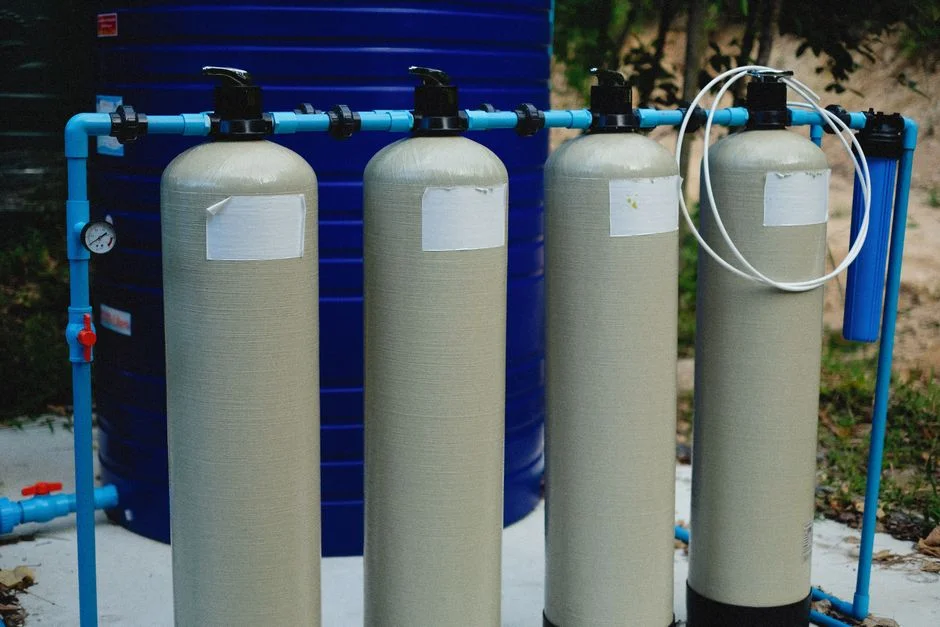
The standard sequence for blowdown is rotary bar screen → equalization → DAF/multi-media → lime-soda softener (Tier 2/3) → side-stream RO → ClO₂ residual control (S4). Tier 1 covers ≤20 MW sites where discharge-only is still acceptable: a DAF unit in front of the softener only if TSS > 20 mg/L; no RO, no softening; target 4–6 CoC and CONAGUA Title discharge to sewer (S4). Tier 2 covers 20–60 MW with partial reuse: DAF + twin-tank industrial softener + side-stream RO unit on the blowdown train + ClO₂ on the reuse loop; push CoC to 7–8 and recover more than 75% of blowdown as reuse water (HydropureWater field data, 2026; S4). Tier 3 covers 60–100+ MW hyperscale reuse-first sites: full pretreatment-RO train with optional ZLD via MVC + forced-circulation crystallizer, activated carbon polish for isothiazolinone destruct, and ZLD budgeted at $3–8 M CAPEX with $5–15/kgal OPEX only when basin TDS exceeds 1,500 mg/L (S4). The industrial RO system is the gating item in Tier 2 and Tier 3 — every additional cycle reduces blowdown volume nonlinearly via Blowdown = Makeup / (CoC − 1) (S4).
The sanitary stream scales differently. Below approximately 80 m³/day with no reuse intent, a WSZ underground package plant in the 1–80 m³/h envelope handles the load fully buried, with no on-site operator and a single annual sludge pump-out — the correct answer for a colocation retrofit that sends sewage to the SACMEX interceptor (S4). For 40–80 MW sites targeting cooling-makeup, toilet-flush, or irrigation reuse, specify the submerged-PVDF MBR for the sanitary train with effluent BOD <5 mg/L and TSS <1 mg/L, which meet reuse targets without tertiary polishing (S4).
| Tier | Campus Size | Blowdown Train | Target CoC | Reuse / Discharge | Sanitary Train |
|---|---|---|---|---|---|
| 1 | ≤20 MW (discharge-only acceptable) | DAF only if TSS > 20 mg/L; no RO, no softener | 4–6 | CONAGUA Title discharge to sewer | WSZ underground package plant (no reuse) |
| 2 | 20–60 MW (partial reuse) | DAF + twin-tank softener + side-stream RO + ClO₂ | 7–8 | >75% blowdown recovered as reuse water; Title as backstop | MBR if reuse targeted; WSZ otherwise |
| 3 | 60–100+ MW (hyperscale reuse-first) | Full pretreatment-RO + optional ZLD (MVC + crystallizer) + GAC polish for isothiazolinone | 7–10 | SACMEX reuse concession baseline; ZLD only when basin TDS > 1,500 mg/L | Submerged-PVDF MBR (BOD <5 mg/L, TSS <1 mg/L) |
The CFO Conversation: MXN/m³ Saved, Payback, and the Reuse Concession Lever
The engineering has to convert into MXN/m³ saved, not kgal/day, before a CFO signs. A 50,000 GPD RO polishing train on blowdown installs at $250,000–500,000 USD with OPEX of $1.50–3.00/kgal including energy, chemicals, membrane replacement, and maintenance (HydropureWater field data, 2026; S4). That train pays back under 3 years once SACMEX industrial potable tariffs cross the roughly MXN 7/m³ equivalent threshold (HydropureWater field data, 2026; S4). The bigger lever, and the one to lead the meeting with, is the 60–80% potable-draw cut that comes from reclaiming SACMEX sewage effluent: once on-site reuse is the baseline, the CONAGUA industrial allocation cap stops being binding during a scarcity declaration, which converts a permit-risk line item into a capex asset (S4). Discharge fees in water-stressed basins add a second economic line at $5–15 per thousand gallons, reinforcing the reuse-first case in any Cutzamala-dependent catchment (S4). The same tariff-versus-reuse logic is documented in the Sapporo data center guide and the Sanaa data center guide, but the MXN-denominated SACMEX tariff and the Title-concession backstop framing are CDMX-specific.
Frequently Asked Questions
How much should we budget for a Tier 2 blowdown RO train in Iztapalapa?
A 50,000 GPD RO polishing train on blowdown installs at $250,000–500,000 USD with OPEX of $1.50–3.00/kgal including energy, chemicals, membrane replacement, and maintenance, and pays back under 3 years once SACMEX industrial potable tariffs cross the roughly MXN 7/m³ equivalent threshold (HydropureWater field data, 2026; S4). Because the published range covers flow and feed-quality variation, request a vendor proposal that fixes local kgal/day, influent TDS, target recovery, and MXN/USD OPEX conversion before locking the line item.
Which permit has to be in place before we can discharge any blowdown to the SACMEX sewer?
An active CONAGUA Title concession is the federal-level requirement for any blowdown line discharging to the municipal sewer, with NOM-001-SEMARNAT-1996 setting pH 5–9, BOD ≤ 120 mg/L to sewer, O&G ≤ 50 mg/L, and free Cl₂ ≤ 0.5 mg/L at the point of discharge (S4). The 2026 design default in Iztapalapa is to obtain the SACMEX non-potable reuse concession first and let the Title concession serve as the wet-weather overflow backstop, not the baseline operating mode (S4). Request a CONAGUA Title quote for the planned blowdown flow and confirm the SEDEMA sub-basin chloride and sulfate caps before commissioning.
Can the sanitary and blowdown streams share one treatment train?
No — biocide and isothiazolinone residuals in blowdown trigger toxicity caps that the BOD/TSS envelope on sanitary sewage does not, so the two streams must be routed to separate trains (S4). Below ~80 m³/day of sanitary flow with no reuse intent, a WSZ underground integrated sewage plant handles the load fully buried with no on-site operator; for 40–80 MW sites targeting cooling-makeup, toilet-flush, or irrigation reuse, specify a submerged-PVDF MBR (BOD <5 mg/L, TSS <1 mg/L) so the sanitary side meets reuse targets without tertiary polishing (S4). When sizing, request a flux and CIP-cycle proposal matched to the campus's peak-shift sanitary load.
What target CoC should we design the cooling loop for at 2,240 m elevation?
Without side-stream RO, target 4–6 CoC to keep blowdown TDS manageable for discharge under NOM-001; with side-stream RO and lime-soda softening, push to 7–8 CoC in Tier 2 and 7–10 CoC in Tier 3, recovering more than 75% of blowdown as reuse water (S4). CDMX's 13–15 °C mean wet-bulb at 2,240 m allows 1–2 cycles more than a coastal site at the same nominal ambient, but the dry-season alignment with Cutzamala allocation tightening is what makes CoC a water-rights constraint, not just an energy-budget one (S4). Confirm the adiabatic/economizer hybrid configuration and the SACMEX industrial potable tariff in MXN/m³ before finalizing the target cycle.