The Two-Layer Regulatory Stack Every Morristown Miner Faces
Mining and metals plants discharging to the Morristown sewer meet 2026 pretreatment limits by clearing two independently enforced layers. The first is the federal baseline under 40 CFR Part 403 (General Pretreatment Regulations), which incorporates the Mineral Mining and Processing Effluent Guidelines at 40 CFR Part 436 — covering mine drainage, mineral processing, and stormwater runoff. The second is the local sewer use ordinance with numeric ceilings, sample collection, and surcharge triggers. Compliance is measured at the sampling manhole, not at a plant-side cleanout, and the Clean Water Act requires an NPDES permit for every point-source discharge from a mining operation, including associated impoundments. Plants that ignore either layer face chronic-exceedance penalties and automatic NJDEP referral.
40 CFR Part 436 was promulgated by EPA in 1975 and amended in 1976, 1977, 1978, and 1979, and covers wastewater discharges from mine drainage, mineral processing operations, and stormwater runoff; the requirements are incorporated into NPDES permits (EPA, 40 CFR Part 436 effluent guidelines page). The Clean Water Act requires an NPDES permit for all point source discharges from mining operations, including discharges from associated impoundments (EPA, Industrial Wastewater NPDES page). Sitting on top of that federal baseline is the Town of Morristown's sewer use ordinance, which sets numeric ceilings on pH, total chromium, hexavalent chromium, mercury, BOD5, TSS, FOG, temperature at the POTW headworks, and total residual chlorine, and which names the sampling manhole as the compliance point.
The two layers are independently enforced. Meeting a federal categorical ceiling does not by itself satisfy a stricter local numeric limit, and a local pass does not waive federal categorical applicability under 40 CFR 403.6. That parallel structure is the first thing an EHS manager should put in writing for the file before sizing any unit operation, because the design-driving number for any given pollutant is whichever layer is stricter on that specific parameter — and they differ pollutant by pollutant.
Numeric Local Limits a Mining/Metals Plant Must Hit
The local ordinance sets numeric ceilings for pH, total chromium, hexavalent chromium, mercury, BOD5, TSS, FOG, temperature at the POTW headworks, and total residual chlorine. Under §50.073(B)(5) for hexavalent chromium, the daily maximum is 0.25 mg/L and the 30-consecutive-day average is 0.09 mg/L on a 24-hour composite sample. The 30-day average on binding parameters determines whether the plant passes the year — a hydroxide train that meets the daily cap without meeting the monthly composite is still a violation.
BOD5, TSS, and FOG carry a 1.4× TRC multiplier rather than the 1.2× that applies to metals and toxics, so an oil-bearing or high-organic mining stream trips SNC thresholds faster than an equivalent metals stream. Mercury at sub-µg/L concentrations drives EPA Method 1631 with cold-vapor atomic fluorescence as the typical path, because standard ICP-MS cannot reliably quantify the local ceiling. All metals in the local monitoring list are reported as total recoverable per 40 CFR 136, with EPA-approved equivalents accepted where validated.
| Parameter | Daily max | 30-day average | Sample type | Design-driving value |
|---|---|---|---|---|
| pH (s.u.) | 5.0–10.0 (range) | — | Field probe at sampling manhole | Range cap, not average |
| Total chromium (mg/L) | 1.7 | — | 24-hr composite | Daily max |
| Hexavalent chromium (mg/L) | 0.25 | 0.09 | 24-hr composite | 30-day average |
| Mercury (ng/L) | 12 | — | Grab, ultra-trace | Drives Method 1631 selection |
| BOD5 (mg/L) | Local ceiling | Local ceiling | 24-hr composite | 1.4× TRC multiplier |
| TSS (mg/L) | Local ceiling | Local ceiling | 24-hr composite | 1.4× TRC multiplier |
| FOG (mg/L) | Local ceiling | Local ceiling | 24-hr composite | 1.4× TRC multiplier |
| Temperature (°F) | 104 at headworks | — | Field probe | Headworks cap |
| Total residual chlorine (mg/L) | Local ceiling | — | Field probe | Amenable to dechlorination |
Federal Categorical Crosswalk for Mining and Metals Processes
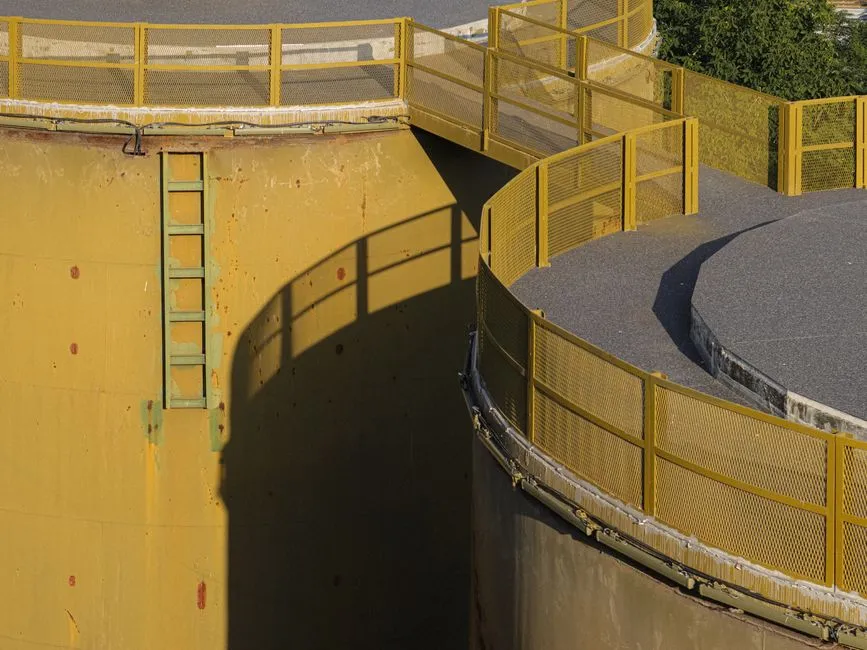
Mineral mining and processing operations are governed by 40 CFR Part 436, which covers mine drainage, mineral processing, and stormwater runoff and is incorporated into NPDES permits (EPA, 40 CFR Part 436 page). For a mining/metals plant, that is the spine of the federal stack — but adjacent process lines often pull in other subparts. Ore processing and refining operations that include acid, alkali, or salt streams fall under 40 CFR Part 415 (Inorganic Chemicals) with categorical parameters on pH, TSS, Zn, Cu, Ni, Cr, and fluoride. Adjacent metals-finishing lines — catalyst plating, R&D surface treatment, electroplating within a metals plant — inherit 40 CFR Part 433 (Metal Finishing), with categorical ceilings on total metals, cyanide, and pH.
Under 40 CFR 403.6 the categorical applicability test is independent of flow: a sub-25,000 gpd plant still inherits categorical standards if its process stream is listed in Subchapter N. Flow only affects whether the user is "significant" for BMR and quarterly DMR cadence, not whether the categorical standards apply. The crosswalk below lets an EHS manager match their process line to the binding subpart in one step; the right-hand column is the design-driving number from the local table above.
| Process line | Binding subpart | Key parameters | Design-driving ceiling |
|---|---|---|---|
| Mine drainage, mineral processing, stormwater | 40 CFR Part 436 — Mineral Mining and Processing | TSS, pH, total metals, settleable solids | Local TSS ceiling (1.4× TRC) |
| Acid/alkali/salt refining streams | 40 CFR Part 415 — Inorganic Chemicals | pH, TSS, Zn, Cu, Ni, Cr, fluoride | 0.09 mg/L hex Cr 30-day avg |
| Catalyst plating, R&D surface treatment, electroplating | 40 CFR Part 433 — Metal Finishing | Total metals, cyanide, pH | 1.7 mg/L total Cr daily max |
How Plants Auto-Qualify as Significant Industrial Users
A plant auto-qualifies as a Significant Industrial User (SIU) under §168-2 if any one of the following applies: subject to categorical standards under 40 CFR 403.6, average process flow above 25,000 gpd, mass loading equivalent to 25,000 gpd of domestic wastewater in BOD/COD/TSS, ≥5% of POTW dry-weather flow, or ≥5% of any pollutant's daily mass loading listed in N.J.A.C. 7:26G-12. The control authority can also designate a user as an SIU on the basis of reasonable potential for adverse impact or a documented history of violations.
In practice, a mining/metals plant that runs an ore-processing line and a metal-finishing line under the same roof typically auto-qualifies the day it discharges, because the categorical standards apply regardless of flow. The penalty for not recognizing this early is a retroactive BMR trigger, a missed 180-day window, and an automatic failure-to-report surcharge under §50.073(S)(F).
The Unit-Operation Train That Actually Clears These Limits
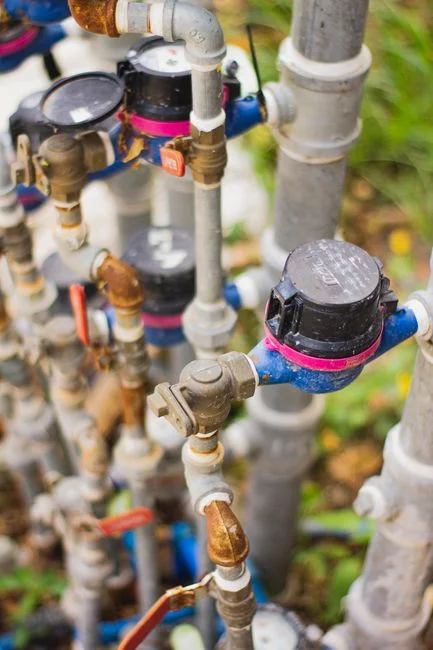
The canonical mining wastewater treatment sequence described for the sector is: pH adjustment → coagulation/flocculation → specialty chemical dosing (corrosion inhibitors, ion exchange, biocides as needed) → filtration via media filters or centrifugal systems sized to the target particle cut (Genesis Water Technologies). Equalization comes first: 24–48 hour HRT to dampen batch excursions before they propagate into the downstream train, with online pH, ORP, conductivity, and turbidity on the basin outlet.
pH adjustment is the keystone. Restoring neutral pH both raises effluent quality and drives dissolved metals to precipitate, which is the prerequisite for the coagulation step that follows. Coagulants and flocculants aggregate the suspended solids and fine metal particles into large flocs that downstream clarification or DAF can remove; a DAF system for colloidal metals and FOG removal is preferred for colloidal metals, while a lamella clarifier for high-TSS mining effluent handles high-TSS streams at higher surface loading. PLC-controlled coagulant, flocculant, and pH-adjuster dosing keeps reagent stoichiometry in the band where hydroxide precipitation actually completes.
For hexavalent chromium specifically, the train must include a reduction step (ORP-controlled, two-step) before the pH 8.5–9.5 hydroxide precipitation, otherwise the 30-day composite drifts above the limit even when the daily max looks safe. Polishing can use a DAF system for high colloidal load or a lamella clarifier for high TSS, followed by media filtration; 0.03 µm UF polishing for TSS and turbidity provides a final barrier for TSS, turbidity, and colloidal metals before discharge. A useful reference for selecting between the colloidal and high-TSS polishing options is the metals-side DAF vs clarifier comparison for mining and metals wastewater; for the biological step that some mixed streams require, see the MBR vs conventional activated sludge for mining wastewater guide, and for a parallel pretreatment playbook in a nearby sewershed see the Halo mining/metals pretreatment playbook.
Online monitoring of pH, ORP, conductivity, and turbidity on the equalization basin outlet, with alarm setpoints at 80% of the daily max for the binding pollutant, is the cheapest SNC prevention — that single instrument typically pays back inside one avoided surcharge quarter.
Cost Bands and the Financial Escalators Behind the Limits
Under §168-9, the Pretreating Industrial Rate is a flat $7.54 per 100 ft³ of discharge and applies to any NJDEP-identified SIU with installed pretreatment. Operating cost for chemical pretreatment typically runs $0.08–$0.25 per gallon treated; biological + MBR polishing typically runs $0.35–$0.60 per gallon treated (HydropureWater field data, 2026, mid-Atlantic pretreatment projects).
The surcharge escalator under §50.073(S)(B) is the second financial lever. A single pollutant above 1.5× the local limit on a single sample, or chronic TRC exceedance, unlocks monthly penalty surcharges layered on top of the base rate. A Technical Review Criteria (TRC) trip occurs when ≥33% of samples in a six-month window are ≥1.4× the daily max for BOD5, TSS, or FOG (≥1.2× for other parameters). Chronic violation is defined under §50.073(S) as ≥66% of measurements in a six-month window exceeding the daily maximum or monthly average for the same pollutant. SNC consequences include permit revocation, sewer-service termination, automatic NJDEP referral under §168-7, and surcharge penalties stacked on the $7.54/100 ft³ base rate — a six-month chronic exceedance typically costs more in surcharges than the capital cost of the precipitation upgrade that would have prevented it.
Reporting Cadence That Keeps a Mining/Metals Plant Compliant
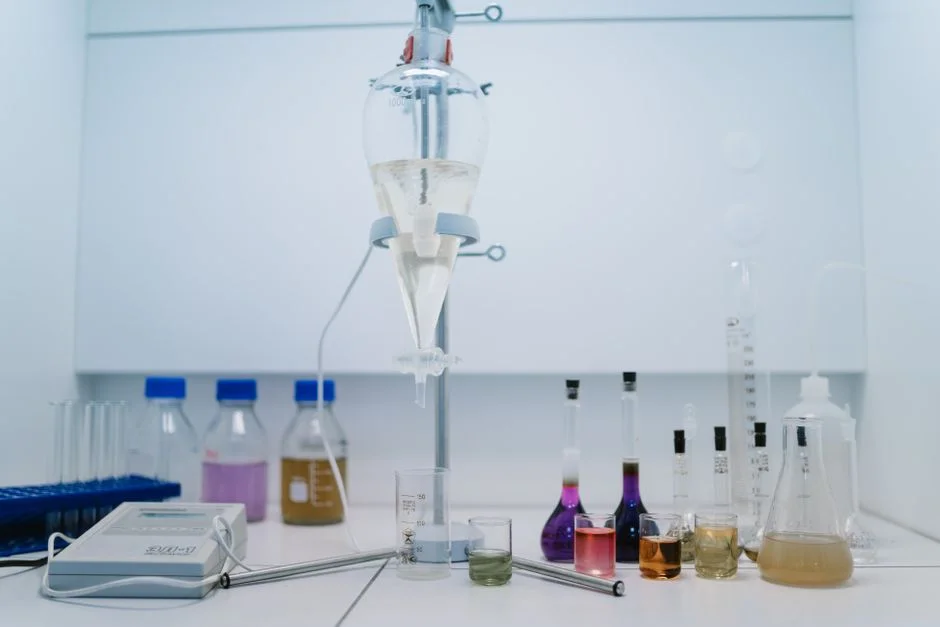
The schedule below merges 40 CFR Part 403 reporting cycles with the Town's §168-9 permit-renewal cadence and the §50.073 surcharge triggers. Reports are due to the Department of Public Works on the SIU permit schedule, with a 30-day grace before the §50.073(S)(F) failure-to-report trigger activates.
| Report / trigger | Cadence | Cost band (2026) | Statutory anchor |
|---|---|---|---|
| Baseline Monitoring Report (BMR) | Within 180 days of SIU determination or new categorical trigger | $1,500–$3,500 per report (lab + reporting labor) | 40 CFR 403.12(b) |
| Discharge Monitoring Report (DMR) | Quarterly for categorical SIUs; semi-annually for non-categorical | $4,000–$8,000 per cycle (permit fee + consultant) | 40 CFR 403.12(e) |
| Quarterly compliance report | After BMR for categorical SIUs | Each report cycle, 40 CFR 136 methods | 40 CFR 403.12(e) |
| Permit renewal | Local cadence (§168-9) | — | §168-9 |
| Surcharge trigger | Single pollutant >1.5× local limit, or chronic TRC | Monthly penalty layered on base rate | §50.073(S)(B) |
| Failure-to-report trigger | 30-day grace after due date | Violation fee | §50.073(S)(F) |
Frequently Asked Questions
Does a sub-25,000 gpd mining plant still inherit federal categorical standards?
Yes. Under 40 CFR 403.6 the categorical applicability test is independent of flow; a plant running a Part 436 (Mineral Mining and Processing) or Part 415 (Inorganic Chemicals) process inherits the categorical limits even if average process flow stays below 25,000 gpd. Flow only affects whether the user is "significant" for BMR and quarterly DMR cadence, not whether the categorical standards apply.
What is the design-driving value on hexavalent chromium — the daily max or the 30-day composite?
Under §50.073(B)(5), the daily maximum is 0.25 mg/L and the 30-consecutive-day average is 0.09 mg/L on a 24-hour composite sample. The 30-day average is the design-driving value — meeting the daily cap without meeting the monthly average is still a violation. A hydroxide train that meets total chromium but skips the upstream two-step reduction will drift above 0.09 mg/L within two weekly composites, well before the daily max trips an alarm.
What does a single TRC exceedance actually cost a plant in 2026?
Under §50.073(S)(B), a single pollutant above 1.5× the local limit on a single sample, or chronic TRC exceedance, unlocks monthly penalty surcharges layered on top of the $7.54/100 ft³ Pretreating Industrial Rate. Chronic violation (≥66% of measurements over six months exceeding the same pollutant's limit) adds permit revocation, sewer-service termination, and automatic NJDEP referral under §168-7. A buyer should request the current surcharge schedule from the local control authority before sizing a budget against equipment CapEx, because the surcharge stack varies by parameter and by local fee ordinance.
How long does a typical BMR plus pretreatment train upgrade take from trigger to commissioned operation?
A buyer should request site-specific lead times from each shortlisted vendor, because 2026 supply conditions for DAF skids, lamella clarifiers, chemical dosing skids, and UF racks vary by capacity and by control package. As a planning anchor, the BMR is due within 180 days of SIU determination or a new categorical trigger, so the engineering, procurement, and commissioning window must close inside that period to avoid a failure-to-report surcharge under §50.073(S)(F).