Brazzaville Data Center Water: Two Streams, One Treatment Plan
A data center in Brazzaville must handle two distinct water streams: sanitary and washdown wastewater from the building, and cooling-tower blowdown from the evaporative cooling system. The AfDB-funded three-story facility planned for the capital is small relative to U.S. hyperscale (the existing Pointe-Noire site holds 54 racks across 156 m²), so flows are modest, but Congo's humid tropical climate, dependence on the Congo River or municipal supply, and limited industrial discharge permitting still dictate a deliberate treatment train. Cooling-tower blowdown typically runs 1,200–6,000 mg/L TDS at 4–8 cycles of concentration, with 10–50 mg/L suspended solids and accumulated treatment chemicals. A practical Brazzaville design uses side-stream filtration, ultrafiltration, and either nanofiltration or brackish-water reverse osmosis, sized for 50–85% recovery, with discharge or evaporation-pond management for the concentrate.
The local context shapes the design. The facility reported by Data Center Dynamics (DCD) is being financed with €52.47 million ($57m) from the African Development Bank and €14.5 million ($15.8m) from the Republic of Congo government, with an unnamed "delegate" operator and unspecified mechanical specifications at the time of reporting. The existing Congo data center, launched in Pointe-Noire and built by the Postal and Electronic Communications regulatory authority, holds 54 racks across 156 m² (1,680 sq ft) — a useful scale reference, since Brazzaville is expected to be similar in format rather than hyperscale. For a comparable build, water sources are the Congo River (high turbidity, seasonal variability), municipal supply (intermittent), or roof-harvested rainwater. Each has a different scaling and biological profile, and the chosen source drives everything downstream. The same engineering logic that resolves cooling-tower blowdown in data center blowdown treatment in Santo Domingo applies, but scaled down and tuned for Congo conditions.
What Cooling-Tower Blowdown Actually Contains
Blowdown is the bleed stream an operator pulls from the cooling-tower recirculation loop to keep dissolved solids from concentrating to scale- or corrosion-damaging levels. According to Genesis Water Tech, its TDS sits at 4–8 times the makeup water concentration, so a 200 mg/L makeup becomes 1,200–6,000 mg/L blowdown depending on cycles of concentration and source water quality. The chemical mix is what makes it hard to reuse or discharge without treatment.
The scaling fraction is dominated by calcium, magnesium, silica, and alkalinity — ions that precipitate on heat exchangers, membrane surfaces, and pipework as cycles are pushed higher. Treatment chemicals are a second concern: biocides, corrosion and scale inhibitors, and dispersants all accumulate, and legacy chemistries based on chromates or high phosphates are particularly difficult to handle. Suspended solids are present at 10–50 mg/L even with basin filtration, driven by corrosion products, biofilm fragments, and airborne particulates. Biological content — planktonic bacteria, algae, biofilm-forming organisms — is unavoidable in any well-maintained system. The parameter table below summarizes blowdown characteristics from the Genesis Water Tech source.
| Parameter | Typical Blowdown Range | Source |
|---|---|---|
| TDS | 1,200–6,000 mg/L (4–8× makeup) | Genesis Water Tech |
| Scaling minerals | Ca, Mg, silica, alkalinity concentrated | Genesis Water Tech |
| Suspended solids | 10–50 mg/L | Genesis Water Tech |
| Treatment chemicals | Accumulated biocides, inhibitors, dispersants | Genesis Water Tech |
| Biological content | Bacteria, algae, biofilm organisms present | Genesis Water Tech |
These parameters set the targets for the treatment train and explain why generic "water reuse" guidance breaks down at a Congo facility. Mismatched pretreatment lets scaling ions through and destroys membranes; ignoring the biocide and phosphate load creates a discharge that will not pass any reasonable permit. The same logic that justifies an MBR configuration for cooling tower blowdown in larger facilities — biological polishing under controlled conditions — applies in principle, but Congo-scale blowdown usually does not justify the footprint of a full MBR skid on the cooling loop.
The Brazzaville Treatment Train: From Blowdown to Reusable Makeup
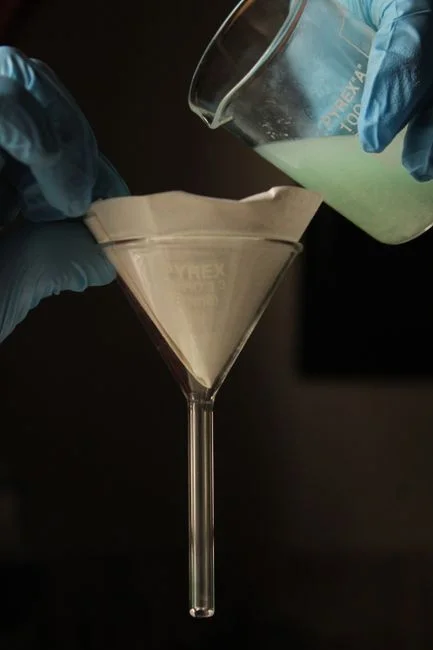
A defensible Congo treatment train runs blowdown through four stages: side-stream spiral filtration, ultrafiltration, reverse osmosis (or nanofiltration where partial softening is acceptable), and concentrate management. Each stage is sized for the chemistry above and for Congo's small-format build, not for hyperscale.
Stage 1 is side-stream filtration. Self-cleaning spiral filters at 10–25 micron treat 1–5% of the total circulation flow, dropping suspended solids and biological loading before they reach the membranes. Genesis Water Tech places CAPEX at $50,000–$200,000 for typical data center installations, with minimal OPEX beyond solids disposal. For a Brazzaville build, the lower end of that range is realistic. Stage 2 is an ultrafiltration pretreatment skid at 0.01–0.1 micron (PVDF or equivalent), operating at 10–30 psi, achieving 90–95% recovery with permeate backwash, and removing suspended solids, bacteria, viruses, and high-MW organics ahead of the RO/NF unit. Stage 3 is the workhorse. An industrial RO system at 150–400 psi produces permeate at 10–50 mg/L TDS, with 50–85% recovery limited by the scaling-prone character of blowdown even with antiscalant injection and pH adjustment. Where hardness rather than total TDS is the bottleneck, nanofiltration at 75–150 psi with 70–85% recovery and permeate at 30–50% of feed TDS is a lower-energy option.
Stage 4 is concentrate management. Mechanical vapor compression (MVC) reaches 95–98% recovery with distillate below 10 mg/L TDS, but Genesis Water Tech places CAPEX at $1–3 million and energy use at 15–25 kWh per 1,000 US gallons — figures that put full MVC out of reach for a small Congo facility. Evaporation ponds or off-site hauling of RO concentrate is the realistic alternative. The parameter table below captures the membrane stage economics and design ranges.
| Stage | Function | Operating Range | CAPEX Band |
|---|---|---|---|
| Side-stream spiral filter | Suspended solids, biological load reduction | 10–25 μm; 1–5% of circulation | $50,000–$200,000 |
| Ultrafiltration | SS, bacteria, virus removal; RO/NF pretreatment | 0.01–0.1 μm; 10–30 psi; 90–95% recovery | Site-specific |
| Reverse osmosis | Dissolved solids, hardness, silica removal | 150–400 psi; 50–85% recovery; permeate 10–50 mg/L TDS | $250,000–$500,000 (50,000 GPD reference) |
| Nanofiltration (alt.) | Partial softening, partial TDS removal | 75–150 psi; 70–85% recovery; permeate 30–50% of feed TDS | Lower than RO equivalent |
| Mechanical vapor compression | Concentrate volume reduction | 95–98% recovery; distillate <10 mg/L TDS | $1–3 million (10,000–30,000 GPD) |
Antiscalant and pH adjustment are non-negotiable before the membranes. Silica, calcium sulfate, and carbonate scale limits recovery to 85% even with optimized chemistry, which is why a Brazzaville design that targets higher recovery should be treated with skepticism. For a deeper tropical comparison, the Manaus data center blowdown engineering guide walks through a similar Amazon-basin context with humid, river-fed source water.
Sanitary and Washdown Wastewater: Right-Sizing the Biological Step
Stream 1 is the smaller but biologically stronger flow: toilets, kitchenettes, floor wash, and equipment cleaning. Volumes are modest — single-digit m³/day for a 54-rack-class facility — but the load is continuous and concentrated. A packaged A/O sewage treatment plant handles this range, runs fully automated, and does not require a dedicated operator, which matters where technical staffing is thin. Discharge to municipal sewer is the simplest path in Brazzaville where a sewer connection exists. Where landscape irrigation is desired as a reuse pathway, an MBR-integrated polishing step delivers near-reuse quality effluent, though the cost-benefit only works where irrigation demand is real and consistent.
Final disinfection can be chlorine dioxide or a UV disinfection unit. UV is the better default where chlorine-resistant organisms are a concern and where chemical by-products in the discharge stream could complicate any future reuse permit. For a Congo facility with intermittent utility supply, packaged biological plants with UV polishing offer the lowest operator overhead and the fewest consumables logistics.
Sizing and Cost Reality Check for a Congo-Brazzaville Build
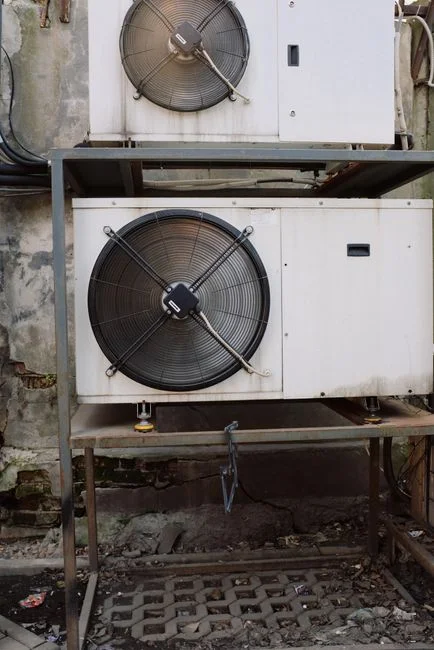
U.S. hyperscale benchmarks — Google's Council Bluffs facility at 1.4 billion gallons annually per Valicor, or a 100 MW facility consuming 400,000–550,000 gallons daily — do not translate directly to Brazzaville. The Pointe-Noire data center's 54 racks across 156 m² is the right reference point: small-format, public-sector, and donor-financed, with cooling capacity and IT load a small fraction of hyperscale. The cost table below rescales the Genesis Water Tech ranges to that reality.
| Cost Line | U.S. Hyperscale Reference | Congo-Brazzaville Rescale | Source |
|---|---|---|---|
| Blowdown RO CAPEX (50,000 GPD reference) | $250,000–$500,000 | Skid-mounted 5–20 m³/day unit; specific quote required | Genesis Water Tech |
| Blowdown RO OPEX | $1.50–$3.00 per 1,000 gal | Use U.S. range as planning anchor; confirm with vendor | Genesis Water Tech |
| Full ZLD CAPEX | $3–8 million | Not justified at Congo scale; partial reuse preferred | Genesis Water Tech |
| Full ZLD OPEX | $5–$15 per 1,000 gal | Not applicable unless discharge is forbidden | Genesis Water Tech |
| Discharge fees (water-stressed regions) | $5–$15 per 1,000 gal | Confirm with Congolese regulator; no published Congo rate in research | Genesis Water Tech |
| TDS discharge limit (selected jurisdictions) | Below 1,500 mg/L | Confirm with Congolese regulator; no published Congo limit in research | Genesis Water Tech |
Two points from the cost table need explicit qualification. First, the $250,000–$500,000 Genesis Water Tech CAPEX band is anchored to a 50,000 GPD (≈190 m³/day) reference, which is hyperscale, not Congo-scale. A 5–20 m³/day skid for a 1–10 MW facility needs a vendor-specific quotation, not a rescaled percentage. Second, the discharge-fee and TDS-limit figures in the table are not Congo-specific — they come from Genesis Water Tech's characterization of water-stressed regions in general. A buyer should request the actual Congo discharge regulation and the local utility's industrial tariff before locking the opex line. Full ZLD at $3–8 million CAPEX and $5–$15 per 1,000 gallons OPEX is justified only where discharge is forbidden and water is exceptionally scarce; Brazzaville should default to partial reuse plus evaporation-pond or off-site concentrate handling.
Frequently Asked Questions
What CAPEX and OPEX should we budget for a Congo-scale blowdown treatment train?
For a 1–10 MW facility, plan for a skid-mounted RO in the low single-digit m³/day range, with a side-stream filter and ultrafiltration upstream. The Genesis Water Tech reference for a 50,000 GPD RO is $250,000–$500,000 CAPEX and $1.50–$3.00 per 1,000 gallons OPEX, but those numbers must be requoted at Congo scale. A defensible budget line is: side-stream filter $50,000–$200,000, UF skid sized to RO feed, RO skid (vendor quote), and concentrate management by evaporation pond or off-site hauling rather than MVC. OPEX for a 5 m³/day system at $1.50–$3.00 per 1,000 gallons annualizes to roughly $2,700–$5,500 per year for energy, chemicals, and membrane replacement at U.S. pricing — adjust for Congo power and consumables costs.
How do we choose a treatment train supplier for a Brazzaville build?
Confirm three things before signing: the supplier's reference list on small-format (sub-1 MW) data center or telecom facility builds, the membrane-cleaning protocol and local service coverage (operator reach in Congo or a regional service partner), and whether the antiscalant program is compatible with the planned blowdown chemistry. Ask for a feed-water characterization on your actual Congo River or municipal sample, not a generic bid assumption, and require the supplier to specify recovery rate and concentrate TDS at that feed quality.
Is evaporative cooling the right choice in Brazzaville's humid climate?
Evaporative cooling is energy-efficient but water-intensive. Per Valicor's analysis of Google data, evaporative cooling reduces energy consumption by roughly 10% compared to air-cooled alternatives, but a hyperscale evaporative facility can consume 400,000–550,000 gallons daily versus 8,000 gallons for a closed-loop design. For a Congo-scale build, the smaller absolute flow makes evaporative cooling viable if source water is reliable and discharge is permitted, but the facility should plan for blowdown treatment from day one rather than retrofitting later.
What compliance risks should we flag for the AfDB and the Congo government?
Two risks deserve explicit attention in the project file. First, the absence of a published Congo-specific TDS discharge limit in the research means the project team must obtain the current industrial discharge regulation from the Congolese environment ministry before commissioning — Genesis Water Tech notes that some jurisdictions enforce limits below 1,500 mg/L, which directly determines whether partial-reuse RO permeate is dischargeable or must be evaporated. Second, source-water continuity: municipal supply in Brazzaville is intermittent, and the project should secure a redundant source (Congo River with pretreatment, or rainwater harvesting) so that cooling-tower cycles of concentration are not destabilized by makeup-water chemistry swings.
Related Equipment
- industrial RO system — specifications, capacity range, and technical data