What a Lamella Settler Is and Why It Matters in 2026
Plate settler, lamella clarifier, inclined plate settler, slant plate clarifier, and tube settler all describe the same underlying principle of inclined-surface settling; the only real distinction is plates versus tubes, and how the pack is packaged (WaterAndWastewater.com). In practice, the equipment is a sedimentation vessel that stacks plates at 45–60°, accepts feed through side-entry openings so settled sludge is not re-entrained, and discharges clarified water through top collection channels while sludge slides into a bottom hopper (Sulzer 2026 brochure).
That geometry is why a lamella can deliver the same duty as a conventional tank on as little as 10% of the footprint, making it the default for capacity upgrades and brownfield retrofits in 2026 (Sulzer). The application envelope is broad: pre- and post-water treatment, primary through tertiary settling, sludge thickening, metal hydroxide wastewater, pulp and paper, iron and steel, and biological clarification (Sulzer). For projects that need flocculation, sludge recirculation, and inclined-plate separation in one package, units such as the HydropureWater high-efficiency sedimentation tank (lamella clarifier) are designed for surface loading rates of 20–40 m/h in a single integrated structure and chemical consumption reduced by up to 30% versus conventional dosing (HydropureWater verified product catalog).
How Inclined Plates Accelerate Settling: The Mechanism
Inclined plates exploit the Boycott effect: particles settle onto the upper face of an inclined plate while clarified liquid rises in the opposite direction, which shortens the effective settling path and multiplies the effective settling area per unit vessel volume. The key engineering fact is that a particle only "sees" the horizontal projection of the plate, so effective area equals plate length × plate width × cos(plate angle) — not the full wetted plate area (WaterAndWastewater.com). Confusing plate area with projected area is the single most common error in evaluating proposals, and it is the mistake that drives most oversized plate counts and undersized tanks in the field. Modern flow control solves another problem: liquid enters each plate through side openings rather than from below, which prevents already-settled sludge from being lifted and re-suspended into the rising stream (Sulzer). The mechanism has been independently confirmed in 2026 work on a Reflux Lamella Settler (RLS) with two inclined sections: the lab-scale RLS reached a maximum solid volume fraction of 0.63 (v/v) at the base, compared with only 0.43 (v/v) in a vertical settling column under identical conditions, with the dilute region at 0.15 (v/v) (Pakistan Journal of Chemistry 2026, Syed et al.). The same 0.63 v/v underflow was reproduced in a prototype batch holding 1 kg of 250 µm coal particles in 12 kg of water, and coloured PVC tracers visibly slid down the inclined surface into the sludge zone, confirming the counter-current mechanism at scale (Pakistan Journal of Chemistry 2026).
Field-Proven Performance Numbers (2020–2026)
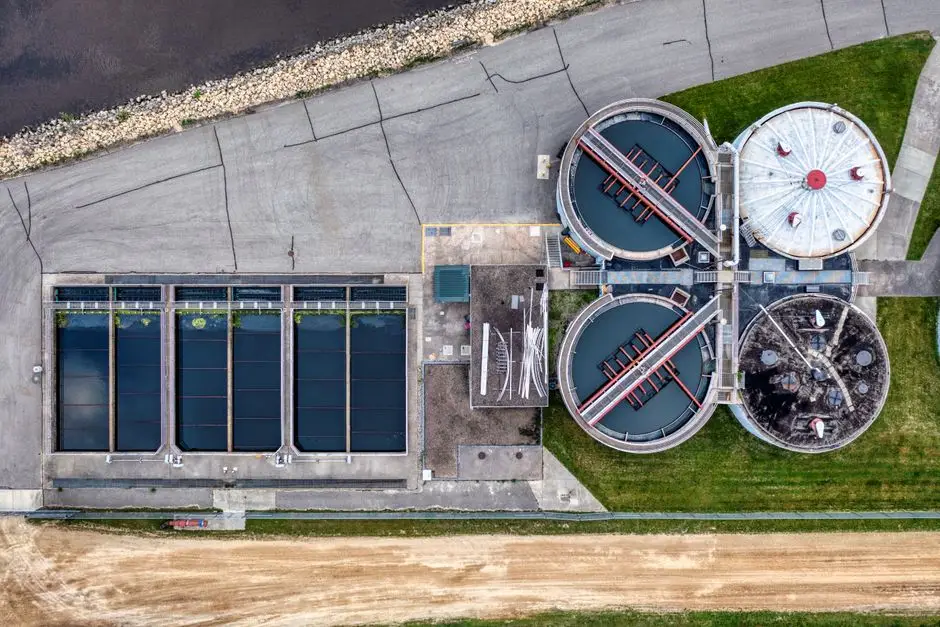
A CFD-optimized decentralized lamella settler with upstream flocculation was field-validated on cattle feedlot wastewater and delivered ~98% COD removal, almost complete turbidity removal, ~95% phosphorus removal, and ~70% organic nitrogen removal; ammonia nitrogen mostly remained in the clarified liquid, making the effluent suitable for fertigation (Heliyon, 24 Dec 2020, e05840). Understanding these performance metrics requires looking at upstream processing, as plate-pack efficiency depends on consistent coagulation and flocculation.
For a lower-strength, particulate-heavy stream, a Reflux Lamella Settler treating coal-contaminated water with 250 µm coal particles hit 0.63 v/v underflow versus 0.43 v/v in a vertical column, and a real car-wash sample dropped from 233 NTU to 30 NTU in 90 minutes, demonstrating the geometry's behaviour on dilute industrial matrices (Pakistan Journal of Chemistry 2026, Syed et al.). The published performance bands are conditional on good upstream coagulation and flocculation; when a lamella underperforms, the diagnosis almost always lies upstream in the rapid mix and flocculation stages, which is why jar testing is the first troubleshooting step before any plate-pack intervention (WaterAndWastewater.com). Pairing the settler with a correctly specified automatic chemical dosing system is the most reliable way to keep coagulant feed stable across influent swings.
Sizing a Lamella Settler the Right Way
Plate settler sizing is governed by projected area rather than plate area, and confusing the two is the most common error in evaluating proposals (WaterAndWastewater.com). The workflow below is what you should use to sanity-check any supplier quotation in 2026.
- Set the surface loading rate (m/h) from your influent TSS, target underflow consistency, and jar-test data; HydropureWater high-efficiency units are rated 20–40 m/h as a useful reference band (HydropureWater verified product catalog).
- Compute required projected area as Q (m³/h) ÷ surface loading (m/h). For example, 200 m³/h at 25 m/h requires 8 m² of projected area.
- Convert projected area to plate count using plate length × plate width × cos(plate angle). A 2.5 m × 1.2 m plate at 55° gives 1.72 m² of projected area, so 58 plates are required for 100 m² of projected area (WaterAndWastewater.com).
- Confirm the geometry constraints: plate angle 45–60°, typical spacing 50–80 mm, side-entry feed distribution, and a sludge hopper sized for the design underflow concentration (Sulzer).
| Sizing input | Symbol / unit | Typical value or rule | Source |
|---|---|---|---|
| Surface loading rate | m/h | 20–40 m/h (high-efficiency integrated units) | HydropureWater verified product catalog |
| Plate angle | degrees from horizontal | 45–60° | Sulzer 2026 brochure; WaterAndWastewater.com |
| Plate spacing | mm | 50–80 mm typical | Sulzer 2026 brochure |
| Projected area per plate | m² | Length × Width × cos(angle); 2.5 m × 1.2 m @ 55° = 1.72 m² | WaterAndWastewater.com |
| Feed entry | — | Side-entry to each plate | Sulzer 2026 brochure |
Red flags in any proposal: the datasheet quotes only total plate area, omits the plate angle, or shows a plate count that "looks low" for the duty — these almost always conflate plate area with projected area and will underperform once installed (WaterAndWastewater.com).
Lamella vs Tube Settler vs Circular Clarifier
Lamella and tube settlers are both sized on projected area, while conventional circular and rectangular clarifiers are sized on plan-area surface overflow rate (WaterAndWastewater.com). That single difference drives most of the trade-offs buyers see in 2026 proposals. Footprint is where the lamella wins outright: it delivers the same duty in the smallest plan area, followed by tube settlers and DAF, with circular clarifiers requiring the most land (WaterAndWastewater.com). Robustness runs the other way — circular clarifiers are the most tolerant of poorly conditioned feed, while lamella and tube settlers require good coagulation and flocculation; if the upstream conditioning is unreliable, solids pass straight through the pack. The technology fits best in capacity upgrades within existing tanks, constrained brownfield sites, and duty steps where footprint dominates the project economics; circular clarifiers remain the workhorse for primary and secondary clarification at municipal scale (WaterAndWastewater.com). The limitation to call out in any design review is fouling and plate blinding under heavy solids — address it with upstream screening and periodic cleaning access, not by oversizing the plate pack (WaterAndWastewater.com). For a deeper cross-check on the DAF side of that decision, see this 2026 guide on DAF vs clarifier for mining and metals wastewater.
| Technology | Loading basis | Relative footprint | Upstream requirement | Best-fit application | Main limitation |
|---|---|---|---|---|---|
| Plate settler / lamella | Flow ÷ projected area | Smallest for a given settling area | Good coagulation and flocculation essential | Capacity upgrades; constrained sites | Fouling and blinding; needs clean, well-conditioned feed |
| Tube settler module | Flow ÷ projected area | Same principle, lighter installation | Good coagulation and flocculation essential | Retrofit into existing rectangular basins | Less robust to heavy solids loading |
| Circular clarifier | Surface overflow rate on plan area | Largest | Tolerant of variable conditioning | Primary and secondary clarification at scale | Land requirement; long construction |
| Rectangular clarifier | Surface overflow rate on plan area | Large, but efficient in plan layout | Tolerant | Common-wall construction | Short-circuiting risk |
| Dissolved air flotation | Flow ÷ plan area with recycle | Compact | Coagulation plus air saturation system | Light, buoyant, or oily solids | Energy for saturation; mechanical complexity |
2026 Buyer's Checklist: What to Demand in the RFQ
Translate the engineering case above into a procurement-grade checklist to defend the choice in any design review. The non-negotiables for a 2026 RFQ are: demand the projected area in m² and the surface loading in m/h rather than total plate area or plate count alone; specify plate angle (45–60°), plate spacing, material (stainless steel, painted mild steel, or FRP), and side-entry feed distribution (Sulzer 2026 brochure). Confirm whether a flocculation tank with agitator and rapid mixer is included and whether the unit is a free-standing model (LS, LT) or a plate pack (LP, LPS) for installation in a concrete basin, since that choice changes the civil scope and the retrofit cost line (Sulzer). Above 100 m³/h, request a CFD or tracer validation of hydraulic distribution and a written performance band (TSS, turbidity, COD, or P) tied to your influent matrix rather than catalogue numbers. Ask for hydraulic residence time, underflow concentration target, and a maintenance access plan for plate cleaning — the technology is marketed as "few moving parts, low OPEX," but plate blinding is the documented long-term risk and you want a cleaning protocol before purchase, not after (WaterAndWastewater.com; Sulzer).
| RFQ line item | What to demand | Why it matters |
|---|---|---|
| Projected area | m² value, surface loading in m/h | Avoids the plate-area vs projected-area trap (WaterAndWastewater.com) |
| Plate geometry | Angle 45–60°, spacing, material | Defines capacity and corrosion envelope (Sulzer) |
| Feed distribution | Side-entry to each plate | Prevents re-entrainment of settled sludge (Sulzer) |
| Model type | LS/LT free-standing or LP/LPS plate pack | Sets civil scope and retrofit cost (Sulzer) |
| Flocculation package | Tank, agitator, rapid mixer | Required for published performance bands (Heliyon 2020) |
| Hydraulic validation | CFD or tracer study above 100 m³/h | Verifies even flow across the pack (WaterAndWastewater.com) |
| Performance warranty | Written band tied to your influent (TSS, turbidity, COD, P) | Makes the unit defensible in commissioning (Heliyon 2020; PJC 2026) |
| Maintenance access | Plate cleaning protocol, access plan | Mitigates documented fouling risk (WaterAndWastewater.com) |
Frequently Asked Questions
What is the difference between a plate settler and a lamella clarifier?
None in principle — plate settler, lamella clarifier, inclined plate settler, slant plate clarifier, and tube settler all describe inclined-surface settling; the only real distinction is
Frequently Asked Questions
What is a lamella settler and how does it work?
A lamella settler is a high-rate clarification device that utilizes a series of inclined plates (lamellae) to increase the effective settling area within a compact vessel. As influent water flows upward between the plates, suspended solids settle onto the plate surfaces due to gravity. Once a critical mass is reached, the accumulated sludge slides down the inclined surface into a collection hopper at the base, while the clarified effluent exits at the top.
The efficiency of the system is governed by Hazen’s theory, which dictates that settling is independent of tank depth and depends primarily on the horizontal projected area. By stacking plates at an angle—typically between 45 and 60 degrees—the settler provides a functional settling area many times larger than the equipment's physical footprint.
How do you size a lamella settler — and what is the projected-area mistake to avoid?
Sizing a lamella settler requires calculating the required effective settling area based on the surface overflow rate (SOR), typically measured in m³/m²/h or gpm/ft². The formula is the design flow rate divided by the desired SOR, adjusted by a factor for plate efficiency and the angle of inclination. It is critical to account for the "dead zone" created by the plate thickness and the spacing between plates.
The most common mistake is using the total plate surface area instead of the horizontal projected area. If you calculate based on total plate area without applying the cosine of the inclination angle, you will significantly underestimate the required footprint, leading to hydraulic overloading, particle scour, and poor effluent quality. Always verify that the vendor is providing the horizontal projected area (HPA) rather than the physical area of the plate material.
How much footprint can a lamella settler save compared to a conventional clarifier?
A lamella settler typically reduces the required footprint by 70% to 90% compared to a conventional circular or rectangular clarifier. Because the settling plates effectively multiply the available floor space by a factor of 10 or more, the equipment can achieve the same hydraulic throughput as a conventional basin that is ten times larger in surface area.
This reduction is particularly significant in high-flow applications where land constraints or indoor installation requirements make traditional basin construction cost-prohibitive. For example, a flow that requires a 20-meter diameter circular clarifier can often be handled by a lamella unit with a footprint of roughly 4 to 6 square meters.
Lamella settler vs tube settler vs circular clarifier: which is best for an industrial retrofit in 2026?
For an industrial retrofit in 2026, the lamella settler is generally the superior choice due to its modularity, ease of installation, and superior solids handling compared to tube settlers. While tube settlers are inexpensive, they are prone to clogging and are difficult to clean. Circular clarifiers, while robust, are rarely suitable for retrofits due to their massive structural and civil engineering requirements.
Lamella settlers offer the best balance of performance and maintenance; they are self-supporting, can be installed within existing building envelopes, and feature plates that are easier to inspect and wash down than honeycomb-style tube modules. In 2026, many industrial facilities are opting for stainless steel lamella units to ensure longevity against corrosive process streams.
What should I include in an RFQ to a lamella settler supplier to avoid being undersold on plate area?
To avoid being undersold, your RFQ must explicitly require the "Horizontal Projected Area" (HPA) of the plates, not the "Total Plate Surface Area." You should define your specific influent total suspended solids (TSS) concentration, particle density, and the required effluent TSS limit. Request a performance guarantee based on a specific Surface Overflow Rate (SOR) rather than just a volumetric flow rate.
Additionally, mandate that the supplier provide the plate spacing (typically 50mm to 100mm) and the angle of inclination. Require a calculation sheet showing the effective settling area after subtracting the volume occupied by the plate thickness and the flow-distribution manifold. Finally, ask for a "scour velocity" calculation to ensure that the flow velocity between the plates will not re-suspend the settled solids at your peak design flow.