Why Wausau Plants Live Under Two Regulatory Stacks at Once
A Wausau-area facility that sends wastewater to a sanitary sewer is not operating under an NPDES permit — it is operating under the Clean Water Act §307(b) pretreatment program codified at 40 CFR Part 403, with the local POTW enforcing the numerical ceiling through its sewer-use ordinance (per EPA's pretreatment standards and local-limits framework). Categorical applicability is set by the operation, not the geography: 40 CFR Part 437 covers Ore Mining and Dressing (NAICS 2122, subparts at 40 CFR 437.40–437.47) for the milling side, and 40 CFR Part 433 covers Metal Finishing for any plating, pickling, or anodizing line — with copper capped at 3.38 mg/L daily max / 2.07 mg/L monthly average and total chromium at 2.77 mg/L daily max / 1.71 mg/L monthly average under 40 CFR 433.15 (per the EPA framework and the categorical reading in S1 and S5).
For industrial-mineral extraction in the region, 40 CFR Part 436 (Mineral Mining and Processing) layers on top across its 15 named subparts, where the site is extracting industrial minerals rather than metallic ore.
The surface-water path is a separate authorization under CWA §402 NPDES, and Wisconsin DNR coordinates that permit through the NR 200 series. Most Wausau-area plants carry both authorizations because they have separate stormwater outfalls and a sewer manhole, but for 2026 the sewer-side limits are the binding constraint — civil penalties run up to $25,000 per day per violation under CWA §309, plus Significant Noncompliance Public Notification (SNUR) listings and permit revocation, and the local control authority enforces those numbers directly. Conflating the two pathways is the single most common reason a plant invests in the wrong treatment train.
The Binding Numbers for a Wausau-Area Sewer Discharge in 2026
The controlling number on the sewer path is the Marathon County POTW sewer-use ordinance, not the federal categorical floor. Local sewer-use ordinances in 2026 typically run zinc at 0.3–1.0 mg/L monthly average and copper at 0.3–0.5 mg/L monthly average, which is tighter than the 40 CFR Part 437 floor of 1.0 mg/L daily max / 0.5 mg/L monthly average (per S1 and S5). Lead is being driven toward 10 µg/L under the Lead and Copper Rule Revisions, which is one to two orders of magnitude below the Part 437 floor — hydroxide precipitation alone is no longer a defensible endpoint for a strict POTW. EPA's 2024 Multi-Sector General Permit (finalized 2024-09) added PFAS monitoring for PFOS, PFOA, PFHxS, and PFNA across metal mining and metal-finishing sectors, and local control authorities are adopting the same analytical suite for sewer discharges (per S1 and S5). The 2025 ore-mining BAT revisions (2025-03) tightened the cost-benefit envelope on total recoverable metals, which means hydroxide residuals in the 0.5–2.0 mg/L band will need sulfide polishing or ion exchange on a slipstream to stay defensible at the next permit cycle.
Design rule: commit the plant to a number 20–30% below the current local limit so a one-cycle tightening of the ordinance does not push the site into non-compliance on the day the new permit arrives. The equipment footprint is the part you cannot change cheaply after start-up.
| Parameter | 40 CFR Part 437 Daily Max (mg/L) | 40 CFR Part 437 Monthly Avg (mg/L) | Typical 2026 Local POTW Limit (mg/L) | 2026 Risk Driver |
|---|---|---|---|---|
| Zinc | 1.0 | 0.5 | 0.3–1.0 monthly avg | Local ordinance tightening |
| Copper | 1.0 | 0.5 | 0.3–0.5 monthly avg | LCRR re-derivation |
| Lead | 0.5 | 0.3 | Trending toward 10 µg/L | Lead and Copper Rule Revisions |
| Total chromium | — | — | Per local SUO | Part 433 layering where finishing exists |
| PFAS (PFOS, PPOA, PFHxS, PFNA) | Monitor only (MSGP 2024-09) | — | Adopted via SUO by some POTWs | MSGP 2024 PFAS panel |
What Actually Arrives at the Wausau Headworks
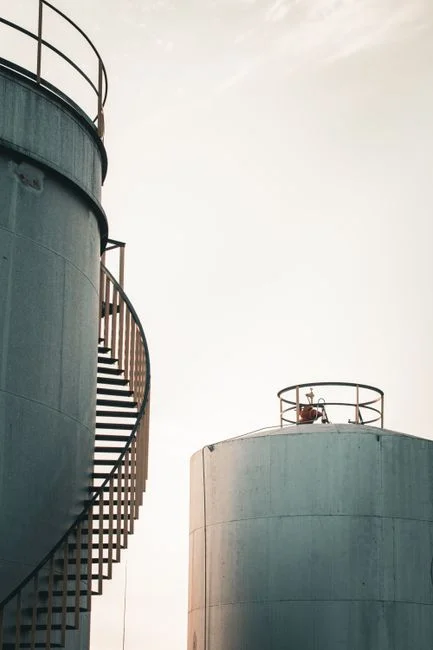
Raw acid mine drainage and spent process solutions at a typical Wausau-area operation arrive at the treatment train at pH 2–4 with total suspended solids in the hundreds to several thousand mg/L, dissolved heavy metals (Pb, Cu, Zn, Cd, Ni, As), and elevated sulfate and TDS in leach-pad runoff and brine streams (per S1 and S5). SME defines the source mechanism as acid rock drainage — the reaction of water and oxygen with sulfide minerals such as pyrite and pyrrhotite — and the Wausau area's sulfide-ore geology means that legacy workings and modern circuits can share the same water column. The U.S. inventory of abandoned and inactive mines exceeds 500,000 (McLemore 2008, cited in SME's Mining and Water Quality briefing), and Wausau-area legacy sites can carry mercury and cyanide from historic gold processing where legacy streams commingle with modern circuits.
The Wausau-specific overlay is the seasonal hydrograph. A late-winter and early-spring snowmelt pulse delivers a cold, dilute, high-flow spike that flushes accumulated metals from legacy workings and mill clean-out sumps into the modern circuit, and a design that holds only at summer low-flow fails in March. ARD is persistent, not event-driven, which is why equalization — not clarification — decides whether a spike becomes a violation. Elevated sulfate and TDS push reagent choice toward NaOH rather than lime in high-TDS service, because lime generates 3–5× more sludge at the same neutralization duty and that sludge has to be dewatered, hauled, and disposed of (per S1 and S5).
The Equalization Case: How a 4-Hour Basin Loses the Monthly Average
Setup: 100 m³/h average flow, one 2-hour mill clean-out spike of 250 m³/h carrying 1,200 mg/L TSS and 8 mg/L zinc, coincident with the spring freshet on a Wausau-area tributary. Run the math both ways (per the basin-sizing framing in S1 and S5).
Case A — 4-hour basin (200 m³ capacity). The spike passes through with minimal attenuation. The 2-hour spike delivers 500 m³ × 8 mg/L Zn = 4,000 g of zinc over a 24-hour day, on top of the 2,200 m³ × ~3 mg/L baseline = 6,600 g. Total day: 10,600 g / 2,700 m³ = 3.9 mg/L zinc in the daily composite, and the rolling 30-day monthly average settles right at — or above — the local POTW ceiling. A single event pushes it over.
Case B — 24-hour basin (2,400 m³ capacity). The 500 m³ spike dilutes into the full 2,400 m³ active volume before discharge to the clarifier, giving an instantaneous zinc feed of roughly 2.1 mg/L. The clarifier sees a stable influent, the rolling 30-day monthly average drops to about 0.8 mg/L zinc — well below a 0.3–1.0 mg/L local ceiling — and the downstream hydroxide precipitation stage has a stable pH to work against.
Translate the difference into CWA §309 risk: a single monthly-average excursion is a violation; a sustained excursion is a pattern of violations, and the civil penalty is up to $25,000 per day per violation. The marginal capex of tripling basin volume from 4 to 24 hours is small compared to that exposure, and the basin is the only unit operation in the train that gets installed once and never replaced. Spec the basin at 8–24 hours of average daily flow, not at the 4-hour "rule of thumb" many mining/metals pretreatment plants still carry.
The Equipment Train, in the Order Water Sees It

A defensible 2026 train for a Wausau-area operation follows the order water sees it, with each step sized to remove a defined fraction of the load so the next step performs within its design envelope. Headworks protection comes first: a rotary mechanical bar screen ahead of the equalization basin keeps rags, plastics, and fibrous debris from ragging up the clarifier and downstream pumps. The equalization basin — 8–24 hours of average daily flow — is the single highest-ROI compliance move, and the marginal capex of tripling basin volume is small against CWA §309 penalty exposure.
Chemical control runs on a PLC-controlled chemical dosing skid that holds pH inside a ±0.2 band, which is the difference between meeting and missing a 0.3 mg/L zinc monthly average. Lime is cheaper per ton but generates 3–5× more sludge than NaOH in high-TDS mining service. Precipitation is staged: hydroxide at pH 9–11 for the bulk removal, then sulfide polishing (NaHS, FeS) on a slipstream to reach 0.01–0.05 mg/L residual when the local limit is below 0.3 mg/L — sulfide reagent costs run 2–4× higher and require sealed reactors with H₂S scrubbing (per S1 and S5).
Solids separation picks a DAF system at 5–25 m/h hydraulic loading for oil, grease, and fine colloidal metals across 4–300 m³/h, or a lamella clarifier at 20–40 m/h for metal-hydroxide sludge above 100 m³/h on a footprint-constrained site. Polishing is a multimedia filter (anthracite/sand/garnet) at 1–2 m/h as a safety net for clarifier upsets, with sulfide polishing or ion exchange on a slipstream to handle the LCRR-tightened lead number. Sludge dewatering closes the loop with a plate and frame filter press producing 25–35% dry solids cake for Subtitle-D landfill or smelter return, with filtrate returning to the head of the plant to keep the recycle loop closed.
| Stage | Stage-Outlet Target | Design Reference | Equipment |
|---|---|---|---|
| Headworks | Rags, plastics removed; flow variation ≤2:1; pH swing ≤1.5 | 40 CFR Part 403 general; local SUO | Rotary mechanical bar screen |
| Equalization | Stable flow, stable pH | 8–24 h ADF | EQ basin with mixer |
| pH / coagulant dosing | pH 6.5–9.0 instantaneous; ±0.2 band | Local SUO | PLC-controlled chemical dosing skid |
| Precipitation | Cu, Pb, Zn, Cd <0.5 mg/L; <0.05 mg/L after sulfide polish | 40 CFR 437.40–437.47; 40 CFR 433.15 | Two-stage reactor (hydroxide + sulfide) |
| Solids separation | TSS <30 mg/L; oil/grease <15 mg/L | 40 CFR Part 437 TSS subpart cap; local SUO | DAF or lamella clarifier |
| Polishing | TSS <10 mg/L; safety net for upsets | Local SUO TSS cap | Multimedia filter (anthracite/sand/garnet) |
| Lead / PFAS slipstream | Residual per local SUO | LCRR 10 µg/L trajectory; MSGP 2024-09 PFAS | Sulfide polish or ion exchange |
| Sludge dewatering | 25–35% dry solids, stackable cake | RCRA Subtitle-D landfill; smelter recovery | Plate and frame filter press |
What to Confirm With the Local POTW Before Any Equipment Is Ordered
Confirm three things on the permit before equipment is sized: the local limits for each metal on the analytical panel, the maximum daily and instantaneous loading rates, and any slug-control or flow-equalization requirements the POTW has added to the discharge authorization (per S1 and S5). Build the recycle loop in from the start — SME's technical position supports maximizing water recycling to reduce both freshwater demand and discharge volume, but the residual blowdown must still meet local POTW limits before it reaches the sewer manhole. If the Wausau POTW's annual self-monitoring report now carries a PFAS panel, GAC or ion-exchange polishing needs to be in the design envelope even if today's permit does not require it (per S1 and S5).
Frequently Asked Questions
Does a Wausau-area plant need an NPDES permit to discharge to the sewer?
No. NPDES permits govern direct discharge to surface water under Clean Water Act §402. Sewer discharge to a POTW is regulated under CWA §307(b) and 40 CFR Part 403, with categorical standards in 40 CFR Part 437 (Ore Mining and Dressing) and 40 CFR Part 433 (Metal Finishing) where applicable (per S1 and S5). Most plants carry both authorizations because they have separate stormwater outfalls and a sewer manhole, and the local POTW enforces the sewer-side limits directly.
Which number controls — the federal categorical or the Marathon County POTW sewer-use ordinance?
The local POTW sewer-use ordinance. Local sewer-use ordinances in 2026 typically set zinc at 0.3–1.0 mg/L monthly average and copper at 0.3–0.5 mg/L monthly average, tighter than the 40 CFR Part 437 categorical standard of 1.0 mg/L daily max / 0.5 mg/L monthly average (per S1 and S5). Lead is being driven downward by LCRR to roughly 10 µg/L as the action level, one to two orders of magnitude below the Part 437 floor. A single monthly-average excursion triggers CWA §309 civil penalties up to $25,000 per day per violation, so the binding number is always the one in the local ordinance.
When does sulfide polishing beat hydroxide precipitation alone?
Sulfide precipitation (NaHS, FeS) achieves residual metals of 0.01–0.05 mg/L versus 0.5–2.0 mg/L for hydroxide, which matters when the local limit is below 0.3 mg/L for zinc or copper (per S1 and S5). Reagent cost runs 2–4× higher and the system requires sealed reactors with H₂S scrubbing, so the cost-effective compromise for most mining flows is hydroxide precipitation with sulfide polishing on a slipstream.
What inputs should a buyer have ready before requesting a 2026 capex quote?
A buyer should bring four documents to the vendor meeting: the current POTW sewer-use ordinance, a representative influent analytical panel (TSS, pH, total and dissolved metals, sulfate, TDS, cyanide where applicable), the peak 2-hour flow alongside the average daily flow, and the equalization volume target. Lead time on a 2026 retrofit is set by the longest critical-path item — the 24-hour equalization basin civil work, which is why the basin should be ordered first, ahead of the dosing skid, the DAF or lamella clarifier, the sulfide polish, and the plate and frame filter press. Capex is best framed as the cheapest insurance against a CWA §309 civil penalty of up to $25,000 per day per violation, which is what a 20–30% design margin below the current local limit buys.