What counts as domestic sewage treatment in Accra today
Domestic sewage treatment in Accra covers the collection and treatment of household blackwater, greywater, and small-commercial effluent. The Accra Metro Sewerage Unit (AMSU) runs the centralised network in partnership with the Ghana EPA and GWCL, managing wastewater collection, treatment, and network maintenance for the sewered parts of the metropolis (AMSU, 2025). Outside that catchment, decentralised and packaged systems fill the gap.
The public-health stakes are documented: Antwi-Agyei et al. (2016) found roughly 160 hectares of Accra farmland irrigated with domestic wastewater, and a 2008 QMRA set tolerable infection risks of 7.7 × 10⁻⁴ per person per year for rotavirus and 1 × 10⁻² per person per year for Ascaris. Buyers in 2026 should therefore spec treatment to Ghana EPA discharge limits, not just reuse comfort, when selecting MBR, A/O packaged, or wetland-based systems. The supplied research does not include a current Accra sewerage coverage percentage; confirm this figure with AMSU or the Ghana EPA before scoping a site.
AMSU's remit, as stated on its services page, is to provide sustainable sewerage across Accra through partnerships with GWCL and the EPA, and to protect public health and the environment while supporting urban growth. Where the AMSU trunk does not reach — peri-urban estates on the Tema–Accra corridor, hospitality sites along the coast, school and university campuses, and community-scale residential developments — a decentralised or packaged plant becomes the realistic 2026 option. The PLoS ONE study (Antwi-Agyei et al., 2016) defines domestic effluent in the Accra context as "blackwater and greywater, water from commercial establishments and institutions, and stormwater and other run-off," which is the working definition a 2026 spec should adopt when drawing the boundary between a domestic plant and a combined-sewer or industrial-effluent design.
Why Accra wastewater quality is a public-health problem, not just a utility problem
An estimated 160 hectares of farmland across seven major sites in Accra are irrigated with domestic wastewater, per Antwi-Agyei et al. (PLoS ONE, 2016). The same study recorded that 80% of domestic consumers were aware of wastewater-related health risks, but only 37% of farmers were — a 43-percentage-point gap that illustrates why end-of-pipe treatment quality, not downstream behaviour, is the controllable variable for a specifier.
The Journal of Water and Health QMRA (2008) set a tolerable rotavirus infection risk of 7.7 × 10⁻⁴ per person per year and a tolerable Ascaris infection risk of 1 × 10⁻² per person per year for Accra's reuse context. These are the thresholds a 2026 buyer should hand to a supplier and ask: "Show me your pathogen-reduction evidence against these two organisms at design flow." The PLoS ONE paper also notes that 50–90% of vegetables consumed by urban dwellers in West Africa are wastewater-irrigated, which means the receiving environment for any Accra discharge includes informal irrigation, salad supply chains, and street food — exactly the exposure pathway the QMRA modelled.
The practical translation is straightforward. A decentralised plant on a peri-urban estate is not just protecting the developer's own reuse loop; it is also the last controlled barrier before effluent enters a drain that may run onto a vegetable field. Specifying BOD, COD, TSS and total nitrogen to Ghana EPA values is necessary but not sufficient. Ask the supplier for log-reduction evidence on rotavirus and helminth ova, and tie the answer back to the QMRA thresholds above so the procurement file carries a defensible public-health rationale, not just a compliance tick-box.
Technology options for Accra domestic sewage: MBR, A/O packaged plants, and constructed wetlands

Three technology families cover almost every 2026 Accra site on a domestic sewage brief: an MBR membrane bioreactor system for reuse-grade domestic sewage in Accra, a buried A/O packaged sewage treatment plant for Accra residential and hotel sites, and a constructed-wetland or vermifiltration system for low-density or low-operator sites. The IntechOpen chapter on vermifiltration frames decentralised, low-expertise systems explicitly as a response to gaps in centralised coverage, which is the same gap a 2026 Accra buyer is trying to close. MBR and A/O packaged plants are mechanically more controlled; wetlands trade operator simplicity for footprint.
MBR is the compact, high-effluent-quality option. A packaged MBR integrates biological treatment with an DF-series flat-sheet MBR module for decentralised Accra plants, which physically retains biomass and most suspended solids, producing a clarified effluent suitable for toilet flushing, landscape irrigation, or further polishing. The capital cost is higher and the membrane module requires periodic chemical cleaning, so MBR is best justified where the reuse value of the effluent is real or where the discharge consent is tight.
The WSZ underground A/O packaged plant combines anoxic/aerobic biological contact oxidation with sedimentation and disinfection in a single buried unit, runs fully automated with no operator, and handles 1–80 m³/h — a capacity band that matches most Accra residential estates, hotels, and institutional campuses (HydropureWater, 2025). The trade-off is lower log-reduction on pathogens than MBR, so for sites where the receiving drain leads to informal irrigation, a tertiary disinfection step or a polishing wetland should be specified in addition.
Constructed wetlands and vermifiltration are the lowest-energy, lowest-operator option. The IntechOpen vermifiltration chapter (DOI 10.5772/intechopen.103920) reports that vermifiltration is efficient, viable, requires less expertise, and can be decentralised, with design parameters and effluent compared against national statutory limits. The trade-off is footprint: a wetland needs land that an Accra peri-urban site often does not have, so wetlands fit large institutional grounds or low-density community layouts better than compact hotel or estate infill.
| Parameter | MBR packaged plant | A/O packaged (e.g. WSZ) | Constructed wetland / vermifiltration |
|---|---|---|---|
| Typical capacity band | 10–2,000 m³/day (system range) | 1–80 m³/h per unit | Site-specific, footprint-driven |
| Footprint | Small — above-grade skid or container | Small — buried below landscaping | Large — land-intensive |
| Operator skill | Moderate (membrane cleaning) | Low — fully automated, no operator | Low — periodic vegetation work |
| Energy use | Higher (membrane aeration + recirculation) | Moderate (blower duty) | Lowest — gravity / passive |
| Effluent reuse potential | High — reuse-grade, low TSS | Moderate — irrigation / toilet flush with care | Moderate — landscape / restricted irrigation |
| Best-fit Accra site | Tight-footprint reuse, hotel, high-density estate | Residential community, hotel, rural or peri-urban site | Low-density estate, school grounds, community-scale |
Sizing a domestic sewage plant for an Accra residential or hospitality project
Sizing is a checklist of inputs, not a single formula. The supplied research does not publish an Accra-specific per-capita flow value, so a 2026 buyer should request per-capita wastewater flow (L/p/d) and a peaking factor from the shortlisted supplier and have both numbers cross-checked against the Ghana EPA design practice that AMSU applies in its own trunk design. Demand a clear statement of design flow (average daily) and peak flow (typically 2–3× average for morning and evening discharge windows in residential and hotel estates), and a separate duty-cycle statement for hospitality or institutional sites where weekend and event peaks can push the daily average well above the weekday baseline.
For a residential estate, the realistic per-unit inputs to request are: number of dwelling units, assumed occupancy (typically 4–6 persons per household in Accra's peri-urban estates), per-capita flow, and a documented peaking factor. For a hotel or resort, ask for bed count, kitchen and laundry effluent contribution, and a weekend/holiday occupancy profile — the HydropureWater hotel and resort wastewater treatment in Ghana engineering guide covers this in more detail. For a school or community site, the inputs shift to student or population headcount, daytime peak vs. night-time shutdown, and any food-service effluent. None of these inputs should be assumed by the supplier without a written basis; if a number is given without a reference, treat it as a placeholder.
Match the demand to a realistic capacity window before opening commercial talks. The WSZ underground A/O unit covers 1–80 m³/h, which fits most Accra residential and hotel estates in a single or twin-module configuration (HydropureWater, 2025). The MBR integrated system range starts at 10 m³/day and scales to 2,000 m³/day, which covers anything from a 50-bed hotel to a multi-block residential estate. If a supplier's quoted sizing falls outside these bands without explanation, ask why — it usually means the per-capita assumption or the peaking factor has been set incorrectly, and it is cheaper to find that out at the RFQ stage than after delivery.
Ghana EPA and AMSU compliance checklist for 2026
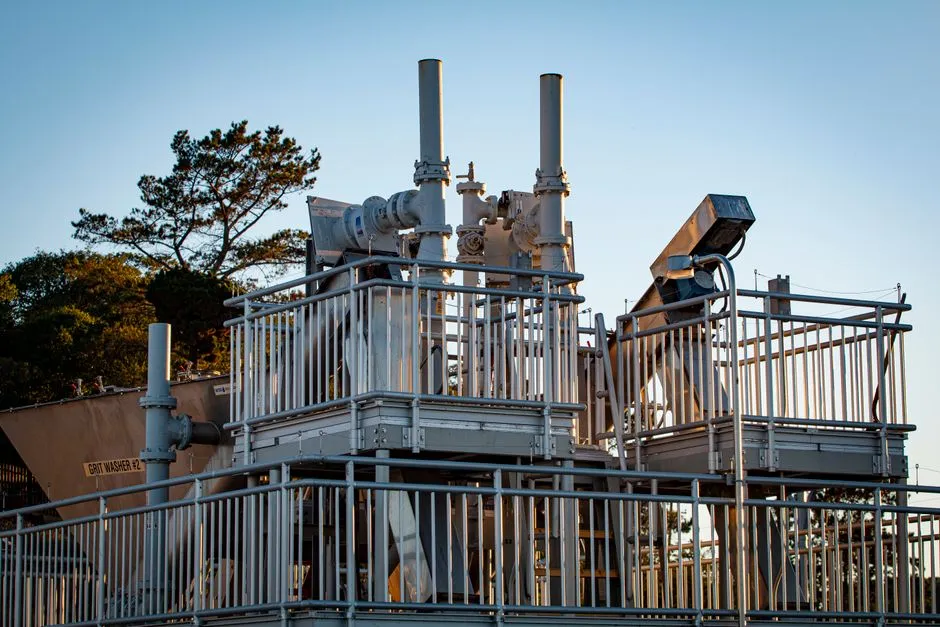
Ghana EPA sets national discharge standards, and AMSU is the operational partner for sewered areas — both are referenced on the AMSU services page. For a 2026 procurement file, the items below are the minimum evidence a buyer should request before signing a purchase order.
- Obtain the current Ghana EPA numerical effluent limits for BOD, COD, TSS, total nitrogen, total phosphorus, faecal coliforms, and helminth ova directly from the Ghana EPA; the supplied research does not include the 2026 numerical values, so do not rely on a supplier's quoted limits without the primary source.
- Ask the supplier for pathogen-reduction evidence referenced to the QMRA thresholds: 7.7 × 10⁻⁴ rotavirus and 1 × 10⁻² Ascaris infection risk per person per year (Journal of Water and Health, 2008), not just BOD/COD removals.
- Request at least one reference plant in Ghana or West Africa of comparable capacity, and a recent effluent quality certificate from that plant — preferably within the last 12 months, since membrane condition and biological health degrade with time.
- Confirm the supplier will support the discharge-permit application with AMSU or the Ghana EPA, including any site-specific discharge consent conditions that go beyond the general standard.
- Document the sludge-handling route: who de-sludges, where the cake goes, and how that interacts with the 160 ha of Accra wastewater-irrigated farmland documented by Antwi-Agyei et al. (PLoS ONE, 2016).
Where the site sits inside the AMSU catchment, AMSU itself becomes a stakeholder — the AMSU services page describes its role in wastewater collection, treatment, and network maintenance, and a buyer should confirm whether the site can connect to the trunk or must remain on a packaged plant even inside the sewered zone.
Frequently Asked Questions
What should a 2026 cost expectation look like for a packaged STP in Accra?
The supplied research does not publish a 2026 price for a packaged sewage treatment plant in Accra, and a defensible budget cannot be built from a generic online range. Instead, ask each shortlisted supplier for a written quote that itemises the equipment cost, freight to Tema port, installation, and a 12-month operating-cost estimate (power, membrane cleaning chemicals, de-sludging). Submit the same capacity, the same influent assumptions, and the same effluent target to at least three suppliers, and benchmark the spread. A quote that is significantly below the others usually means something has been omitted — often de-sludging, controls, or the disinfection stage — so request a like-for-like comparison before treating the low number as real.
How do I shortlist domestic sewage treatment suppliers in Ghana without relying on a brand name?
Score each supplier against the same evidence list. Request reference plants in Ghana or West Africa of comparable capacity and a recent effluent quality certificate from at least one of those plants; ask for pathogen-reduction evidence tied to the rotavirus and Ascaris QMRA thresholds (Journal of Water and Health, 2008); confirm the supplier supports Ghana EPA permitting and can deliver a like-for-like commercial comparison on the same capacity. A supplier that cannot produce any of these is not a serious shortlist candidate, regardless of price. For context on a comparable 2026 brief, the rural sewage treatment in Ghana engineering and sourcing guide covers off-grid selection criteria in more detail.
Which technology fits a tight Accra estate footprint with no on-site operator?
For a residential or hotel site where the plant must be buried under landscaping and run unattended, a packaged A/O system such as the WSZ underground integrated sewage treatment plant, which is fully automated with no operator required at 1–80 m³/h, is the closest match (HydropureWater, 2025). If the effluent must be reuse-grade for toilet flushing or site irrigation, step up to an MBR packaged plant and budget for the membrane cleaning regime. Constructed wetlands are not realistic on a tight footprint.
Why does Accra discharge quality matter beyond the site boundary?
Antwi-Agyei et al. (2016) documented an estimated 160 hectares of Accra farmland irrigated with domestic wastewater across seven major sites, and 50–90% of vegetables consumed by urban dwellers in West Africa are wastewater-irrigated. A decentralised plant's effluent often reaches a drain that runs onto one of those fields, so the effluent quality directly affects downstream farmers and consumers — which is why the QMRA tolerable infection risks of 7.7 × 10⁻⁴ rotavirus and 1 × 10⁻² Ascaris per person per year (Journal of Water and Health, 2008) are the right reference frame for the spec, not just the operator's comfort.