The 2026 Compliance Stack for Des Moines Plastics and Rubber Plants
Compliance for an Iowa plastics or rubber discharger is not a single lab number — it is a layered system. Federal categorical pretreatment standards set the outer envelope: 40 CFR Part 414 governs plastics manufacturing and 40 CFR Part 458 governs rubber manufacturing, and both flow downstream into a local limit that the WRA enforces through an individual permit (S2; S4). The WRA acts as the local Control Authority under the Federal Clean Water Act, overseeing more than 2,500 commercial and industrial facilities in the Des Moines metro, of which 60+ operate under industrial wastewater discharge permits (S4).
Inside the permit sit three things that drive equipment design. First, a slug control plan defines what happens when a process upset sends a non-routine load to the sewer. Second, BMP requirements cover housekeeping, chemical storage, and additive programs. Third, any coagulant or flocculant dosing system must be explicitly listed in the permit before it is installed — a chemistry change without prior review is a permit violation, not just an engineering choice (S2; S4).
Above the WRA permit sit the RCRA reporting rules. Under the Domestic Sewage Exclusion at 40 CFR 403.12(p)&(j), an Industrial User discharging more than 15 kg per calendar month of non-acute hazardous waste, or any amount of acute hazardous waste, must notify the WRA within 180 days of the discharge (S4). For most compounding and molding lines, this threshold is rarely tripped, but a single zinc- or solvent-bearing washwater stream can push a plant over the line during a maintenance event, and the reporting clock starts the moment it happens.
2026 Daily-Max Pretreatment Limits You Must Design Against
The 2026 daily-max envelope a West Des Moines compounding or rubber goods plant sizes against is TSS around 50 mg/L, oil and grease around 100 mg/L, and pH 6–9 (S2). For rubber subcategories, a zinc ceiling of 2.6–4.0 mg/L applies depending on the subpart, because zinc oxide and zinc stearate are process staples that show up in mold washwater and extruder cleanup streams (S2). These figures are design baselines, not guarantees — site-specific WRA permit limits are frequently tighter and are paired with surcharge triggers that convert a single bad sample into a balance-sheet event (S2).
Zinc deserves specific attention during equipment selection. Zinc-bearing compounds float rather than settle, so the separator has to lift them, not just capture them. The same physical problem applies to plasticizer oils: DOP, DINP, and ESBO all sit in the low-specific-gravity range and resist gravity clarification (S2). Engineers should request the current permit text from the WRA Pretreatment Department before specifying hardware, because the surcharge-trigger language and the daily-max values listed in the permit are the legally binding numbers, not the envelope in any guide.
| Parameter | Typical 2026 daily-max design envelope | Compliance posture |
|---|---|---|
| TSS | ~50 mg/L | Site-specific WRA limit may be tighter; surcharge-triggered |
| Oil and grease | ~100 mg/L | Critical for plasticizer and latex streams; clarifier alone often misses this number |
| pH | 6–9 | Continuous monitoring typically required in the permit |
| Zinc (rubber subcategories) | 2.6–4.0 mg/L | Subpart-dependent; zinc floats and resists settling |
| Chemical additives (coagulant, polymer) | Must be listed in permit | Any dosing change requires prior WRA review |
Match the Separator to the Stream, Not to the Industry
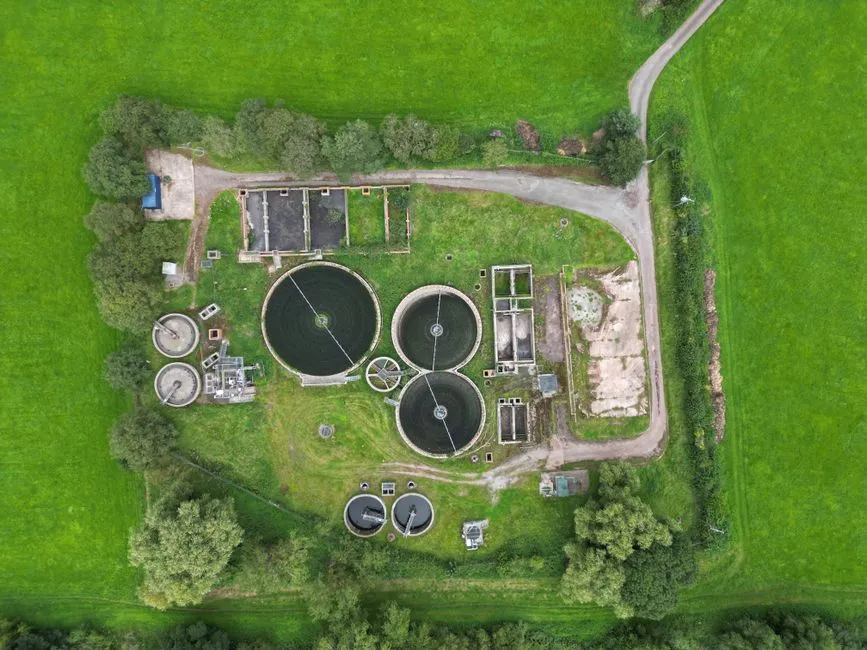
Stream character drives separator selection more than the NAICS code on the W-9. A plastics compounding washwater typically carries residual plasticizer oils (DOP, DINP, ESBO), polymer fines, antistatic agents, and surfactant cleaners; oil droplets sit in the 10–50 µm range, the bulk specific gravity is roughly 0.95–1.02, and gravity settling underperforms (S2). A rubber or latex wastewater stream layers in natural and synthetic latex carryover, zinc oxide, sulfur residues, and process oils (naphthenic, paraffinic), producing a viscous, sticky, partly colloidal matrix that fouls conventional settlers within hours (S2).
Microbubble flotation is the mechanism that actually fits these streams. A DAF system with 30–50 µm microbubble flotation attaches bubbles to oil droplets and fine polymer particles, lowering their effective density and rafting the floatables to the surface in minutes (S2). A lamella clarifier for heavy mineral filler streams shortens the settling path and is sound on its target contaminant — dense fillers like calcium carbonate, titanium dioxide, or barium sulfate — but cannot lift neutrally buoyant material and will form a stable scum layer on a plasticizer stream (S2).
The decision tree reduces to three branches:
- Branch 1 — floating plasticizer oils, latex carryover, or surfactant-stabilized emulsions: default to a DAF primary. Zinc stearate and process oils float, and microbubble flotation is the only single-step process that pulls them reliably (S2).
- Branch 2 — dense mineral fillers (CaCO₃, TiO₂, BaSO₄) with low FOG: a lamella clarifier is defensible at lower cost, with surface loading of 20–40 m/h in the standard catalog (S2).
- Branch 3 — both fractions present: DAF primary with a lamella clarifier polish is the most compliance-robust layout and the configuration most WRA-permitted metro plants adopt after reviewing operating data (S2).
Why a Standalone Clarifier Fails FOG Compliance
The documented removal gap is the strongest argument against value-engineering a clarifier into a plasticizer or latex stream. On a plasticizer/latex stream, DAF achieves roughly 95% FOG removal versus about 70% for a clarifier, per an Ecologix 2026 food-processing benchmark that aligns with field observations on plasticizer streams (S2). On a heavy mineral stream, the same Ecologix mining benchmark shows a clarifier reaching roughly 90% TSS reduction — so the technology is sound, just in the wrong application (S2).
Rubber facilities specifically need the FOG number held continuously, not on the average. A Friday cleanup cycle on a rubber molding line can spike FOG three to five times above the Tuesday baseline, and the chemistry setpoint that works on Monday may not hold Saturday (S2). A standalone clarifier on that stream will frequently fail the FOG number, the FOG surcharge will trigger, and the surcharge language in the WRA permit is the document that defines the dollar exposure.
The cheapest way to avoid that exposure is a two-week pilot on the actual DAF unit with the proposed PLC-controlled coagulant and flocculant dosing system, rather than a procurement decision based on catalog curves alone. A pilot also generates the operating data the WRA expects to see when an additive program is reviewed.
Reference System: Sizing a 50 m³/h Des Moines-Area Plant
A 50 m³/h reference plant sits inside the standard DAF catalog (4–300 m³/h across 13 standard models) and well within the surface-loading range of a lamella clarifier (20–40 m/h) (S2). At that flow, the procurement comparison is between a DAF skid, a lamella clarifier, and a DAF-plus-lamella hybrid, with a plate and frame filter press for float-cake dewatering downstream to handle the sludge.
Cost ranking: a lamella clarifier at 50 m³/h is typically 20–35% lower in upfront cost than a comparable DAF; a DAF skid sits in a moderate CapEx band; the DAF-plus-lamella hybrid carries the highest CapEx but is the most compliance-robust layout (S2). OpEx is inverse: DAF has moderate operating cost from coagulant and flocculant consumption plus the air compressor load; clarifier OpEx is the lowest because no chemical conditioning or air system is required; the hybrid sits between the two (S2).
Sludge handling is where the second compounding effect appears. A separator float cake is typically 2–5% solids, and a plate and frame filter press cuts sludge volume 75–85%, materially reducing hauling cost and landfill manifests (S2). For a 50 m³/h rubber or plastics line facing FOG noncompliance risk, a DAF retrofit typically pays back in 12–24 months through avoided WRA surcharges, reduced sludge hauling, and lower operator overtime (S2).
| Item | DAF (50 m³/h) | Lamella clarifier (50 m³/h) | DAF + lamella hybrid (50 m³/h) |
|---|---|---|---|
| Upfront CapEx band | Moderate | 20–35% lower than DAF | Highest of the three layouts |
| OpEx profile | Moderate (polymer + air) | Lowest (no chemistry, no air) | Between the two |
| Best-fit stream | Plasticizer oils, latex, FOG | Heavy mineral fillers, low FOG | Mixed plastics and rubber |
| FOG removal on plasticizer stream | ~95% (Ecologix 2026) | ~70% (Ecologix 2026) | Highest combined removal |
| TSS removal on heavy filler stream | High | ~90% (Ecologix 2026 mining) | Highest combined removal |
| Float cake to filter press | 2–5% solids | 2–5% solids | 2–5% solids; volume cut 75–85% in press |
| Indicative payback (FOG noncompliance risk) | 12–24 months (S2) | Longer if FOG surcharge triggers | Comparable to DAF on mixed stream |
Permit Workflow and Slug Control at the WRA
The administrative path is as important as the equipment. New or expanding industrial users must submit an Industrial User Survey to the WRA for review prior to construction and at least 180 days before commencing discharge (S4). The WRA may require specific pretreatment measures, sampling equipment, and discharge sampling points depending on the nature of the operation (S4). Before the WRA issues a new or renewed permit, the Industrial User submits a completed Industrial Wastewater Discharge Permit Application plus the applicable annual permit fee and one-time application fee (S4).
Fees are codified. A Class A permit carries an annual fee of $1,500 plus a one-time $200 application fee; a Class B permit is $750 annual plus a one-time $100 application fee; hauled-waste discharges use a separate application (S4). These fees are documented in Section 118-352 of the City of Des Moines Municipal Code, and the language mirrors across WRA member communities (S4).
Slug discharge response is a 24/7 obligation. The Industrial User must immediately notify the WRF Treatment Manager or Regulatory Compliance Department at 515-323-8010 or 515-323-8133; the after-hours line is 515-323-8040; a Slug Discharge Form follows as a written record (S4). Discharge of any potentially harmful contaminants requires prior WRA Director approval via a Discharge Authorization Form (fax 515-323-8063), and hazardous waste must never enter the sanitary or storm sewer — disposal routes through the Metro Waste Authority Regional Collection Center in Bondurant at 515-967-5512 (S4).
For plants new to the program, the practical sequence is: file the Industrial User Survey early (the 180-day clock starts at first discharge, not at permit issuance), list the proposed dosing chemistry in the application, run the pilot on the actual stream, and submit jar-test and pilot data with the permit package so the chemistry curve is reviewable on first read.
Pilot Testing Before You Buy
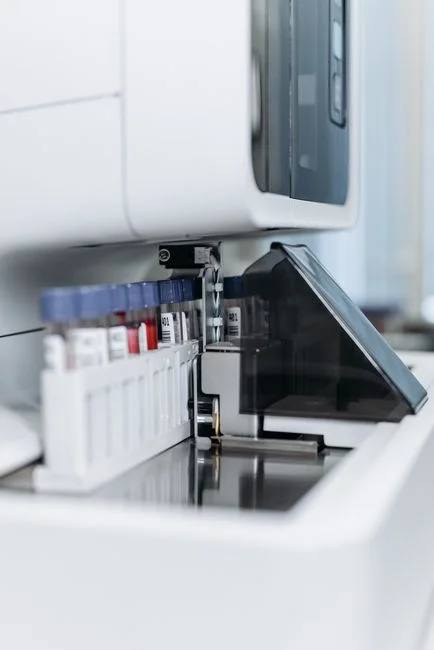
For any stream above 50 m³/h, run a jar test followed by an on-site pilot before procurement (S2). Polymer and latex streams vary widely, and a Friday cleanup cycle on a rubber molding line can spike FOG three to five times above the Tuesday baseline; the chemistry setpoint that works on Monday may not hold Saturday (S2). A two-week pilot on the actual DAF unit, with the proposed chemical dosing system, costs less than one month of noncompliance surcharges and provides a defensible basis of design for the procurement committee (S2).
The pilot is also the cheapest insurance against the most common procurement failure: specifying a clarifier on a stream that actually needs DAF, then living with a FOG surcharge for the next decade. For plants weighing DAF against a clarifier, a cross-industry DAF vs clarifier comparison for fabricated metals lays out the decision framework for a different contaminant profile and reinforces why stream-matched selection matters. For the broader 2026 pretreatment landscape and the process behind primary treatment, the primary wastewater treatment process explainer provides the upstream context.
Frequently Asked Questions
What does a 50 m³/h DAF or lamella clarifier system cost for a Des Moines-area plastics or rubber plant?
Catalog-anchored ranking is the only cost claim supported by the research: a 50 m³/h lamella clarifier is typically 20–35% lower in upfront cost than a comparable DAF, a DAF skid sits in a moderate CapEx band, and a DAF-plus-lamella hybrid carries the highest CapEx but is the most compliance-robust layout (S2). The buyer should request firm pricing from each shortlisted vendor with a defined scope boundary (tankage, skids, controls, chemistry panels, installation, commissioning) before the procurement committee meeting; equipment-only sticker prices without that scope split routinely understate total installed cost by 30–60%.
How do I pick the right primary separator — DAF or clarifier — for a plastics compounding or rubber molding line?
Match the separator to the dominant fraction in the stream, not to the industry label. If the stream carries floating plasticizer oils, latex carryover, or surfactant-stabilized emulsions, default to DAF; if it carries dense mineral fillers with low FOG, a lamella clarifier is defensible at lower cost; if it carries both, DAF primary with a lamella polish is the most compliance-robust layout (S2). The decision should be confirmed with jar testing and a two-week on-site pilot on the actual DAF unit, because FOG can spike three to five times above the Tuesday baseline during a Friday cleanup cycle (S2).
What permits and fees are required to discharge industrial wastewater to the WRA in 2026?
New or expanding industrial users must file an Industrial User Survey with the WRA at least 180 days before commencing discharge, prior to construction (S4). A Class A permit costs $1,500 annually plus a one-time $200 application fee; a Class B permit costs $750 annually plus a one-time $100 application fee; hauled-waste discharges use a separate application (S4). Any coagulant or polymer dosing must be listed in the permit and the slug control plan, so jar-test and pilot data should be submitted with the permit package to keep the chemistry review on first read.
What is the 24/7 notification procedure if my plant has a slug discharge to the WRA sanitary sewer?
Notify the WRF Treatment Manager or Regulatory Compliance Department immediately at 515-323-8010 or 515-323-8133; the after-hours line is 515-323-8040; submit a Slug Discharge Form as a written follow-up (S4). Any discharge of potentially harmful contaminants that is not already covered by the permit requires prior WRA Director approval via a Discharge Authorization Form (fax 515-323-8063), and hazardous waste must never enter the sanitary or storm sewer — that waste routes through the Metro Waste Authority Regional Collection Center in Bondurant at 515-967-5512 (S4).