What an Effluent Treatment Plant Actually Does in a Riyadh Industrial Context
An effluent treatment plant (ETP) in Riyadh is a multi-stage system designed to bring industrial or municipal wastewater inside Saudi Arabia's PME reuse tiers and MAW effluent-quality thresholds before discharge, reuse in cooling or irrigation, or further polishing. Modern ETPs combine primary physical separation, biological treatment such as activated sludge, and a membrane or advanced-oxidation polishing step, as documented in the ETP taxonomy described in the 2026 commercial ETP literature (rekpro.co). For Riyadh buyers the deciding factors in 2026 are influent characterization, target reuse category, footprint, energy and chemical use, and whether the plant will be civil-built, containerized, or hybrid.
The ETP is distinct from a municipal sewage treatment plant (STP), which only targets sewage from residential and commercial flows. An industrial ETP must handle process-specific contaminants — hydrocarbons, free and emulsified oils, heavy metals, high salinity, temperature swings — that a domestic STP is not designed to remove. The six-stage taxonomy that the 2026 ETP literature publishes — chemical, biological, physical, membrane, hybrid, and sludge treatment — is the menu a Riyadh designer selects from, not a fixed sequence; the actual train is matched to the influent and to the discharge or reuse outcome.
Three Riyadh 2026 outcomes drive the design: (a) compliance with MAW effluent limits for discharge, (b) PME-compliant reuse across the Saudi reuse categories (irrigation, cooling, industrial process, landscape), and (c) zero-liquid-discharge (ZLD) recovery for sites where disposal routes are constrained and water is too valuable to lose. The local climate reinforces reuse: ambient temperatures that raise biological activity also drive evaporation loss and concentrate dissolved solids, so a closed-loop or polishing train is rarely optional. The domestic sewage context for residential and hotel flows is covered in the parallel Domestic Sewage Treatment in Saudi Arabia: 2026 Engineering Guide.
Saudi PME Reuse Tiers and MAW Effluent Limits: The Design Envelope
PME (the Saudi reuse framework) classifies reclaimed water by end use — restricted irrigation, unrestricted irrigation, cooling, industrial, and urban — and each category carries its own quality bar. MAW sets the minimum effluent quality for any wastewater that is discharged or reused, and an exceedance exposes the operator to penalties under the National Center for Environmental Compliance (NCEC) and to site-shutdown risk.
Biological treatment alone is rarely sufficient for the stricter PME tiers. A polishing step — UF, nanofiltration, or RO for the highest-grade reuse, or advanced oxidation for trace organics — is typically required to bring BOD, TSS, total nitrogen, total phosphorus, and microbiological indicators below the tier ceilings. The 2026 research evidence for advanced polishing comes from the University of Twente PhD thesis on direct nanofiltration of WWTP effluent (Schrader, doi:10.3990/1.9789036523325), which confirms that membrane technology is the established route to bring WWTP effluent to reuse quality.
The operator carries the burden of proof: continuous online monitoring of flow, pH, conductivity, turbidity, and residual disinfectant, with logged records available for inspection. Where the ETP is sold to an industrial client, the process guarantee should be written against the specific PME tier or the MAW numeric limits, not against a generic "meets local standards" clause.
| Parameter | What to confirm with the supplier | Why it matters in Riyadh |
|---|---|---|
| Target reuse tier (PME) or discharge (MAW) | Numeric effluent quality the plant is guaranteed to meet | Sets whether biological alone is enough, or whether UF/NF/RO is required |
| Continuous online monitoring | Flow, pH, conductivity, turbidity, residual Cl/ClO₂ logged | Required for NCEC inspection and audit trail |
| Polishing stage selection | UF, nanofiltration, RO, or AOP — and why | Determines the reuse categories the plant can serve |
| Documentation package | P&IDs, GA drawings, electrical and control narrative, commissioning protocol | Saudi regulators and the client's PMC will require these |
Matching ETP Technology to Your Wastewater Type
The first filter for technology selection is a wastewater-characterization matrix: BOD/COD ratio, TSS, oils and grease (FOG), heavy metals, hydrocarbons, TDS, temperature, and pH variability. From that matrix the process train falls out — biological for high organic load, physico-chemical for oils and metals, membrane polishing for TDS-bound streams.
For high organic load (food and beverage, slaughterhouse, pulp and paper), biological treatment — activated sludge, sequencing batch reactor (SBR), moving-bed biofilm reactor (MBBR), or MBR membrane bioreactor wastewater treatment system — is the workhorse, often with DAF pretreatment to knock down FOG and TSS before the bioreactor. For oil and grease or hydrocarbon-bearing streams (refineries, petrochemicals, metalworking), a dissolved air flotation (DAF) system removes free and emulsified oils first, followed by biological treatment and a dedicated hydrocarbon-sludge handling line; the 2024 cyanobacteria study (ojs.nieindia.org) confirms that ETP sludge from oil refineries contains total petroleum hydrocarbon (TPH) and polycyclic aromatic hydrocarbons (PAHs), which is why the sludge line must be designed separately from a domestic sludge line.
For TDS-, salt-, or heavy-metal-bearing streams (textile, electronics, pharma, mining), physico-chemical precipitation followed by membrane polishing — UF as a guard filter, then RO — is the realistic path, and ZLD is the option where disposal is constrained and reuse is required. For polishing to the stricter PME reuse tiers, UF or nanofiltration is the minimum, RO for the strictest tiers, with a constructed-wetland or ozone/AOP stage as a low-energy tertiary option; the Wageningen PhD thesis on micropollutant removal by constructed wetlands (Lei, doi:10.18174/575408) supports constructed wetlands as a tertiary polishing route for trace organics.
Every ETP needs a sludge line: thickening, dewatering with a plate and frame filter press for sludge dewatering or a decanter centrifuge, then disposal or biogas recovery. The 2026 ETP taxonomy lists thickening, dewatering, digestion, and drying as the standard sludge-train steps.
| Wastewater profile | Primary stage | Secondary / polishing | Sludge line |
|---|---|---|---|
| High organic (food, beverage, pulp & paper) | DAF → biological (activated sludge, SBR, MBBR, MBR) | UF if PME reuse is targeted | Thickening → dewatering → disposal or biogas |
| Oils, FOG, hydrocarbons (refinery, metalworking) | DAF → biological | UF or sand filter as needed | Separate hydrocarbon sludge line — TPH/PAH handling |
| High TDS / metals (textile, electronics, mining) | Physico-chemical precipitation | UF → RO, or ZLD train | Chemical sludge dewatering, often off-site disposal |
| Mixed industrial + domestic | Equalization → DAF → biological | UF/NF for PME polishing | Mixed sludge dewatering |
Civil-Built, Containerized, or Hybrid? Riyadh Deployment Options for 2026
The form-factor decision is the single biggest cost and schedule driver after the process train is chosen. Three options are realistic in Riyadh in 2026, plus a hybrid that combines the strengths of two.
Containerized or skidded MBR / MBBR units are the fastest to install, factory-tested, and suited to flows that fit inside a single skid envelope, or to temporary, camp, or remote sites. Hydraulic capacity per skid is finite, so this option does not scale to large industrial flows. Underground package plants — an integrated buried unit combining A/O biological contact oxidation, sedimentation, and disinfection — have a small footprint and can be landscaped over, but they are sized for residential, hotel, and hospital duty, not heavy industrial loads.
Civil-built concrete-tank ETPs with separate biological, clarification, and membrane halls are the only realistic option for flows above the skid envelope, for ZLD trains, or for sites that need a long design life and that want to use local concrete construction. The cost of civil work is the line item most often under-quoted by international vendors in Saudi tenders, and is the most common source of budget overrun on Riyadh ETP projects.
The hybrid is increasingly the default 2026 choice for mid-sized Riyadh industrial projects: civil concrete for equalization and the biological reactor, packaged skids for the membrane and sludge stages. The form-factor decision must be made jointly with hydraulic and sludge-handling decisions, not after them, because the civil footprint drives the membrane skid count and the sludge dewatering sizing.
| Form factor | Typical flow envelope | Best fit | Constraint to flag |
|---|---|---|---|
| Containerized / skidded MBR or MBBR | Single-skid envelope | Temporary, camp, remote, fast-track sites | Hydraulic ceiling per skid |
| Underground package plant (A/O + sedimentation + disinfection) | Small flow | Residential, hotel, hospital, light commercial | Not suited to heavy industrial loads |
| Civil-built concrete ETP | Above skid envelope; ZLD | Long design life, large industrial flows, local concrete | Civil work is the most under-quoted line item |
| Hybrid (civil + skidded membrane and sludge) | Mid-sized industrial | Default 2026 choice for many Riyadh projects | Requires civil and skid interfaces to be designed together |
Sizing, CAPEX/OPEX and Energy: How to Build a Defensible Budget
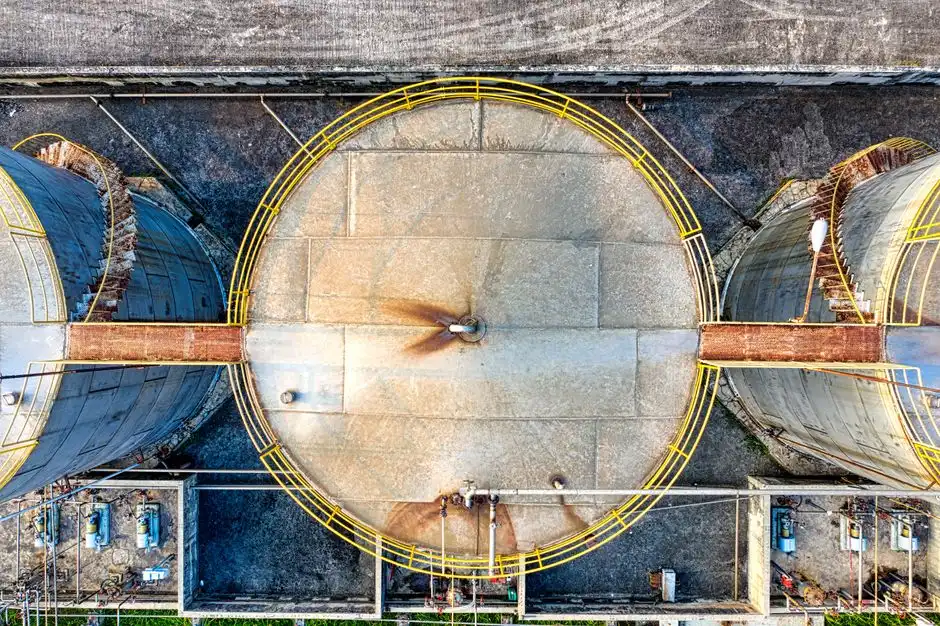
The supplier must be given a fixed set of inputs before any Riyadh budget is defensible: design flow in m³/day with a diurnal peaking factor, influent characterization (BOD, COD, TSS, FOG, TN, TP, TDS, temperature, pH, hydrocarbons if relevant), target effluent quality against the relevant PME tier or MAW limit, available footprint, power and water availability, and the discharge or reuse end use. Without these, quotes are not comparable.
OPEX drivers to budget separately are electrical energy (kWh/m³, dominated by aeration in the biological stage and by high-pressure pumps on any RO train), chemical consumption (coagulant, polymer, antiscalant, cleaning chemicals, and NaOCl or ClO₂ for disinfection), sludge disposal cost, and operating labour. Each equipment item should be quoted on a like-for-like basis: screening, DAF or clarifier, biological reactor, MBR or UF modules, RO or NF if used, sludge dewatering, and disinfection (chlorine dioxide, UV, or ozone). For disinfection, a chlorine dioxide (ClO₂) generator for water disinfection is a common Riyadh choice because of its residual stability in hot, high-TDS reuse lines.
The research provided does not contain published Riyadh 2026 CAPEX or OPEX figures, so the budget must be built from a vendor-quoted basis against a like-for-like equipment list rather than from a published benchmark. The sizing exercise and the cost line items for a parallel project type are detailed in the Commissioning Duration for Water & Wastewater Treatment Systems: 2026 Guide, which is a useful cross-check for schedule and commissioning cost.
| OPEX line | Driver | What to request from vendor |
|---|---|---|
| Electrical energy (kWh/m³) | Aeration; high-pressure RO pumps | Specific energy per m³ at design load |
| Chemicals | Coagulant, polymer, antiscalant, CIP chemicals, disinfectant | Consumption per m³ at design load |
| Sludge disposal | Volume and class of dewatered cake | Cake dryness %, mass/day, disposal route |
| Labour | Operator hours per shift | Manpower estimate per shift at design load |
| Spare parts and membranes | Replacement interval and stocking | Regional stocking location and lead time |
Supplier Selection Checklist for a Riyadh ETP Project
Five checks separate a defensible Riyadh ETP supplier shortlist from a generic one. The vendor's track record must include documented KSA PME/ or MAW-compliant projects, not just export references from cooler or less saline climates — membrane and biological performance shift with TDS and temperature, and a reference from a temperate climate does not transfer. The contract must identify who supplies the P&IDs, the GA drawings, the electrical and control narrative, and the commissioning protocol; Saudi regulators and the client's PMC will require all of these, and ambiguity on ownership is the most common cause of approval delays.
The process guarantee should be tied to a specific PME tier or to the MAW numeric limits, with defined liquidated-damages for non-performance, not a generic "meets local standards" clause. Membranes, chemicals, and spare parts must be available through a regional stocking agent in Riyadh or Dammam to avoid the long-lead outages that imported consumables cause. Finally, local service coverage, a committed response time, and whether the vendor trains the client's operators or simply hands over a manual should be confirmed in writing before award.
| Check | Pass / fail question | Document to request |
|---|---|---|
| KSA PME/MAW track record | Has the vendor delivered a PME- or MAW-compliant plant in KSA? | Reference list with project location and client contact |
| Documentation ownership | Who supplies P&IDs, GA, E&C narrative, commissioning protocol? | Document deliverable list in the contract |
| Process guarantee | Tied to a specific PME tier or MAW limit, with LDs? | Performance guarantee clause |
| Spare parts stocking | Regional stocking in Riyadh or Dammam? | Spare parts list with lead time and stocking location |
| Service and training | Local service coverage, response time, operator training? | Service-level commitment and training plan |
Frequently Asked Questions
What does a 2026 effluent treatment plant in Riyadh actually cost?
Published Riyadh 2026 CAPEX and OPEX benchmarks were not found in the research provided. A defensible budget must be built from a vendor-quoted basis against a fixed list of inputs — design flow with diurnal peaking, full influent characterization, target PME tier or MAW limit, footprint, power and water availability, and discharge or reuse end use — and then benchmarked across at least three vendors on a like-for-like equipment list.
How do I avoid PME or MAW non-compliance on a Riyadh ETP project?
Write the process guarantee against the specific PME tier or the MAW numeric limits, with defined liquidated-damages for non-performance, and require continuous online monitoring of flow, pH, conductivity, turbidity, and residual disinfectant with logged records. An exceedance can trigger NCEC penalties and a PME tier downgrade, which the regulator can enforce.
What is the realistic lead time for a Riyadh ETP in 2026?
Separate the equipment-factory lead time, the civil work, and the membrane delivery — the membrane delivery is usually the critical path. A containerized or skidded plant can be delivered faster than a civil-built plant, but a civil-built plant is the only option for flows above the skid envelope or for ZLD trains.
Which supplier type should a Riyadh industrial buyer shortlist in 2026?
Shortlist vendors with documented KSA PME- or MAW-compliant references, with regional stocking in Riyadh or Dammam, with a written service-level commitment and a training plan, and with a performance guarantee that names a specific PME tier or MAW limit rather than a generic "meets local standards" clause.
Related Equipment
- ultrafiltration (UF) water treatment system — specifications, capacity range, and technical data