
How Riyadh Treats Domestic Sewage Today
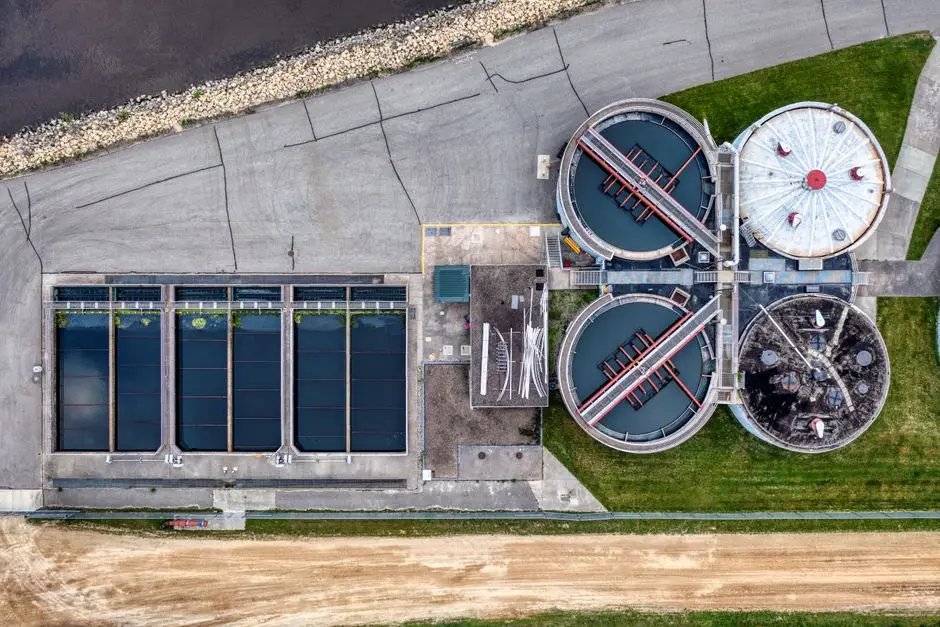
Riyadh's domestic sewage network is run by the National Water Company (NWC) and private BOT contractors on a conventional activated-sludge train: screening, grit removal, primary sedimentation, aeration, secondary clarification, tertiary filtration, and chlorination. At city scale, Riyadh Province spans 406,291 km² (about 18.9% of Saudi Arabia), sits at roughly 620 m altitude in a dry tropical climate, and serves about 7.5 million residents — 25% of the national population (MDPI, 2025). Riyadh's WWTPs produce 596 million m³/year of treated wastewater, but only about 37 million m³ (≈9%) is currently used for agriculture, leaving the majority available for higher-value reuse (MDPI, 2025). Average free chlorine in Riyadh treated wastewater has been measured at 0.26 mg/L, citing Al-Jasser (MDPI, 2025).
At the national level, Saudi Arabia operates 133 WWTPs with a combined 1.93 billion m³/year of capacity (MDPI, 2025); an earlier reference counts 33 plants at 748 million m³/year with 15 more under construction, confirming the fleet is still expanding (Wikipedia). The Gulf Cooperation Council produced 2,853 million m³/year of wastewater in 2015, with Saudi Arabia contributing 54% and treating 69% of it, which frames TWW as a strategic resource rather than a disposal problem (MDPI, 2025). For Riyadh specifically, where customer meters exist, non-revenue water is estimated at 34%, which is relevant when sizing an onsite STP that receives a mix of infiltration and sewage (Wikipedia, NWC). For private sites that fall outside NWC's central network — compounds, labour camps, hotels, hospitals — the underground A/O packaged sewage treatment plant is the conventional packaged equivalent of this municipal train.
| Parameter | Riyadh value | Source (date) |
|---|---|---|
| Population served | ~7.5 million (25% of Saudi Arabia) | MDPI Riyadh WWTP study (2025) |
| Annual TWW volume | 596 million m³/year | MDPI (2025) |
| TWW reused for agriculture | ~37 million m³/year (~9%) | MDPI (2025) |
| National WWTP fleet capacity | 133 plants, 1.93 billion m³/year | MDPI (2025); 33 plants at 748 million m³/year earlier count (Wikipedia) |
| Altitude / climate | ~620 m; dry tropical | MDPI (2025) |
| Average free chlorine in TWW | 0.26 mg/L | MDPI (2025), citing Al-Jasser |
| Non-revenue water (Riyadh, metered) | 34% | Wikipedia / NWC |
Biological Process Options for Domestic Sewage in Riyadh
For private and onsite STPs in Riyadh, four biological configurations cover almost every realistic project. A/O packaged plants combine anoxic and aerobic zones with sedimentation and disinfection in a single buried unit, suit flows of 1–80 m³/h, and are fully automated with no operator required, which is why they are the default baseline for compounds, hotels, hospitals, and rural sites (HydropureWater WSZ product data). MBR systems combine activated sludge with submerged PVDF membranes at <1 μm filtration, deliver near-reuse-quality effluent, and need roughly 60% less footprint than conventional plants at 10–2,000 m³/day — the right answer when land is constrained and reuse is the goal (HydropureWater MBR product data).
The third option is biological but not mechanical. Mesocosm-scale constructed wetlands planted with Typha latifolia and run for 12 cycles of 7 days each were shown in a 2026 study to remove ciprofloxacin, cefixime, and antibiotic resistance genes (qnrS, sul1, dfr1, blaTEM, blaCTX-M, blaOXA) from raw domestic wastewater, with biochar and zeolite media outperforming gravel and a 7-day hydraulic retention time identified as the best operating point; conventional nutrient and organic removal was similar across all three media (Sci Rep 2026, 16(1):15069). The fourth is SBR — sequencing batch reactor — and IFAS-type hybrid biofilm-activated-sludge systems, which are well suited to decentralized sites with variable influent quality and limited operator skill. Selection should be driven by target reuse class (irrigation only vs. cooling or toilet flushing vs. discharge), available footprint, energy budget, and whether the site can run a membrane plant — not by headline cost. An MBR membrane bioreactor for near-reuse effluent is the typical choice when the answer to "is reuse required?" is yes.
| Configuration | Typical flow range | Footprint / energy | Effluent class | Best-fit project |
|---|---|---|---|---|
| A/O packaged (WSZ) | 1–80 m³/h | Buried unit, low energy, no operator | Standard discharge / irrigation | Compounds, hotels, hospitals, rural clusters |
| MBR (PVDF membranes) | 10–2,000 m³/day; <1 μm pore | ~60% smaller footprint than conventional; continuous aeration | Near-reuse quality | Reuse for irrigation, cooling, toilet flushing |
| Constructed wetland (zeolite, 7-day HRT) | Mesocosm / small-cluster | Land-intensive, very low energy | Conventional organics + emerging contaminants | Sites with land, no industrial trade waste |
| SBR / IFAS hybrid | Decentralized, variable load | Moderate footprint, intermittent aeration | Standard discharge / irrigation | Labour camps, variable influent |
Riyadh Reuse Pathways and the Green Riyadh Initiative
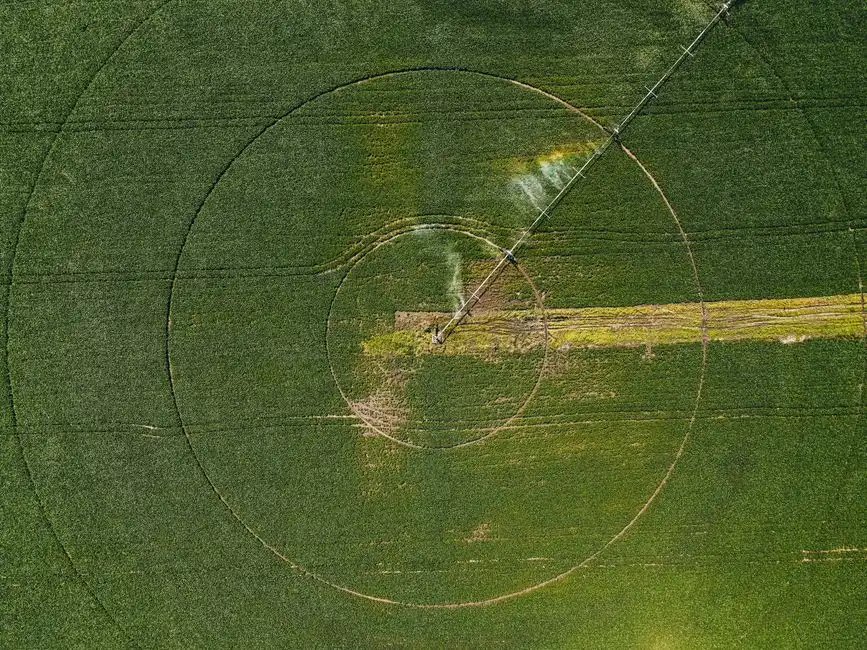
Reuse is the reason an onsite STP exists in Riyadh. The National Water Company's Treated Sewage Effluent Initiative (TSEI) sells TWW to industrial and landscaping customers under contracts of up to 25 years; this is the primary commercial pathway for bulk reuse today (Wikipedia). Riyadh already pumps about 50 million m³/year of TWW roughly 40 km and 60 m uphill to irrigate 15,000 ha of wheat, fodder, orchards, and palm trees, which proves long-distance agricultural reuse is operational, not theoretical (Wikipedia).
The Green Riyadh initiative is explicitly designed to expand landscaping irrigation with TWW; design should target nitrate, salinity, and residual chlorine limits consistent with landscape irrigation rather than open-water discharge (MDPI, 2025). The MDPI study on Riyadh TWW found that EC, Ca²⁺+Mg²⁺, NO₃, and COD loaded onto the first principal component (32.6% of variance), while NH₄, DO, and turbidity loaded onto the second, and that nitrate in some samples exceeded irrigation thresholds (MDPI, 2025). An MDPI assessment using the Comprehensive Water Pollution Index (CPI) and the Canadian Wastewater Quality Index (CWQI) concluded that the effluent from Riyadh WWTPs is appropriate for irrigation, supporting the Green Riyadh push for higher reuse. Reuse decisions should also be cross-checked against Domestic Sewage Treatment in Saudi Arabia: 2026 Engineering Guide and Saudi Arabia MAW wastewater standards before final spec. Inlet protection matters here as well: a rotary mechanical bar screen for headworks keeps rags, plastics, and fibrous debris out of the downstream biological stages that determine reuse quality.
Sizing and Specifying a Domestic STP in Riyadh
Translating the technology discussion into a purchase order starts with the design horizon and per-capita flow. For compounds, hotels, and labour camps in Riyadh's hot climate, peak factors and high organic loading (COD, BOD) drive tank volume more than average flow; for a deeper treatment on organics, see How to Remove COD from Wastewater: 2026 Engineering Methods & Removal Efficiency Guide. For packaged A/O plants, spec the flow range (1–80 m³/h), the required effluent class, and whether the unit will be buried or trailer-mounted; underground installation with landscaping above is the default in Riyadh for compounds (HydropureWater WSZ product data).
For MBR-based systems, spec the design flow (10–2,000 m³/day), membrane pore size (<1 μm), target TSS and COD, and PVDF membrane area, and confirm that the site can supply continuous aeration for membrane scouring (HydropureWater MBR product data). Specify headworks protection: a rotary mechanical bar screen at the inlet protects downstream pumps, valves, and biological stages from rags, plastics, and fibrous debris typical of domestic sewage (HydropureWater GX bar screen data). Disinfection must be specified for the chosen reuse pathway — chlorination for irrigation-compatible residual, or a UV sterilizer for chemical-free disinfection where downstream irrigation cannot tolerate chlorine by-products (HydropureWater UV sterilizer data). For context on supplier selection in the region, see Sewage Treatment Equipment Supplier in Al Khor: 2026 Engineering Guide.
Decision Framework: Choosing the Right STP Configuration in 2026
Use this one-page path to move from project type to process choice. If the site is a residential compound, hotel, hospital, or rural cluster up to ~80 m³/h with standard discharge limits, an underground A/O packaged plant is typically the lowest-risk baseline. If the effluent must be reused for irrigation under Green Riyadh, for cooling, or for toilet flushing, prefer MBR to secure near-reuse-quality output and a smaller footprint, even at higher membrane and energy cost.
If land is abundant, energy is constrained, and the influent is conventional domestic sewage without industrial trade waste, constructed wetlands — particularly with zeolite media and 7-day HRT — are a credible low-energy option supported by 2026 mesocosm evidence (Sci Rep 2026, 16(1):15069). If the project is a labour camp or remote site with intermittent flow, specify a packaged A/O unit on a trailer mount and pair it with UV disinfection for chemical-free reuse. In every case, lock in headworks screening, an automatic chemical dosing system for pH and coagulant control where needed, and a sludge dewatering path such as a plate and frame filter press so the STP can actually be operated, not just commissioned.
| Project type | Recommended configuration | Key spec to lock in | Reuse pathway |
|---|---|---|---|
| Compound / hotel / hospital / rural cluster ≤80 m³/h | A/O packaged (WSZ), buried | Flow range 1–80 m³/h, effluent class, buried vs. trailer | Standard discharge or irrigation |
| Reuse-for-irrigation / cooling / toilet flush | MBR (PVDF, <1 μm) | 10–2,000 m³/day, membrane area, continuous aeration | Green Riyadh landscaping, TSEI |
| Land-abundant, low-energy site | Constructed wetland (zeolite, 7-day HRT) | Media type, HRT, no industrial trade waste | Local irrigation |
| Labour camp / remote, intermittent flow | A/O packaged on trailer + UV | Mobility, UV dose, peak factor | On-site reuse or irrigation |
Frequently Asked Questions
What is the conventional process train for domestic sewage treatment in Riyadh?
The conventional municipal train is screening, grit removal, primary sedimentation, activated-sludge aeration, secondary sedimentation, tertiary filtration, and chlorination, operated by NWC and private BOT contractors; average free chlorine in Riyadh TWW is 0.26 mg/L (MDPI, 2025, citing Al-Jasser).
How much does a domestic STP for a Riyadh compound actually cost to specify and procure?
No unit price for Riyadh onsite STPs is available in the research. A buyer should request a per-m³-treated cost breakdown that separates civil works, packaged biological unit (A/O or MBR), headworks, disinfection, dosing, and sludge dewatering, then compare on a 20-year TSEI-style contract basis, since the National Water Company sells TWW under contracts of up to 25 years (Wikipedia).
Which biological process should an engineer select in 2026 for a Riyadh onsite STP?
Match the process to the reuse class: A/O packaged for standard discharge or simple irrigation up to 80 m³/h, MBR for near-reuse-quality effluent at 10–2,000 m³/day, constructed wetlands with zeolite media and 7-day HRT for land-abundant low-energy sites, and SBR/IFAS for variable or industrial-strength domestic flows (HydropureWater WSZ/MBR data; Sci Rep 2026, 16(1):15069).
What compliance and supplier-selection risks matter most when buying a domestic STP in Riyadh?
The 2026 compliance risk is whether the plant can meet Green Riyadh landscaping reuse limits on nitrate, salinity, and residual chlorine; the MDPI study flagged higher-than-allowed nitrate in some Riyadh TWW samples (MDPI, 2025). For supplier selection, confirm that the vendor can supply headworks, biological unit, disinfection, dosing, and sludge dewatering as one package with documented flow and effluent ranges, and that the system can plug into the NWC TSEI reuse pathway or a private reuse contract (Wikipedia).