
Why Transportation Equipment Wastewater in Brigham Is a Different Selection Problem
Generic "DAF vs. clarifier" guides often assume a single feed stream with stable chemistry. A Brigham transportation equipment plant—such as an auto-parts shop, aerospace components facility, rail maintenance depot, or heavy-truck aftermarket operation—typically manages five or six parallel feeds. These include emulsified cutting fluids from CNC and grinding, tramp oils from parts washers, alkaline and acid cleaners from degreasing and pickling, phosphate conversion-coating rinses, paint-booth water, and a separate heavy-solids sidestream of metal fines and stamping or blast grit. Two of those streams (parts-washer and paint-booth) are dominated by emulsified oil and surfactant that will not gravity-settle; two (machining and stamping) are dominated by fine metal oxide and grit that settle only with coagulant aid. Mixing these streams ahead of one primary tank is why generic selection advice fails this industry.
Utah POTW pretreatment, administered locally under the Brigham City Industrial Pretreatment Program, regulates oil and grease, TSS, pH, and metals at discharge. The primary unit acts as the compliance barrier for the entire headworks rather than just a process step. Because the supplied research (HydropureWater 2024; Ecologix, undated; EPA 1983 OCPSF Development Document) is not transport-specific, buyers must collect local flow, FOG, TSS, salinity, pH, and metals data for each stream before selecting equipment. Treat this characterization as the first deliverable for the 2026 capital request.
DAF vs Clarifier at a Glance: The Numbers a 2026 Buyer Needs
The table below consolidates peer-comparable numbers from the provided research (HydropureWater, 2024) into a brief for procurement review. Every row should be quoted with the same scope and date in vendor meetings.
| Parameter | Dissolved Air Flotation (DAF) | Gravity / Lamella Clarifier |
|---|---|---|
| TSS removal | 92–97% | 80–90% (lamella up to 95%) |
| FOG removal | 95–99% | 50–70% |
| Hydraulic loading | 5–15 m/h | 1–3 m/h (surface) |
| Footprint | 0.2–0.5 m²/m³/h | 0.5–1.0 m²/m³/h |
| Hydraulic retention | 10–30 min | 2–4 h |
| Polymer dose | 2–10 mg/L | 1–5 mg/L |
| Sludge consistency | 2–5% solids (float) | 0.5–2% solids (underflow) |
| Heavy metals with coagulant (Cr, Pb) | 80–90% | 60–70% |
| Energy use | 0.2–0.5 kWh/m³ (air saturation) | Lower compressor load |
| CAPEX envelope | $150–$400/m³ treated; +30–50% for stainless | Lower upfront; larger tank volume |
These columns address distinct operational requirements. DAF targets emulsified oil and fine TSS in a small footprint, meeting the needs of parts-washer or paint-booth lines. Clarifiers address high TSS loads where oil is not the primary challenge, such as stamping-floor washdown. The Ecologix selection guide confirms that DAF is suited to oils, greases, and fine solids in compact setups, while clarifiers suit heavy solids and cost-conscious operations (Ecologix, undated).
How DAF and Clarifiers Actually Work in This Stream
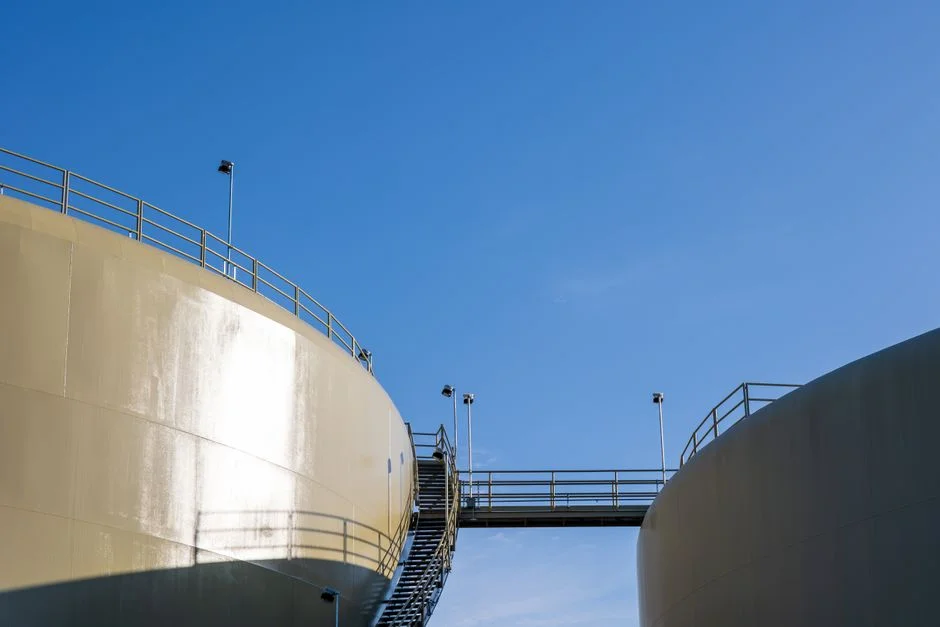
A HydropureWater DAF system saturates a recycle stream of clarified effluent with air at 4–6 bar in a pressure vessel, then releases it at atmospheric pressure into the flotation tank. The resulting micro-bubbles attach to oil droplets and flocs, carrying them to the surface for skimming (HydropureWater, 2024; DAF Corp, 2025). The float leaves the tank at 2–5% solids, while the clarified underflow meets target TSS levels.
Clarifiers, whether circular, rectangular, or lamella, rely on gravity sedimentation. Heavier particles settle to a sludge cone, and clarified water overflows a peripheral weir (Ecologix, undated). Lamella plates increase the effective settling area and surface loading rates, allowing a lamella clarifier to match a DAF footprint on heavy-TSS, low-FOG streams.
The mechanical mismatch for transport wastewater is structural, as emulsified oils resist coalescence and sub-50-µm metal oxides settle slowly. Both classes require either a bubble (DAF) or a coagulant-aided dense floc (chemical-aided clarifier) to achieve removal in a reasonably sized tank. Consequently, a plain circular clarifier without coagulant or lamella plates is rarely the optimal primary on a vehicle or aerospace line, making the hybrid "DAF on oily streams, lamella on grit streams" layout standard practice (Ecologix, undated).
The 2026 Decision Rule for Brigham Transportation Plants
Apply these criteria in order after the characterization round is complete:
- Default to DAF when FOG is above 200 mg/L or the stream is dominated by emulsified oils—such as cutting fluids, parts-washer effluent, and most paint-booth water.
- Default to a clarifier (lamella preferred) when raw TSS is above ~1,000 mg/L, FOG is low, and the stream is heavy on metal fines or grit—such as stamping, grinding, and blast-booth washdown.
- Use a hybrid when the headworks receives both an oily sidestream and a heavy-solids sidestream. DAF polishes the oily line, the lamella clarifier handles grit, and the underflows converge at a common sludge dewatering unit.
- Check salinity before locking in DAF. DAF performance drops when salinity exceeds 10,000 mg/L (~1% TDS). Facilities routing RO concentrate or deicing-rinse water to the headworks must verify TDS before specifying DAF.
- Treat paint-booth water as a likely DAF candidate pending bench or pilot testing. Because removal numbers vary, require a jar test or on-site pilot on a representative sample before purchase.
For most Brigham vehicle and aerospace plants, this rule points to DAF as the primary, with a lamella clarifier reserved for heavy-solids sidestreams. Characterization data should always override this default.
Sizing and Spec Checklist for a 2026 DAF or Clarifier Skid
Present the following inputs during every vendor meeting to ensure quotes are comparable.
| Input | Why it matters | Source of value |
|---|---|---|
| Peak and average flow (m³/h) | Sets tank volume and recycle pump size | Plant flow log / sewer meter |
| FOG, TSS, pH, temperature | Drives DAF vs clarifier choice and polymer dose | 24-h composite sampling |
| Salinity / TDS | Confirms DAF applicability (10,000 mg/L limit) | Lab conductivity |
| Metals list (Cr, Pb, Ni, Zn) | Sets local POTW compliance target | Brigham City IPP discharge limits |
| Footprint ceiling (m²) | Forces lamella or DAF over conventional clarifier | Site plan |
| Materials of construction | 304L stainless standard for chloride/road-salt exposure | Vendor selection |
DAF sizing parameters from the research include a hydraulic loading of 5–15 m/h, polymer usage of 2–10 mg/L, and a recycle ratio determined by air-saturation design (HydropureWater, 2024). Clarifier parameters involve a surface loading of 1–3 m/h and retention of 2–4 h; lamella plates raise effective loading to 20–40 m/h. A complete skid includes a PLC panel, saturation pump, air compressor, sludge pump, and—for hybrids—a lamella sludge pump rated for 0.5–2% underflow. Pair the unit with a PLC-controlled coagulant and polymer dosing skid sized for the upper end of the dose band to ensure operational stability.
2026 Cost, Payback, and Compliance Framing
A DAF unit typically costs $150–$400 per m³ of treated flow, with a 30–50% premium for 304L stainless steel (HydropureWater, 2024). Clarifiers offer lower upfront costs but require more tank volume due to the 1–3 m/h surface loading limit. DAF units consume 0.2–0.5 kWh/m³ for air saturation and 2–10 mg/L of polymer, whereas clarifiers draw less energy but occupy more floor space. Sludge handling often dictates the budget; DAF float (2–5% solids) is 2–3 times more voluminous on a dry-solids basis than clarifier underflow, requiring a plate-and-frame filter press sized appropriately for the chosen primary (HydropureWater, 2024).
HydropureWater (2024) cites a 100 m³/h dairy plant achieving a 3.2-year payback with DAF versus 4.5 years with a clarifier. Brigham transport plants should calculate payback based on local POTW surcharges, hauling costs, and reuse credits rather than generic benchmarks. Compliance is the binding constraint, and the Brigham City Industrial Pretreatment Program enforces strict limits on oil, grease, and TSS. For industry-specific comparisons, refer to the Pikeville food and beverage guide, the New Centerville mining and metals guide, or the Wright City petroleum wastewater guide.
Frequently Asked Questions
What CAPEX envelope should we put on the 2026 capital request for a DAF primary in Brigham?
HydropureWater (2024) reports a DAF CAPEX range of $150–$400 per m³ of treated flow, with a 30–50% premium for 304L stainless steel. For a 50 m³/h average flow, this equates to roughly $190,000–$600,000 before stainless markups; request a binding quote that specifies hydraulic loading, polymer dose, and materials of construction.
How do we pick between a single DAF vendor and a hybrid DAF + lamella clarifier layout?
Default to a single DAF skid when characterization shows a combined stream with FOG above 200 mg/L and TSS below ~1,000 mg/L; use a hybrid when parts-washer effluent and floor or stamping washdown arrive at a common headworks (HydropureWater, 2024; Ecologix, undated). Require vendors to quote both layouts using the same influent data and provide a pilot report on the actual Brigham stream.
What lead time and compliance documents should we request before issuing a PO?
Confirm fabrication lead times in writing, as DAF skids with 304L tanks often require extra time for welding and passivation. For compliance, request published removal performance data, a materials traceability letter for 304L, and a control narrative for review by the Brigham City Industrial Pretreatment Program. Verify current local oil and grease, TSS, pH, and metals limits with the POTW before finalizing the design.
Can DAF and a clarifier share the same sludge dewatering press?
Yes, but size the plate-and-frame filter press based on the primary unit producing the higher dry-solids load. DAF float (2–5% solids) is more voluminous than clarifier underflow (0.5–2% solids), often requiring a larger press