Why Biodiesel Wastewater Is a Special Case for Biological Treatment
Biodiesel is produced by transesterification of edible oils, non-edible oils, animal fats and similar feedstocks, and the wastewater generated by that process is documented as a distinct stream rather than a generic industrial effluent (Satbhai et al., IJMST 2023-08-02). The same review identifies transesterification by-product streams — glycerol, residual methanol, free fatty acids, and soaps — as the main sources of pollutants in the effluent.
Characteristically this stream carries high COD and BOD, emulsified oil and grease, pH swings driven by acid and caustic wash, residual methanol from incomplete phase separation, and high salinity or conductivity from catalyst wash water. The exact concentration ranges depend on feedstock, catalyst and wash-water economy and must be requested from the plant rather than estimated from literature defaults. These characteristics deliver shock loads and foaming that conventional activated sludge struggles to absorb without washout or bulking, creating the need for a membrane-based biological step.
What an MBR Actually Does — and Why It Fits Biodiesel Duty
An MBR couples a biological reactor with membrane filtration so that biomass is retained by the membrane rather than by a downstream gravity clarifier (Satbhai et al., IJMST 2023-08-02). Combining the biological process with membrane filtration delivers advantages over conventional biological treatment alone. Operationally this retention enables higher mixed liquor suspended solids in a smaller tank volume, eliminates sludge washout under shock loading, and produces a particle-free permeate that downstream reuse polishing can act on. Submerged PVDF flat-sheet or hollow-fiber configurations with integrated coarse-bubble aeration for membrane scouring are the dominant industrial form factor, as documented in the supplier catalog for an integrated MBR membrane bioreactor system. For engineers new to the unit operation, the MBR cost per cubic meter guide walks through the reactor-plus-membrane architecture in more detail.
Pretreatment Train: The Step That Decides Whether the MBR Survives
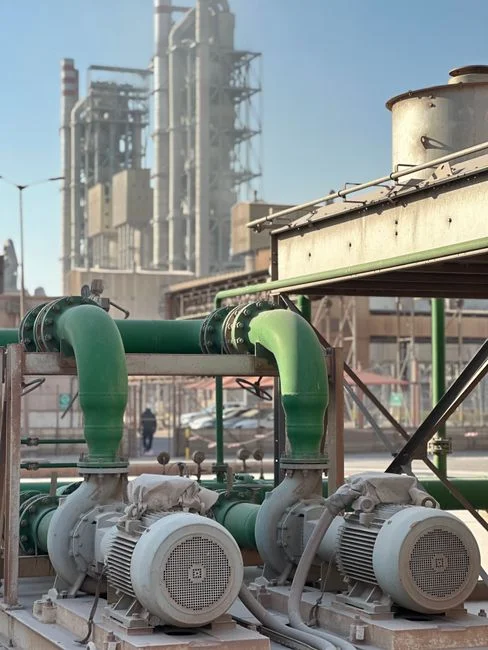
Pretreatment improves the efficiency of biological processes, and for a biodiesel-plant MBR, it is the single most important design decision (Satbhai et al., IJMST 2023-08-02). The qualitative sequence that consistently appears in industrial applications is equalization, pH correction, oil and grease removal, optional methanol or glycerin recovery, nutrient balancing, and only then the MBR. Equalization dampens the batch-wise pH and COD swings that follow transesterification cycles; pH correction brings the stream into a band the biomass can tolerate; oil and grease removal is the step most often undersized. A dissolved air flotation unit for oil and grease removal is the standard primary oil-separator for high-FOG industrial streams, with a coalescer plate pack as an alternative when free oil dominates. Nutrient balancing — typically nitrogen and phosphorus addition — closes the C:N:P ratio that the biological stage requires. Skipping or right-sizing any of these steps is the most common cause of premature membrane fouling in biodiesel service.
MBR Design Parameters for Biodiesel Effluent
The biodiesel-specific MBR design numbers a process engineer needs to defend a PFD or a vendor meeting are drawn from the supplier's published product catalog for the submerged PVDF configuration. The actual values for any given plant depend on the post-DAF pollutant profile, the flow envelope, and the reuse target, and these inputs must be confirmed with the operator before final sizing.
| Parameter | Value / Range | Source |
|---|---|---|
| Membrane material | PVDF, submerged flat-sheet or hollow-fiber | DF series spec (HydropureWater product catalog) |
| Nominal pore size | 0.1 μm | DF series spec (HydropureWater product catalog) |
| Effective permeate filtration | < 1 μm | MBR integrated system spec (HydropureWater product catalog) |
| Membrane aeration | Integrated coarse-bubble air-scour box | DF series spec (HydropureWater product catalog) |
| Element replaceability | Individual element replaceable within cassette | DF series spec (HydropureWater product catalog) |
| Packaged system flow envelope | 10–2,000 m³/day | MBR integrated system spec (HydropureWater product catalog) |
| DF series cassette flow | 32–135 m³/day per cassette at 80–225 m² membrane area | DF series spec (HydropureWater product catalog) |
| Footprint versus conventional biology | 60% smaller claimed | MBR integrated system spec (HydropureWater product catalog) |
| Energy versus external cross-flow | 10–20× lower claimed (benchmark to verify with vendor) | DF series spec (HydropureWater product catalog) |
Two caveats apply. First, the footprint and energy figures are vendor claims; the engineer should request a vendor-side calculation against the offered aeration strategy, mixed-liquor concentration, and cassette count. Second, the design inputs a buyer must obtain from the plant and feed into the MBR sizing are: post-DAF COD and BOD, residual FOG after flotation, residual methanol, peak versus average flow, the temperature window, and the downstream reuse target. The MBR is sized around the post-DAF values, not the raw transesterification effluent. For deeper design criteria on the MBR step itself, the MBR design criteria guide gives a more general framework. The specific DF series submerged PVDF MBR module carries the membrane-level numbers above.
MBR vs SBR vs UASB vs Conventional Activated Sludge for Biodiesel Plants
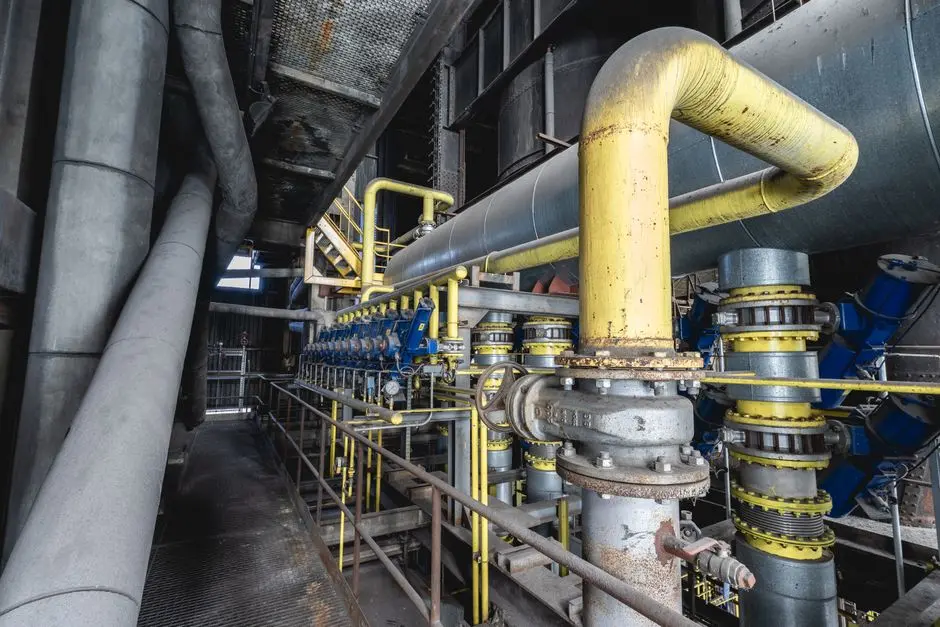
The MBR technology combines biology with membranes and offers advantages over conventional biological treatment (Satbhai et al., IJMST 2023-08-02). The realistic alternatives an EPC will float in a meeting — SBR, UASB, and conventional activated sludge — each have a known failure mode against transesterification effluent. The head-to-head summary is below.
| Option | Strength on Biodiesel Effluent | Documented Weakness | Effluent Quality |
|---|---|---|---|
| MBR | High MLSS tolerates shock; particle-free permeate supports reuse (Satbhai et al., 2023-08-02) | Membrane fouling risk if FOG or methanol is not pretreated out | Highest of the four; near-reuse at < 1 μm |
| SBR | Batch operation absorbs flow and load swings better than continuous CAS | Still depends on a settling phase; turbid supernatant; larger tankage per m³ | Clarifier-quality supernatant, not reuse-ready |
| UASB / anaerobic | Can handle very high COD loads; produces biogas | Sensitive to FOG and sulfate; biogas treatment required; rarely stand-alone for this stream | Needs polishing biology downstream |
| Conventional activated sludge | Lowest capex; widely understood | Sludge washout and foaming on FOG and methanol shock; clarifier failure | Clarifier overflow; not reuse-ready |
The MBR delivers the highest effluent quality of the four, at the cost of membrane maintenance and aeration energy, which is why the pretreatment train and the cassette-level air-scour design carry so much weight. Where biogas recovery is a project priority, a UASB-plus-polishing-MBR combination is the more defensible train than a stand-alone anaerobic unit. The general MBR design criteria guide covers the underlying design logic for the MBR step in any of these trains.
Reuse Outcomes and What to Plan for Downstream of the MBR
Reuse of MBR-treated biodiesel wastewater is a feasible outcome, though the MBR is the biological step, not the full reuse specification (Satbhai et al., IJMST 2023-08-02). MBR permeate is near-reuse quality at < 1 μm effective filtration, yet it still carries dissolved salts, residual COD fractions, and conductivity that typically exceed boiler-feed or process-wash limits. The standard polishing step for closed-loop reuse is an industrial RO polishing step, sometimes protected upstream by an ultrafiltration stage that absorbs any residual particulate load on the RO membranes. Sludge from the MBR biological tank requires dewatering; a plate-and-frame filter press is the standard packaged solution for the smaller sludge volumes an MBR train produces. Designing the reuse envelope with these downstream steps in mind is what turns an MBR project from a discharge compliance exercise into a true zero-liquid-discharge or reuse train.
Supplier Selection Checklist for the MBR Step
A fixed checklist is the most reliable way to compare MBR proposals on substance rather than brochure aesthetics. The items below are tied directly to the failure modes documented for biodiesel duty — FOG fouling, methanol carryover, and pH shock — and should be answered in writing by every bidder.
- Ask for the membrane material, nominal pore size, aeration method, and confirm individual element replaceability inside the cassette — not just the headline system flow.
- Request a guaranteed flux at the design MLSS and the design temperature, together with the CIP protocol: chemistry, frequency, and expected recovery.
- Confirm reference installations on biodiesel or similar high-FOG industrial effluent; municipal MBR references are not equivalent and should be discounted accordingly.
- Verify the energy figure against the offered aeration strategy. The 10–20× reduction versus external cross-flow is a baseline comparison, not a guarantee, and the vendor should substantiate it against the cassette count and airflow rate offered.
- Confirm the cassette-to-frame mechanical design and frame material for a hot, oily service environment, since biodiesel effluent routinely runs warm and carries residual FOG even after DAF.
Frequently Asked Questions
Is an MBR the right biological step for biodiesel wastewater?
MBR technology offers advantages over conventional biological treatment for this stream, with reuse of the treated effluent identified as feasible (Satbhai et al., 2023-08-02). The MBR is the right choice when the project requires reuse-quality permeate and the plant can commit to a real pretreatment train upstream.
What pretreatment does the MBR need in front of it?
The minimum sequence is equalization, pH correction, oil and grease removal by DAF or a coalescer, and nutrient balancing. A methanol stripper is required when residual methanol is high, because methanol at the concentrations carried over from transesterification will upset downstream biology. The plant must supply measured post-DAF COD, FOG and methanol values to size these steps; do not assume default reduction percentages from a vendor proposal.
What pore size and membrane material are standard?
Submerged PVDF at 0.1 μm nominal pore size with integrated coarse-bubble aeration is the standard industrial configuration for this duty, as documented in the DF series product specification.
How is the MBR sized for a given biodiesel plant?
Sizing starts with the post-DAF pollutant profile and the peak-versus-average flow, then maps onto the cassette flow envelope (32–135 m³/day per cassette at 80–225 m² membrane area for the DF series) within the packaged system envelope of 10–2,000 m³/day. Final sizing requires a vendor-side flux and air-scour calculation against the actual temperature window and reuse target.
What should a buyer require in the technical proposal from an MBR supplier?
The proposal should commit to membrane material and pore size, a guaranteed flux at the design MLSS and temperature, the CIP protocol with expected recovery, a reference list on biodiesel or comparable high-FOG industrial effluent, and a substantiated energy figure tied to the offered aeration strategy. The buyer should also confirm cassette-level element replaceability and the frame material specification, since these determine lifetime operating cost.