
Why Lake City Plastics and Rubber Plants Are Revisiting Clarification in 2026
Primary clarifiers in Lake City plastics plants frequently struggle with mats of white polymer beads, release-agent sheen, and shredded flash trim that fail to sink in traditional sedimentation basins. That scene has become more common as 2026 capex reviews fold in two new pressures — tighter pretreatment enforcement on industrial discharges and a corporate sustainability lead who now asks about microplastics. Reviews in Environmental Science and Bio/Technology (2021) treats micro/nano-plastics as a documented wastewater source-pathway requiring both source control and treatment, which is why a 2026 clarification decision cannot be made on float-versus-settle logic alone.
Plastics and rubber plants produce a mixed influent: extrusion washwater carries plasticizer emulsions and floating fines, latex coagulation overflow carries low-specific-gravity droplets and serum proteins, rubber compounding blowdown carries carbon black and heavy mineral fillers that sink, and mold-release drip pans deliver FOG-dominant streams. A conventional sedimentation clarifier handles the last two well, but it is the wrong unit process for the first two — operators end up manually removing what the basin was never designed to float. Lake City's cold winter water temperatures also need to be considered when sizing either technology in 2026, because cold inlet water raises water viscosity, slows microbubble rise velocity, and changes the air-to-solids ratio that any DAF vendor will quote.
How DAF and Sedimentation Clarifiers Actually Separate Solids
Dissolved air flotation and sedimentation clarifiers remove suspended solids through opposite physical principles, requiring engineers to map specific influent characteristics to the appropriate unit process.
A DAF system pressurizes a sidestream of clarified water with air inside a saturation vessel; on depressurization into the float cell, micro-bubbles in the 30–50 µm range nucleate and attach to flocculated particles, lifting them to a floating sludge blanket that a surface skimmer drags into a collection trough (Clearwater Industries, 2026). Most DAF units also include a small settled-sludge compartment or basin with sludge extraction, so a DAF is best described as a "float-first, settle-second" clarifier rather than a pure flotation device. Because the bubble-contact stage drives separation, the influent must be chemically conditioned first: coagulant plus pH adjustment plus polymer flocculant are dosed through flocculation tubes (15–45 s flash-mix in a serpentine pipe array) or staged mix tanks with impeller agitators (Clearwater Industries, 2026).
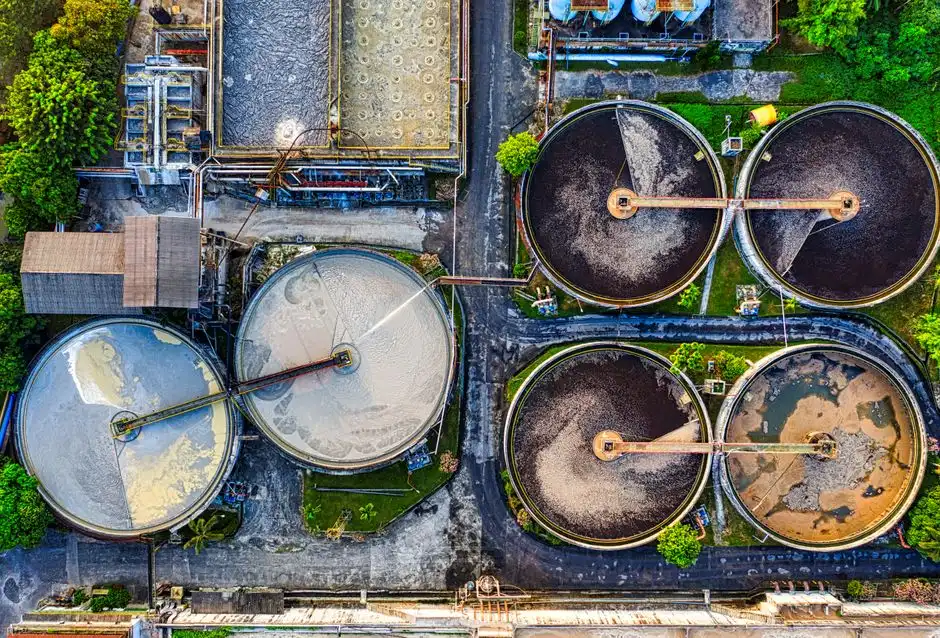
A sedimentation clarifier relies on gravity alone. Inclined-plate (lamella) designs multiply the effective settling area inside a small footprint and are typically designed to surface loadings of 20–40 m/h, with the lamella geometry trading depth for area (HydropureWater lamella clarifier datasheet, 2026). No bubble-contact stage is involved, which is why the same datasheet claims chemical reductions of up to 30% relative to a conventional basin — there is no floc-strength requirement driven by bubble attachment. The trade-off is that anything with a specific gravity below 1.0 will not reach the sludge hopper; it will simply ride the surface launder out with the clarified water.
DAF vs Clarifier: Parameter-by-Parameter Comparison for Plastics and Rubber
The table below provides a technical reference for corporate engineers during vendor evaluations. All numbers come from current manufacturer literature; the right column is qualitative because the supporting research does not give a single industry-standard value.
| Parameter | Dissolved Air Flotation (DAF) | Lamella Plate Sedimentation Clarifier |
|---|---|---|
| Separation mechanism | 30–50 µm micro-bubbles attach to floc, float to surface (Clearwater Industries, 2026) | Gravity settling on inclined plates; no bubble-contact stage (HydropureWater lamella datasheet, 2026) |
| Catalogue flow range | 4–300 m³/h across 13 standard models (HydropureWater DAF datasheet, 2026) | 20–40 m/h surface loading (HydropureWater lamella datasheet, 2026) |
| Target contaminant | Floatable FOG, plasticizer emulsions, polymer beads, microplastic fines, latex droplets (Clearwater Industries, 2026) | Heavy settleable inorganics, carbon black, mineral fillers (HydropureWater lamella datasheet, 2026) |
| Chemical footprint | Coagulant + pH adjust + polymer, 15–45 s flash-mix in flocculation tubes (Clearwater Industries, 2026) | Flocculant aid only; up to 30% chemical reduction vs. conventional basin (HydropureWater lamella datasheet, 2026) |
| Cold-water sensitivity | Microbubble rise velocity and polymer activity both fall with water temperature — request cold-water performance data | Viscosity rise slows settling; less sensitive than DAF but still derates in winter |
| Startup constraint | First fill must be clean water to protect the recirculation pump and saturation system (Clearwater Industries, 2026) | No clean-water first fill; can be commissioned on plant water |
| Footprint / hydraulics | Shallow, large free-board; floating polymer beads consume air-to-solids capacity | Compact inclined-plate pack; sensitive to flow distribution and plate fouling |
Where the two technologies meet is the float cell's free-board. When a polymer-bead mat builds on a DAF, the effective air-to-solids ratio the vendor sized for changes, which is why a plastics plant often needs to derate a DAF catalogue flow or accept shorter skimmer intervals. A lamella clarifier has no such free-board constraint because the contaminants it is designed for sink.
Match the Unit Process to Your Sub-Process (Extrusion, Latex, Compounding, Mold Release)
Plastics and rubber influent consists of distinct streams, each requiring a specific primary treatment approach to meet 2026 procurement standards.
- Extrusion washwater. Plasticizer emulsions and floating polymer fines dominate. DAF primary is the standard choice because the 30–50 µm micro-bubbles attach to the emulsified phase and lift fines the operator would otherwise be skimming off by hand (Clearwater Industries, 2026).
- Latex coagulation overflow. Latex droplets and entrained serum proteins sit just below water specific gravity. DAF recovers floatable latex as a skimmable by-product while clarifying the serum — a double value that a lamella cannot capture.
- Rubber compounding blowdown. Carbon black, zinc oxide, and mineral fillers sink. A lamella clarifier recovers the settleable fraction at 20–40 m/h surface loading without the chemical conditioning a DAF would demand for the same stream (HydropureWater lamella datasheet, 2026).
- Mold-release and lubricant drip. FOG-dominant. DAF's micro-bubbles attach to free and emulsified oil and lift it for skimming — this is the textbook FOG application (Clearwater Industries, 2026).
- Mixed plant effluent. A typical Lake City facility blends all four. Most operators specify DAF primary because at least one sub-stream is floatable, then route the underflow to biological or membrane polishing.
The decision matrix that falls out of this is: DAF if the dominant load floats (latex, plasticizer, polymer fines, FOG, release agents), lamella if the dominant load sinks (carbon black, fillers, inerts). Plants that have both streams usually run segregated primary treatment and a common polishing train.
The 2026 Microplastic Question: Can DAF or Clarifier Do It Alone?
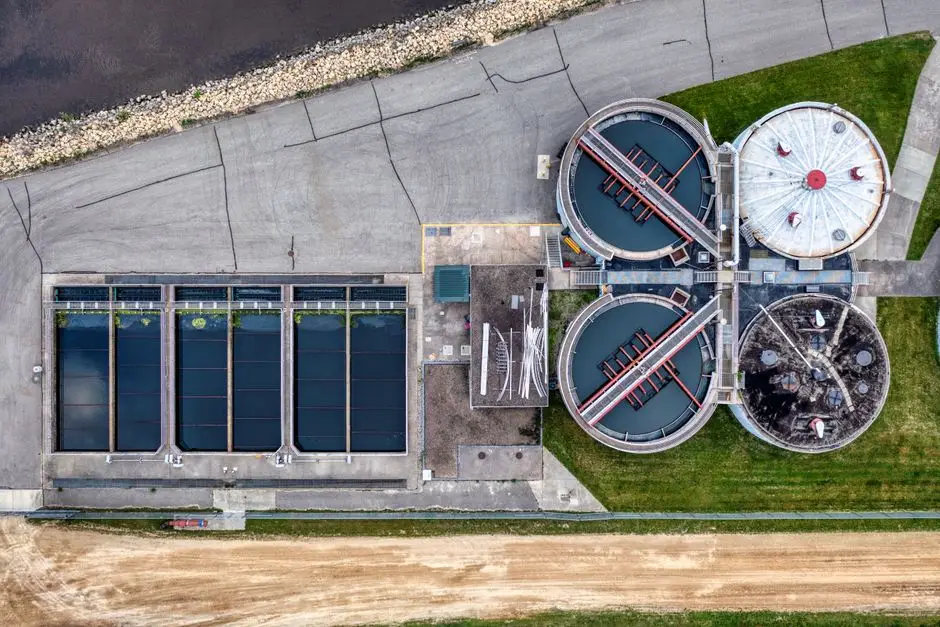
Corporate sustainability leads are prioritizing micro/nano-plastic source-pathway management in 2025–2026 ESG disclosures, citing Reviews in Environmental Science and Bio/Technology (2021). Primary clarifiers alone cannot reach the discharge targets required for effective microplastic control.
DAF primary will float a significant fraction of buoyant microplastic fragments, polymer beads, and fibre offcuts, because those particles have a specific gravity close to or below water and a 30–50 µm bubble can attach to them. The catch is that sub-100 µm fragments and denser-than-water polymer fragments (filled compounds, carbon-black-loaded rubber wear) are not fully removed by flotation alone. For 2026 microplastic discharge targets, pair the DAF with a downstream polishing stage — an MBR polishing stage with submerged PVDF membranes, or UF polishing at 0.03 µm pore size — both of which act as absolute barriers to the fragment sizes that escape flotation.
Use the lamella clarifier only as a microplastic step where the plastic fragments are confirmed to settle; otherwise, route microplastic-bearing streams to DAF primary and downstream membrane polish. A single primary clarifier, of either type, should not be sold to the sustainability lead as a microplastic control.
Lake City 2026 Implementation Checklist
Use this table as a pre-vendor-call punch list to verify site-specific requirements before selecting a system.
| Workstream | Action before vendor selection | What to request from the supplier |
|---|---|---|
| Influent characterisation | Flow (m³/h, peak vs average), TSS, FOG, COD, pH, temperature, and float-vs-settle split from jar tests | Sizing basis with stated safety factor; reference list of similar plastics/rubber sites |
| DAF scope (if selected) | Plan for pressurised recycle pump, saturation vessel, flocculation tubes or staged mix tanks, and a clean-water source for first fill (Clearwater Industries, 2026) | Documented clean-water startup procedure; cold-water microbubble performance data; PLC-controlled chemical dosing with skimmer-speed and pump-speed adjustment (Clearwater Industries COMPACT DAF description, 2026) |
| Lamella clarifier scope (if selected) | Plan for sludge recirculation, flocculation stage, and inclined-plate pack sized to 20–40 m/h surface loading (HydropureWater lamella datasheet, 2026) | Plate material, plate spacing, sludge hopper geometry, and flow-distribution design |
| Microplastic polishing | Decide between MBR and UF based on space, footprint, and discharge limits | Membrane pore size, flux, cleaning protocol, and documented microplastic log-removal |
| Climate and site | Confirm winter inlet-water temperature range; identify polymer grade rated for low temperature | Cold-water performance curves; insulated or indoor skid options; freeze-protection scope |
| Controls and instrumentation | List pH, flow, temperature, and TSS instrumentation points | PLC panel I/O list; remote-monitoring option; alarm setpoints |
For a Lake City winter, the climate note is the one most often missed. Cold water slows the microbubble rise velocity that any DAF vendor's catalogue curve assumes at 20 °C, and it depresses polymer activity, so a skimmer that comfortably handles a summer float mat can lose capacity in January. Ask the vendor for cold-water curves and a polymer grade rated for low temperature before signing — both of those checks are cheaper to do on paper than to discover during a January upset.
Frequently Asked Questions
For a Lake City plastics or rubber plant in 2026, is DAF or a clarifier the right primary?
DAF if the stream carries floatable FOG, latex, plasticizer emulsions, release agents, or polymer beads — the 30–50 µm micro-bubbles attach and lift them for skimming (Clearwater Industries, 2026). A lamella clarifier is the right primary when the dominant load is heavy settleable inorganics, carbon black, or mineral fillers at 20–40 m/h surface loading (HydropureWater lamella datasheet, 2026). Most Lake City plants end up specifying DAF primary because at least one sub-stream is floatable.
What flow range should a DAF system cover, and what should I budget?
Match to peak hourly flow, not average — the HydropureWater DAF catalogue lists 4–300 m³/h across 13 standard models (2026), which covers most plant scales. For 2026 budgeting, request a written quote tied to your
Frequently Asked Questions
Should a plastics or rubber factory in Lake City choose DAF or a clarifier in 2026?
The choice depends on the specific gravity and particle size of your waste stream. DAF (Dissolved Air Flotation) is generally preferred for plastics and rubber applications because these materials often have a specific gravity close to or lighter than water, which hinders effective settling in a traditional clarifier. In 2026, Lake City facilities aiming for strict TSS (Total Suspended Solids) and FOG (Fats, Oils, and Grease) discharge limits typically favor DAF units for their ability to achieve 85% to 95% removal efficiency for lightweight suspended particles.
Clarifiers remain the standard only if your wastewater contains heavy inorganic fillers, such as calcium carbonate or clay, which settle rapidly. If your effluent contains a mix of heavy fillers and buoyant polymers, a two-stage approach—using a clarifier for heavy solids followed by a DAF for floating polymers—is the industry-standard configuration for meeting 2026 environmental compliance.
What flow range do DAF systems cover for industrial plastics wastewater?
Modern DAF units for plastics and rubber manufacturing are highly scalable and typically cover flow rates ranging from 10 GPM (gallons per minute) to over 2,000 GPM. Small to mid-sized compounding facilities in Lake City generally utilize skid-mounted units rated for 50 to 250 GPM, while large-scale extrusion plants often require custom-engineered concrete or stainless steel tanks capable of handling continuous flows exceeding 1,000 GPM.
Can dissolved air flotation remove microplastics by itself?
DAF is highly effective at capturing microplastics, but its efficiency is dependent on the addition of chemical coagulants and flocculants. When properly dosed, DAF systems can capture microplastic particles down to the micron level by attaching air bubbles to the particles, lifting them to the surface for mechanical skimming. While DAF can remove over 90% of microplastics, it should be paired with secondary filtration, such as sand or multimedia filters, if your 2026 permit requires the removal of sub-micron particles.
What pretreatment does a rubber compounding plant need before a clarifier?
Rubber compounding wastewater is characterized by high viscosity and the presence of tackifiers, which can cause significant fouling in a clarifier. Before entering a clarifier, the stream must undergo primary screening to remove large rubber scraps and debris, followed by an equalization tank to manage pH fluctuations and temperature spikes. Additionally, an oil-water separator or chemical emulsion breaking stage is necessary to ensure that synthetic rubber residues do not coat the clarifier’s mechanical components or impede the settling process.
What should I ask a DAF supplier about cold-weather performance and lead time in 2026?
For Lake City’s climate, ask the supplier specifically about the insulation ratings of the DAF tank and whether the air saturation system is rated for sub-zero operation, as cold water increases viscosity and can significantly reduce air bubble buoyancy. Verify if the system includes heat-traced piping for chemical feed lines to prevent crystallization during winter months.
Regarding lead times, demand a firm delivery schedule that accounts for 2026 supply chain constraints on stainless steel and PLC control components. Ask for a guaranteed "ready-to-operate" date rather than a "shipping" date, and request a penalty clause for delays exceeding 30 days to protect your project timeline against ongoing component shortages.