Does 40 CFR Part 433 Apply to Your Marengo Facility?
The gating question for any fabricated metals shop near Marengo, Illinois is whether 40 CFR Part 433 (Metal Finishing) applies at all, because the rule is process-based and pulls a facility into scope the moment a single regulated tank goes into service. Confirming scope before any equipment is sized prevents both overspending on pretreatment the plant does not need and undersizing a system that has to hit categorical limits it did not budget for.
Six core operations trigger categorical status under 40 CFR Part 433: electroplating, electroless plating, anodizing, coating (chromate conversion, phosphate, and similar), chemical etching and chemical milling, and printed circuit board manufacturing (EPA Metal Finishing Effluent Guidelines, cited in S5). One plating tank is enough to pull all 46 operations listed in 40 CFR 433.10(a) into scope, even when the parent shop classifies itself under SIC Major Group 34 (Fabricated Metal Products) (S5). The legal hook is the process, not the NAICS or SIC code, so a stamping shop that ships only dry parts to a separate finisher is generally outside the category while a contract plating tank on site brings the whole floor back into it (S2, S5).
Out-of-scope shops are not exempt from federal oversight. The general categorical prohibitions in 40 CFR 403.5 still apply: no pass-through, no interference, no fire or explosion hazard, and no corrosive damage to the POTW collection system (S5). A job shop that cuts, bends, and welds mild steel with no surface chemistry lives under those four prohibitions and whatever the local Control Authority adds in its local limits, but it does not file a Baseline Monitoring Report against Table 1 metals.
For a Marengo floor, the Illinois-specific step is to confirm the Control Authority with the receiving POTW pretreatment coordinator before any equipment is ordered. The answer dictates where the BMR is filed, which local limits govern, and which technical requirements the state of Illinois layers on top of the federal program (framework adapted from S5). The Village of Marengo wastewater plant and adjacent McHenry County regional authorities each carry their own local limits, and the operating envelope can move substantially between jurisdictions.
Which Limits Apply: Federal Categorical, Local POTW, and Permit Conditions
Three overlapping limit sets govern a Marengo fabricator's discharge: the federal categorical standards in 40 CFR Part 433, the local limits developed by the Control Authority under 40 CFR 403.5, and any narrative or numeric conditions written into the individual discharge permit (S5). The plant must meet whichever limit is stricter on each parameter, which is why the design envelope is built pollutant by pollutant from the POTW table rather than the federal table alone.
PSES (Pretreatment Standards for Existing Sources) covers facilities that operated before August 1982; PSNS (Pretreatment Standards for New Sources) covers facilities established after that date. With the exception of cadmium, the numeric values are essentially identical (S2, S5). Most POTW pretreatment programs enforce PSNS-equivalent local limits on all industrial users as a conservative baseline, so even an existing plant should usually design to PSNS numbers (S2, S5).
Local limits are always at least as stringent as the federal categorical rule and routinely add the parameters 40 CFR Part 433 underweights: oil and grease caps (often 100–250 mg/L daily max), TSS caps (typically 200–400 mg/L daily max), and a pH window of 6.0–9.0 enforced as an instantaneous limit rather than a 4-hour composite (S5). Categorical limits at 40 CFR 433.13 are non-negotiable on Table 1 metals, total cyanide, and Total Toxic Organics; the local and state layers add the operational guardrails that catch what the federal table leaves out (S5).
40 CFR Part 433 sets PSES and PSNS limits for cadmium, chromium, copper, lead, nickel, silver, zinc, and Total Toxic Organics; the plant must also meet the local POTW limits developed under 40 CFR 403.5, which are always at least as stringent and frequently add oil and grease, TSS, and pH caps (S2). The consolidated parameter table below lines up the federal daily-maximum and monthly-average values with the local-limit ranges a Marengo design should treat as the binding envelope.
| Parameter | 40 CFR 433 PSES/PSNS Daily Max (mg/L) | 40 CFR 433 PSES/PSNS Monthly Avg (mg/L) | Typical POTW Local Limit Daily Max (mg/L) | Notes |
|---|---|---|---|---|
| Cadmium (Cd) | 0.69 | 0.26 | Stricter of federal | Only metal where PSES/PSNS values differ materially (S2, S5) |
| Chromium, total (Cr) | 2.77 | 1.71 | Stricter of federal; often 1.0–2.0 | Covers both Cr(VI) and Cr(III) post-reduction (S2, S5) |
| Copper (Cu) | 3.38 | 2.07 | Stricter of federal; often 1.0–2.0 | Local cap is the binding number on most permits (S5) |
| Lead (Pb) | 0.69 | 0.43 | Stricter of federal | Rarely binding on a Marengo floor (S2, S5) |
| Nickel (Ni) | 3.98 | 2.38 | Stricter of federal; often 1.0–2.0 | Drives RO polish decisions for reuse (S2) |
| Silver (Ag) | 0.43 | 0.24 | Stricter of federal | Binding only on precious-metal shops (S2, S5) |
| Zinc (Zn) | 2.61 | 1.48 | Stricter of federal; often 1.5–3.0 | Stamping and galvanizing shops most affected (S2, S5) |
| Total Cyanide (CN) | 1.20 | 0.65 | Stricter of federal | Must be destroyed upstream of precipitation (S2, S5) |
| Total Toxic Organics (TTO) | 2.13 | — | — | BMR-only analysis unless CA grants ongoing waiver (S5) |
| Oil & Grease | Not in 433 | Not in 433 | 100–250 (S5) | Local limit only |
| TSS | Not in 433 | Not in 433 | 200–400 (S5) | Local limit only |
| pH | Not in 433 | Not in 433 | 6.0–9.0 instantaneous (S5) | Local limit only |
The action item for the buyer is to obtain the receiving POTW's current local limits document in writing before locking in equipment sizing, because the local cap — not the federal cap — is the binding number on most parameters and the permit cycle renews annually.
The Contaminant Families a Marengo Floor Drain Actually Generates
Most fabricated metals floors generate the same four contaminant families regardless of the specific process mix, and the typical field concentrations are what drive equipment sizing rather than the categorical limit numbers themselves (S2, S5). Building a treatment train without measuring what is actually coming down the floor drain is the most common reason a 2026 installation misses permit on day one.
Free and emulsified oils come off stamping, machining, and drawing cells at 50–500 mg/L. Dissolved heavy metals (Zn, Ni, Cu, Cr, Pb, Cd) leave plating rinsewater and acid pickling baths at 5–200 mg/L total. Hexavalent chromium spikes from chromic anodizing, hard-chrome plating, and conversion coating — a hard-chrome dump can push Cr(VI) above 50 mg/L with pH below 2. Total suspended solids from grinding swarf, casting sand, and hydroxide floc carryover run 100–1,000 mg/L (S5). Cyanide appears wherever alkaline cyanide plating of zinc, copper, cadmium, or silver is still in use, and it must be destroyed before metals precipitation or it resolubilizes the precipitates downstream (S2, S5).
Two design consequences follow. First, sample a full week of composite flow before specifying equipment, because a 4-hour composite that misses the Friday afternoon dump will undersize the equalization basin (S2, S5). Second, the four contaminant families do not respond to the same chemistry: oils need physical separation or chemical break, hex chrome needs reduction, cyanide needs oxidation, and dissolved metals need pH-driven precipitation. Trying to drop them all into one reaction stage produces an effluent that fails on at least one parameter and usually on three (S5).
A shop that has moved to alkaline non-cyanide zinc or acid copper sidesteps the cyanide unit operation entirely, but a job-shop hard-chrome line that also runs decorative nickel over a cyanide copper strike has both streams in the same floor drain and both unit operations in the train (S5). The buyer action item is a written influent characterization report covering pH swing, oil range, total dissolved metals, Cr(VI) peak, and cyanide presence before any RFQ is sent.
The Standard Pretreatment Train, in the Order It Must Run
The standard unit-operation sequence for a fabricated metals pretreatment system runs in a fixed order, and the order is not optional. Cyanide must be destroyed before chrome reduction, and chrome must be reduced before metals are precipitated — otherwise mixed-metal sludges carry residual cyanide and hexavalent chromium into the clarifier and the reportable effluent (S5).
- Headworks screening. A rotary mechanical bar screen for headworks removes rags, wipes, and tramp metal upstream of the equalization basin; this is the single most common cause of premature press-cloth failure when it is skipped (S2).
- Flow equalization. Smooths pH to 6–9 and brings flow CV below 0.5; plating shops run batch dumps, not steady flow, so equalization is the unit operation that makes the chemistry downstream work at all (S2).
- Cyanide destruction. Alkaline chlorination at pH > 11, ORP > 650 mV, 1–2 h HRT, using NaOCl. Must occur before chrome reduction so residual CN⁻ does not carry through the precipitation stage (S2, S5).
- Hexavalent chrome reduction. Sodium metabisulfite (or ferrous sulfate) at pH 2–3, ORP 250–300 mV, converting Cr(VI) to Cr(III); Cr(III) then precipitates as Cr(OH)₃ in the next stage. Must occur before metals precipitation (S2, S5). The chemistry is detailed in a separate hexavalent chromium reduction process guide.
- Metal hydroxide precipitation. pH 8.5–9.5 with NaOH; co-precipitates Zn, Ni, Cu, Pb, Cd, and the reduced Cr (S2, S5).
- DAF or lamella clarification. Removes floated floc and TSS. A DAF system for metal hydroxide floc is the right call when free or emulsified oil shares the floor drain; lamella is the right call in a low-oil rinse stream (S2, S5).
- pH trim and final polishing. 6–9 outlet pH. Skid-mounted PLC-controlled chemical dosing cuts field install time, forces bench-test of interlocks before shipment, and gives the operator one panel to lock out (S2, S5). Polishing is added only when the POTW tightens below PSNS, when reuse demands it, or when a future rule forces it (S2).
Chemical dosing is governed by feedforward (flow-paced) and feedback (pH/ORP) control on a PLC-controlled automatic chemical dosing skid. The four chemicals in regular service are NaOH or H₂SO₄ for pH trim, sodium metabisulfite for chrome reduction, NaOCl for cyanide destruction, and anionic or cationic polymer for floc. Each pump needs a calibration column and a stroke-count totalizer; without those, the operator is dosing blind and the effluent proves it (S5).
DAF vs. Lamella: The Real Engineering Choice for a Marengo Floor
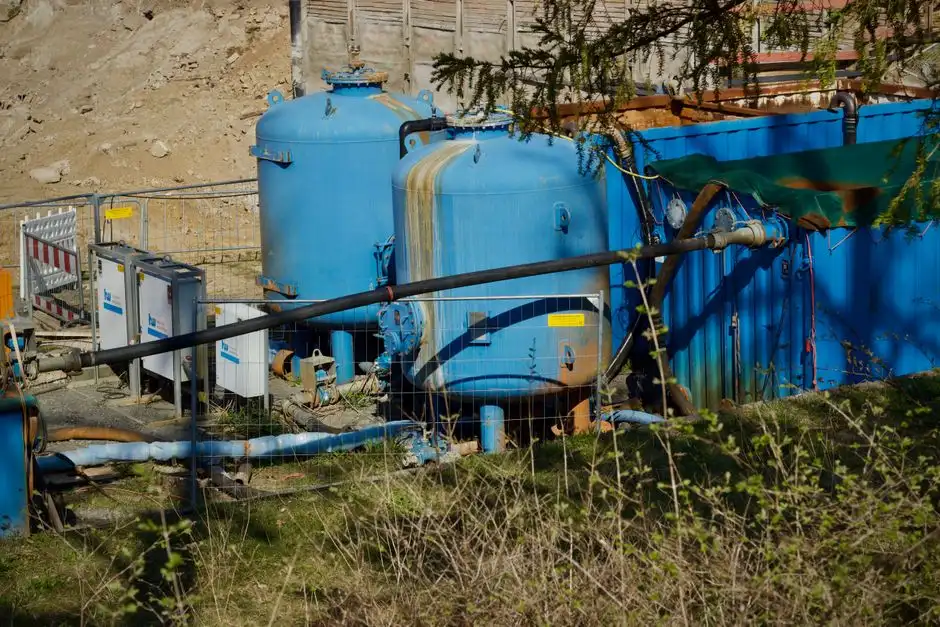
The DAF-versus-lamella decision turns on the contaminant mix in the floor drain, and most fabricated metals plants are not actually choosing freely — the oil loading drives the call. A shop whose floor drain carries tramp oil from stamping and machining cells cannot skim that oil with a lamella and should not pretend it can. The DAF sizing framework below is unpacked further in a DAF vs clarifier for fabricated metals in Geneva article that covers the same parameters from a different jurisdictional angle.
DAF sizing is governed by three knobs: hydraulic surface loading, air-to-solids ratio, and recycle rate. Hydraulic surface loading runs 4–20 m/h depending on model and floc density. Air-to-solids ratio spans 0.005–0.060, with 0.02 a typical design point for metal-hydroxide floc. Recycle rate is set at 10–30% of forward flow (S2, S5). Pushing A/S higher produces a drier float but costs blower power and can shatter fragile floc; pushing recycle rate higher improves TSS removal but dilutes the chemistry and inflates equalization demand (S2, S5).
A lamella clarifier for metals precipitation runs at 20–40 m/h surface loading. Inclined-plate geometry improves floc-blanket contact and reduces chemical consumption by roughly 30% versus a conventional clarifier (S5). The trade-off is oil handling: a lamella cannot skim free or emulsified oil the way a DAF can, so it is the right call in a low-oil rinse stream and the wrong call in a shop that shares its floor drain with stamping or machining cells. Lamella also offers a smaller footprint, which matters for retrofits in existing fabricated metals buildings; the inclined-plate package is available as a high-efficiency sedimentation tank skid that can replace a conventional clarifier in tight floor space.
| Parameter | DAF | Lamella |
|---|---|---|
| Hydraulic surface loading | 4–20 m/h (S2, S5) | 20–40 m/h (S5) |
| Air-to-solids ratio | 0.005–0.060; 0.02 typical (S2, S5) | Not applicable |
| Recycle rate | 10–30% of forward flow (S2, S5) | None |
| Free/emulsified oil removal | Yes (S5) | No (S5) |
| Chemical consumption vs. conventional | Baseline | ~30% lower (S5) |
| Footprint | Larger | Smaller (inclined plates) |
| Best fit | Stamping + plating + machining cells sharing a floor drain (S2, S5) | Low-oil rinse stream only (S5) |
Most fabricated metals plants hit sewer limits with the train above and never need a polishing step. The cases that do are predictable: the POTW tightens local limits below PSNS, the plant wants to reuse rinsewater and needs RO-quality feed, or a new rule (PFAS, per the EPA 2026 chrome finishing rulemaking) lands and forces a polish stage (S2).
Sludge Dewatering and the Plate-and-Frame Payback
The choice of DAF or lamella at the head of the clarifier step determines the sludge dryness profile downstream, and that profile drives hauling cost for as long as the plant operates. A buyer who picks the clarifier without modeling the dewatering step is leaving money on the table — or signing up for a hauling bill that the hauler is happy to renew every quarter.
Floated metal-hydroxide sludge typically runs 2–5% dry solids out of the DAF and dewaters to 25–35% with a plate and frame filter press for metal hydroxide sludge (S2). A belt press is cheaper and continuous but caps out around 22% dry solids on metal hydroxide — if the hauler is paying by wet ton, plate and frame pays back (S2). The rotary mechanical bar screen upstream of the equalization basin keeps rags, wipes, and tramp metal out of the sludge train, which is the single most common cause of premature press-cloth failure (S2).
Alarm and shutdown interlocks on pH excursion, ORP out of range, and high TSS should automatically divert flow back to the equalization basin header so a chemistry upset does not become a discharge violation (S2, S5). Skid-mounted chemical dosing matters at the back end too: it cuts field install time, forces the integrator to bench-test interlocks before shipment, and gives the operator one panel to lock out instead of five loose pumps (S2, S5). The framework applies equally to a Marengo floor and to comparable mining and metals plants Maple Valley 2026 pretreatment operations that share the same hydroxide-sludge handling problem.
PFAS Future-Proofing: The 2026 Chrome-Finisher Rulemaking
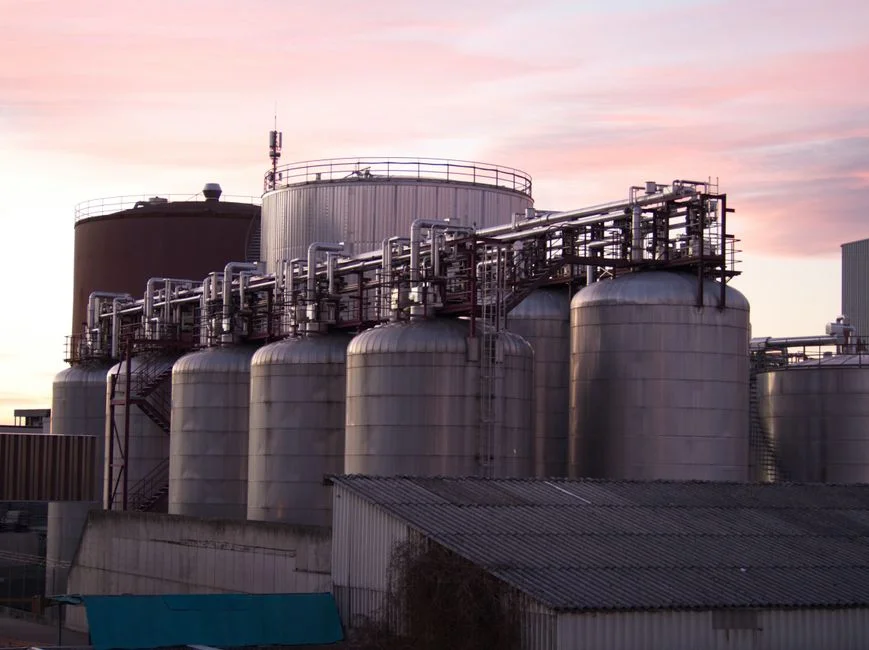
EPA identified chrome finishing facilities (chromium plating, chromium anodizing, chromic acid etching, and chromate conversion coating) as the predominant PFAS source in the Metal Finishing category because some operations have used PFAS-based fume suppressants to control hexavalent chromium emissions (S5). The rulemaking docket is EPA-HQ-OW-2022-0869, and there is no numeric PFAS limit in effect in 2026 (S2, S5).
Anion exchange or granular activated carbon is the proven polish step for the long-chain PFAS species tied to chrome plating (S2). The right 2026 design move is to lay out the train so a polish skid can be bolted on later rather than installed now and paid for ahead of any actual limit. Size equalization, chrome reduction, and DAF with hydraulic capacity to accept the future polish skid's backwash and regenerate stream without re-sizing the head of the train (S2, S5). EPA's 2022 PFAS wastewater permit guidance rescission does not unwind this category-specific rulemaking, but it does change the broader permitting landscape; a Marengo chrome finisher should track both tracks — docket EPA-HQ-OW-2022-0869 for categorical effluent limits, and the receiving POTW's permit cycle for any PFAS parameters the local authority may add in the interim (S5).
For BOD/COD tightening or water reuse, a submerged PVDF MBR integrated wastewater treatment system delivers sub-micron filtration and stable effluent that can be sent to cooling tower makeup or rinsewater reclaim. For sub-ppm TDS or specific metal caps such as nickel below 0.1 mg/L for some reuse specs, an RO system is required, and the multi-media filter upstream must hold SDI15 below 3 or the RO membranes fail early (S2). Closed-loop zero liquid discharge is rarely economic for a fabricated metals plant unless water scarcity or a specific reuse-economics case supports the capital (S2).
Compliance Cadence: BMR, Initial Report, and Semi-Annual Filings
The administrative cadence is dictated by 40 CFR 403.12, and a Marengo plant inherits it almost verbatim. The first deliverable is the Baseline Monitoring Report, due to the Control Authority at least 90 days before the plant first discharges regulated wastewater; the second is the initial compliance report, due within 90 days of the compliance date, with pollutant concentrations, average and maximum daily flows, and a corrective plan if limits are not yet met (S5). After the initial cycle, the plant files semi-annual compliance reports in June and December under 40 CFR 403.12 (S5).
TTO monitoring is the part most compliance managers underestimate. The Baseline Monitoring Report must demonstrate compliance with the Total Toxic Organics list at 40 CFR 433.13, and the analysis is expensive. The Control Authority may waive ongoing TTO monitoring after the BMR if the facility demonstrates compliance and completes the follow-up tasks the CA prescribes — but that waiver is at the CA's discretion, not the facility's (S5). Plan for the analysis in the BMR budget and do not assume the waiver will be granted.
On-site records — BMR, compliance reports, sampling logs, calibration records, chain-of-custody — must be retained for at least three years and produced on request. The Control Authority must be notified immediately of any release that could interfere with the POTW (S5).
| Filing | Due | Trigger | Citation |
|---|---|---|---|
| Baseline Monitoring Report (BMR) | ≥ 90 days before first regulated discharge | New or modified discharge to POTW | 40 CFR 403.12 (S5) |
| Initial Compliance Report | Within 90 days of compliance date | Following BMR acceptance | 40 CFR 403.12 (S5) |
| Semi-Annual Compliance Reports | June and December | Ongoing, after initial cycle | 40 CFR 403.12 (S5) |
| TTO Compliance Demonstration | BMR submission | 40 CFR 433.13 Table 1 | 40 CFR 433.13 (S5) |
| Record Retention | ≥ 3 years on site | Ongoing | 40 CFR 403.12 (S5) |
Frequently Asked Questions
Does a Marengo stamping shop with no plating line have any pretreatment obligations?
Probably not under 40 CFR Part 433, because the rule is process-based and the six triggering operations (electroplating, electroless plating, anodizing, coating, chemical etching and milling, and PCB manufacturing) are not running on the floor (S5). The shop is still bound by the general categorical prohibitions in 40 CFR 403.5 — no pass-through, no interference, no fire or explosion hazard, no corrosive damage — and the receiving POTW's local limits still apply to anything that goes down the drain. Confirm scope in writing with the receiving POTW's pretreatment coordinator before any equipment decision.
What does a 2026 fabricated metals pretreatment system cost to install and operate, and what drives the budget?
The research supplied does not include a numeric installed-cost or operating-cost figure, so any specific dollar range quoted here would be invented. The actionable buyer step is to request a written line-item budget from each integrator that breaks out equalization volume (driven by influent characterization), cyanide destruction hardware (only if alkaline cyanide plating is on site), chrome reduction reactor sizing, DAF or lamella selection, plate and frame filter press, and the chemical dosing skid. Two budget items most buyers underweight in a quote comparison are the BMR TTO analytical cost and the on-site retention requirements for calibration and chain-of-custody records, both of which recur annually.
How do I choose between a DAF and a lamella clarifier for my floor drain mix?
The decision is driven by oil loading, not by footprint or capital cost. A floor drain that carries free or emulsified oil from stamping, machining, or drawing cells needs a DAF because a lamella cannot skim oil (S5). A low-oil rinse stream from a clean plating line can run on a lamella at 20–40 m/h surface loading with chemical consumption roughly 30% lower than a conventional clarifier (S5). A useful cross-check is a one-week oil-and-grease profile on the floor drain; if the weekly average exceeds the local limit by a margin that lamella cannot close, the DAF is the only credible answer.
What is the BMR filing timeline and what happens if I miss the 90-day window?
The Baseline Monitoring Report must be submitted to the Control Authority at least 90 days before the plant first discharges regulated wastewater, per 40 CFR 403.12 (S5). It contains Table 1 pollutant results, measured flow, process description, and analytical methods. The initial compliance report follows within 90 days of the compliance date, with semi-annual reports in June and December thereafter. Missing the 90-day window does not have a single federal penalty schedule; enforcement runs through the Control Authority's pretreatment program and the Illinois EPA, and the practical consequence is that the plant cannot lawfully discharge until the BMR is accepted, so equipment commissioning and production startup have to be sequenced against the CA's review clock.