Why Perth Projects Need a Containerized MBR (Not a Concrete STP)
Containerized membrane bioreactors (MBRs) are the default choice for Perth residential estates under roughly 200 equivalent persons and for 100–500 person FIFO camps because the format removes the cast-in-place civil works that a conventional activated-sludge plant demands. MAK Water, the leading Western Australian packaged MBR supplier, positions its bioreactors as "corrosion-resistant, self-contained, modular systems that allow easy deployment to remote locations" (MAK Water, 2026). For projects outside the Perth metro sewerage area — regional WA mining camps, remote accommodation blocks, and fly-camp builds — this is the deciding factor: a packaged unit can be on a tilt-tray in weeks, while a concrete STP is a wet-season construction programme.
Water scarcity in the south-west and Pilbara regions pushes designers toward Class A+ reuse for toilet flushing, irrigation, and wash-down, because potable make-up is either expensive (desalinated supply) or restricted. MAK Water's MBR is engineered specifically to produce Class A+ effluent for "risk category high" applications, with the Karratha Airport installation being the directly applicable Western Australian Department of Health (WA DoH) precedent (MAK Water, 2026). For projects with no reuse intent, MAK Water's ASBR, ASBR+, MBBR, and MBBR+ packaged plants target Class C "risk category low" effluent — a simpler train that may suit a residential-only discharge to a Water Corporation or local council scheme (MAK Water, 2026).
For small to mid-size residential estates (under ~200 EP) and 100–500 person camps, a packaged containerized MBR avoids the long lead time, structural design, and on-site commissioning risk of a conventional activated-sludge plant. The sizing workflow below is the one a Perth project engineer can hand to a hydraulic consultant, a camp operator, and a DoH validator with the calculations already attached.
The Five Inputs You Must Lock Down Before Sizing
A defensible containerized MBR specification starts with five design inputs. Get any one of them wrong and the container, the bioreactor volume, or the reuse class will not align with the WA DoH submission.
- Population served. For a residential estate, count dwellings × design occupancy from the local planning scheme. For a FIFO or construction camp, confirm the peak roster rather than nominal bed count, because the hydraulic peak (shift changeover, hot showers) drives the peak flow, not the average headcount.
- Per-capita sewage flow. The published containerized MBR sizing basis used by Pure Aqua is 50 US gallons per capita per day (gpd per capita) for its MBR-C line (Pure Aqua, 2026). Convert to kL/day for Australian documentation: 50 US gal ≈ 0.189 m³/day per person. Request the per-capita figure your WA hydraulic consultant will sign off, and reconcile it with the supplier's basis before issuing the RFQ.
- Peak factor. Residential wet-weather peak factors are typically higher than camp (camp flows are already steadier because the population is on shift). Ask the supplier what peak factor the balance tank and forward-feed pump are designed to.
- Influent strength. MAK Water references typical composition of untreated domestic wastewater from Metcalf & Eddy (5th edition, 2014) as its design basis, with higher or lower design values available on request (MAK Water, 2026). For a camp with kitchen grease or laundry trade waste, request the supplier's allowance.
- Reuse target. Decide between Class A+ ("risk category high") for toilet flushing, irrigation, and car-wash, or Class C ("risk category low") for lower-exposure reuse or environmental discharge. This single decision controls whether you need an MBR (Class A+) or an MBBR/ASBR (Class C) per MAK Water's product range (MAK Water, 2026).
Step-by-Step Sizing Calculation for a Perth Containerized MBR
The arithmetic below uses the only two quantitative sizing anchors present in the research, both attributed inline: the 50 gpd per capita reference from Pure Aqua's MBR-C specification table (Pure Aqua, 2026), and the >1,200 m³/day single-container benchmark from MENA-Water (MENA-Water, 2026). All other dimensions (peak factor, MLSS, flux, BOD load) are stated as the qualitative design decisions the buyer must request from the supplier — the research does not provide enough numeric detail to fill in those rows, and filling them with assumed ranges would be unsafe for a WA DoH submission.
- Step 1 — Average dry-weather flow (ADWF). Multiply population by the per-capita flow. The published containerized MBR reference is 50 gpd per capita (Pure Aqua, 2026). For a 200-person camp, ADWF = 200 × 0.189 m³/day ≈ 37.9 m³/day at the published basis. Confirm the local Australian figure with the hydraulic consultant before issuing the design.
- Step 2 — Peak flow. Apply the project's peak factor to ADWF to size the balance tank and the forward-feed pump. Pure Aqua's MBR-C includes a feed water pump in the standard scope (Pure Aqua, 2026), and the supplier should confirm the peak factor the pump curve is rated to.
- Step 3 — Balance / equalisation tank. MAK Water lists "Balance tank volume (recommended)" and "Treated effluent tank volume (recommended)" as separate line items in its MBR scope, confirming both must be sized explicitly and quoted as separate items, not bundled (MAK Water, 2026). Sizing rules for balance tank retention are not given in the research — request the supplier's design retention time at peak flow.
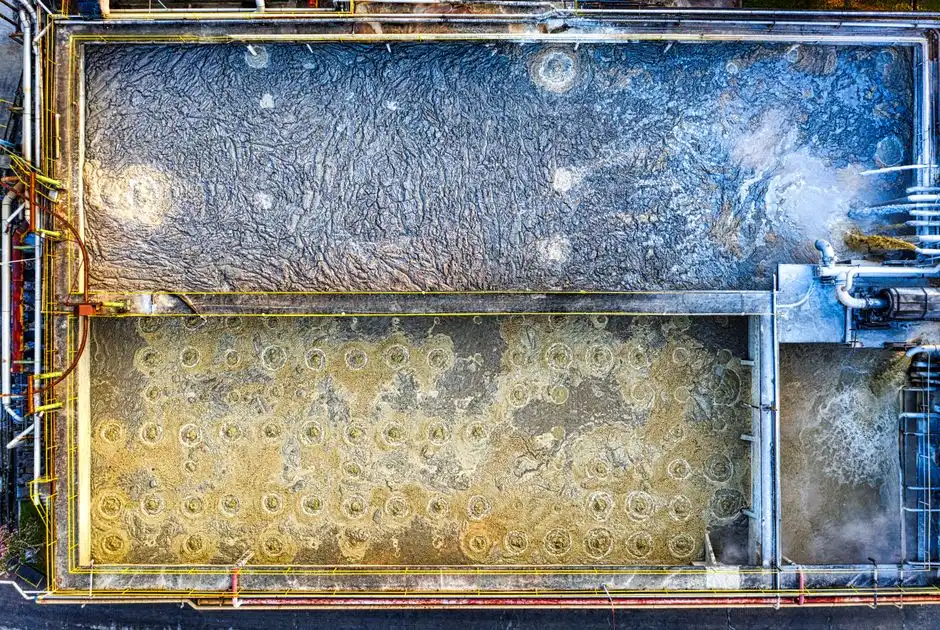
- Step 4 — Bioreactor volume. Size the anoxic and aerobic zones for BOD load using the design BOD and the supplier's target F/M ratio. MAK Water's published typical performance is BOD <40 mg/L (or <10 mg/L reduction from influent value) for its MBR (MAK Water, 2026). MLSS operating range is quoted as 4,000–12,000 mg/L, "variable according to coagulant dose rate" (MAK Water, 2026) — confirm the design point your supplier is sizing to.
- Step 5 — Membrane area and flux. Select the membrane module and the design flux. Pure Aqua's MBR-C uses submerged hollow-fibre UF at 0.04 µm nominal pore size with coarse-bubble air scour (Pure Aqua, 2026). MAK Water's standard MBR uses flat-sheet membranes with air scouring and a CIP system (MAK Water, 2026). Request the supplier's design flux (L/m²·h) and the peak-flux allowance before locking the module count.
- Step 6 — Effluent polishing. Include hypochlorite disinfection, which is the MAK Water standard finish (MAK Water, 2026), or a UV reactor, which Pure Aqua offers as an option (Pure Aqua, 2026). For Class A+ reuse, confirm which combination achieves the log-credit targets the WA DoH validator will check.
- Step 7 — Sludge handling. MAK Water's MBR scope includes a sludge tank with supernatant sampling points and discharge valves, plus a supernatant sump with submersible pump (MAK Water, 2026). For a small camp where waste activated sludge must be dewatered before offsite disposal, a packaged plate-and-frame filter press is the standard packaged option.
Process tra (parameters available in the supplied research; other inputs to be requested from the supplier):
| Parameter | Value or basis | Source |
|---|---|---|
| Per-capita flow (published basis) | 50 US gpd per capita (≈ 0.189 m³/day per person) | Pure Aqua MBR-C, 2026 |
| Process train | Screening → balance tank → anoxic → aerobic → flat-sheet MF with air scour + CIP → hypochlorite | MAK Water MBR, 2026 |
| Membrane type (MAK) | Flat sheet, air-scoured, CIP system | MAK Water, 2026 |
| Membrane type (Pure Aqua) | Submerged hollow-fibre UF, 0.04 µm nominal pore size | Pure Aqua, 2026 |
| BOD (treated, typical) | < 40 mg/L (or < 10 mg/L reduction from influent) | MAK Water, 2026 |
| MLSS | 4,000–12,000 mg/L, variable per coagulant dose | MAK Water, 2026 |
| Influent basis | Metcalf & Eddy 5th ed. (2014), typical composition of untreated domestic wastewater | MAK Water, 2026 |
| Single-container capacity ceiling | > 1,200 m³/day in one 40' ISO container | MENA-Water, 2026 |
For the membrane module and bioreactor hardware, the supplier's standard product line is typically the containerized MBR wastewater treatment system and the DF series flat-sheet MBR membrane module. A working background on membrane design criteria is in the related MBR membrane module design criteria guide.
Container Format: 20' HC vs 40' HC vs Parallel Skids
Container selection is governed by capacity, road access, cranage, and the option to relocate the plant if a camp closes. Pure Aqua's MBR-C is offered in both 20' and 40' high-cube (HC) containers depending on capacity, with insulated container walls, zero water leakage, enhanced container structure, and a seaworthy rating (Pure Aqua, 2026). MENA-Water states that "more than 1,200 m³/day can be filtered in one 40-feet ISO container," which sets a practical upper limit per single 40' unit (MENA-Water, 2026). MAK Water's standard MBR is offered as FRP bioreactors with integral plant room, and the supplier also offers a fully integrated mobile "I-Version" configuration for sites that may be relocated (MENA-Water, 2026; MAK Water, 2026).
Decision rule of thumb, anchored to the research:
| Configuration | Capacity envelope | Best fit in Perth / WA | Source |
|---|---|---|---|
| 20' HC | Small residential clusters (population sized at 50 gpd per capita; Pure Aqua lists MBR-C in 20' HC) | Under ~100 EP, tight road access, single-drop deployment | Pure Aqua, 2026 |
| 40' HC | Up to > 1,200 m³/day in one unit | Mid-size camp, 50–200-lot residential estate, single-unit build | MENA-Water, 2026 |
| Parallel skids with common balance / treated-effluent tanks | Above 1,200 m³/day or phased builds | Large camp, staged residential, sites where one unit must stay online during service | Inferred from MENA-Water 40' ceiling, 2026 |
| Mobile "I-Version" containerized MBR | Same as standard HC envelope, fully integrated | FIFO camps with planned decommissioning or relocation | MENA-Water, 2026; MAK Water, 2026 |
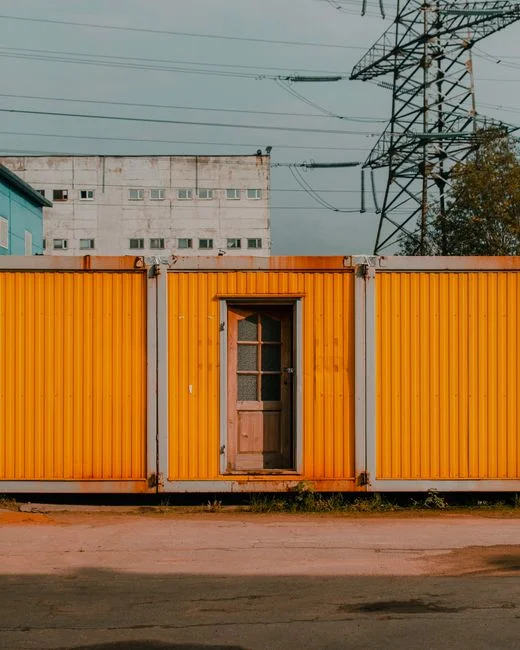
Before locking the configuration, confirm Perth-site road transport weight limits and cranage. A fully dressed 40' HC with tanks, blowers, and water can exceed standard tilt-tray limits on regional WA roads; the supplier must sign off the transport mass in the RFQ response. The 40' HC single-container benchmark is also a useful sanity check against the population step in the calculation — for a 200-person camp at 50 gpd per capita, the design sits well under the 1,200 m³/day ceiling, so a single 40' HC is appropriate.
Matching the Design to WA Department of Health Reuse Classes
The effluent quality target — and therefore the choice of treatment train — is set by the WA Department of Health Guidelines for Non-Potable Use of Recycled Water, not by the project engineer. For a Perth project, two reuse classes are typically in play:
- Class A+ ("risk category high"). Target when reuse includes toilet flushing, landscape irrigation with public access, or car-wash. MAK Water's MBR is engineered specifically for Class A+, with the standard process train of screening, balance tank mixing, anoxic and aerobic treatment, flat-sheet membrane filtration with air scouring and CIP, and hypochlorite disinfection (MAK Water, 2026). The Karratha Airport case study is the directly applicable WA DoH precedent for a Class A+ containerized MBR: the plant was commissioned for the $100m Airport redevelopment in 2009, treats terminal sewage to "risk category high" compliance, and enables reuse for toilet flushing, landscape irrigation, and the automatic car-wash facility, with MAK Water subsequently awarded a five-year O&M contract by the City of Karratha (MAK Water, 2026).
- Class C ("risk category low"). Target for lower-exposure reuse or environmental discharge. MAK Water's ASBR, ASBR+, MBBR, and MBBR+ packaged plants all target Class C — simpler trains, smaller containers, and a different validation pathway (MAK Water, 2026).
If the project is residential-only with no reuse intent, confirm with Water Corporation or the local council whether a Class C discharge is acceptable. That decision can simplify the plant, drop the membrane train, and reduce the container size — and it changes which supplier product line you are sizing.
Commissioning, Validation and Ongoing Operation in WA
Sizing is only the first half of a defensible submission; the second half is what happens after the container is on the ground.
- WA DoH validation. For Class A+ reuse, plan for a WA DoH validation phase following commissioning. The Karratha precedent makes this a defined project deliverable: MAK Water was engaged to carry out design, manufacture, commissioning, and WA DoH validation of the plant (MAK Water, 2026). Build the validation programme into the project schedule before signing the supply contract.
- Control scope. MAK Water's standard MBR ships with a PLC and touch-screen HMI, with an optional ClearAccess remote monitoring premium package (MAK Water, 2026). Pure Aqua's MBR-C supports remote monitoring as an option (Pure Aqua, 2026). Decide remote monitoring vs local-only HMI before the RFQ; for a remote FIFO camp, remote monitoring is the standard WA operating model.
- O&M ownership. MAK Water was awarded a five-year O&M contract for the Karratha plant by the City of Karratha, illustrating the typical WA operating model for a publicly accountable reuse site (MAK Water, 2026). Decide early whether the camp operator, the developer, or a third party will hold the O&M contract, because the spares holding and the callout response are different in each case.
- Spares and consumables. Specify spare membrane modules, diffusers, CIP chemicals, and the standard valves and media with the sizing so the first 12 months of operation are covered without a separate procurement event.
Frequently Asked Questions
How many people can one 40' HC containerized MBR serve in Perth?
Using the published 50 gpd per capita reference (≈ 0.189 m³/day per person) from Pure Aqua's MBR-C line (Pure Aqua, 2026) against the >1,200 m³/day single-container benchmark from MENA-Water (MENA-Water, 2026), the headline ceiling works out to roughly 6,300 persons at ADWF in a single 40' HC. In practice, the operating envelope is well below that because the supplier will design to a peak factor and a more conservative per-capita figure. Request the supplier's population ceiling at their design peak factor and your hydraulic consultant's per-capita flow before quoting.
What reuse class do I need for a Perth camp with toilet flushing and irrigation?
Class A+ "risk category high" under the WA Department of Health Guidelines for Non-Potable Use of Recycled Water. MAK Water's MBR is engineered specifically for Class A+, and the Karratha Airport installation is the directly applicable WA DoH precedent for a packaged MBR validated to that class (MAK Water, 2026). An MBBR or ASBR will not achieve Class A+ and should not be specified if reuse for toilet flushing or public-access irrigation is in scope.
What is the realistic lead time and budget for a 20' or 40' HC containerized MBR delivered to Perth?
The research does not include a published price or lead time for either container size — request a written schedule that covers container fabrication, FRP bioreactor manufacture, factory acceptance testing, road transport to Perth, site installation, commissioning, and the WA DoH validation phase for Class A+ projects (per the Karratha precedent, MAK Water, 2026). Lead time is driven primarily by container availability and FRP shop capacity, not by membrane supply; ask the supplier to break both out in the quote so the critical path is visible.
Can the same plant be relocated if the camp closes?
Yes — specify a fully integrated "I-Version" mobile MBR configuration rather than a fixed FRP bioreactor skid, and confirm the container is road-transportable on standard WA tilt-trays. MENA-Water describes its I-Version as the format to choose "for mobile applications or if the plants need to be shifted to new locations" (MENA-Water, 2026), and MAK Water similarly positions its bioreactors as modular for redeployment (MAK Water, 2026). For FIFO camps with a defined closure date, the I-Version is the right specification.