Why Milan semiconductor fabs and data halls need a 2026-specific wastewater playbook
Milan sits at the collision point of three forces that no global semiconductor or data-centre overview captures together: Po River basin water stress, the post-2024 Italian PFAS transposition, and the EU AI-Act-driven hyperscaler build-out pressing onto Lombardy's existing fab footprint. A modern fab can use up to 10 million gallons of water per day according to IDE Tech, and the TNFD February 2026 case study on tech-sector water dependency reports that 45% of data centres globally sit in river basins at high risk of water availability disruption — a category that includes the sub-basins feeding Lombardy's industrial corridor.
Italian transposition of the EU PFAS obligations introduced through 2024-2025 is now appearing as explicit monitoring and reduction conditions in Lombardy discharge permits, so PFAS removal has moved from a voluntary ESG item to a baseline 2026 design requirement. The EU AI Act and hyperscaler capital expenditure — projected by McKinsey (2025) to exceed USD 1.7 trillion globally by 2030 — are accelerating Milan-metro data-hall construction, increasing indirect water demand for power generation and direct demand for cooling and humidification. For a 2026 spec, that means the wastewater train is no longer a stand-alone environmental asset; it is a permitting, water-security, and chip-yield problem at the same time.
What process wastewater streams a Milan fab or data hall actually generates
The most common design error in both fab and data-hall projects is mixing incompatible streams upstream of a single neutralization tank. The two site archetypes generate fundamentally different effluent matrices, and the train must reflect that. Fab streams include fluorides from HF etching, hydrochloric and sulfuric acid residues, ammonia, copper, nickel and tungsten from deposition, CMP slurry, photoresist solvents, and PFAS from specialty chemistries; CMP alone can represent 30-40% of a fab's total wastewater volume according to IDE Tech. Data-hall streams are dominated by cooling-tower blowdown with high TDS, scale inhibitors and biocides, indirect free-cooling (IFC) loop water with possible glycol carry-over from valve or heat-exchanger failures, humidification bleed-off, and occasional generator or pretreatment backwash. The fab's raw water envelope sets the upper bound: per AXEON, a fab needs 1,400-1,600 gallons of municipal water to produce 1,000 gallons of UPW, and a single 200 mm wafer requires 5,600 L of UPW for cleaning, so even an R&D line generates tens of cubic metres per shift of contaminated rinsewater that must be segregated from sanitary and HVAC streams. A data-hall may be smaller in UPW demand but larger in IFC loop volume, which is why the cooling loop is the dominant stream on a megawatt basis.
| Stream | Source | Key contaminants | Segregation rule |
|---|---|---|---|
| HF/buffered oxide etch | Wet bench, etch tool | F⁻, Si, NH₄⁺ | Keep separate from CMP and metals lines |
| CMP slurry waste | Polishing tool | SiO₂/Al₂O₃/ CeO₂ particles, Cu, organic residues | Isolate before any pH adjustment |
| Spent photoresist | Coat/develop track | Solvents, NMP, TMAH | Route to organics destruction, not metals line |
| Cooling-tower blowdown | Data-hall HVAC | TDS, scale inhibitors, biocides | Separate from IFC and humidification |
| IFC loop water | Data-hall free-cooling | Glycol carry-over, corrosion inhibitors | Monitor TOC; standby carbon or AOP polish |
| Humidification bleed | Data-hall cleanroom/AHU | Low TDS, warm water | Candidate for direct cooling-tower make-up |
The Milan fab wastewater train: from segregation to 85-90% recovery
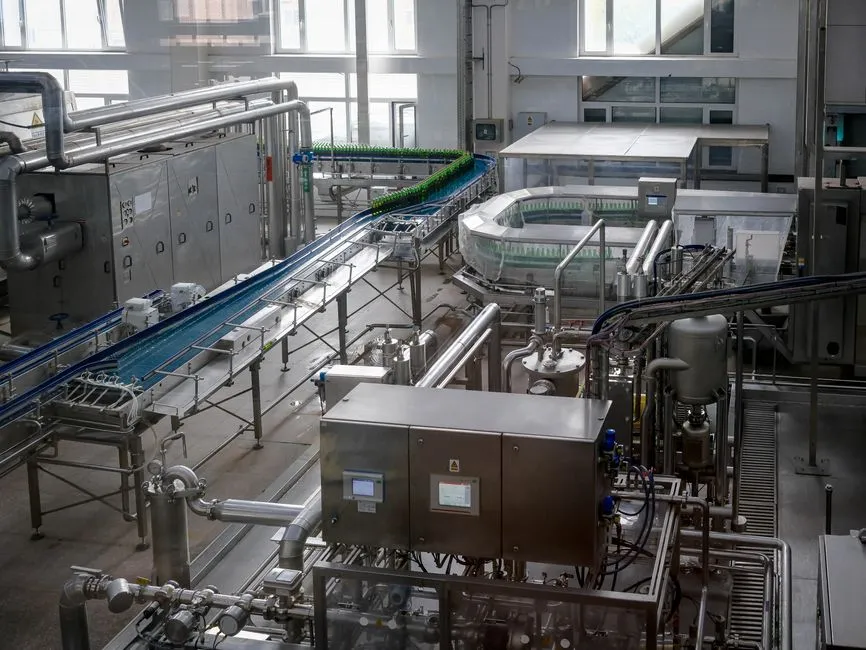
A defensible 2026 Milan fab train starts upstream of any chemistry, with segregation of fluoride-bearing, ammonia-bearing, and CMP streams before pH adjustment — otherwise insoluble fluoride complexes precipitate onto downstream membranes and force premature cleaning cycles. Two-stage pH neutralization followed by lamella clarification or a DAF unit removes bulk metals and suspended slurry; fluoride is precipitated with calcium at a controlled pH window before any membrane stage. UF at 0.01-0.03 µm protects the RO from fine CMP particles, and a high-recovery RO configuration using a HydropureWater industrial RO system pushes overall recovery into the 85-90% range that IDE Tech reports as the current state-of-the-art for advanced fabs. AOP — UV/H₂O₂, ozone, or catalytic — is used upstream of final RO or as a polishing step to break down photoresists, solvents, and trace PFAS precursors; AOP sizing and reagent selection are covered in the HydropureWater 2026 AOP design guide. The RO permeate is then split: a portion can be polished through EDI (delivering >2 MΩ·cm resistivity at 90%+ recovery per AXEON) for non-UPW reuse such as scrubber make-up, while the rest is sent to a thermal system or membrane distillation for closed-loop recycling.
The Milan data-hall wastewater train: cooling blowdown, IFC and humidification
Data-hall trains are routinely undersized because designers treat them as building-services water rather than process water. Cooling-tower blowdown carries high TDS, scale inhibitors and biocides; the standard Milan-metro configuration is softening followed by side-stream RO and a chemical or UV disinfection polish, which is why a HydropureWater industrial water softener feeding an RO skid is a common reference design. Indirect free-cooling loops can leak glycol into blowdown during valve or heat-exchanger failures, so the train must include periodic TOC monitoring and an activated-carbon or AOP polisher capable of absorbing a glycol slug without exhausting the polishing media. Humidification bleed-off is high-purity but warm; it is a strong candidate for direct reuse in cooling-tower make-up after cartridge filtration and a UV sterilizer pass to control biofilm. UltraFacility 2026 notes that data centres are "inheriting fab-grade water and commissioning discipline", so a 2026 Milan data-hall specification should mirror fab UPW monitoring — continuous online resistivity, TOC, and particle counters at the polishing loop — rather than rely on conventional building-services treatment. This is the same logic that justifies bringing continuous online monitoring rather than daily grab samples into a tender.
UPW make-up and polishing loop: the specs every Milan engineer must hit
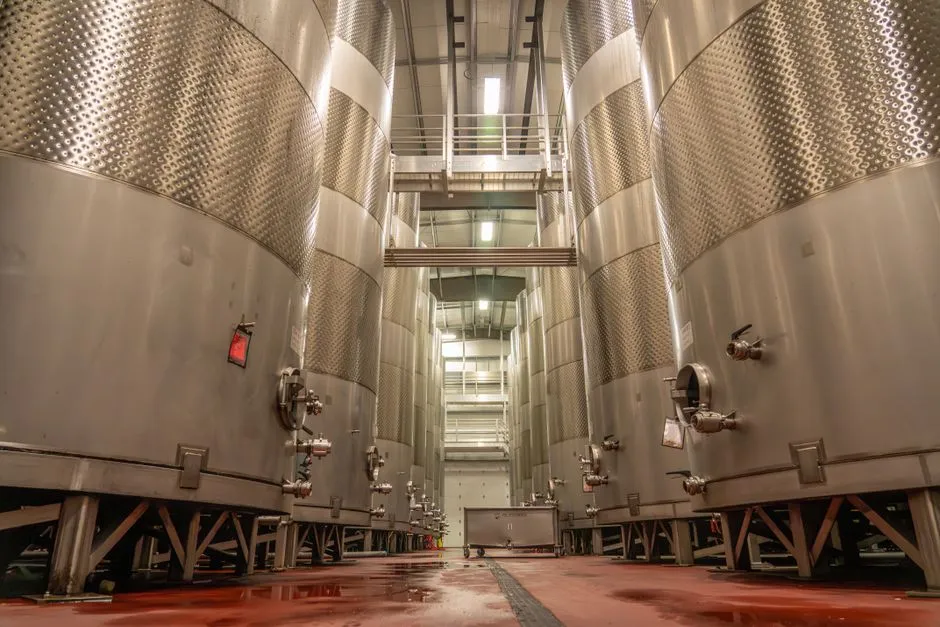
The polishing loop is where fab and high-end data-hall specs converge. UPW must meet resistivity >18.2 MΩ·cm at 25°C, TOC <1 ppb, dissolved silica 0.2-1.0 ppb, colloidal silica 0.3-2.0 ppb, and <1 particle/mL for particles >0.05 µm, with the parameter set defined by SEMI F63, ASTM D5127, and ISO 3696 Grade 1 per AXEON. A 2026 polishing loop typically combines mixed-bed or EDI polishing, sub-0.2 µm final filters, membrane degasification, and continuous online resistivity, TOC, and particle counters; redundancy is no longer optional because AXEON notes that 2 nm and 3 nm advanced nodes are tightening TOC limits below 0.5 ppb, which a single polishing stage cannot guarantee under upset conditions. A HydropureWater EDI polishing module placed downstream of RO delivers the >2 MΩ·cm output that the SEMI F63 envelope requires, and the same RO + EDI + UV + UF stack is the most direct way to hit SEMI F63 within a Milan fab's existing pretreatment envelope — a configuration detailed further in the 2026 polishing-loop distribution guide for 18.2 MΩ·cm UPW.
| Parameter | SEMI F63 specification | Measurement method | Polishing-loop implication |
|---|---|---|---|
| Resistivity | >18.2 MΩ·cm at 25 °C | Inline conductivity meter | EDI or mixed-bed polish required |
| TOC | <1 ppb (sub-0.5 ppb for 2/3 nm) | UV-persulfate oxidation | 185 nm UV oxidation stage |
| Dissolved silica | 0.2-1.0 ppb | ICP-MS | Strong-base anion polish |
| Colloidal silica | 0.3-2.0 ppb | ICP-MS | 0.01 µm UF polishing |
| Particles >0.05 µm | <0.3-1 particle/mL | Laser particle counter | 0.2 µm final filter + online counter |
| Bacteria | <1 CFU/100 mL | Membrane filtration | UV sterilization + periodic sanitization |
Italian and EU compliance map for 2026: D.Lgs. 152/2006, PFAS, and Lombardy permits
Italian discharge to surface water or to the public sewer is governed by D.Lgs. 152/2006, Parte III, with Table 3 (scarico in acque superficiali) and Table 4 (scarico in pubblica fognatura) setting the numeric limits for the conventional parameters most relevant to fabs and data halls — pH, suspended solids, COD, nitrogen species, fluoride, metals, and total phosphorus. The EU Water Framework Directive (Directive 2000/60/EC) and its 2024-2025 PFAS daughter obligations now require PFAS monitoring in Lombardy discharge permits, and ARPA Lombardia reviews design documentation and the discharge monitoring plan before issuing or renewing an authorization; for a new fab this typically means a full environmental integration along the lines of a VIA/VAS process, while for a retrofit the focus is on the Autorizzazione Unica Ambientale (AUA). For a 2026 design basis, document three things up front: the segregated-stream flow balance, the recovery target (the 85-90% figure cited by IDE Tech), and the PFAS monitoring plan. These are the items most often flagged in the AUA review because they let the regulator confirm that the design can meet both conventional Table 3/4 limits and the new PFAS envelope without retrofit. AXEON separately notes that 20-25% of raw water is lost during UPW purification, so the flow balance must account for that loss when sizing discharge limits.
Decision framework: which treatment train fits a Milan fab or data hall in 2026
The decision matrix below is built to be carried into a 2026 vendor meeting. If the site is a fab with HF, CMP, and metals streams, the answer is segregation → neutralization/precipitation → DAF/clarifier → UF → RO → AOP → EDI or thermal polish, targeting 85-90% recovery. If the site is a data hall with cooling-tower, IFC, and humidification streams, the answer is softening → side-stream RO → UV/ClO₂ polishing, with carbon or AOP standby for glycol carry-over events. If the site is a co-located fab plus data hall — an increasingly common Milan pattern as hyperscalers site near existing fabs — share the high-recovery RO and thermal polishing stages, but keep the fluoride/ammonia segregation line and the IFC-glycol handling line independent so a single upset does not cross-contaminate both effluent matrices. If the discharge point is in a high-stress sub-basin of the Po or to a small Lombardy sewer, add a thermal ZLD step on the brine stream; this is the configuration reaching >95% recovery referenced in the IDE Tech 2026 data. A sedimentation tank and a chemical dosing system are the two pieces of pretreatment hardware that should appear on every block of this matrix, because pH and reagent control are upstream of every downstream failure mode.
| Site profile | Front-end train | Membrane train | Polish / reuse | 2026 target |
|---|---|---|---|---|
| Fab (HF + CMP + metals) | Segregation → neutralization → Ca precipitation → DAF/clarifier | UF (0.01-0.03 µm) → RO | AOP → EDI or thermal | 85-90% recovery |
| Data hall (cooling + IFC + humidification) | Softening → cartridge filtration | Side-stream RO | UV/ClO₂; carbon standby for glycol | Reuse in cooling make-up |
| Co-located fab + data hall | Independent fab line + independent IFC line | Shared high-recovery RO | Shared thermal or EDI polish | 85-90% recovery |
| High-stress Po sub-basin discharge | Add brine concentration | RO → brine RO | Thermal ZLD | >95% recovery |
Frequently Asked Questions
What CAPEX envelope should a Milan fab or data hall plan for a 2026-compliant wastewater train?
The IDE Tech and AXEON sources do not provide a published CAPEX range for a full segregated fab or data-hall train in 2026, so any quoted figure would be a guess. A defensible 2026 procurement step is to request a bottom-up CAPEX split from each shortlisted vendor covering segregation, neutralization/precipitation, membrane stages, AOP, and the polishing loop, and to ask each vendor to show how that split moves with recovery target (85-90% versus >95% ZLD). The vendor's ability to produce that breakdown is itself a supplier-selection signal.
How do I pick a supplier for a 2026 Milan fab or data-hall wastewater project?
Use three filters, in this order: documented experience on segregated fab or fab-equivalent data-hall trains, ability to deliver the SEMI F63 polishing loop and the PFAS monitoring plan together, and presence in Italy or the EU for commissioning and ARPA-facing documentation. A shortlist that cannot point to a specific segregated-stream project should be downgraded; a vendor that treats the AUA review as out-of-scope should also be downgraded. Reference projects in the same Lombardy or Po-basin context are the strongest single signal.
What is the practical lead time risk for a 2026 Milan installation?
Neither IDE Tech nor AXEON publishes a 2026 lead time for a full fab or data-hall wastewater train, so the buyer must request a written lead time for each major unit operation (segregation, DAF, UF, RO, AOP, EDI/thermal) and add those together rather than rely on a single integrated number. The structural risk to plan for is membrane and EDI long-lead items, which the buyer should ask each vendor to identify by part number and country of origin, because 2026 EU supply chains for those specific items remain the bottleneck.
Which PFAS compliance item is most often missed in a 2026 Lombardy permit application?
The most common gap is the link between the segregated-stream flow balance and the PFAS monitoring plan: ARPA Lombardia's 2024-2025 PFAS obligations require the permit to show how PFAS will be tracked at the segregated-stream level, not only at the final combined discharge. The mitigation is to include, in the design basis, a per-stream PFAS monitoring point and a documented mass balance, and to confirm with ARPA during pre-application review that the chosen sampling points are acceptable. Vendors who treat PFAS as a single end-of-pipe measurement rather than a per-stream obligation should be challenged on this point in the tender. A useful comparator is the 2026 Pune semiconductor and data-hall engineering guide, which describes the same per-stream PFAS logic in a different regulatory context.