Why Medan Plants Treat Semiconductor and Data-Hall Wastewater as Two Different Trains
Semiconductor process drains carry HF, HCl, H₂SO₄, NH₃, copper, nickel, tungsten, CMP slurry, solvents, photoresists, and PFAS in the same pipe corridor; data-hall drains carry cooling-tower blowdown, humidification bleed, and condensate that are high in dissolved solids and silica but low in organics and metals. Blending these streams ruins metals precipitation, kills RO recovery, and makes downstream PFAS destruction ineffective (S4).
Globally, 40% of existing fabs and over 40% of new fabs announced since 2021 are projected to be in basins with high or extremely high water-stress risk by 2030, and 45% of data centres globally are in river basins at high risk of water-availability disruptions. Regulators now expect segregated, audited treatment trains rather than a single site WWTP (S2). A modern fab can use up to ~10 million gallons (~37.9 million L) of water per day, and CMP alone can represent 30–40% of that volume, making the CMP line the single largest segregated stream to design (S4). For a Medan OSAT, data-hall colocation, or brownfield expansion, the design choice is not "one WWTP or two" but "which streams stay segregated, which are blended, and where reuse targets are set before any concrete is poured."
Stream-by-Stream Treatment Train for the Semiconductor Side
The semiconductor side is best designed as four parallel lines that only converge after primary treatment, ensuring a fluoride or slurry upset cannot poison a polishing membrane downstream (S4).
- CMP wastewater: targeted precipitation/clarification for residual copper and slurry solids, followed by UF (≈0.03 µm PVDF-class) for CMP slurry and RO protection; DAF for CMP and metals-laden wastewater and lamella clarifiers are the primary steps for slurries and metals (S4).
- HF/etch and acidic streams: calcium-based fluoride precipitation in a dedicated equalisation tank, with metals removed before any RO; fluoride spikes will destroy membranes if blended upstream, so this line stays isolated (S4).
- Organic / photoresist / solvent line: equalisation, then AOP (UV/H₂O₂ or ozone) to break persistent organics into biodegradable forms, followed by biological polishing (MBR) and RO (S4).
- Final polish and reuse: high-recovery RO and EDI polishing, with the permeate feeding a UPW loop; advanced fabs recover 85–90% of wastewater with this combination, and ZLD layouts go higher still (S4).
Sludge handling requires precision: the metals-rich clarifier underflow is dewatered on a plate-and-frame filter press, with the cake routed to a licensed hazardous-waste handler—a requirement under most Asian hazardous-waste regimes in 2026 (S4).
| Stream | Primary treatment | Secondary / polishing | Typical reuse or discharge path |
|---|---|---|---|
| CMP slurry + metals | Coagulation, DAF / lamella clarifier | UF → RO | RO permeate to UPW loop; brine to metals recovery or ZLD |
| HF / acidic etch | Ca-based precipitation, equalisation | Sand/ multimedia filter → RO | RO permeate to reuse; sludge to hazardous-waste handler |
| Photoresist / solvent (organic) | Equalisation, AOP (UV/H₂O₂ or O₃) | MBR → RO | RO permeate to UPW; biological sludge dewatered |
| UPW loop return | — | High-recovery RO → EDI | 18.2 MΩ·cm UPW to tool |
Stream-by-Stream Treatment Train for the Data-Hall Side
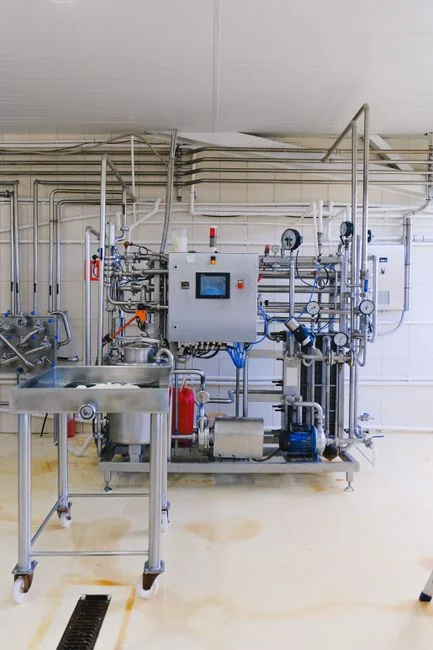
The data-hall side functions primarily as a cooling-water and humidification management system, requiring a shorter and less reagent-intensive train (S2). Cooling-tower blowdown—high in hardness, silica, and dissolved solids—is softened with lime/soda or ion-exchange softening, then polished through side-stream RO; this combination is the 2026 baseline for hyperscale blowdown reuse (S4, S2). Humidification bleed is low in TDS but warm and biologically active, routing through multimedia filtration followed by UV or chlorine dioxide for cooling-loop disinfection to control Legionella and biofilm without dumping biocides into the sewer (S2). Air-side economiser condensate and RO reject are blended back through softening and RO recovery, with the brine stream sent to a small evaporation/crystallisation train if the site is targeting ZLD (S2). Sanitary and cafeteria flows stay physically separate and are handled by a compact MBR for organic and sanitary side-streams or a packaged sewage plant sized for occupancy. These two distinct, auditable trains share almost no equipment, simplifying KLHK effluent reporting and future ZLD upgrades.
Polishing Loop and Reuse Targets: 2026 Numbers a Medan Buyer Can Quote
State-of-the-art fabs recover 85–90% of their wastewater using high-recovery RO, advanced filtration, and thermal polishing, with ZLD layouts going higher (S4). The structural cost of reuse is a priority for a Medan finance team: a single fab uses around 14 billion litres of UPW per year and needs 1.4–1.6 L of municipal water per litre of UPW, so every percentage point of reuse compounds directly into raw-water and permit savings (S2). For UPW-grade reuse, polishing loops combine RO permeate with EDI polishing stack for UPW reuse to deliver ultrapure water, with TOC, silica, and dissolved-gas control at the point of use; RO removes over 99% of dissolved solids from the feed, leaving ~1%, and EDI strips the rest without acid/caustic regeneration (S4). Cooling-tower reuse is a high-impact efficiency measure: closed-loop cooling with high-recovery side-stream RO is now the baseline for hyperscale sites, with sizing determined by occupancy and PUE (S2).
| Reuse target | Treatment chain | Indicative 2026 number to quote | Source |
|---|---|---|---|
| Overall fab reuse (advanced fab) | High-recovery RO + thermal polishing | 85–90% recovery | S4 |
| ZLD fab | RO + evaporator/crystalliser + FEDI | Higher than 90% | S4 |
| Municipal water per L of UPW | — | 1.4–1.6 L | S2 |
| UPW per fab, annual | — | ≈14 billion L | S2 |
| RO dissolved-solids rejection | — | over 99% | S4 |
PFAS, Metals and AOP: 2026 Compliance Posture for the Region
PFAS compounds are chemically stable, resistant to conventional oxidation, and difficult to remove; effective 2026 approaches pair high-pressure membrane filtration with activated-carbon or ion-exchange adsorption, plus destruction technologies (S4). The US EPA has confirmed legally binding PFAS MCLs and designated PFAS as hazardous substances under CERCLA, with release-reporting triggers. Multi-national operators in Medan should align to this benchmark even if local regulation lags, as current procurement and monitoring decisions will outlast any 2026 permit cycle (S4). AOPs (UV/H₂O₂, ozone, catalytic systems) break photoresists, solvents, and trace organics into CO₂ and biodegradable by-products, lifting downstream RO performance and meeting stringent TOC limits (S4). Fluoride from etching, metals from deposition, and ammonia/nitrogen compounds require dedicated pretreatment and online analysers, and automatic chemical dosing for fluoride and pH control is the most reliable way to maintain consistent equalisation before mixed streams reach RO. For a Medan EHS manager framing a 2026 capex memo, "PFAS destruction"—not just "PFAS removal"—is the required line item.
Medan-Specific Siting, Permitting and Water-Stress Considerations
The Deli/Belawan river basin and the broader North Sumatra water system face seasonal stress, and the growth of data-hall capacity is placing the basin on the regulator's watchlist. Effluent quality is governed by KLHK standards under PP No. 22/2021, with provincial and city-level instruments (Pergub/Perda North Sumatra and Medan city rules) setting stricter limits on BOD, COD, TDS, heavy metals, and total discharge volume. Engineering designs must ensure any reuse system is metered, online-monitored, and auditable. A 2026 design for Medan should treat water reuse as a permit requirement: projects demonstrating 85–90% reuse with a segregated train, a documented PFAS handling plan, and a continuous monitoring stack will move through KLHK review faster than those submitting a single mixed-drain mass balance. For context on cutting water consumption in a Medan fab and AOP sizing for photoresist and PFAS destruction, the linked 2026 engineering guides extend this design logic into the capex narrative.
Frequently Asked Questions
What capex should a Medan fab or data hall plan for a 2026 segregated wastewater train?
Research confirms recovery targets (85–90% for advanced fabs, higher for ZLD) and the structural ratio of 1.4–1.6 L of municipal water per litre of UPW (S2, S4). Buyers should request a line-item bid split by stream (CMP, HF/etch, organic, polishing) and by major equipment (DAF, UF, high-recovery RO, EDI, evaporator/crystalliser) rather than accepting a single lump sum.
How do we select a supplier for the high-recovery RO and polishing loop?
Use recovery guarantee, brine volume, membrane replacement interval, and demonstrated PFAS destruction capability as the four weighted criteria, and request reference sites running the same feed chemistry (CMP-laden or cooling-tower blowdown) for at least 12 months (S4). Suppliers should integrate high-recovery RO system for fab reuse with EDI polishing and an automatic chemical dosing package under one control logic to unlock the 85–90% recovery target.
What happens if we defer PFAS handling until Indonesian regulation catches up?
Multi-national operators in Medan are already aligning to US EPA PFAS MCLs and CERCLA hazardous-substance designations, which carry release-reporting triggers (S4). Deferring the plan means designing the segregated train now for easy retrofit of an AOP/destruction stage later, rather than rebuilding equalisation and RO sections after a permit surprise.
Can sanitary and process wastewater share treatment equipment at a hyperscale data-hall site in Medan?
No—sanitary and cafeteria flows should be handled by a compact MBR or packaged sewage plant sized for occupancy, while cooling-tower blowdown and humidification bleed run through a separate softening and side-stream RO train (S2). Sharing equipment forces biocides and organics into a polishing loop designed only for dissolved solids, driving up RO fouling and CIP frequency.