What a Modern Municipal WWTP O&M Program Actually Covers in 2026
Operation and maintenance at a municipal wastewater plant is one program, not two. The Spellman & Drinan chapter Operation, Maintenance, and Troubleshooting (CRC Press) frames the distinction: operation covers the process-control decisions an operator makes hour to hour, maintenance covers the physical work that keeps the assets capable of executing those decisions, and the two are inseparable.
The SWEFC Wastewater System Operation and Maintenance Manual V2 (UNM, 2022) builds the practical structure on top of that academic framing: written procedures, scheduled inspections, compliance sampling, and a recordkeeping discipline that an inspector can audit. A 2026 O&M program must start from the plant's current NPDES permit, treat the permit limits as the program's pass/fail criteria, and schedule every preventive task to protect those limits. Many U.S. permits are on five-year renewal cycles, so utilities entering a 2026 renewal year should be updating the O&M manual now. A Phase II O&M evaluation (OpenAlex) found that the most limiting factors on plant performance are almost always operational and maintenance decisions, not design capacity, which is why a written program pays back faster than capital upgrades.
Preliminary and Primary Treatment: Bar Screens, Grit Removal, and Clarifier Care
Headworks failures cascade through every downstream process, making the initial walk-down essential. Mechanical bar screens such as the HydropureWater GX Series rotary mechanical bar screen protect pumps, aeration diffusers, and membrane systems from rags, plastics, and fibrous debris; the routine task is a daily rake inspection and a weekly verification of brush rotation and discharge chute clearance. Grit removal is the next line of defense: a missed pump-out cycles grit into aeration tanks where it abrades diffusers, into digesters where it steals active volume, and into primary clarifiers where it disrupts sludge blankets. The O&M schedule should tie grit pump-out to measured accumulation in the chamber, not a fixed calendar date, and should include a velocity check to confirm the channel is still in the design range. Primary clarifiers complete the headworks-to-secondary handoff: scum removal, sludge-pump cycle verification, and surface overflow rate checks are the daily and weekly tasks. A drifting surface overflow rate is one of the earliest leading indicators of secondary-treatment stress, because hydraulic overload on the primaries pushes more BOD and TSS into the aeration basins. Document every reading and every sign-off; the SWEFC O&M Manual treats these logs as the audit trail a permit inspector will request first.
Biological Treatment: Controlling the Living Part of the Plant

Biological tanks are where the Phase II O&M evaluation (OpenAlex) found most performance losses originate, requiring the O&M program to convert process-control theory into scheduled tasks. Following the SWEFC Manual's daily/weekly/monthly structure, the operator should record mixed-liquor suspended solids, sludge volume index, dissolved-oxygen profile, food-to-microorganism ratio, and solids retention time, with the numeric targets taken from the plant's process design basis. For diffused-aeration systems, add air-flow distribution by zone, dissolved-oxygen probe calibration against a Winkler or optical reference, and diffuser header pressure to the recurring list; a rising header pressure at constant airflow is the earliest indicator of fouled diffusers and lost energy efficiency. MBR and membrane-bioreactor retrofits need their own O&M block: membrane permeability trending, relaxation cleaning, and recovery-clean CIP scheduling belong on the calendar. Where a utility has installed an MBR or is evaluating one, the HydropureWater MBR membrane bioreactor system integrates the membrane skid with the biological process control logic, which simplifies the operator's exception logging. Energy-cost reduction in biological treatment is covered in the MBBR energy consumption reduction guide for 2026, which pairs with this section for plants running moving-bed or hybrid reactors. A one-page "biological exception log" closes the loop: any out-of-range reading triggers a defined response, a timestamp, and a corrective action, which doubles as the compliance defense if permit limits are challenged.
Tertiary Filtration, Disinfection, and Reuse-Quality Effluent
Tertiary filtration exists to protect disinfection efficacy, and the O&M tasks must reflect that specific requirement. Differential-pressure trending across sand, multi-media, or disc filters, backwash cycle verification against measured turbidity breakthrough, and a written log of post-backwash effluent quality are the core items; the specific pressure-trigger threshold for a work order should be requested from the filter OEM. UV disinfection has its own discrete task set: WEF proceedings on UV operations at two small municipal plants document that lamp cleaning, quartz-sleeve maintenance, and intensity monitoring are the items that decide whether UV actually meets the required dose, and they belong on a calendar-based PM block. Chemical disinfection requires feed-rate verification, residual monitoring at the contact-tank exit, and a dechlorination check if the permit requires it; for utilities phasing out gaseous chlorine, the HydropureWater chlorine dioxide generator is an on-site generation option. UV is covered as a complementary step in the HydropureWater UV sterilizer product line for reuse-quality polish. The final O&M deliverable for this section is the contact-time calculation inputs: flow, residual, pH, and temperature recorded at the frequency the permit specifies, as that is the audit trail the regulator demands first.
Solids Handling: Thickening, Dewatering, and Biosolids Compliance
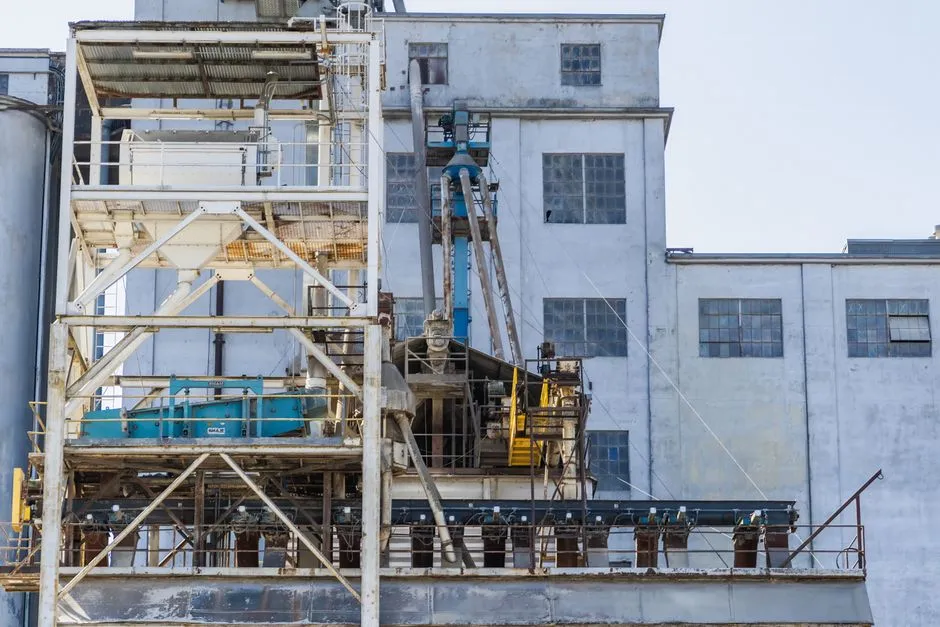
Solids handling closes the mass-balance loop and is usually the plant's largest OPEX line, so the O&M program must treat thickening, stabilization, dewatering, and disposal as one continuous train. The SWEFC Manual and the Spellman & Drinan chapter both structure it that way, starting at the clarifier underflow and ending at the biosolids disposal site. Sludge thickening by gravity, dissolved air flotation, or rotary drum needs polymer-dose checks, underflow density trending, and torque/load monitoring on rotating equipment; rising torque is the leading indicator of downstream dewatering stress. Mechanical dewatering is the highest-maintenance solids unit, and the recurring failure modes (belt tracking, cloth blinding, hydraulic faults on plate-and-frame presses) are well documented in the 2026 belt filter press troubleshooting field guide; the HydropureWater plate and frame filter press is one option when a utility is sizing or replacing this asset. Biosolids compliance is the regulatory anchor: the O&M program must produce the sampling records, vector-attraction reduction documentation, and hauling manifests required by 40 CFR Part 503, as these are the records an EPA biosolids inspector will request.
Preventive Maintenance Cadence by Equipment Class
The PM matrix below is organized by equipment class so it can be reused across plants, with the rule that the actual hour intervals and trigger thresholds come from each OEM's O&M manual for the installed asset. A "trigger-and-escalate" column converts a routine reading into a work order, which is the discipline that prevents catastrophic failure. Each row cross-references the compliance table in the next section so the operator can see the permit output that the PM task protects.
| Equipment Class | Daily / Weekly Tasks | Monthly / Quarterly Tasks | Annual / Shutdown Tasks | Trigger-and-Escalate Threshold (request from OEM) |
|---|---|---|---|---|
| Centrifugal pumps | Vibration check, seal drip, bearing temperature | Oil analysis, alignment verification, amp reading logged | Impeller inspection, bearing replacement, coupling inspection | Vibration > OEM limit mm/s; amp rise > OEM % baseline |
| Aeration blowers | Inlet filter inspection, discharge temperature, oil level | Belt tension, valve actuator test, performance curve check | Bearing service, impeller inspection, surge protection test | Discharge temperature rise beyond OEM band; bearing temp > OEM limit |
| Motors / VFDs | Surface temperature, unusual noise log | Megger or insulation test, thermal imaging scan | Rewind evaluation, VFD capacitor check, alignment re-verify | Surface temp > OEM °C; insulation resistance below OEM MΩ |
| Plug / gate valves | Actuator function test, position indicator verification | Stem packing adjustment, seat leakage check | Internal inspection, gasket replacement, actuator overhaul | Seat leakage past OEM-defined bubble rate; actuator travel time deviation |
| Process instruments (DO, pH, TSS, NH₃) | Probe cleaning, two-point check, signal stability | Calibration against lab reference, sensor replacement cycle | Transmitter verification, cable and junction box inspection | Calibration drift > OEM % of span; response time slowdown |
| MBR / UF membranes | Permeability log, relaxation cycle execution | CIP effectiveness review, integrity test (pressure hold) | Module replacement evaluation, frame and seal inspection | Permeability drop below OEM-defined LMH/bar; integrity test fail |
| UV lamps & sleeves | Intensity sensor check, lamp status, ballast temperature | Sleeve cleaning cycle, lamp age tracking | Lamp replacement, sleeve replacement, ballast test | Intensity below OEM µW/cm²; lamp hours past rated life |
| Chemical feeders | Pump stroke calibration, day-tank level, tubing visual | Calibration against analytical method, tubing replacement | Pump head rebuild, leak test, tank and bund inspection | Feed-rate deviation > OEM % of setpoint; day-tank level trending low |
NPDES Permit Compliance: Turning O&M Records into a Permit Defense
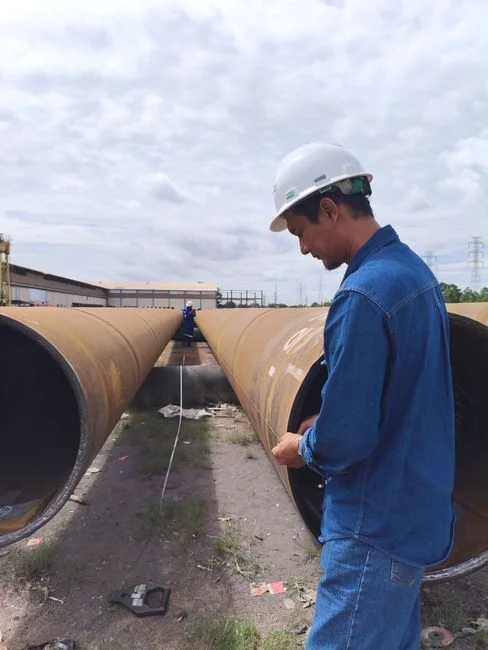
A permit-parameter matrix is the link between every O&M task above and the NPDES limits the plant must meet. The numeric limits themselves must be read from the current permit, and the matrix below shows the structure a utility should populate with its own values. Compliance is provable only if the chain of custody, lab certification, and corrective-action log are kept on the same schedule as the sampling. Run a quarterly self-audit using the SWEFC O&M Manual checklist; for plants facing nutrient or PFAS-related permit tightening in 2026, the O&M program should already include source-control inspections and pretreatment-program reviews.
| NPDES Parameter | Sampling Location | Minimum Frequency | Analytical Method | Linked O&M Task |
|---|---|---|---|---|
| BOD / CBOD | Influent and final effluent | Per permit (commonly 1× weekly to 1× daily composite) | Standard Methods 5210 | Biological exception log, aeration header pressure review |
| TSS | Influent and final effluent | Per permit | Standard Methods 2540 | Clarifier surface overflow rate check, tertiary filter DP log |
| Ammonia / Total Nitrogen | Aeration basin and effluent | Per permit | Standard Methods 4500 | DO profile, SRT calculation, aeration zone balance |
| Fecal coliform or E. coli | Final effluent | Per permit | Standard Methods 9221/9223 | Disinfection CT inputs, UV intensity log, chlorine residual log |
| Total Residual Chlorine | Effluent (if chlorinating) | Per permit (often continuous) | DPD or amperometric | Feed-rate verification, dechlorination check |
| pH | Influent and effluent | Per permit (often continuous) | Standard Methods 4500-H+ | Probe calibration, chemical feed verification |
| Nutrients (P / N) where applicable | Final effluent | Per permit | Standard Methods 4500 | Chemical feed log, biological process SRT, source-control inspections |
Frequently Asked Questions
What is the single most important document a municipal WWTP O&M program needs in 2026?
A written O&M manual built on the SWEFC Wastewater System Operation and Maintenance Manual V2 (UNM, 2022) structure, populated with the plant's current NPDES permit limits, signed daily/weekly/monthly task checklists, and a one-page PM matrix keyed to equipment class. The manual is the audit artifact that converts process-control decisions into documented evidence.
How should a utility budget for a 2026 O&M program update without a per-unit price list?
Build the request for proposal (RFP) around
Frequently Asked Questions
What does a municipal wastewater plant O&M program need to include in 2026 to stay NPDES-compliant?
A modern O&M program must integrate real-time digital monitoring and automated reporting modules that align with 2026 EPA e-Reporting requirements. Essential components include a dynamic asset management system, a comprehensive spill prevention and response plan (SPCC), and documented standard operating procedures (SOPs) that address emerging contaminants like PFAS, even if not yet strictly regulated in all jurisdictions.
Furthermore, compliance requires a robust preventive maintenance schedule that tracks critical process control parameters—such as Dissolved Oxygen (DO), Mixed Liquor Suspended Solids (MLSS), and pH—to ensure effluent quality remains within the strict tiered limits defined by updated NPDES permits. Regular calibration logs for flow meters and analytical instrumentation are mandatory for audit-ready compliance.
How often should preventive maintenance be scheduled for a municipal WWTP's pumps, blowers, and UV system?
Pumps should undergo vibration analysis and seal inspection every 2,000 to 4,000 operating hours, with full teardowns scheduled annually. Blowers require air filter replacement quarterly and oil analysis every 1,000 hours, while positive displacement blowers often demand belt tensioning and gear checks every 500 hours to maintain energy efficiency.
UV systems require the most frequent attention: quartz sleeves must be cleaned every 30 to 90 days depending on water hardness and fouling rates, and lamp intensity sensors should be calibrated monthly. UV lamps typically reach their end-of-life efficiency at 12,000 to 16,000 hours and should be replaced according to the manufacturer’s lumen maintenance curves rather than waiting for failure.
What is a realistic annual O&M budget per million gallons per day for a municipal wastewater plant in 2026?
For a standard activated sludge municipal plant, a realistic O&M budget ranges from $350,000 to $650,000 per million gallons per day (MGD) of design capacity. This range accounts for the rising costs of energy, chemical coagulation/flocculation supplies, and the specialized labor required for advanced nutrient removal processes.
Small plants (under 1 MGD) often face higher per-MGD costs due to lack of economies of scale, sometimes exceeding $800,000 per MGD. Conversely, large, highly automated facilities can optimize costs toward the lower end of the spectrum, provided that capital reinvestment for aging infrastructure is budgeted separately from annual operational expenditures.
How do I choose a supplier for replacement bar screens, UV units, or filter presses for a municipal WWTP?
Supplier selection should be based on a Life Cycle Cost Analysis (LCCA) rather than lowest initial bid, prioritizing equipment with standardized parts that do not require proprietary, single-source components. Evaluate bidders based on their ability to provide local technical support, lead times for critical spare parts, and documented energy consumption metrics under varying hydraulic loads.
For complex equipment like filter presses or UV units, verify the supplier’s track record with similar wastewater characteristics (e.g., high-solids loading or high-transmittance requirements). Request references from plants of similar size and mandate that all equipment meets current ASTM or AWWA standards to ensure long-term compatibility with your existing SCADA and electrical infrastructure.
What are the most common operation and maintenance mistakes that cause a municipal WWTP to miss its permit limits?
The most frequent failure is the neglect of solids inventory management, specifically failing to maintain the correct Mean Cell Residence Time (MCRT) or Food-to-Microorganism (F/M) ratio, which leads to sludge bulking and TSS carryover. Operators often fail to adjust return activated sludge (RAS) and waste activated sludge (WAS) rates in response to seasonal temperature shifts or diurnal flow surges.
Other critical errors include deferred maintenance on aeration equipment, which leads to inadequate DO levels for nitrification, and the failure to calibrate online sensors (DO, turbidity, and ammonia probes). When sensors drift without recalibration, automated control loops provide false data, causing the process to drift out of compliance long before the laboratory confirms a permit violation.