Why Sand Filtration Still Belongs in a 2026 Treatment Train
Sand filtration is a depth-filtration process in which clarified wastewater passes through a graded bed of granular media, capturing particulates via straining, sedimentation within the pore network, and adhesion to grain surfaces. In a 2026 hybrid study, Poolborwornrak et al. (Scientific Reports, 20 June 2026) coupled chemical coagulation with a simple sand column and reported an overall microplastic removal efficiency of 99.93% on 0.15–1 mm polyethylene particles at 15 mL/min, with polyaluminium chloride alone removing 77.41 ± 4.47% of the 0.15 mm fraction at pH 7. That single result reframes sand filtration: it is no longer a legacy polish step but a low-pressure, low-energy capture stage that, when paired with the right coagulant, can compete with finer downstream barriers on specific particle classes.
Against cartridge or membrane barriers, sand beds offer lower pressure drop, higher throughput per footprint, no consumable elements, and tolerance for variable influent. The trade-off is fixed: a sand bed will not remove dissolved species, and it will not reliably retain sub-micron particulate unless it is operated as part of a hybrid train. For most municipal and industrial plants, that means sand filtration still belongs — as the workhorse between primary–secondary clarification and any downstream UF/RO or disinfection unit — provided it is correctly sized and preceded by adequate suspended-solids reduction.
Three industrial configurations dominate procurement: gravity rapid sand filters, pressure sand filters, and traveling-bridge cells. Traveling-bridge designs have accumulated roughly 45 years of municipal and industrial service (aqua-aerobic.com) and present a different footprint-and-automation profile than the gravity or pressure options. Selecting among them is the first procurement decision a plant engineer makes, and the following sections detail the parameters that drive that decision.
How a Sand Filter Actually Works
The flow path is simple: influent enters above the bed through a distribution system that damps inlet velocity, then descends through the granular media. Capture happens in three modes operating in parallel:
- Straining — particles larger than the smallest pore at any given depth are intercepted mechanically.
- Sedimentation — particles smaller than the pores settle onto grain surfaces within the low-velocity pore network.
- Adhesion — particles attach to grain surfaces through electrostatic, van der Waals, and (in slow-sand operation) biological mechanisms, the so-called Schmutzdecke — a biologically active skin that forms on top of a slow sand filter and contributes to slow-sand effluent quality.
In industrial rapid and pressure filters, the bed is too deep and too frequently backwashed to sustain a stable Schmutzdecke; capture is dominated by the first two mechanisms, and the third reduces to short-term adhesion until the next backwash cycle strips the loaded layer away. Save the Water (June 2023) specifies the working media range as 0.3–3 mm in diameter, with the qualifier that grains must be uniform, sieved, washed, and checked for solubility, acid strength, and hardness before use. Non-uniform media produces size segregation during backwash and persistent channeling, a root cause of premature turbidity breakthrough.
Underneath the sand, a graded gravel layer supports the bed and distributes backwash water and air uniformly. The underdrain — nozzles, laterals, or a false-floor with strainers — collects clarified filtrate and feeds backwash flow in reverse. Operators who treat the underdrain as a maintenance item rather than a fixed asset typically see step-change improvements in run length, because underdrain failure shows up as localized channeling long before it manifests as a complete loss of filtrate.
Sand Filter Media, Bed Depth and Hydraulic Loading
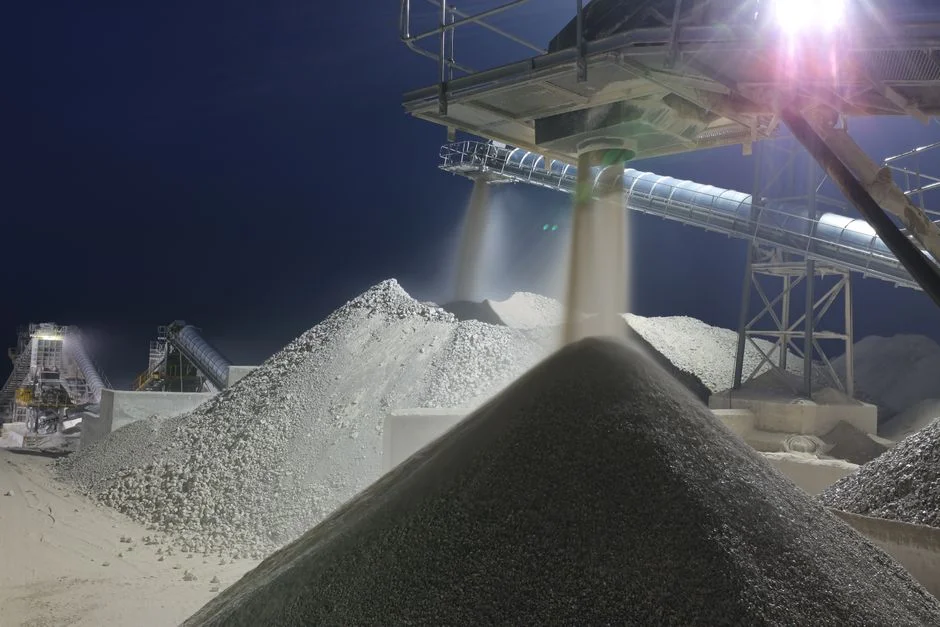
Save the Water (June 2023) states the practical media diameter window as 0.3–3 mm, with an explicit trade-off: media that is too coarse fails to capture fine particulate, and media that is too fine plugs rapidly and shortens run length. Rapid sand beds have been amended with granular limestone, coke, gypsum, coal, biochar, and activated carbon for contaminant-specific polishing, including research on nanoplastic removal with limestone-amended media. None of the supplied research publishes specific bed-depth, effective-size, uniformity-coefficient, hydraulic loading, or backwash-rate values; the table below is a parameter checklist that a buyer should request from each vendor with the vendor's own published curve attached.
| Parameter | What to specify on the data sheet | What to ask the vendor for |
|---|---|---|
| Media diameter | 0.3–3 mm range; nominal and tolerance | Sieve analysis certificate per batch |
| Effective size (d10) and uniformity coefficient (UC) | Target d10 and maximum UC | Vendor's head-loss vs. flow curve at clean-bed condition |
| Media composition | Silica, garnet, anthracite, or amended blend; solubility and acid strength tested | Material certificate; hardness and attrition loss data |
| Bed depth | Freeboard and compacted media depth per cell | Effluent turbidity vs. run time at design flow |
| Hydraulic loading rate | Design flow (m³/m²/h) at average and peak | Backwash rate and duration to achieve ≥20% bed expansion |
| Backwash approach | Water-only, air-scour + water, or continuous backwash | Wastewater volume per cycle as % of filtrate |
| Underdrain type | Nozzles, laterals, or false-floor; material | Air-distribution uniformity test data |
For multimedia configurations — sand capped with anthracite or similar — the engineering objective is to push the bulk of capture into a coarser top layer while retaining fine polishing in the sand below. A multi-media filter configured in this way typically achieves longer runs and lower SDI than a single-media bed at the same loading rate, which is why most RO pretreatment packages specify multimedia rather than sand alone.
Industrial Sand Filter Configurations Compared
Three families cover the majority of industrial installations. The choice is driven by available head, footprint, automation expectations, and flow envelope rather than by effluent quality, since all three can meet comparable turbidity targets when correctly specified.
- Gravity rapid sand filters — open basins, flow driven by gravity, common in municipal tertiary treatment. These offer lower capital cost on large flows but require a larger footprint and backwash pumps and air-scour blowers sized for the bed area.
- Pressure sand filters — closed vessels operating under pressure, common in industrial process make-up and cooling-water sidestream filtration. These provide a smaller footprint and higher effluent head downstream, though they require pressure-vessel code compliance and have higher shell costs.
- Traveling-bridge filters — the bed is divided into narrow cells (8 in. or 12 in. — 20.3 or 30.5 cm — wide on the AquaABF, per aqua-aerobic.com) and a bridge traverses the cells, filtering in parallel and backwashing sequentially. Concrete cells are available in standard widths of 6, 9, 12.5, and 16 ft (1.8, 2.7, 3.8, 4.9 m), with package units from 4 × 8 ft to 9 × 40 ft (1.2 × 2.4 m to 2.7 × 12.2 m). The Turbilite post-backwash filtrate-recovery option collects the first flush after each backwash and recycles it to the washwater collection system to minimize post-backwash breakthrough.
For tertiary polishing before reuse or ahead of RO, the AquaABF-style design tends to win on footprint and continuous-service arguments. For batch processes or sites with strict pressure-vessel redundancy requirements, pressure vessels are usually preferred. Gravity cells remain the default for large municipal flows where footprint is not the binding constraint.
Where Sand Filtration Sits in the Treatment Train
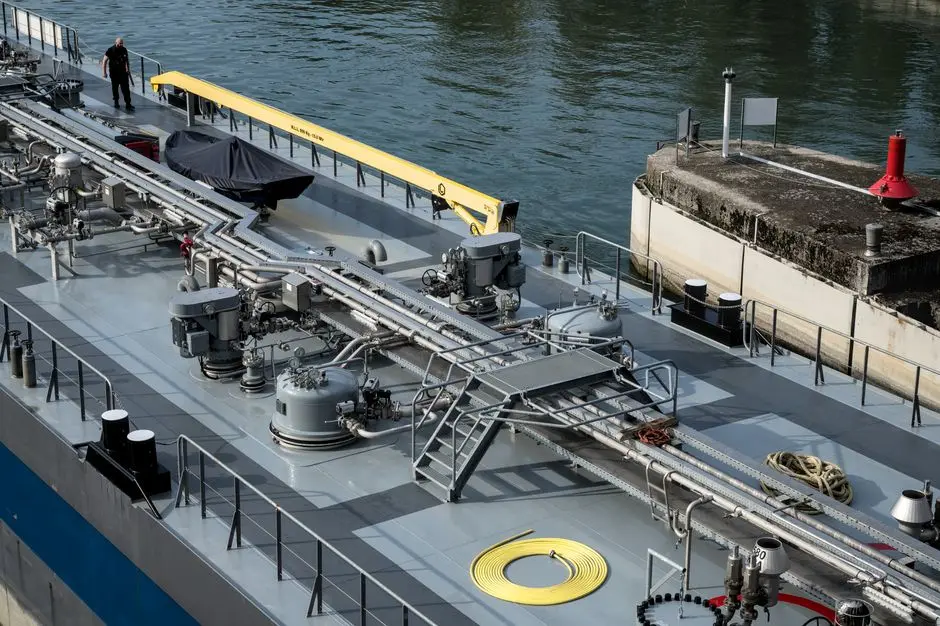
A modern industrial wastewater train typically follows this sequence: screening → grit removal → primary clarification or DAF → biological stage (if required) → sand filter → disinfection or UF/RO. The sand filter's job is to protect the downstream barrier — UF membrane, RO element, or disinfection contactor — from suspended solids that would otherwise foul, scale, or shield pathogens.
The Poolborwornrak et al. (2026) result is evidence that coagulation ahead of the sand bed unlocks high removal efficiency: the researchers moved overall microplastic removal from 63–77% (coagulation alone) to 99.93% once the sand column was added at 15 mL/min. The operational implication is that a sand filter without an automatic chemical dosing skid ahead of it is rarely operating at its design potential, and Save the Water (June 2023) reinforces this by stating that failure to remove suspended solids upstream is the most common cause of sand-bed clogging.
For plants targeting discharge-only permits, a well-operated sand filter is often sufficient. For plants targeting reuse, SDI reduction ahead of RO, or heavy-metal polishing, the sand filter should be followed by a membrane stage — typically a UF system as a barrier to colloidal and microbial carryover, then RO if dissolved species are in scope. The 2026 hybrid study also supports coupling with electrocoagulation on difficult streams; engineers evaluating that route can compare notes against the electrocoagulation design guide.
Operating a Sand Filter: Backwash, Clogging and Common Failures
Backwash should be triggered by whichever of these comes first: terminal differential pressure, effluent turbidity breakthrough, a fixed run time, or a fixed volumetric throughput. Save the Water (June 2023) attributes most field failures to four root causes — insufficient pretreatment, non-uniform or contaminated media, hydraulic overloading, and cold-climate flow restriction.
- Insufficient pretreatment shows as a short run length, climbing differential pressure within the first hours, and visible solids on the bed surface.
- Non-uniform or contaminated media shows as localized channeling — turbidity breakthrough without a corresponding rise in differential pressure — and is confirmed by a bed inspection and a sieve analysis of the top 50 mm.
- Hydraulic overloading shows as turbidity breakthrough at higher than design flow and as media loss from the bed surface; the Poolborwornrak et al. (2026) result serves as a useful anchor, since 99.93% removal was achieved at 15 mL/min.
- Cold-climate flow restriction shows as a viscosity-driven loss of capacity on recirculating and open filters, and is a design issue at the procurement stage.
Operators should log differential pressure, filtrate turbidity, and backwash interval on every cycle. Trends in these variables detect media fouling, underdrain failure, and air-scour problems before they become a permit event. Replacement media, nozzles, and underdrain components are stock items and are covered under a typical bulk filter media and underdrain components spares package. For context on the upstream DAF or coagulation stages that protect a sand filter, the DAF troubleshooting guide is a useful companion reference.
Frequently Asked Questions
What does a sand filter actually remove, and what does it miss?
A sand filter reliably removes suspended solids and turbidity, and — when paired with coagulation — a meaningful fraction of microplastics: Poolborwornrak et al. (2026) reported 99.93% combined removal of 0.15–1 mm polyethylene microplastics at 15 mL/min. It does not remove dissolved species, and it does not reliably retain sub-micron particulate or pathogens on its own. For dissolved metals, salts, or true virus barriers, plan on an RO or UF stage downstream.
When should we choose sand over UF for RO pretreatment?
Choose sand (typically multimedia) when the feed SDI target can be met with conventional media and the RO feed does not require a virus or absolute microbial barrier. Choose UF when the RO membrane warranty requires SDI consistently below 3, when the water is intended for reuse, or when the upstream biology is variable enough that a sand bed alone cannot guarantee a stable RO feed. Ask each vendor for SDI performance data on a synthetic feed matching your plant profile
Frequently Asked Questions
What does a sand filter actually remove from wastewater?
Sand filters act as a physical barrier to remove suspended solids, typically achieving a reduction in Total Suspended Solids (TSS) by 80% to 95%. They are highly effective at capturing particles in the 10 to 50-micron range and significantly reduce turbidity, often achieving effluent levels below 5 NTU depending on the influent loading.
Beyond physical particles, sand filtration provides secondary benefits including the removal of particulate-bound heavy metals, oil and grease, and a significant reduction in biochemical oxygen demand (BOD) associated with suspended organic matter. They serve as an essential pretreatment step for downstream disinfection or membrane processes.
When should I use a sand filter instead of ultrafiltration in an industrial plant?
Sand filters should be prioritized when the primary goal is robust, low-cost removal of bulk suspended solids without the high energy consumption and fouling risks associated with membrane systems. They are ideal for applications where the influent TSS varies significantly or exceeds 50–100 mg/L, as sand beds can handle higher solids loading without the immediate pressure differential spikes that cause ultrafiltration (UF) to fail.
Choose sand filtration when the facility requires lower capital expenditure (CAPEX) and simpler maintenance protocols that do not require specialized chemical clean-in-place (CIP) cycles. Ultrafiltration should be reserved only for applications requiring absolute pathogen removal (log-reduction credits) or as a pretreatment for reverse osmosis where a SDI (Silt Density Index) below 3.0 is strictly mandated.
What sand media size and uniformity coefficient should I specify for a wastewater sand filter?
For standard rapid gravity or pressure sand filters, specify an effective size (ES) ranging from 0.45 mm to 0.55 mm. A uniformity coefficient (UC) of 1.3 to 1.7 is industry standard to ensure optimal hydraulic conductivity and prevent premature blinding of the filter bed while maintaining effective particle capture.
In cases of dual-media filtration, specify anthracite with an ES of 0.8 mm to 1.2 mm layered above the sand to increase the solids storage capacity. Always ensure the media conforms to AWWA B100 standards for physical properties, including acid solubility below 5% and a Mohs hardness rating of at least 6.5 to withstand mechanical attrition during backwash cycles.
How often will a sand filter need backwashing, and how do I size the backwash pump?
Backwash frequency is typically triggered when the differential pressure across the media bed reaches 0.5 to 0.8 bar (7 to 12 psi) or every 24 to 48 hours of operation, whichever occurs first. In high-solids applications, automated cycles may trigger based on a timer or turbidity breakthrough sensors.
Size your backwash pump to provide a flow rate capable of achieving a bed expansion of 20% to 40% for at least 10 to 15 minutes. This generally requires a superficial velocity of 35 to 50 m/h (15 to 20 gpm/ft²), depending on the specific gravity of the media and the temperature of the wastewater, which directly impacts fluid viscosity and buoyancy.
How do I evaluate and compare sand filter suppliers for an industrial tender in 2026?
Evaluate suppliers based on their ability to provide verified pilot study data that matches your specific wastewater chemistry, particularly regarding sticky solids or biological slime potential. Ensure the technical proposal includes detailed hydraulic modeling for the underdrain system, as an inefficient distribution manifold is the leading cause of media channeling and "dead spots" in modern installations.
Compare total cost of ownership (TCO) by requiring a 10-year projection that includes media replacement intervals, power consumption for backwash pumps, and the availability of local spare parts for automated valve manifolds. Prioritize vendors who integrate digital monitoring systems capable of real-time pressure differential trending and automated backwash optimization, as these features are standard for 2026 industrial compliance requirements.