
Why Coimbatore Industries Need a Compliant ETP in 2026
Coimbatore's industrial base—textile wet processing, leather tanning, dyeing, foundries, and food processing—generates effluents that are typically high in organics, suspended solids, oil and grease, colour, and heavy metals. These contaminants are the standard removal targets listed in any industrial ETP scope, and they map directly onto the unit operations a supplier will quote: equalization, coagulation/flocculation, biological oxidation, clarification, filtration, and disinfection.
The scale of the problem is significant: water-related disease causes 3.4 million deaths per year globally according to the WHO Water Day Report as cited by Khan et al. (2021), and the same authors report a World Bank estimate of approximately $6.5 billion in losses in 2015 (about 3.4% of Bangladesh's GDP) attributable to untreated water. While those figures are not Tamil Nadu-specific, they provide the macro framing a plant EHS lead should present to a budget committee to justify capital.
Every ETP in Tamil Nadu operates under Tamil Nadu Pollution Control Board (TNPCB) consent, issued in two stages: Consent to Establish (CTE) before construction and Consent to Operate (CTO) before commissioning. CTO conditions set inlet/outlet monitoring frequency and parameter limits, and non-compliance has historically led to show-cause notices, closure directions, and prosecution. For a 2026 procurement decision, the practical first step is to pull the current consent order and list the consent number, validity period, and every consented parameter; that list becomes the design basis for the supplier. Plants must also size to peak shift flow, not average flow, because textile and food units in the Coimbatore–Tiruppur belt run batch discharges that can easily double the hourly load.
What an ETP Must Remove: Contaminants Typical of Coimbatore Effluents
Industrial effluent is approximately 99.9% water, with the contaminants concentrated in the remaining fraction. That ratio is the engineering reason why an ETP is sized two ways: hydraulic capacity (m³/day) to move the bulk liquid and pollutant load (kg BOD/day, kg COD/day) to size the biological stage. The standard target list—organic matter, inorganic matter, heavy metals, oil & grease, and suspended particles—covers the bulk of what TNPCB consent orders specify, but Coimbatore-specific streams add parameters that generic ETP marketing rarely calls out. Proper treatment begins with defining these specific influent characteristics.
For textile and dyeing units around Tiruppur and the Coimbatore periphery, the buyer should specifically ask bidders about colour removal, TDS management, and a reuse loop. These drive tertiary-stage selection (ozone, activated carbon, RO) and are not generic ETP questions. For foundry and electroplating shops, the heavy-metal and oil-and-grease load makes a dissolved air flotation system for primary separation essential before any biological stage; this is a standard process-engineering expectation, but the buyer should confirm it on the P&ID before signing. For leather units handling chromium, the supplier must show a dedicated chromium precipitation/sludge-handling line, not just biological treatment.
Translating an effluent profile into treatment objectives separates a defensible bid from a sticker price. The buyer should hand every supplier the same influent characterization spreadsheet (pH, COD, BOD, TSS, TDS, oil & grease, plus industry-specific parameters such as chromium, sulphide, or total dissolved salts) and ask each to map every consented outlet parameter to a specific unit operation. Suppliers who answer in marketing language rather than unit-operation language are flagging a risk before the contract is signed.
ETP Process Trains Compared: ASP vs SBR vs MBBR vs MBR
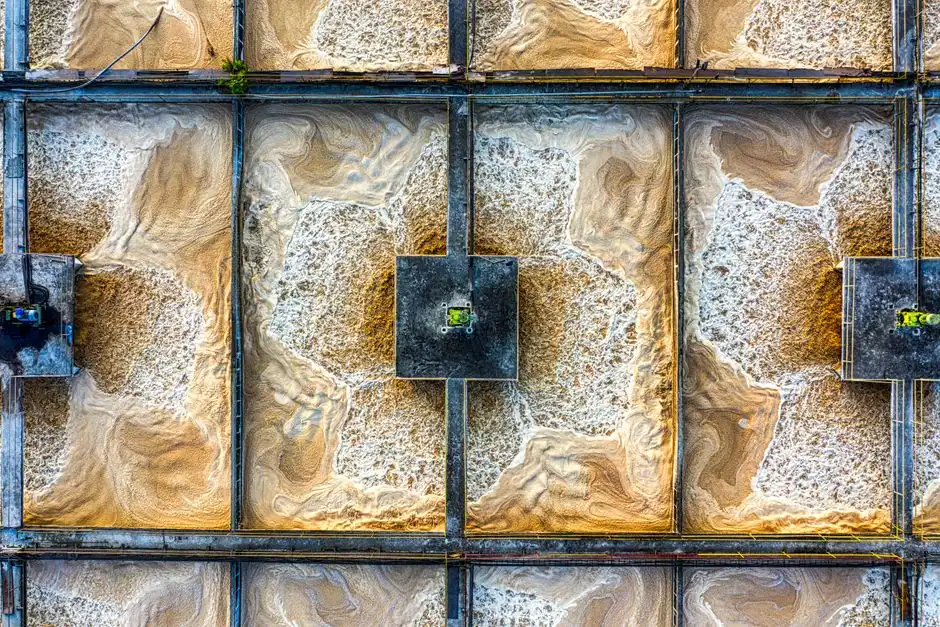
Multiple proven secondary options—Activated Sludge Process (ASP), nitrification/denitrification packages, anoxic bioreactors, and Fluidized Bed Aerobic Bio-reactor (FAB)—are available, confirming that the choice of biological train depends on influent strength, footprint, reuse target, and operator skill. ASP is the conventional workhorse: air or oxygen is blown into unsettled sewage to develop a biological mixed liquor that digests organic content. It is typically the lowest-CAPEX option but needs the largest footprint, consistent sludge return, and disciplined wasting—none of which a Coimbatore buyer with constrained land can take for granted.
For higher-strength or variable textile effluent, sequencing batch reactors (SBR) and moving bed biofilm reactors (MBBR) are common upgrades, trading CAPEX for smaller footprint and better shock-load tolerance. MBR (membrane bioreactor) is the highest-effort option and the cleanest outlet: a membrane bioreactor delivers near-reuse quality at sub-micron filtration. Where land is constrained or zero liquid discharge (ZLD) is the destination, an MBR membrane bioreactor system followed by an industrial RO system is the standard process train, and the MBR module is what determines long-term flux and cleanability.
Modern ETPs should also be specified with continuous monitoring, not just daily lab sampling. Khan et al. (2021) document a wireless sensor network using pH, temperature, and turbidity sensors feeding an Arduino Uno R3 microcontroller, with a GSM module pushing data to a Thingspeak cloud server and computing a Water Quality Index (WQI) for trend tracking and SMS alerts. A 2026 buyer should require continuous logging of pH, temperature, and turbidity at minimum, with the data visible to plant management and to TNPCB on demand.
| Process | Typical footprint | Effluent quality | Best-fit Coimbatore scenario | Key buyer question |
|---|---|---|---|---|
| ASP | Largest | Meets standard consent; reuse needs tertiary | Lowest CAPEX; ample land | Sludge return and wasting plan |
| SBR | Moderate | Similar to ASP; better shock handling | Batch-discharge textile units | Cycle time and equalization volume |
| MBBR | Moderate | Similar to ASP; more stable | Variable influent, mid-strength | Carrier fill ratio and replacement cost |
| MBR | Compact | Near-reuse at <1 μm | High-strength or ZLD targets | Membrane clean-in-place and replacement |
Sizing the ETP: Flow, Load, and the Inputs You Must Give a Supplier
Inlet ratings are specified two ways: m³/day or m³/hr for hydraulic capacity. The biological stage, however, is sized on load—kg BOD/day or kg COD/day applied to the aeration tank—which is why a supplier quoting only a flow number without an assumed influent strength is not giving the buyer a real price. The buyer's job is to walk into every vendor meeting with the same data package so the bids are comparable.
The minimum data package a Coimbatore buyer should hand a supplier: 24-hour composite influent characterization (pH, COD, BOD, TSS, TDS, oil & grease, plus industry-specific parameters like chromium or sulphide), peak shift factor (how much the hourly flow exceeds the daily average), future expansion allowance, and a target reuse percentage. The future expansion allowance is the cheapest insurance a buyer can buy—retrofitting capacity into a live ETP is far more expensive than oversizing the equalization tank and the aeration basin at the build stage. Peak versus average flow matters in Coimbatore because many textile and food units run batch discharges; equalization tank sizing must be specified upfront, not added later when a TNPCB inspection finds the hydraulic buffer is missing.
Sludge handling is part of ETP sizing, not an afterthought. A buyer should ask every bidder for the expected sludge yield (kg dry solids per kg BOD removed) and a downstream dewatering plan. A plate and frame filter press paired with a high-efficiency sedimentation tank is a standard combination for Coimbatore volumes, but the cake moisture target and the disposal route (landfill, co-processing, or hazardous-waste manifest) are commercial decisions the plant must make before the P&ID is frozen. If the unit is an underground packaged plant for a small facility, an underground packaged sewage treatment plant is an alternative layout worth asking about.
2026 Supplier Shortlist: What to Verify Before You Sign
A defensible vendor shortlist for an ETP in Coimbatore should be a one-page matrix, not a name list. The buyer should require each bidder to demonstrate three things in writing: a reference list of at least three operating ETPs of comparable capacity and influent type commissioned in Tamil Nadu within the last 36 months, a process guarantee (not just an equipment warranty) tied to outlet BOD, COD, TSS, and pH at the boundary box, and a clear scope split between what is process-guaranteed and what is supplied on an equipment-only basis. The process guarantee is the single biggest CAPEX-versus-risk tradeoff in an ETP contract, and any supplier who refuses to put outlet numbers in the contract should be marked down.
Automation is no longer optional. The IoT/WSN architecture Khan et al. (2021) describe—sensors feeding a cloud dashboard, with a computed WQI and SMS alerts on threshold breach—is realistic in 2026 and should be specified as a line item. At minimum, the buyer should require a PLC with trend logging for pH, dissolved oxygen, mixed liquor suspended solids, and flow, plus an automatic chemical dosing system tied to those trends. Vendor after-sales support dominates the 5-year OPEX curve: response time, spares stocking for blowers, pumps, and membranes, and the willingness to take an annual maintenance contract (AMC) all need to be in writing.
Finally, the supplier should assist with TNPCB compliance documentation—outlet sampling records, Hazardous & Other Wastes Rules manifests if applicable, and annual return filing for CTO renewal. A supplier who treats compliance support as an extra-cost service is signalling they have not done this work in Tamil Nadu before.
| Verification item | What to ask the bidder | Why it matters |
|---|---|---|
| Reference ETPs in Tamil Nadu | Three sites, similar capacity, visited in the last 36 months | Proves local execution, not just design capability |
| Process guarantee | Outlet BOD, COD, TSS, pH at boundary box, in writing | Shifts performance risk from buyer to supplier |
| Automation scope | PLC trend logs, IoT/WSN data push, auto-dosing tie-in | Reduces operator skill dependency; TNPCB-ready records |
| AMC and spares | Response time SLA, local spares, membrane/blower lead time | Dominates 5-year OPEX |
| TNPCB support | CTO renewal, sampling, manifest, annual returns | Avoids last-minute compliance scrambles |
Building the Cost Case: CAPEX, OPEX, and Reuse Savings
The buyer should not accept any vendor's first number as final. Every bidder should be asked to provide an itemized CAPEX split—civil, mechanical, electrical, instrumentation, automation, and commissioning—and a 5-year OPEX model covering power, chemicals, membranes, labour, and sludge disposal. Power and chemical cost are the two OPEX lines that swing hardest with influent load: a 20% rise in influent COD with no equalization buffer will multiply aeration power and chemical dosing, so the equalization tank is the cheapest insurance in the entire plant.
Reuse economics is where the budget case gets interesting. A Dindigul CETP field trial reported in the International Journal of Current Microbiology and Applied Sciences (2018) found that a 25% treated tannery effluent + 75% domestic wastewater blend, with gypsum amendment, supported higher cotton growth indices than normal water with gypsum. That is direct field evidence that reuse can offset freshwater purchase and disposal cost—but only if the ETP is designed for it from day one, with the right tertiary and disinfection train. For boiler-feed or cooling-tower reuse, an MBR + RO train is the standard answer, and the ZLD conversation (additional RO concentrate evaporation) needs to happen upfront because it can multiply the total project cost by a large factor.
Frequently Asked Questions
How much does an ETP cost in Coimbatore in 2026?
The defensible approach is to require every bidder to submit an itemized CAPEX (civil, mechanical, electrical, instrumentation, automation, commissioning) and a 5-year OPEX (power, chemicals, membranes, labour, sludge disposal) on the same template, then normalize across bids. Reuse savings—quantified using a water balance and current freshwater purchase cost—should be subtracted to arrive at a net-of-reuse CAPEX, because that is the number a finance committee will sign off on.
How do I shortlist an ETP manufacturer in Coimbatore?
Frequently Asked Questions
What is the cost of an effluent treatment plant in Coimbatore for a small textile unit in 2026?
For a small-scale textile unit in Coimbatore, the capital expenditure for an ETP typically ranges from INR 15 lakhs to INR 35 lakhs for capacities up to 50 KLD. This pricing varies based on the level of automation, civil construction requirements, and the specific chemical oxygen demand (COD) reduction technology employed.
How do I choose between SBR, MBBR, and MBR for a dyeing ETP in Coimbatore?
Selection depends on space availability and discharge standards. MBBR is preferred for upgrades due to its compact footprint and high biomass concentration, while SBR is ideal for batch-process dyeing units requiring flexible cycle times. MBR is the superior choice for ZLD (Zero Liquid Discharge) systems where ultra-filtration is necessary to achieve high-quality permeate for reuse, despite higher operational costs due to membrane fouling management.
What TNPCB documents are required before installing a new ETP in Tamil Nadu?
Before installation, you must obtain a Consent to Establish (CTE) from the Tamil Nadu Pollution Control Board. Required documents include a detailed plant layout, a comprehensive project report (DPR) certified by a chartered engineer, an effluent analysis report, proof of land ownership or lease, and a site plan clearly marking the final disposal point as per the Water (Prevention and Control of Pollution) Act.
Which ETP manufacturers in Coimbatore provide performance guarantees on outlet BOD and COD?
Reputable Coimbatore-based environmental engineering firms typically provide performance guarantees for outlet parameters of BOD < 30 mg/l and COD < 250 mg/l, or stricter limits if the treated water is intended for reuse. These guarantees are usually backed by a 12-month performance bond and are contingent upon the influent characteristics remaining within the design parameters specified in the initial contract.
How long does it take to commission a 100 KLD ETP in Coimbatore?
The commissioning timeline for a 100 KLD ETP is typically 12 to 16 weeks. This period includes 4-6 weeks for civil construction, 4 weeks for mechanical and electrical installation, and 4 weeks for stabilization, inoculation of biological cultures, and rigorous testing against TNPCB discharge standards to ensure consistent effluent quality.