What MVR Actually Does to a Gas Bill
Mechanical vapor recompression (MVR) is an electrical, compressor-driven loop that reuses the enthalpy of vapor leaving an evaporator instead of dumping it to a condenser. A Hans Publishers design paper on compressor gas-temperature control in MVR systems treats discharge temperature and suction conditions — not burner size — as the controlling variables for evaporation duty. When MVR supplies the latent heat of vaporisation on the calandria, the natural-gas line to the boiler that would otherwise raise fresh steam is displaced by electricity to the compressor motor. The gas-cost lever is fundamentally a fuel-to-electricity substitution at the evaporator interface.
The Applied Energy 2020 case study that documents the AD-biomass savings notes that natural gas still had to be burned for non-evaporation thermal duties, which is why the distillery deployed AD alongside other measures rather than relying on one lever. Before quoting any savings figure, an engineer should request from the OEM the feed total dissolved solids (TDS), the boiling-point elevation, and the required temperature lift (ΔT) across the compressor, because these inputs set the compressor specific work and therefore the kWh that replace each MMBtu of gas. These boundary numbers are not provided in the supplied research, so the saving ceiling must be modelled site-by-site rather than read off a chart.
MVR Feeds: Process Parameters That Decide the Payback
The operating point of an MVR evaporator is governed by the compressor gas-temperature control loop, where the controller trims compressor speed or inlet guide vanes to hold a discharge temperature that matches the calandria heating requirement. The loop is set by suction pressure, discharge pressure, and the saturation curve of the feed — not by a burner turndown. This changes the OPEX trade. Instead of a $/MMBtu gas price multiplied by boiler efficiency, the running cost becomes $/kWh of electricity multiplied by compressor specific work (kWh per kg of water evaporated), and the gap between those two numbers at site-specific tariffs drives the simple payback. To size the MVR package against current steam cost, an engineer should provide a vendor with the feed flow, the feed solids content, the target evaporation rate, the available electrical capacity, transformer headroom, and the cooling-medium temperature. Integration touchpoints matter because fouling erodes the headline benefit: multi-media pretreatment for MVR feed controls suspended solids that would scale the evaporator surface, and RO concentrate handling for MVR duty defines the feed TDS envelope the compressor has to lift. If pretreatment is undersized, the compressor's discharge temperature drifts and the kWh-per-tonne figure that justified the project worsens over the first 12 months.
| Parameter | What it controls in an MVR loop | Input the engineer must supply |
|---|---|---|
| Compressor discharge temperature | Sets the temperature driving force across the calandria; primary controlled variable per the Hans Publishers MVR design paper | Required evaporation rate and target ΔT |
| Suction pressure / vapor temperature | Defines the compressor's pressure ratio and specific work | Operating vacuum or saturation temperature at the feed TDS |
| Feed TDS / boiling-point elevation | Lifts the saturation temperature and therefore the discharge setpoint | Feed characterisation (lab analysis or historical plant data) |
| Feed flow and solids content | Sets compressor swept volume and fouling risk on heat-transfer surfaces | Hourly flow profile and TSS/silica profile |
| Available electrical capacity | Caps the MVR duty that can be installed without a transformer upgrade | Site electrical single-line diagram and tariff structure |
| Cooling-medium temperature | Sets the condenser floor on the suction side | Cooling-tower or cooling-water design wet-bulb |
AD Biogas: The 64% Natural-Gas Displacement Number
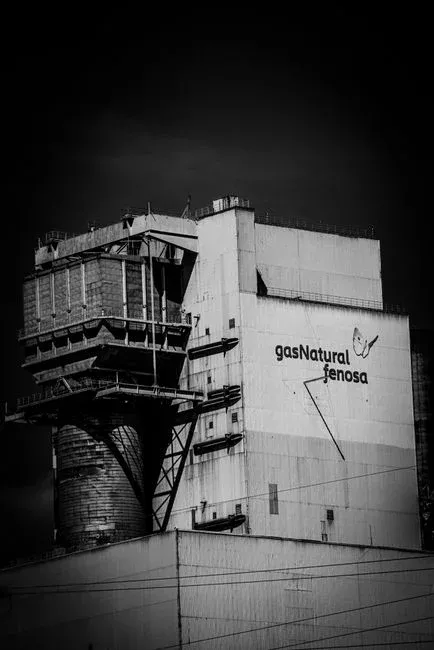
A large distillery case published in Applied Energy in 2020 documents that anaerobic digestion of distillery by-products replaced up to 64% of the site's natural gas consumption, reduced direct GHG emissions by 54%, and delivered 11,389 tCO2eq of indirect GHG savings. The GHG accounting boundary used in the source follows the GHG Protocol's split between direct and indirect emissions, which is the framework most large food, beverage, and chemical reporters use, making the result auditable. The boundary is important: the 64% / 54% / 11,389 tCO2eq numbers are from a single distillery case and should be treated as a reference ceiling rather than a generic industrial benchmark. Different waste streams, digester yields, and downstream boiler conversion efficiencies will move the headline number. MVR addresses the evaporator's latent-heat duty electrically, while biogas from AD addresses the residual thermal loads MVR cannot electrify—wash-water heating, building heat, CIP, and boiler feedwater preheating. The Applied Energy case ran AD in parallel with other efficiency measures to maximize displacement. On the wastewater side, the digester only delivers that gas if the upstream and downstream unit operations are sized correctly, which is where dewatering for the AD by-product line and pH and nutrient dosing for the AD reactor set the volatile-solids loading the digester actually sees.
| Metric (Applied Energy, 2020, large distillery case) | Reported value | Boundary / scope note |
|---|---|---|
| Natural-gas consumption replaced by AD-derived biogas | Up to 64% | Distillery by-products only; non-evaporation thermal loads still on gas |
| Direct GHG reduction | 54% | Scope 1 boundary per GHG Protocol framing in the source |
| Indirect GHG savings | 11,389 tCO2eq | ~41% of direct savings; Scope 2/3 boundary in the source |
| Accounting standard | GHG Protocol direct vs indirect split | Same split large food and chemical reporters already use |
2026 Funding Pathways That Shrink MVR Payback
Public co-funding compresses simple payback by reducing the capex denominator rather than the opex numerator. The categories an evaporation-heavy site in food, distillery, or chemical should screen in 2026 are industrial energy-efficiency programmes, green-industry or decarbonisation grants, and emissions-credit or compliance-credit markets that monetise the same GHG Protocol direct/indirect split used in the Applied Energy paper. The supplied research does not list specific 2026 programme names or award ceilings, so the engineer should verify current calls locally. Before any programme is fed into the financial model, three documents must be requested from the administrator: the eligible scope, the capex basis the grant will pay against, and the reporting boundary under the GHG Protocol. Double-counting is the single biggest compliance risk: the 11,389 tCO2eq of indirect savings reported in the Applied Energy 2020 case can only be claimed once across any credit stack, so finance and sustainability teams must align on a single accounting boundary before the project is signed.
Decision Framework: When MVR Feeds Beat Standalone AD

The choice between MVR-first, AD-first, or both together depends on the size of the evaporator's thermal load and the volume of organic by-product available to feed a digester. A simple two-axis frame puts MVR on the high-evaporation, low-by-product side, AD on the low-evaporation, high-by-product side, and the combined strategy in the high-by-product, high-evaporation quadrant. The minimum data package an OEM or AD vendor will demand before quoting either lever is twelve months of natural-gas invoices, an evaporator mass-and-energy balance, and a by-product characterisation including volatile solids and inhibitory compounds. Pre-treatment sits at the hinge of either decision: dissolved-air flotation upstream of the AD feed protects the digester from solids washout, and a flue-gas desulfurization scrubber on the existing gas boiler remains relevant if a residual thermal load is kept on gas during the transition. For sites benchmarking against peers already in this space, the 2026 cost comparison for evaporation-heavy wastewater trains provides a useful CAPEX benchmark, while the hybrid ZLD systems with 2026 CAPEX breakdown shows how MVR and AD line items sit inside a full ZLD train. Sites weighing build-versus-finance should also review the 2026 TCO comparison between DaaS and CapEx, since funding eligibility often differs between owned and as-a-service structures.
| Site condition | Low organic by-product volume | High organic by-product volume |
|---|---|---|
| High evaporator thermal load | MVR-led; residual thermal load stays on gas or grid steam | MVR + AD combined; mirrors the 2020 Applied Energy distillery case (64% gas displacement) |
| Low evaporator thermal load | Limited gas-cost lever; focus on heat recovery and controls | AD-led; biogas offsets non-evaporation thermal loads rather than steam |
Frequently Asked Questions
What drives the indicative 2026 CAPEX range for an MVR package, and what should we ask a vendor before accepting a quote?
The drivers a vendor will size against are feed flow, feed TDS, the required evaporation rate, the available electrical capacity, and the cooling-medium temperature. The buyer should request each value in writing and confirm it is included in the vendor's kWh-per-tonne guarantee. The quote should also split the compressor, calandria, pretreatment, and electrical upgrade into separate line items so that any grant or co-funding claim can be tied to a specific cost basis.
How do we qualify an MVR or AD supplier so that the project does not become a single-point-of-failure warranty case?
Ask for at least two reference installations running on a feed with comparable TDS and organic loading, request the compressor manufacturer's authorised-service footprint in your region, and require a performance test protocol that locks the kWh-per-tonne and the biogas yield numbers used in your financial model.
What lead-time items should we plan for in 2026 so that funding windows and shutdown slots line up?
The compressor is typically the longest-lead item, followed by the calandria and any electrical-transformer upgrade, and on the AD side the digester tank fabrication and the biogas-upgrading package drive the critical path. The buyer should request a factory-acceptance-test date and a shipping window from each vendor and then back-schedule the grant-agreement signature to land before the compressor is dispatched.
What is the compliance or credit risk if the GHG Protocol boundary is mis-stated across the project?
The 2020 Applied Energy case splits direct and indirect savings on the GHG Protocol basis, and the 11,389 tCO2eq of indirect savings is reported as roughly 41% of the direct savings—those same tonnes cannot be claimed twice across an emissions-credit stack, a green-grant reporting line, and a customer Scope 3 disclosure. The buyer should align finance, sustainability, and the grant administrator on a single boundary before commissioning and document that boundary in the project file.