Why Facultative Ponds in India Fail Without the Right Aeration Choice
A facultative pond is intentionally stratified: aerobic treatment at the surface, anaerobic digestion in the bottom sludge layer, so the aeration job is partial, not full oxygenation (mixing.com). The target dissolved oxygen band is 1–2 mg/L; once readings fall below 0.5 mg/L the system is anaerobic and produces hydrogen sulphide odour and failing effluent (mixing.com).
For Indian operators, the binding constraint is climate, not biology. Cold water holds more oxygen than warm water, and oxygen solubility falls as temperature rises, so aeration systems must work harder in summer to hold target DO (mixing.com). A pond that holds 1.5 mg/L comfortably in December can drop below the facultative band in April–June, producing the classic Indian complaint: a facultative lagoon that went septic over a single hot week.
The second binding constraint is depth. Most Indian facultative lagoons sit at 1–2.5 m, deliberately shallow enough for algal oxygen generation to contribute. Adding mechanical aeration to a 1.5 m pond is a different problem from aerating a 4 m oxidation ditch, and the technology choice must respect that geometry (waterandwastewater.com). The third constraint is energy: aeration already consumes 50–75% of a wastewater plant's total energy budget (mixing.com), so the wrong technology locks in years of wasted power before biology ever reacts.
Surface Aerators: How They Work and Where They Fit
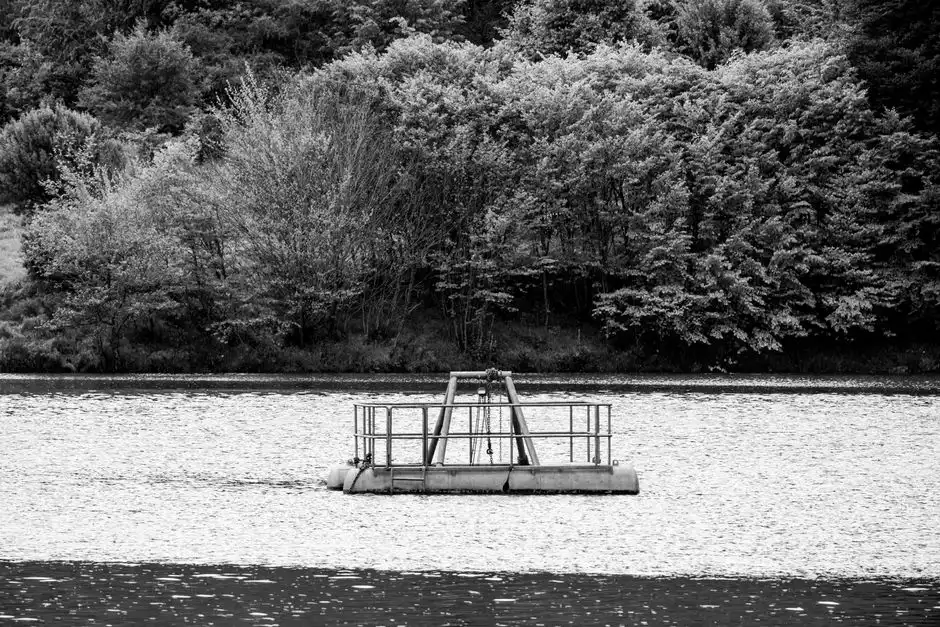
Surface aerators transfer oxygen by mechanically agitating the liquid surface, throwing wastewater into droplets and sheets across a rapidly renewed air–water interface (waterandwastewater.com). Unlike diffused systems, no compressed air is injected below the water column; a single motor-and-impeller assembly on a float or platform does both oxygen transfer and basin mixing.
Performance is published as Standard Aeration Efficiency (SAE) in pounds of oxygen transferred per horsepower-hour under clean water at 20 °C, zero DO, and standard pressure. The alpha factor, which accounts for surfactants and mixed liquor constituents, typically runs 0.6–0.9 for surface units, generally higher than for fine-bubble diffusers, which is one reason surface units hold up comparatively well in high-surfactant industrial wastewater such as textile, dairy and refinery effluents (waterandwastewater.com). Because the driving force is surface renewal rather than bubble residence time, performance is relatively insensitive to basin depth, a significant contrast with diffused aeration (waterandwastewater.com).
Configurations to know when evaluating vendors: low-speed vertical turbine aerators at 30–60 rpm, high-speed floating aerators at 900–1,800 rpm, brush or Kessener rotors at 40–70 rpm, and aspirating aerators that sit on the surface/submerged boundary (waterandwastewater.com). The governing requirement is not always oxygen: if mixing drives the design, you may need more energy than the oxygen demand alone justifies, which is the most common specification error in surface aeration (waterandwastewater.com). For surface units specifically, VFDs paired with DO-based control have become the standard energy retrofit, allowing units to track diurnal load rather than run at fixed output (waterandwastewater.com).
For Indian conditions, the practical fit is shallow ponds under ~3 m, which covers the bulk of Indian facultative lagoon depths (mixing.com, waterandwastewater.com).
Submerged Aeration Systems: Bubbles, Jets and Submerged Rotors
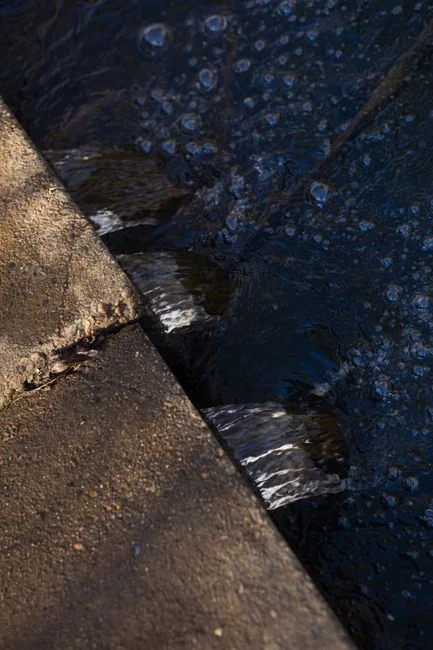
Diffused aeration uses blowers to push compressed air through submerged diffusers on the pond floor or laterally suspended, with deeper submergence increasing transfer efficiency but also blower discharge pressure (mixing.com, waterandwastewater.com). The trade is fundamental: a diffuser sitting at 4 m gives more transfer per cubic metre of air than one at 2 m, but the blower pays for it in pressure.
Jet aeration uses high-velocity liquid jets to draw in and shear air, creating micro-bubbles and intense turbulence; all mechanical equipment sits outside the pond, eliminating in-basin maintenance (mixing.com). Jet systems use horizontal plume injection to keep the gas/liquid transfer interface alive longer than conventional diffused air, and the source documents up to 40% energy reduction versus conventional diffused air while maintaining higher oxygen transfer efficiency (mixing.com).
A documented industrial pilot, the Daura Refinery biological pond, used a 1 m³ tank with a nonporous fine-bubble diffuser at 0.5–0.75 bar(g) injection pressure and 7.6–9.7 L/min airflow, holding 3.4–6.0 mg/L dissolved oxygen under continuous overflow at 10 L/min (IntechOpen). The same study notes that surface fans in that refinery suffered high vibration, support loss, and DO dropping below 4 ppm, which is the practical failure mode that pushes Indian operators toward submerged retrofits (IntechOpen).
For Indian facultative ponds, the attraction of submerged aeration is twofold: no mechanical equipment in the basin to vibrate loose on hot, unevenly compacted embankments, and energy use that scales with submergence depth. The constraint is that shallow 1–2.5 m lagoons give diffused systems little hydraulic head to work with, and blowers still consume compressed air whether the bubbles are useful or not.
Surface vs Submerged at a Glance: The Indian Facultative-Pond Parameter Table
The table below is built from parameters the research sources actually address. Where a parameter is not directly supported, the cell is left qualitative rather than filled with an assumed range.
| Parameter | Surface (floating / mechanical) | Submerged (diffused or jet) | Indian facultative-pond implication |
|---|---|---|---|
| Depth fit | Works in shallow ponds under ~3 m; performance insensitive to depth (waterandwastewater.com) | Transfer efficiency scales with submergence depth; benefits from deeper basins (waterandwastewater.com) | Most Indian facultative lagoons sit 1–2.5 m, favouring surface units for new builds |
| Energy share context | Aeration is 50–75% of plant power; surface unit alpha 0.6–0.9 (mixing.com, waterandwastewater.com) | Jet aeration up to 40% energy reduction vs conventional diffused air (mixing.com) | For shallow ponds, energy savings from submergence are limited by available head |
| DO controllability | VFDs with DO-based control allow diurnal load tracking (waterandwastewater.com) | Blower staging, VFDs, and DO control; mechanical equipment out of basin (mixing.com) | Both can be modulated; surface has lower in-basin maintenance access |
| Surfactant/high-strength tolerance | Alpha 0.6–0.9 generally higher than fine-bubble diffusers (waterandwastewater.com) | Fine-bubble diffusers more sensitive to surfactants (waterandwastewater.com) | Relevant for textile, dairy and refinery effluents common in India |
| Climate failure mode | Spray icing in cold weather; vibration/foundation failure in hot embankments (waterandwastewater.com, IntechOpen) | Blower redundancy needed in power-unstable sites; no in-basin vibration risk (IntechOpen) | Indian heat and intermittent power argue for either DO-controlled surface or blower-redundant diffused |
| In-basin maintenance | Mechanical assembly sits on float or platform above the basin | Diffusers in basin; jet aeration moves all mechanical equipment outside (mixing.com) | Emptying a facultative pond for diffuser service is rarely practical in India |
A Real Surface-to-Submerged Retrofit: Daura Refinery Biological Pond
The Daura Refinery wastewater complex in Iraq ran four mechanical surface fans on the biological pond, with pond dimensions of 16,000 × 32,000 mm split into two pools (IntechOpen). The fans suffered high vibration, the concrete supports failed, and dissolved oxygen in the biological pool dropped below 4 ppm, well under what the downstream process needed (IntechOpen). Maintenance fixes to the foundations and fan fins did not last; the problem reappeared (IntechOpen).
The refinery built a 1 m³ pilot with a nonporous fine-bubble diffuser, continuous overflow at 10 L/min, injected air at 0.5–0.75 bar(g) and 7.6–9.7 L/min, and held 3.4–6.0 mg/L DO across the operating window (IntechOpen). Power consumption dropped to less than 20% of the surface-fan load at the same oxygen delivery (IntechOpen). Scaled to the full biological reactor, the proposed design reduces the aeration load from 241.4 hp to about 200 hp (IntechOpen).
| Parameter | Existing surface-fan system | Proposed fine-bubble diffuser retrofit |
|---|---|---|
| Aeration power (full biological reactor) | 241.4 hp | ~200 hp |
| Dissolved oxygen delivered | Below 4 ppm in the biological pool | 3.4–6.0 mg/L in pilot at 7.6–9.7 L/min, 0.5–0.75 bar(g) |
| Relative power consumption | Baseline (100%) | Less than 20% of baseline |
| Primary failure mode | Vibration, support loss, fan-fin corrosion | None reported at pilot; in-basin diffuser maintenance would require basin isolation |
Source: IntechOpen, 2024. The lesson for Indian operators is that vibration and foundation failure of surface units on hot, often unevenly compacted pond embankments is a documented failure mode, not a hypothetical one, and a 1 m³ pilot is a defensible proof point before full-scale commitment.
Decision Framework: When an Indian Plant Should Pick Surface or Submerged
The framework below maps pond depth, organic load, energy cost and climate to a defensible technology choice, using only the parameters the research actually supports.
Pick surface aerators when the pond is shallow (under ~3 m), the wastewater has high surfactant content (textile, food, refinery), the load is moderate, and capital is constrained (mixing.com, waterandwastewater.com). The surface unit's higher alpha in industrial wastewater is the deciding factor here, and floating units avoid the cost of emptying an existing facultative pond. For sites where post-aeration biological polishing is already in place, an MBR membrane bioreactor system is a common downstream step that tightens the DO band the aerator has to hold.
Pick submerged diffused or jet aeration when the pond is deeper than ~3 m, loads are high-strength, energy cost is a major concern, and in-basin mechanical maintenance is undesirable. Jet aeration can cut energy up to 40% vs conventional diffused air while keeping all mechanical equipment outside the basin (mixing.com), and the Daura case shows biological-stage power falling to under 20% of the original surface-fan load when the diffuser is properly sized (IntechOpen).
Treat climate as a first-class variable. Spray icing is a defined cold-climate failure mode for surface units, with mitigations including continuous operation, increased submergence, and orienting units away from structures (waterandwastewater.com). Warm Indian summers push both technologies harder through oxygen solubility loss, but especially surface units that depend on surface renewal; the same aerator that holds 1.5 mg/L in winter can drop the pond below target in April–June (mixing.com).
Where 24/7 operation is impractical due to Indian power shedding, specify DO-based control with VFDs for surface units, or design blower redundancy for diffused systems. In either case, design to the same 1–2 mg/L facultative DO target and never run below 0.5 mg/L, which signals anaerobic failure (mixing.com). Nutrient control upstream can be paired with an automatic chemical dosing system to keep BOD loading steady across the diurnal cycle the aerator is trying to track.
Operating-Cost, Sizing and Compliance Questions to Ask Before You Buy
Ask vendors for SAE curves at 20 °C clean water and an alpha factor measured on your wastewater. Surface units typically land at 0.6–0.9 alpha, fine-bubble diffusers generally lower, and the gap matters more in surfactant-loaded industrial effluents (waterandwastewater.com). Without a measured alpha, every energy claim downstream is built on clean-water assumptions.
Demand a DO simulation across summer and winter, not just an annual average, because oxygen solubility falls as temperature rises and the same aerator behaves very differently in May and December (mixing.com). For shallow Indian facultative ponds, the summer case usually governs, and that is the case the vendor should be designing to.
For retrofit projects, request a vibration and foundation survey of existing surface-aerator supports before sizing a replacement. The Daura case shows this is often the binding constraint, with fans re-failing even after maintenance passes (IntechOpen). If the existing embankment cannot hold a replacement surface unit, the comparison has already been decided in favour of submerged aeration.
Build the 50–75% energy share of aeration into any ROI calculation (mixing.com); a 20–40% energy cut is the realistic upside band documented across the sources, not a vendor's headline number. For downstream solids handling where aeration is no longer the bottleneck, a plate-frame filter press sized to the new sludge profile is a typical follow-on, and any retrofit that creates dust from disturbed sludge beds can be paired with a pulse-bag baghouse dust collector. Compliance risk in India is driven primarily by effluent BOD and TSS, so cross-check the BOD water treatment process guide for the limits that apply to your discharge consent.
Frequently Asked Questions
What depth and load decide the choice between surface and submerged aeration in an Indian facultative pond?
Surface aerators are the default for shallow ponds under ~3 m, which covers most Indian facultative lagoon depths of 1–2.5 m, and their higher alpha of 0.6–0.9 makes them more tolerant of high-surfactant industrial wastewater (waterandwastewater.com). Submerged diffused or jet aeration becomes the better fit when the pond is deeper than ~3 m, the load is high-strength, or in-basin mechanical maintenance is undesirable; jet aeration can cut energy use up to 40% versus conventional diffused air (mixing.com).
How much can a facultative-pond aeration retrofit realistically cut operating cost?
Aeration already represents 50–75% of a plant's total energy budget, so any technology change has to be measured against that baseline (mixing.com). Submerged jet aeration can deliver up to 40% energy reduction versus conventional diffused air at the same oxygen transfer (mixing.com), and the Daura Refinery retrofit cut biological-stage aeration power to under 20% of the original surface-fan load while holding 3.4–6.0 mg/L DO (IntechOpen). Ask vendors for a site-specific energy quote rather than relying on these as a guaranteed saving; the actual figure depends on local power tariffs, blower efficiency, and the alpha factor measured on your wastewater.
How do climate and unreliable power change the supplier-selection checklist?
Cold-climate spray icing is a defined surface-aerator failure mode with documented mitigations including continuous operation and increased submergence (waterandwastewater.com). In India, the inverse problem dominates: hot embankments cause vibration and foundation failure in surface units, as documented at Daura Refinery where surface fans suffered support loss and the fix was a submerged retrofit (IntechOpen). For Indian sites with intermittent grid power, specify DO-based control with VFDs for surface units or design blower redundancy for diffused systems, and confirm the supplier has Indian climate references rather than only temperate-climate installations. For an effluent treatment plant buyer's guide for Ahmedabad that covers the local climate and consent regime in more detail, see the linked regional reference.
What DO target should a facultative pond be designed to hold, and when is it worth retrofitting instead of replacing surface aerators?
Hold 1–2 mg/L in a facultative lagoon; never run below 0.5 mg/L, which signals anaerobic failure and produces hydrogen sulphide odour and failing effluent (mixing.com). If existing surface fans cannot hold 4 mg/L DO under summer load, follow the Daura methodology: build a 1 m³ pilot with a nonporous fine-bubble diffuser, validate 3.4–6.0 mg/L DO at realistic airflow and pressure, and only then commit to a full-scale retrofit (IntechOpen). For polishing downstream of the aerated lagoon, a dissolved air flotation (DAF) machine is a common upgrade path where TSS consent limits are tight.