What Installation and Commissioning Actually Cover
Installation is the mechanical build of an ion exchange system against the P&ID and vendor drawing set: vessel placement, piping, valves, instruments, and the final resin loading step. Commissioning is the structured performance verification that follows, confirming each vessel, pump, and control loop meets design intent through hydraulic, regeneration, and treated-water quality tests. The two phases are not interchangeable; collapsing them into a single "startup" milestone is the primary reason field teams skip a documented acceptance test and hand operations a system with no baseline.
Industrial ion exchange is far broader than softening. Sensorex (2022) lists high-purity water for nuclear, power, and electronics, heavy-metal removal from industrial waste, and nitrate and natural organic matter removal in municipal treatment as standard applications, with the technology equally relevant to non-water processes such as plutonium and uranium extraction. The same source also documents the operating principle: a micro-porous exchange resin saturated with a loosely held ionic solution, with cations or anions on the bead surface swapped for contaminants in the feed. The University of Granada's work on olive mill wastewater treatment confirms the same chemistry applies to complex industrial waste streams well outside drinking water, which means commissioning criteria must be matched to the specific application and resin selection rather than borrowed from a generic checklist. A written commissioning protocol produces a baseline the operations team can defend for the next decade.
Pre-Installation Readiness Checklist
Run this list two to four weeks before equipment arrives. The items below are the ones most often missed and most expensive to fix after the skid is on site.
- Civil. Confirm foundation sizing, housekeeping pads, anchor locations, and floor loading for vessels filled with resin and water. A cation unit with resin and brine solution can exceed several tonnes.
- Piping. Verify pipe sizes, materials, and slope against the P&ID; confirm sample points, bypasses, and isolation valves are present for each vessel so any single unit can be taken offline without shutting the train.
- Electrical and instrumentation. Confirm power supply, control panel location, and that conductivity, pH, pressure, and flow instruments are specified, supplied, and factory-calibrated to vendor procedure.
- Resin storage. Confirm resin arrives in sealed containers, is stored indoors and dry, and that the resin type and volume match the vessel sizing. Frozen or sun-exposed resin will commission badly.
- Standards and documentation. Align the commissioning protocol to the project method statement, the vendor O&M manual, and any applicable BSI/EN commissioning standard. The design-installation-commissioning structure used in BSI standards such as the BS EN 15287 family is the model most EPC method statements follow (BSI, 2026).
- Safety. Brine handling, eye-wash, and chemical dosing isolation all need to be ready before regeneration commissioning, not after.
| Discipline | What to verify | Evidence to file |
|---|---|---|
| Civil | Foundation dimensions, anchor pattern, floor loading | Surveyor's sign-off, foundation pour record |
| Piping | Pipe spec, slope, sample points, bypasses, isolation valves per P&ID | Punch list cleared against isometric |
| Electrical & I&I | Power, panel location, instrument calibration certificates | Loop-check sheets, calibration records |
| Resin | Type, volume, sealed container condition, indoor dry storage | Vendor delivery note, storage photo log |
| Safety | Brine handling, eye-wash, chemical dosing isolation | Safety walk-down sheet |
Mechanical Installation Sequence
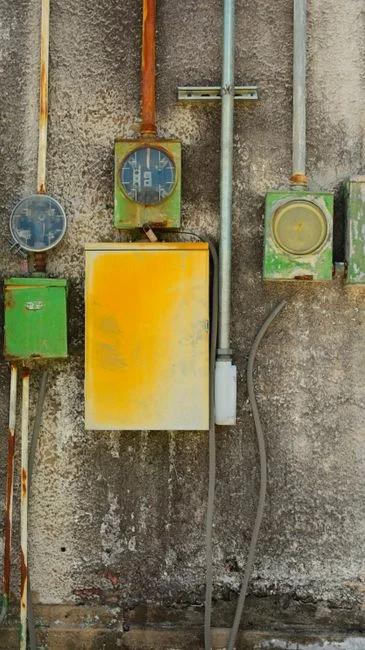
Physical installation follows a specific sequence so vessels are not moved twice and resin is never loaded before piping is pressure-tested.
- Set vessels. Position cation, anion, and mixed-bed vessels per the general arrangement drawing; level each vessel and verify nozzle orientations match the piping isometric.
- Connect piping. Install inter-vessel piping, service water, brine, and waste lines; do not load resin until all hydrostatic tests are complete and signed off.
- Install instruments. Mount conductivity probes, pH sensors, pressure gauges, and flow meters per vendor recommendations (Sensorex, 2022).
- Load resin. Open each vessel, add the specified volume of resin — Sensorex (2022) describes the media as micro-porous polymer beads 0.3–1.3 mm in diameter — to the designed bed depth, then backwash to classify the bed and remove fines.
- Leak and flush. Pressure-test the piping, flush service water through the system, and confirm the waste path for the brine reject stream is operational before any regeneration. The brine reject handling path can be sourced from the consumables and valve set used for water treatment parts, valves and filter media.
If a hydropurewater twin-tank industrial water softener is being installed as part of the train, follow the same sequence per vessel; the twin-tank configuration simply doubles items one through five.
Commissioning the Regeneration Cycle
Regeneration is the only commissioning step where an ion exchange system can permanently damage its own media. Get the brine strength, flow, and rinse volume right before the first service cycle.
- Brine preparation. Confirm NaCl concentration, temperature, and volume match the resin manufacturer's regeneration recipe. Weak brine reduces capacity; strong brine risks osmotic shock to the bead population.
- Backwash. Confirm bed expansion and reclassification; this protects the bead population and prevents fines carry-over into service.
- Brine draw and slow rinse. Run regeneration in the designed counter-current or co-current mode; verify brine is fully drawn through and no air pockets remain in the vessel.
- Fast rinse. Continue rinse until the outlet conductivity matches the inlet baseline, indicating brine is fully displaced.
- Waste handling. Confirm the regeneration waste is routed to the agreed discharge point. EBH Engineering (2021) documents that in municipal ion-exchange plants the brine stream is the small percentage not sent to distribution, and the project must pre-select between sewer discharge, deep-well injection, NPDES-permitted surface discharge, or HDPE-lined evaporative lagoons, each with its own cost and approval profile.
On mixed-bed and polishing trains, the regeneration sequence is identical in principle but is run on the cation and anion resins separately after they are hydraulically separated. If the train is followed by polishing equipment such as an EDI electrodeionization stack, confirm the EDI is in standby until the upstream ion exchange train has produced stable outlet conductivity for at least one full service cycle.
Acceptance Test Parameters and Performance Verification
Commissioning requires a measured result rather than a verbal handover. Lock in a pass/fail acceptance test with the parameters below, and capture the readings as the operations baseline.
- Treated water quality. Measure outlet conductivity and target ion concentration; compare to the specification (deionized water, softened water, or heavy-metal removal limit).
- Capacity. Run the system to breakthrough on a controlled service cycle and confirm throughput matches design capacity between regenerations.
- Hydraulics. Log service flow, backwash flow, and pressure drop across each vessel; high pressure drop signals resin fouling or underbedding.
- Controls. Verify automatic valves, PLC interlocks, and conductivity trip points operate as programmed.
- Baseline record. Capture initial run length, water quality, and pressure profile — this becomes the reference for future troubleshooting.
| Parameter | What to measure | Pass criterion | Documented as |
|---|---|---|---|
| Outlet conductivity | Online probe + grab sample | Matches project specification (e.g., < 0.1 µS/cm for DI) | Reading + time stamp |
| Service capacity | Run to breakthrough | Matches design between regenerations | Volume treated per cycle |
| Bed pressure drop | Inlet/outlet gauges per vessel | Within vendor dP curve | dP log |
| Backwash flow | Flow meter during backwash | Achieves design bed expansion % | Flow log |
| Regeneration waste | Volume per cycle, route confirmed | Matches approved discharge method | Waste manifest |
| Controls | Valve sequence, PLC interlocks, trips | As programmed, no faults | Loop-check sheet |
Common Commissioning Failures and How to Prevent Them
Most field mistakes fall into a small set of recurring symptoms. Use the table below to triage in the first 48 hours of operation.
- Channeling in the resin bed. Usually caused by dry loading or air pockets — fix by full backwash and reclassification before service.
- Premature breakthrough. Check brine strength, rinse volume, and bed depth; a low capacity on day one almost always points to a regeneration commissioning problem, not the resin.
- High pressure drop across a vessel. Inspect for underbed support, fines carry-over, or air binding; do not run past design dP.
- Inconsistent treated water quality. Recalibrate conductivity and pH sensors; Sensorex (2022) notes that many perceived IX problems are actually instrument problems.
- No documented baseline. Without a baseline, no one can later prove whether the system has degraded against a known reference.
Where brine is being dosed as part of regeneration, an automatic chemical dosing system on the brine line reduces concentration drift between cycles and removes one of the most common regeneration-commissioning variables.
Frequently Asked Questions
How much does it cost to install and commission an industrial ion exchange system?
Cost varies with vessel count, train size, resin volume, and site conditions such as civil work, brine waste handling, and instrumentation scope. Buyers should request a line-item split covering vessels and skid, resin supply, piping and electrical labour, instrumentation, commissioning hours, and a separate line for the regeneration waste handling system. Cross-check that the vendor's commissioning hours include loop checks, regeneration commissioning, and a written acceptance test report, not just a site visit.
What should I check when selecting an ion exchange system supplier?
Confirm the supplier provides a project-specific P&ID, a method statement aligned to a recognised commissioning standard, factory loop checks, a defined resin type and volume per vessel, and a written acceptance test procedure with pass/fail criteria. Ask for evidence of prior commissioning of the same train configuration and confirm they will issue a baseline data sheet at handover. For supplementary equipment, the supplier should also be able to provide compatible consumables and control valves so commissioning spares are not on a separate lead time.
What resin loading and bed-depth data do I need before commissioning?
You need the resin type, supplier, lot number, volume per vessel, target bed depth, freeboard, and the designed backwash expansion percentage. Confirm these match the vessel drawings and that the resin has been stored indoors in sealed containers since delivery. Record the as-loaded bed depth so the operations baseline includes a known starting condition for future troubleshooting.
How do I commission regeneration without damaging the resin?
Match brine concentration, temperature, and volume to the resin manufacturer's recipe, run a full backwash to classify the bed and remove fines, then complete the brine draw, slow rinse, and fast rinse in the designed flow direction. Continue the fast rinse until outlet conductivity returns to inlet baseline, and confirm the brine waste route is operational before the first regeneration. For a twin-tank setup such as a HydropureWater twin-tank industrial water softener, commission each vessel independently before placing the train into alternation.
Related Equipment
- HydropureWater twin-tank industrial water softeners — specifications, capacity range, and technical data
- HydropureWater EDI electrodeionization stacks — specifications, capacity range, and technical data
- HydropureWater resin, control valves and consumables — specifications, capacity range, and technical data
- HydropureWater automatic chemical dosing systems — specifications, capacity range, and technical data