What Belt Filter Press Installation and Commissioning Actually Deliver
Belt filter press installation is the engineered sequence that takes a dewatering unit from crate to aligned, utility-connected, and load-tested operation. Commissioning is the documented set of dry and wet tests that proves the unit meets design duty before the operator takes over. The business case for treating these as one program is clearest in the Processes 2024 retrofit, where a filter press replaced a vacuum belt filter running at −0.3 bar: cake solids rose from 19% to 34–35% DS at 8 bar operating pressure, and annual operating cost fell by £74,376 — roughly 50% of the prior treatment cost (Processes, 2024). Filtrate quality improved by 87% on COD, 78% on TSS, 57% on TS, and 55% on turbidity against the legacy baseline, and 50 mg/L total solids was reported against a 150 mg/L UK discharge threshold (Processes, 2024).
A defensible handover therefore has to clear four commissioning gates: a foundation capable of carrying the filled mass (~7 tonnes in the S2 retrofit), utilities sized to the 8 bar filtration duty, a mechanical belt-tracking and tensioning loop that holds at speed, and a measured cake-solids plus filtrate acceptance test. None of these is optional; each one closes a specific failure mode that the case study shows can be turned into either a £10,000 retrofit cost or a recurring operating penalty. The rest of this article sequences the field work to clear those gates in order, with numeric targets taken directly from the Processes 2024 case study where the data is supported, and qualitative guidance where the buyer must request site-specific inputs.
Pre-Arrival Planning and Document Review
Pre-mobilization paperwork is the cheapest insurance on a filter press job. The first item is to confirm the commercial split matches the scope your team will install: the S2 paper is explicit that the £94,000 figure covers the press only, while the gantry, civil work, pipework, tanks, and pumps were scoped and costed separately (Processes, 2024). If a vendor quote bundles the press with civil, the engineer needs to ask for a line-item split before signing, because each line carries a different commissioning gate.
Second, verify the foundation drawing against the filled-press mass. The S2 retrofit added ~£10,000 of new foundation to carry a filled unit of ~7 tonnes, which is a useful sanity check whenever a vendor foundation drawing looks light (Processes, 2024). Third, lock the shakedown chemistry. S2 pre-coated the filter press with 500 L of 2.0% diatomaceous earth solution prepared in a pre-coat tank, and the same paper sized the duty cycle at 3 h per cycle to deliver 81 cycles/month for 108 m³/month of sludge (Processes, 2024). That 3 h benchmark is the sizing template to copy for a different monthly volume.
Finally, assemble the pre-arrival data pack before the truck leaves the OEM yard.
| Document | Source / Origin | Acceptance Check |
|---|---|---|
| Equipment scope split (press vs. ancillaries) | Vendor quote + S2 case structure | Press body at £94,000 reference; ancillaries itemised (Processes, 2024) |
| Foundation drawing vs. filled mass | Vendor GA + structural check | Design supports ~7 t filled mass; budget ~£10,000 for new foundation if needed (Processes, 2024) |
| Pre-coat recipe | Operations / OEM | 500 L of 2.0% DE solution prepared in pre-coat tank (Processes, 2024) |
| Sludge duty data | Site monthly records | Monthly volume (m³), target cycles, 3 h benchmark cycle time (Processes, 2024) |
| Utility demand sheet | Vendor data + S2 duty | 8 bar hydraulic duty; post-plateau filtrate decay to <250 L/h (Processes, 2024) |
Civil Work, Foundation, and Utility Connections
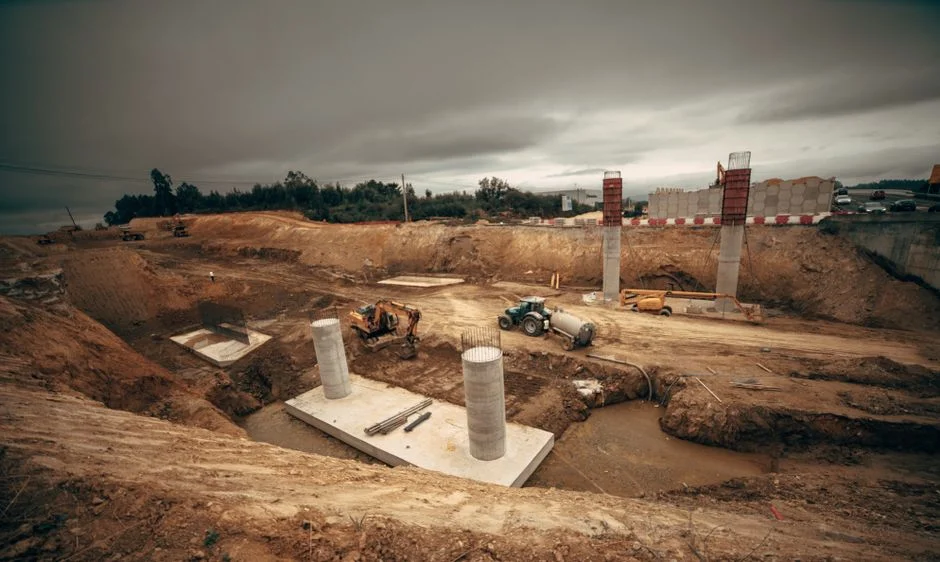
Civil and utility sizing is where retrofit projects most often eat the commissioning float. The S2 retrofit spent ~£10,000 on a new foundation to carry the filled press mass of approximately 7 tonnes, and the paper notes the installation also included a raised access platform, a pendant control for individual plate cleaning, a local control panel, a laser curtain, a hanging curtain for cleaning, a pre-coat tank, and a filtrate tank (Processes, 2024). Any of those items that the engineer omits from the civil scope will reappear as field rework during mechanical installation, and that rework is the single biggest source of late-stage cost.
Hydraulic and service-water sizing must support the 8 bar filtration pressure used in S2 and the post-plateau filtrate decay to under 250 L/h (Processes, 2024). The paper shows the pressure trace climbing for about an hour to a steady 7.4 bar plateau, with filtrate continuing for another hour before the flow rate dropped below 250 L·h⁻¹ (Processes, 2024). Pump selection has to deliver that plateau on a real feed, not just on a nameplate, and the service-water skid has to feed the wash bar at the cloth's full operating width without starving the belt.
Sludge-feed, polymer-feed, pre-coat, and filtrate piping must all be flushed and pressure-tested before any polymer is introduced. S2's 12% lime-plus-steam addition to the legacy vacuum belt is a useful reminder that chemical pre-treatment duty is real and that pipework sized for water will not survive an aggressive conditioning regime (Processes, 2024). The polymer skid and any dosing pumps should be wired and primed in parallel with piping flushing; the HydropureWater automatic chemical dosing system integration point is a natural place to verify flow and signal ranges before wet commissioning.
Mechanical Installation: Frames, Belts, Rollers, and Tracking
Mechanical installation determines whether the press will track true, dewater evenly, and survive its first week of continuous duty. Begin by staging, levelling, and grouting the frame to the foundation drawing; verify plumb within the OEM tolerance before any belt is loaded. Then fit the two filter cloths, set initial tension per the OEM manual, and walk each roller to confirm it is free, greased, and aligned along both the gravity and pressure zones. Misalignment at this stage will show up as edge wear on day one of wet running.
Run the press empty next, and use that run to commission the tracking sensors and tension. The acceptance criterion is simple: the belt must run centred for a full minute at slow speed and a full minute at rated speed, with no oscillation that the operator would call a tracking fault. The S2 paper does not give a tracking tolerance, so the engineer must request the OEM's belt tracking tension specification as a project input. Wash-water bar alignment closes out the mechanical package; uneven spray is the leading cause of blinding and short cloth life during early operation, and a skewed spray is frequently misread as a tracking fault later.
For plants that run polymer-conditioned sludge, the boundary between mechanical and chemical commissioning is the polymer injection point and the mix tube into the press. The conditioning chemistry drives cake solids, so the mechanical team should hand the line over with a clean, drained, and pressure-tested conditioning loop ready for polymer introduction. The HydropureWater plate and frame filter press product page is a useful reference for the standard I/O list and plate-cleaning pendant that the mechanical installer should expect to land and wire.
Electrical, Controls, and Safety-System Checks
Electrical commissioning is sequenced to keep the press safe to energise and to give the control system a clean handover. Verify motor rotation, overload settings, and brake function on each drive before any belt is run under load; a reversed phase on a hydraulic pump will not show up until the system is pressurised, and the cost of finding it then is a damaged seal.
Walk every safety interlock on the OEM I/O list and prove the E-stop chain end-to-end. S2 specified a laser curtain guarding the press opening, a pendant for individual plate cleaning, and a local control panel; the engineer should expect, at minimum, those items plus a hung curtain for cleaning access and a filtrate tank sample point (Processes, 2024). Each interlock has to be proven by a deliberate trip, not by a visual check.
Confirm the local control panel talks to the site PLC or MES, that analogue signals — belt speed, hydraulic pressure, polymer flow — read correctly, and that alarms route to the operator HMI. Document a punch list of every open electrical item before wet commissioning begins; this list is the single most useful artefact at handover, because it converts opinion into evidence when the contractor and the client argue about what was actually completed. For engineers who want a parallel view on membrane bioreactor controls and the same kind of I/O walk-down, the MBR Plant Operation and Maintenance Guide (2026 Engineering Manual) applies a similar sequence to a different unit operation.
Dry and Wet Commissioning Sequence
Dry commissioning turns a static installation into a verified mechanical system. Run each drive unloaded, prove interlocks, calibrate pressure transmitters against the 8 bar duty point, and step the local control panel through its automatic sequences. The S2 paper shows the operating point is 8 bar with a steady 7.4 bar plateau after about an hour of filtration (Processes, 2024); the transmitter calibration has to be checked at that pressure, not at a low-pressure shop value.
Wet commissioning starts with water only. Confirm feed, filtrate, and wash-water flows; check every joint for leaks before introducing polymer or lime. Once the water leg is clean, introduce conditioned sludge, ramp to design feed rate, and watch the pressure trace for the ~1 h climb to the 7.4 bar plateau (Processes, 2024). Hold at duty until filtrate flow decays to under 250 L/h, then open the press and inspect the cake (Processes, 2024). Sample the cake for percentage dry solids and the filtrate for total solids; those two numbers are the inputs to the acceptance test.
Document the full run in a commissioning log: start time, feed rate, pressure trace, filtrate flow, and any alarms. The trend log is what you hand to operations; without it, the acceptance test is opinion. For reference, the same wet-run logic — leak check, ramp to duty, hold, sample — is described for cavitation air flotation in the Cavitation Air Flotation Installation and Commissioning (2026 Guide), and the DAF retrofit article covers a similar handover protocol for a different solids-separation unit.
Acceptance Test: Targets You Can Measure on Day One
The acceptance test is the document that turns the S2 case study into a signed-off protocol. Use the numbers below as pass/fail criteria, with the S2 paper as the source of record (Processes, 2024).
| Parameter | Acceptance Target | Reference / Method |
|---|---|---|
| Cake solids (DS) | ≥34% (S2 measured 34–35%) | Gravimetric, representative sample (Processes, 2024) |
| Filtrate total solids | ≤50 mg/L (vs. 150 mg/L UK threshold) | Lab TS on filtrate (Processes, 2024) |
| Filtrate COD / TSS / TS / turbidity | Documented reduction vs. baseline | Same methods as baseline analysis (Processes, 2024) |
| Operating pressure plateau | ~7.4 bar after ~1 h | Pressure transmitter trend (Processes, 2024) |
| Filtrate flow decay | <250 L/h before cake discharge | Flow meter on filtrate line (Processes, 2024) |
| Cycle time | Design fill-to-discharge within 3 h benchmark | 81 cycles/month for 108 m³/month (Processes, 2024) |
The sign-off pack should bundle the pressure trend, the filtrate decay curve, cake photographs, and the chemistry results. This is the audit trail a regulator or internal QHSE team will ask for, and it is also the basis for any future claim against the OEM's performance warranty. Engineers running a parallel retrofit on a different unit should look at the DAF Retrofit & Upgrade Guide 2026: Boost Capacity Without New Tanks for how a similar acceptance pack is structured for a dissolved-air flotation unit.
Common Commissioning Problems and How to Fix Them
Cake too wet is the most common Day-2 complaint, and the S2 data is blunt: the gap between 19% and 34% DS is mostly conditioning, not pressure (Processes, 2024). Re-check polymer dose and mixing first, then re-check feed solids; the 8 bar duty will not rescue an under-conditioned cake. Belt tracking off-centre is the next likely fault. Re-verify roller alignment and tension, and then check wash-water coverage; a skewed spray is often misread as a tracking fault, and chasing the wrong root cause wastes a shift.
If the pressure never reaches the 7.4 bar plateau, investigate three things in order: cloth blinding, feed over-thickening, and pump capacity (Processes, 2024). Each has a different fix and a different owner — blinding is operations, feed solids is upstream, pump capacity is mechanical. Filtrate TSS above target is a pre-coat or cloth-integrity problem: confirm the 500 L of 2.0% DE pre-coat from the S2 protocol is being applied correctly and check that the filter cloth is intact across its full width (Processes, 2024). A damaged cloth will pass the visual check but fail the filtrate sample, which is why the acceptance test exists.
Frequently Asked Questions
What does a belt filter press cost to buy and install?
The S2 paper reports £94,000 for the press body alone, with the gantry, civil work, pipework, tanks, and pumps scoped and costed separately (Processes, 2024). For a real budget, request a line-item quote from the vendor that mirrors that split, and ask the civil contractor for a foundation cost based on the filled mass of the specific unit being offered.
How much foundation work is realistic for a retrofit installation?
S2 spent ~£10,000 on a new foundation to carry a filled press of ~7 tonnes (Processes, 2024). Use that as a sanity check, not a quotation: ground conditions, access, and the size of the actual unit all change the number, so the engineer should request a site-specific foundation design check before the pour.
How is the duty cycle and number of presses sized for a given plant?
The S2 paper sizes the unit from a 3 h cycle time, giving 81 cycles/month to process 108 m³/month of sludge (Processes, 2024). To size for a different monthly volume, divide the volume by 3 h × cycles-per-month, and confirm the resulting cycle count against the operator's available shift hours and the polymer conditioning capacity upstream.
What compliance benchmark should the filtrate hit on day one?
S2 reports filtrate total solids of 50 mg/L against a 150 mg/L UK discharge threshold, with COD, TSS, TS, and turbidity all reduced against the legacy baseline (Processes, 2024). For permitting discussions, request the local discharge consent limits in writing and size the acceptance test around the tightest of those values, not the S2 number, which is plant-specific.