
Why Meat Processing Wastewater Breaks a Generic DAF Design
A dissolved air flotation unit designed for a refinery or a municipal plant will underperform on slaughterhouse effluent because the influent combines three stress factors in one stream: high FOG, high TSS, and emulsified blood, all delivered hot. Per Krofta's meat-processing reference, traditional clarifiers cannot handle that combined load, which is why the industry moved to DAF (source: krofta.com/industries/meat-protein-processing). A typical meat-stream influent runs FOG 200–3,000 mg/L, TSS 500–4,000 mg/L, blood 50–500 mg/L, and temperature 35–55°C from hot kill-floor and rendering streams (source: S2 context, S4 influent characterization). That hot, protein-rich matrix shifts the engineering problem in three ways.
First, dissolved air solubility drops as temperature rises, so a saturator set for 4 bar at 25°C delivers less air at 45°C. That reduces bubble volume and degrades FOG attachment unless the saturation pressure is pushed to 4.5–6 bar. Second, emulsified blood carries surface-active proteins that coat bubbles and prevent FOG droplets from colliding with them; coagulation chemistry must therefore neutralize that protein charge before flotation, not after. Third, free FOG that is not destabilized will pass straight through a DAF sized for municipal flows, because the bubble-to-oil mass ratio is too low to lift the load.
The design implication is direct: a meat-processing DAF is configured differently from a municipal or refinery DAF — staged for FOG recovery first, chemically dosed second, and operated at higher saturation pressure to compensate for hot influent. The rest of this article builds the engineering case for that configuration.
Single-Stage vs Two-Stage DAF: Which Configuration Fits Your Plant
Single-stage DAF treats the stream once in one flotation cell, usually with coagulant and polymer dosed upstream. Two-stage DAF runs the stream through two cells in series: Stage 1 chemical-free to recover skimmable FOG for reuse, Stage 2 chemically dosed to polish the water (source: krofta.com/industries/meat-protein-processing). The choice is driven by flow, blood load, and whether FOG recovery has an economic case.
Quantified stage performance, anchored to full-scale poultry plant data and the DAF vs API separator performance comparison, looks like this: Stage 1 typically strips 60–80% of the FOG as a crude, often saleable, skimmate; Stage 2 then takes total FOG removal to 90–98% and TSS removal to 90–95%, with treated turbidity under 30 NTU. The two stages do different jobs — Stage 1 is a recovery unit, Stage 2 is a polishing clarifier — and collapsing them into one cell sacrifices both the FOG revenue stream and the polishing performance.
Single-stage is defensible for small slaughterhouses under 20 m³/h with low blood load and sewer-only discharge, where the recovered FOG volume does not justify a second tank, pump, and skimmer. Two-stage becomes mandatory above these thresholds: poultry plants processing more than 50,000 birds per day, beef kill plants with on-site rendering, and hide-processing lines with high-solids brine reuse (source: S2 context). A side-by-side decision matrix helps the engineer defend the choice in a P&ID review.
| Parameter | Single-stage DAF | Two-stage DAF (Stage 1 + Stage 2) |
|---|---|---|
| Typical flow band | < 20 m³/h | 50–500 m³/h |
| Stage 1 chemistry | Coagulant + polymer | None (chemical-free FOG recovery) |
| Stage 2 chemistry | — | Ferric chloride 38% m/m + anionic polymer (source: S4) |
| FOG removal | 70–90% | 90–98% |
| TSS removal | 80–90% | 90–95% |
| Treated turbidity | 50–150 NTU | < 30 NTU (source: S4) |
| FOG recovery as saleable skimmate | Limited (contaminated with coagulant) | Yes — Stage 1 oil is reusable, ~70–85% crude yield |
| Footprint | 1× cell | 2× cells (larger plot) |
| Best fit | Small slaughterhouse, sewer discharge, no rendering | Poultry >50,000 birds/day, beef with rendering, hide lines, brine reuse |
For procurement specs on either configuration, see the HydropureWater DAF system and the broader DAF selection and cost decision framework.
Core Design Parameters: Hydraulic Loading, Air-to-Solids, and Saturation Pressure

The numerical envelope below is the working band most engineers defend in a meat-processing DAF datasheet. Three numbers drive almost every other decision: hydraulic loading rate, air-to-solids ratio, and saturation pressure. Get those wrong and the unit underflows, carries over FOG, or both.
Retention time sits in the 3–5 minute range for most meat DAF applications, per Krofta's reference (source: S2). For streams with high blood load, push that to 4–6 minutes to let the floc blanket stabilize before the sludge is scraped; rushing the blanket is a common cause of turbidity breakthrough. Hydraulic loading on the flotation cell surface is typically 5–25 m³/m²·h: lower for high-FOG streams where the sludge layer is thick, higher for dilute streams with mostly fine TSS. Below 5 m³/m²·h the cell is oversized and bubbles coalesce; above 25 m³/m²·h short-circuiting dominates and TSS carryover rises.
The air-to-solids (A/S) ratio, expressed as mass of air released per mass of solids fed, runs 0.02–0.06 for FOG-dominant meat streams. Insufficient A/S is the most common cause of poor FOG capture in field service — operators tend to under-aerate because higher recycle means higher pump OPEX, but the cost of an undersized saturator is paid in carryover and downstream polymer overdose. Saturation pressure of 3–6 bar produces bubble sizes of 20–100 μm (per the DAF engineering specifications reference guide); the 4–5 bar sweet spot is where FOG attachment is most efficient on hot meat streams. Recycle ratio — the fraction of clarified effluent recycled through the saturator — runs 10–30% of throughput; higher recycle improves TSS capture linearly but increases pump energy proportionally. The decision logic and parameter envelope, summarized:
| Parameter | Design band (meat DAF) | Selection rule |
|---|---|---|
| Retention time | 3–5 min (blood-heavy: 4–6 min) | Longer for higher blood load |
| Hydraulic loading | 5–25 m³/m²·h | Lower for high-FOG, higher for dilute |
| Air-to-solids ratio (A/S) | 0.02–0.06 | < 0.02 → FOG carryover; > 0.06 → wasted air |
| Saturation pressure | 3–6 bar (4–5 bar sweet spot) | Hot streams require the upper end |
| Bubble size | 20–100 μm | 40–60 μm optimal for FOG |
| Recycle ratio | 10–30% of throughput | Higher → better TSS, higher OPEX |
Coagulant and Polymer Selection for Slaughterhouse Effluent
Coagulant choice is the lever that gets a meat-processing DAF under the 30 NTU treated-turbidity mark, and full-scale data points to one clear winner. The 2026 poultry plant study at 100 m³/h compared four coagulants — ferric chloride 38% m/m, aluminum polychloride (PAC) 18% m/m, aluminum sulfate 8% m/m, and ferrous sulfate 6% m/m — paired with anionic polymers from six suppliers (source: S4, Polymers 2026, 18(9):1078). Ferric chloride 38% m/m produced the best results: treated turbidity < 30 NTU, oil yield of 360 L/day at the tridecanter with moisture < 2%, and consistent sludge dewaterability at 55–65% moisture. The other three coagulants underperformed on at least one of those three criteria.
Polymer type had no statistically significant effect on oil recovery in the S4 trial, but PAC runs showed high variability (CV > 50%), which is a problem for process control. The default pairing for a meat-processing DAF is therefore ferric chloride 38% m/m plus an anionic polymer, with the polymer dose trimmed on jar tests. The S4 bench protocol is a useful starting point: rapid mix at G = 300 s⁻¹ for 1–2 minutes, then slow mix at G = 30 s⁻¹ for 10–15 minutes, then transfer to the DAF cell (source: S4). Engineers should run that jar matrix on the actual plant influent before locking a vendor dose into the P&ID, because FOG saponification value and blood protein load shift the optimum coagulant demand by 20–40%.
One operational warning from the S4 study deserves a line in the procurement spec: oil moisture jumped to > 30% during storage because condensate from an inefficient exhaust system contaminated the recovered FOG. Exhaust design on the skimmate tank and oil-recovery train is part of the DAF skid specification — not an afterthought to be left to the rendering contractor. Chemical dosing is typically delivered through an automatic coagulant and polymer dosing skid tied to flow-proportional control. Coagulant performance, summarized:
| Coagulant (m/m) | Treated turbidity | Oil yield (S4) | Sludge dewaterability | Variability |
|---|---|---|---|---|
| Ferric chloride 38% | < 30 NTU | 360 L/day, moisture < 2% | Consistent (55–65% moisture) | Low |
| Aluminum polychloride 18% | 40–80 NTU | Lower than FeCl₃ | Variable | High (CV > 50%) |
| Aluminum sulfate 8% | 50–100 NTU | Lower | Acceptable | Moderate |
| Ferrous sulfate 6% | 60–120 NTU | Lower, slower kinetics | Lower | Moderate |
Worked Example: 100 m³/h Poultry Plant DAF Mass Balance
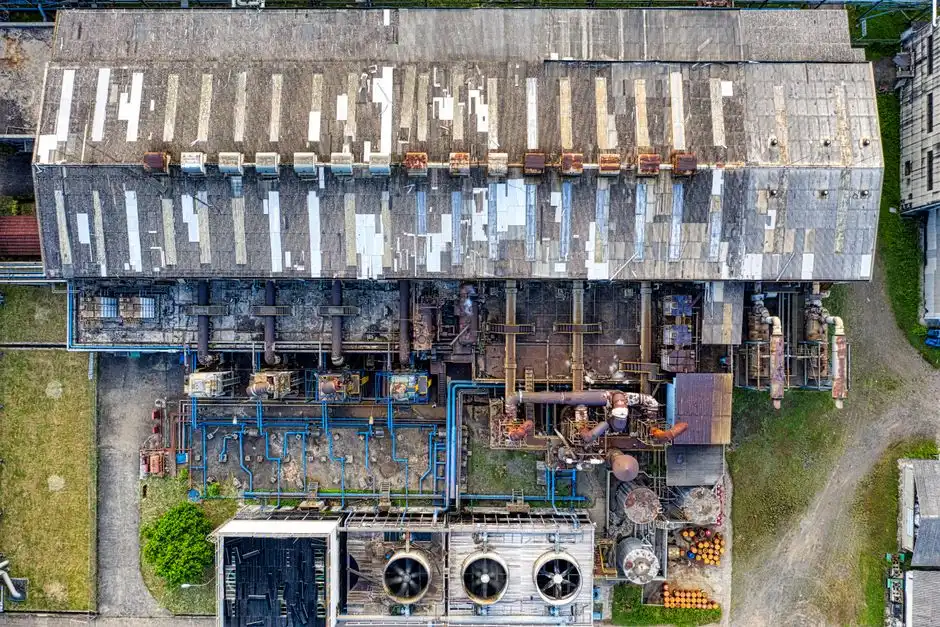
Anchoring the design to a real unit makes the numbers portable. The 2026 full-scale study at a poultry slaughterhouse ran a 100 m³/h DAF on ferric chloride 38% m/m and recorded an oil yield of 360 L/day at the tridecanter outlet with moisture < 2% (source: S4). For a two-stage split, the implied distribution is roughly 70% of the recovered oil in Stage 1 (chemical-free, crude FOG that can be sold or sent to rendering) and 30% in Stage 2 (the additional polish skimmate with the chemistry-conditioned water). That gives about 250 L/day of crude FOG in Stage 1 and 110 L/day of additional oil in Stage 2, with Stage 2 delivering the < 30 NTU turbidity that the biological stage downstream can tolerate.
The mass balance below scales linearly with throughput, so the engineer can multiply every stream by the ratio of their plant's flow to 100 m³/h. It also flags a downstream constraint that DAF alone cannot solve: the polished effluent still carries the soluble BOD₅ and TKN load from blood proteins and dissolved meat solids. A DAF is a physical separator, not a digester, and the typical post-DAF soluble BOD₅ from a poultry stream is 800–1,500 mg/L with TKN 100–200 mg/L — both of which require an anoxic/aerobic MBBR or SBR before discharge to meet ammonia and BOD limits. Technoeconomic context from the same study: simple payback 60.7 months (discounted 64.1 months at 12% p.a.), with NPV sensitive to oil price — a 20% drop in oil price pushes NPV negative (source: S4). The DAF sludge stream from Stage 1 can then be dewatered on a plate and frame filter press for DAF sludge dewatering to 55–65% moisture cake for rendering. The 100 m³/h mass balance:
| Stream | Flow (m³/h) | FOG (mg/L) | TSS (mg/L) | Turbidity (NTU) | BOD₅ (mg/L) |
|---|---|---|---|---|---|
| Influent to Stage 1 | 100 | 1,500–2,500 | 2,000–3,000 | > 1,000 | 2,500–4,000 |
| Stage 1 skimmate (FOG) | ~0.01 (oil) | Crude FOG, saleable | — | — | — |
| Stage 1 effluent → Stage 2 | 100 | 300–600 | 800–1,200 | 200–400 | 2,200–3,500 |
| Stage 2 effluent (polished) | 100 | 30–80 | 100–200 | < 30 | 1,000–1,500 (soluble, downstream) |
| Stage 2 skimmate (FOG) | ~0.005 (oil) | Polished skimmate | — | — | — |
| DAF sludge to filter press | ~3–5% of flow | — | 3–5% solids | — | — |
Compliance Targets Your DAF Must Help the Plant Meet
DAF is the front end of a compliance train, not the whole train. In the US, 40 CFR Part 432 (Meat and Meat Products Point Source Category) sets subcategory-specific monthly-average limits for BOD₅, TSS, FOG, and ammonia across slaughterhouses, renderers, and further processors; the DAF is responsible for the FOG and TSS fraction, while anoxic/aerobic biology handles the residual soluble BOD₅ and ammonia. In the EU, the IED BAT Reference Document for the food, drink and milk industries sets BAT-AEL ranges for COD and TSS that DAF pre-treatment helps achieve; DAF as primary treatment is standard BAT for meat-processing sub-sectors with high FOG load (source: S2 context, EU BAT-AEL for Food, Drink and Milk Industries).
For plants discharging to a municipal sewer (indirect discharge), local POTW pretreatment limits typically cap FOG at 100–200 mg/L. A single-stage DAF on a meat effluent will struggle to meet 100 mg/L FOG without tertiary polishing; two-stage DAF with the chemical regime above typically lands at 30–80 mg/L FOG, which clears most pretreatment ordinances. For plants targeting water reuse — process rinse water, cooling tower makeup, or boiler feed — post-DAF MBR or UF polishing is required to bring TSS below 10 mg/L and turbidity below 2 NTU, neither of which a DAF alone can deliver. The DAF's job in that chain is to protect the membranes from FOG fouling, not to replace the membrane stage.
Frequently Asked Questions
What hydraulic loading rate should I use for a meat-processing DAF?
For FOG-dominant meat streams, design at 5–15 m³/m²·h on the flotation cell surface. For dilute streams with mostly fine TSS and low FOG, push to 15–25 m³/m²·h. The lower the hydraulic loading, the more residence time bubbles have to attach to oil droplets, but oversized cells waste capex and let bubbles coalesce. Always validate the band against a jar test on the actual plant influent before locking a number into a P&ID.
Single-stage or two-stage DAF — which do I need?
Use single-stage only for small plants under 20 m³/h with low blood load and sewer-only discharge, where there is no economic case for FOG recovery. Use two-stage for any plant above 50 m³/h, any poultry plant processing more than 50,000 birds per day, any beef kill plant with on-site rendering, and any hide-processing line targeting brine reuse. Two-stage is also the right answer if the treated stream has to land under 30 NTU for downstream membrane or biological polishing.
Which coagulant should I specify for a slaughterhouse DAF?
Ferric chloride 38% m/m paired with an anionic polymer is the 2026 default, based on full-scale poultry data showing < 30 NTU turbidity and 360 L/day oil yield at 100 m³/h (source: S4). Run the S4 jar protocol (G = 300 s⁻¹ rapid mix, G = 30 s⁻¹ slow mix) on the actual plant influent before locking a dose, because blood protein load shifts the optimum by 20–40%. PAC 18% is a workable backup but shows high variability (CV > 50%) in the same data set.
What can a DAF alone not remove from meat effluent?
A DAF cannot remove soluble BOD₅, TKN, ammonia, or pathogens — those require a biological stage downstream, typically anoxic + aerobic MBBR or SBR. DAF also does not reduce salinity in hide-processing brines; it removes the TSS that would otherwise foul downstream brine-reuse equipment, but the dissolved salt load passes through. For reuse-quality water, plan a UF or MBR polishing stage after the DAF.
How do I handle hot effluent (35–55°C) entering the DAF?
Push the saturation pressure to 4.5–6 bar to compensate for the lower air solubility at elevated temperature, and consider cooling the stream with a heat exchanger if the temperature regularly exceeds 50°C. Hot streams also accelerate FOG saponification, which can emulsify free oil and reduce capture — if emulsification is observed, dose coagulant earlier in the upstream line (closer to the kill-floor discharge) to give the chemistry more contact time before flotation.