What a SCADA Digital Monitoring Integration Provider Actually Does in Wastewater
A SCADA digital monitoring integration provider for wastewater systems is a specialist engineering firm — not a software reseller — that connects PLCs, RTUs, flowmeters, and online analyzers into a centralized HMI/SCADA platform. Per the SCADA Directory, integrators design the polling, alarm-reporting, and data-logging fabric that links lift stations, booster stations, and headworks through a mix of licensed radio, cellular, fiber, and industrial Ethernet telemetry back to a plant control room or cloud dashboard. The integrator owns the I/O list, the network architecture, the HMI graphics standard, and the cutover plan; the software vendor only licenses the runtime.
The buying moment in 2026 is unusually compressed. Kings Research projects the global SCADA in water and wastewater market at USD 3,151.1 million by 2032, with growth pulled forward by the U.S. Environmental Protection Agency's April 2023 announcement of USD 6.5 billion in clean-water and wastewater infrastructure funding under the Investing in America program, layered on top of the USD 3.5 billion NYC DEC/DEP New York Harbour agreement (per Kings Research, 2025-04). Both programs come with cybersecurity reporting requirements that flow down to integrator scope, which is why a "best SCADA company" search returns the wrong answer — the right question is "which integrator has shipped a plant-wide migration of comparable tag count, on a comparable telemetry mix, and can produce an AWWA J100 RAM scoring package."
Utilities bring in integrators for four recurring reasons: new facility builds, aging control-system upgrades, telemetry expansion into remote collection-system assets, and full plant-wide SCADA migration where servers, HMI software, and field controllers are modernized in parallel (SCADA Directory). Bidders who only sell licenses cannot deliver the last three.
Reference Architecture a Qualified Integrator Should Propose
The reference stack a qualified wastewater SCADA integrator should put on paper has five layers: field instrumentation (flowmeters, level, pH, dissolved oxygen, turbidity) → RTUs/PLCs → communications network → SCADA servers plus historian → HMI and mobile dashboards. As Alliance Water Resources describes the flow, "flowmeters are data loggers that are installed in strategic locations to send data to remote terminal units, then send their collected data to the treatment plant operators." That same data path is the spine of every integrator proposal — if the bidder cannot draw it with named devices and named protocols at each layer, the proposal is under-scoped.
Use the table below to sanity-check tag counts, telemetry media, and the cybersecurity standard expected at each layer. The ranges are typical of municipal and industrial wastewater plants in the 10–500 m³/h class, and they line up with reference projects cited later in this guide.
| Layer | Typical Devices | Plant-Scale Range | Standard / Reference |
|---|---|---|---|
| Field instrumentation | Magnetic flowmeters, ultrasonic level, pH/DO/turbidity probes | 50–500 I/O points per process train | Vendor calibration certificates; ISO 17025 where required |
| RTUs / PLCs | Allen-Bradley CompactLogix/ControlLogix, Siemens S7, Schneider M340, Ovarro Kingfisher | 2,000–10,000 tags (package plant); 20,000–100,000 (mid-size WWTP); 100,000+ (large reclamation) | IEC 61131-3; AWWA J100 RAM scoring |
| Communications | Licensed 450 MHz radio, cellular LTE-M/5G, single-mode fiber, industrial Ethernet (DLR, PRP) | Polling 1–60 s; alarm push < 5 s | ISA/IEC 62443-3-3 zone boundaries |
| SCADA + historian | Rockwell FactoryTalk, GE iFIX + Proficy Historian, Yokogawa OpreX, ABB Topkapi, Eaton, Honeywell, Emerson, Hitachi AQUAMAX, PSI PSIcontrol | 500,000-tag upper bound (GE iFIX at PUB Singapore reclamation, per Kings Research) | OPC UA, MQTT, SQL/ODBC historian |
| HMI / mobile | Webspace, Ignition Perspective, FactoryTalk View, AVEVA | ISA-101.01-2015 graphic standards; alarm rationalization per ISA-18.2 | ISA-101 high-performance HMI |
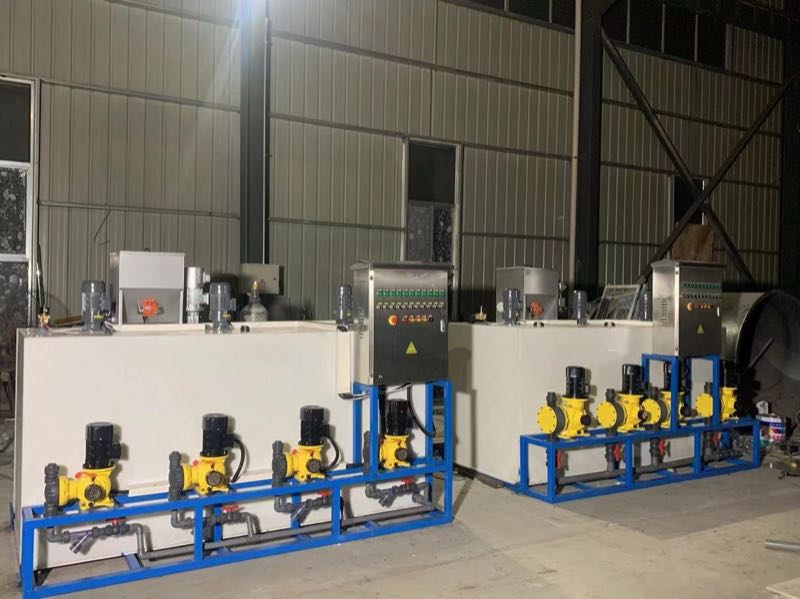
Open-architecture stacks — SQL-database historians, OPC UA, REST/MQTT northbound to cloud — are now the baseline expectation. Alliance Water's history notes that "open-source SCADA systems finally became the norm in the 2000s and adopted modern information technology like structured query language (SQL)," and that baseline has hardened since. If a bidder proposes a closed proprietary stack with no documented SQL export, that is a procurement risk. For an MBR membrane bioreactor with PLC I/O or a PLC-controlled chemical dosing skid, confirm that the proposed SCADA platform exposes the controller tags through OPC UA and that the historian accepts them at the polling rate above before signing.
Cybersecurity, RAM, and Compliance Criteria That Separate Qualified Integrators from Software Resellers
Three documents separate a qualified wastewater SCADA integrator from a software reseller. First, demand ISA/IEC 62443 zone-and-conduit documentation, not a generic "secure by design" claim. The integrator must show zone boundaries, conduit definitions, Security Level Targets (SL-T) per zone, and a cybersecurity conformance matrix mapped to IEC 62443-3-3. Eaton's MTL Tofino security appliances are an example of a control-network cybersecurity product family used to enforce these zone boundaries (per Kings Research) — useful as a reference architecture but not a substitute for the integrator's own zone drawings.
Second, require AWWA J100 RAM (Reliability, Availability, Maintainability) scoring for the control system. AWWA J100 is the standard that quantifies probability of failure, mean time to repair, and availability at the system level for water and wastewater control systems, and most non-specialist bidders cannot produce one. If a proposal does not include a J10Q reliability block diagram and a J100 RAM prediction table for the new build or migration, the bid is non-compliant.
Third, mandate network segmentation (OT vs IT), firewall make/model and firmware baseline, and a secure remote-access method — VPN with multi-factor authentication, never exposed RDP. SCADA Directory specifically flags this: "cybersecurity is a critical consideration for municipal and private utilities. Integrators typically follow established standards for network segmentation, firewalls, and secure remote access to protect critical infrastructure from unauthorized access." Funding context matters: the EPA's USD 6.5 billion April 2023 announcement and the NYC DEC/DEP USD 3.5 billion Harbour agreement both carry cybersecurity reporting clauses that flow down to the integrator's scope, so a J100 deliverable and a 62443 conformance matrix are now contractually exposed, not optional.
A 2026 Provider Evaluation Matrix for Wastewater SCADA Projects
The matrix below is the procurement scoring sheet — paste it into your evaluation memo. Each candidate is scored on seven criteria drawn from SCADA Directory's evaluation guidance: water/wastewater process experience, supported telemetry media, demonstrated tag-count scale, ISA/IEC 62443 + AWWA J100 evidence, HMI standardization capability, regulatory-report generation, and regional service coverage. Weight them to your plant's risk profile; lift-station-heavy utilities should up-weight telemetry media and Ovarro-class RTU experience, while plant-wide migrations should up-weight AWWA J100 and tag-count scale.
| Criterion | What to demand as evidence | High-scale reference (per Kings Research) | Walk-away signal |
|---|---|---|---|
| Water/wastewater process experience | Named reference plants, process type, I/O count, go-live date | GE iFIX at PUB Singapore reclamation (~500,000 tags) | No named municipal or industrial WWTP reference |
| Supported telemetry media | Licensed radio, cellular, fiber, industrial Ethernet — all four with field photos | Ovarro Kingfisher RTU + SCOPE SCADA + StreamWebscada cloud | Single-media proposals (cellular-only or fiber-only) for a mixed collection system |
| Demonstrated tag-count scale | Live system larger than your target by ≥ 50% | Yokogawa OpreX at Melbourne Water, serving 5M+ residents (March 2025) | Smallest reference plant is smaller than yours |
| ISA/IEC 62443 + AWWA J100 evidence | Zone-conduit diagram, J10Q RAM table, conformance matrix | Eaton MTL Tofino + HMI/SCADA stack with documented SL-Ts | "Secure by design" boilerplate; no J100 deliverable |
| HMI standardization capability | ISA-101.01-2015 graphic standards document, alarm-rationalization workshop | Rockwell FactoryTalk with IIoT analytics enhancements (March 2025) | Vendor-default graphics; no alarm-philosophy deliverable |
| Regulatory-report generation | NPDES-equivalent discharge logs, operator-shift reports, DMR exports | ABB AquaMaster4 flowmeter + Topkapi integration (August 2024) | Reports generated manually in Excel from historian exports |
| Regional service coverage | Drive-time SLA, on-call response, regional panel-shop partner | Honeywell / Emerson global system-integrator networks | Travel-and-expense billing for every service visit |
For lift-station and remote-asset telemetry rather than plant-wide control, the smaller specialist tier (Ovarro SCOPE/StreamWebscada/Kingfisher RTU, PSI PSIcontrol at the Polish utility Aquanet) is the right fit and should be scored separately. For full plant-wide control on a mid-size or large WWTP, hold bidders to the high-scale reference column — Yokogawa, GE, Rockwell, ABB, and the major Emerson/Honeywell/Hitachi system-integrator partners. If a bidder cannot name a reference project of comparable tag count, cannot produce a network-segmentation diagram, or has no AWWA J100 deliverable, they are not qualified for the scope. A multi-media filtration pretreatment skid or a PLC-controlled plate and frame filter press should be visible to the same SCADA layer; if the bidder's reference architecture cannot ingest those skids' tag streams over OPC UA, downgrade the score.
Building the Integrator RFP: Scope, Deliverables, and Acceptance Tests
Turn the matrix into the RFP with the following must-have deliverables. Each item is a contract exhibit, not a wish list.
- Control narrative — written description of how the plant starts, stops, and recovers from utility loss, signed by a PE.
- P&ID markups — every instrument, valve, and motor tagged to the I/O list.
- I/O list with tag-count target — bound to the architecture table above; vendor commits to historian performance at that tag count.
- Network architecture diagram — ISA/IEC 62443 zones and conduits, firewall models, remote-access method (VPN + MFA, no exposed RDP).
- HMI graphic standards document — ISA-101.01-2015 conformance, with sample screens.
- Alarm-management philosophy — ISA-18.2 rationalization, including nuisance-alarm budget per shift.
- FAT and SAT protocols — factory acceptance test before shipment, site acceptance test before payment.
- Cybersecurity conformance matrix — line-by-line mapping to ISA/IEC 62443-3-3 system requirements.
- AWWA J100 RAM deliverable — J10Q reliability block diagram and J100 RAM prediction table.
- Migration cutover plan and rollback procedure — phased, with defined rollback at each step. SCADA Directory flags this clearly: "a complete plant-wide SCADA migration where servers, software, and field controllers are modernized" is the highest-risk project class in the sector, and the only acceptable mitigation is a phased cutover with proven rollback.
- Regulatory-report generation as a deliverable — NPDES-equivalent discharge logs, operator-shift reports, and DMR-format exports, not a manual Excel workflow.
Specify a 90-day mobilization clause in the contract. With the EPA's USD 6.5 billion and the NYC USD 3.5 billion funding active, 2026 RFP windows are short and bidders are already booked two quarters out. A mobilization clause protects the schedule if the selected integrator cannot staff the kickoff meeting.
Frequently Asked Questions
How large is the SCADA market for water and wastewater in 2026?
Kings Research projects the global SCADA in water and wastewater management market at USD 3,151.1 million by 2032, driven by aging infrastructure, high operational costs, and stricter regulatory requirements. Federal funding is pulling 2026 procurement forward, including the EPA's USD 6.5 billion clean-water announcement (April 2023) and the NYC DEC/DEP USD 3.5 billion Harbour agreement.
Which SCADA platforms should we expect to see in 2026 wastewater bids?
Plant-wide bids typically name Rockwell FactoryTalk (IIoT enhancements announced March 2025), GE iFIX with Proficy Historian and Webspace (500,000-tag Singapore reclamation reference), Yokogawa OpreX (Melbourne Water, 5M+ residents, March 2025), ABB Topkapi with AquaMaster4 flowmeter integration (August 2024), Eaton HMI/SCADA, Honeywell, Emerson, Hitachi AQUAMAX, and PSI PSIcontrol. For lift-station and remote-asset telemetry, the specialist tier is Ovarro SCOPE, StreamWebscada, and Kingfisher RTU.
What cybersecurity and reliability standards should a wastewater SCADA RFP require?
Require ISA/IEC 62443 zone-and-conduit documentation with a cybersecurity conformance matrix, and an AWWA J100 RAM scoring deliverable (J10Q reliability block diagram plus J100 prediction table). Specify network segmentation between OT and IT, named firewall models, and secure remote access via VPN with multi-factor authentication — never exposed RDP. SCADA Directory flags network segmentation, firewalls, and secure remote access as the baseline cybersecurity practice for water and wastewater integrators.
How do we size a wastewater SCADA project before issuing an RFP?
Use the architecture table in this guide: package plants typically run 2,000–10,000 tags, mid-size municipal WWTPs 20,000–100,000 tags, and large reclamation plants 100,000+ tags. The credible upper bound is the GE iFIX deployment at the Singapore reclamation plant at roughly 500,000 tags (per Kings Research). Issue the I/O list with the RFP and require bidders to commit to historian performance at that tag count.
Related Equipment
- PLC-controlled chemical dosing skid — specifications, capacity range, and technical data
- MBR membrane bioreactor with PLC I/O — specifications, capacity range, and technical data
- multi-media filtration pretreatment skid — specifications, capacity range, and technical data
- PLC-controlled plate and frame filter press — specifications, capacity range, and technical data