Saudi Arabia Wastewater Discharge Standards: 2025 Compliance Limits
Saudi Arabia discharge standards set the binding effluent quality limits that PME and MEWA enforce on every industrial discharger in the Kingdom. Under the 2025 MEPA standards cited in common compliance tables, industrial facilities discharging directly to coastal waters, wadis, or aquifers must meet TSS ≤10 mg/L, BOD₅ ≤25 mg/L, COD ≤100 mg/L, and oil/grease ≤5 mg/L. MEWA's Executive Regulations for the Protection of Aqueous Media from Pollution set treated wastewater prior to coastal and marine discharge at TSS 25 mg/L (30-day average; 40 mg/L sample maximum), BOD₅ 10 mg/L (25 mg/L maximum), COD 20 mg/L (50 mg/L maximum), and FOG 2 mg/L. A petrochemical plant in Jubail was fined SR 25,000 in January 2025 after routine PME sampling recorded oil/grease at 8 mg/L—3 mg/L above the coastal limit in the MEPA table—triggering a 72-hour production halt while engineers adjusted their dissolved air flotation (DAF) system. The table below summarizes the key compliance limits by discharge destination and reuse application.
| Parameter | Direct Discharge to Coastal Waters (MEPA 2025) | Pretreatment to Public Sewers (MEWA Executive Regulations) | Reuse Class A (Unrestricted Irrigation) | Reuse Class B (Restricted Irrigation) |
|---|---|---|---|---|
| TSS (mg/L) | ≤10 | ≤350 | ≤10 | ≤30 |
| BOD₅ (mg/L) | ≤25 | ≤300 | ≤10 | ≤20 |
| COD (mg/L) | ≤100 | ≤600 | ≤50 | ≤100 |
| Oil/Grease (mg/L) | ≤5 | ≤100 | ≤5 | ≤10 |
| pH | 6-9 | 6-9 | 6-9 | 6-9 |
| Temperature (°C) | ≤40 | ≤45 | ≤35 | ≤35 |
| Fecal Coliform (MPN/100mL) | N/A | N/A | ≤2.2 | ≤1,000 |
Enforcement is rigorous. The Executive Regulations of Law of Treated Sewage Water require inspections and self-reporting, and Table (8) sets offense-specific fines rather than a single first-and-repeat schedule. Penalties include SR 25,000 for draining raw sewage into valleys, streams, or dams, and SR 50,000 for disposing raw sewage into wells. Discharging sewage that fails Table (1) sewer inlet criteria draws SR 20,000 and an order to cease drainage. Permits are non-transferable, renew every three years, and are spot-checked by PME with unannounced sampling. Facilities tied to public sewers must pretreat to MEWA sewer-inlet ceilings. Table (1) of those regulations caps raw sewage entering the public system at TSS ≤600 mg/L, BOD₅ ≤500 mg/L, COD ≤1,000 mg/L, and oil/grease ≤100 mg/L; municipal plants often layer on extra local requirements.
Reuse standards add another layer. Class A treated sewage water (TSS ≤10 mg/L, BOD₅ ≤10 mg/L, fecal coliform ≤2.2 MPN/100 mL) is cleared for unrestricted irrigation, including food crops and public parks. That Class A package matches Table (3) tertiary limits in the Executive Regulations of Law of Treated Sewage Water. Earlier guidance used Class B TSS ≤30 mg/L and BOD₅ ≤20 mg/L; Table (2) secondary/restricted irrigation sets TSS ≤40 mg/L, BOD₅ ≤40 mg/L, and fecal coliform ≤1,000 cells/100 mL. The Design Guide for Wastewater Treatment Plants in Saudi Arabia (MEWA, 2020) requires tertiary treatment (multi-media filtration) and disinfection (chlorine dioxide) to meet fecal coliform limits. Operators mapping out an industrial wastewater treatment program in Saudi Arabia will see why these national limits drive equipment selection from day one.
How Saudi Standards Compare to Global Regulations (GCC, EU, US)
Saudi Arabia discharge standards rank among the strictest in the GCC because the Kingdom protects aquifers and coastal ecosystems that feed desalination intakes and irrigation schemes. The table below places Saudi limits beside UAE, Kuwait, EU, and US benchmarks.
| Parameter | Saudi Arabia (MEPA 2025) | UAE (Federal Law No. 24/1999) | Kuwait (EPA Standards) | EU (Urban Waste Water Directive 91/271/EEC) | US (EPA Secondary Treatment Standards) |
|---|---|---|---|---|---|
| TSS (mg/L) | 10 | 15 | 20 | 35 (for >10,000 PE plants) | 30 |
| BOD₅ (mg/L) | 25 | 25 | 30 | 25 (for >10,000 PE plants) | 30 |
| COD (mg/L) | 100 | 150 | 200 | 125 (for industrial discharges) | N/A |
| Oil/Grease (mg/L) | 5 | 10 | 15 | N/A | 10 |
| pH | 6-9 | 6-9 | 6-9 | 6-9 | 6-9 |
Three differences stand out for engineers sizing equipment:
- TSS limits: Saudi's 10 mg/L MEPA table threshold is tighter than UAE (15 mg/L) and Kuwait (20 mg/L) and matches the EU's "sensitive area" rule for coastal waters. The driver is protection of coral reefs and desalination intakes.
- Oil/grease: The 5 mg/L MEPA ceiling is the lowest in the GCC table, set by the petrochemical load on Saudi coastlines. UAE and Kuwait allow 10-15 mg/L; the EU and US do not set a specific industrial oil/grease number in the benchmarks above.
- Reuse standards: Class A (TSS ≤10 mg/L, BOD₅ ≤10 mg/L) outranks WHO guidance for unrestricted irrigation (TSS ≤50 mg/L, BOD₅ ≤30 mg/L), reflecting the Kingdom's drive for water security in agriculture.
Multinational operators cannot copy a UAE design across the border. A unit holding TSS at 15 mg/L in the Emirates will need tertiary multi-media filtration to land at 10 mg/L against the MEPA table, and a refinery already meeting 10 mg/L oil/grease must add chemical-conditioned DAF polishing to reach the 5 mg/L bar. The selection tables in the Saudi Arabia industrial effluent limits reference line up the exact unit operations for each gap.
Matching Treatment Technologies to Saudi Compliance Limits
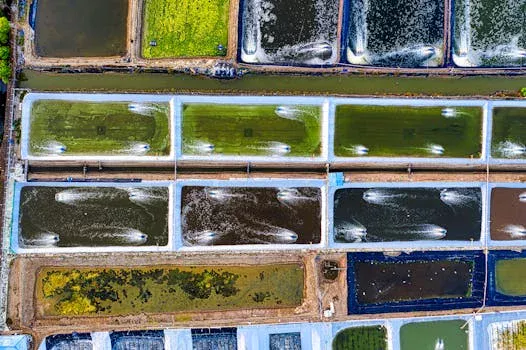
Selecting the right treatment technology depends on two factors: influent wastewater characteristics and required effluent quality. The table below maps common processes to Saudi's compliance limits, with performance data from field applications in the Kingdom.
| Parameter (Limit) | Treatment Technology | Removal Efficiency | Influent Range | Equipment Example |
|---|---|---|---|---|
| TSS (≤10 mg/L) | Dissolved Air Flotation (DAF) | 92-97% | 50-500 mg/L | DAF systems for Saudi TSS and oil/grease compliance |
| Lamella Clarifier | 85-90% | 200-1,000 mg/L | High-turbidity wastewater applications | |
| BOD₅ (≤25 mg/L) | Membrane Bioreactor (MBR) | 95-98% | 200-2,000 mg/L | Integrated MBR systems for Saudi BOD₅ and COD compliance |
| A/O Biological Contact Oxidation | 85-92% | 100-1,000 mg/L | WSZ series for medium-strength wastewater | |
| COD (≤100 mg/L) | MBR | 90-95% | 500-3,000 mg/L | See above |
| Advanced Oxidation (e.g., Fenton's Reagent) | 70-85% | 1,000-5,000 mg/L | For refractory COD in petrochemical wastewater | |
| Oil/Grease (≤5 mg/L) | DAF with Chemical Dosing | 95-99% | 50-1,000 mg/L | DAF systems + PLC-controlled chemical dosing |
| API Separator | 80-90% | 100-5,000 mg/L | For free oil removal in refineries | |
| pH (6-9) | Automatic Chemical Dosing | ±0.2 pH units | 2-12 | PLC-controlled dosing systems |
| Disinfection (Fecal Coliform ≤2.2 MPN/100mL) | Chlorine Dioxide (ClO₂) | 99.99% kill rate | 10⁶–10⁸ MPN/100mL | ClO₂ generators for Saudi reuse disinfection |
Key considerations for technology selection:
- TSS removal: DAF systems are the most effective route to Saudi's 10 mg/L MEPA table limit, removing 92-97% of TSS from influents of 50-500 mg/L. Lamella clarifiers are a cheaper alternative for high-turbidity streams (200-1,000 mg/L) but need a larger footprint and chemical dosing to land at 10 mg/L.
- BOD₅/COD removal: MBR systems give the highest removal (95-98% BOD₅, 90-95% COD) and fit tight sites. For medium-strength wastewater (BOD₅ 100-1,000 mg/L), A/O biological contact oxidation cuts capex while still hitting 85-92% BOD₅ removal.
- Oil/grease: DAF with coagulant and flocculant dosing is the workhorse for the 5 mg/L bar, reaching 95-99% removal. API separators are useful upstream for free oil in refineries but always need a downstream DAF or polishing filter to clear the strict threshold.
- Disinfection: Chlorine dioxide (ClO₂) is preferred for reuse because of its 99.99% fecal coliform kill and lack of residual toxicity. UV is a viable alternative only when TSS stays at or below 10 mg/L to avoid shielding.
For facilities with variable influents, modular trains offer flexibility. A typical petrochemical layout strings an API separator for free oil, a DAF for emulsified oil and TSS, and an MBR for BOD₅/COD compliance. Review a DAF vs oil-water separator comparison for Saudi oil/grease compliance to pick the right primary step, and walk through methods to reduce COD for Saudi compliance limits when the MBR alone is not enough.
Designing a Wastewater Treatment Plant for Saudi Compliance: Process Flow & Equipment Selection
Designing or upgrading a wastewater treatment plant (WWTP) for Saudi compliance follows a six-step path laid out in the Design Guide for Wastewater Treatment Plants in Saudi Arabia (MEWA, 2020). Each step pairs a unit operation with the equipment needed to clear the MEPA 2025 ceiling.
-
Influent characterization: Measure TSS, BOD₅, COD, oil/grease, pH, and temperature to set the required removal efficiencies. Use MEWA's design parameters for industrial wastewater:
- Petrochemical: BOD₅ 300-1,500 mg/L, COD 800-3,000 mg/L, oil/grease 100-1,000 mg/L
- Food processing: BOD₅ 500-2,000 mg/L, TSS 300-800 mg/L
- Textile: COD 1,000-5,000 mg/L, pH 9-12
- Pretreatment: Install rotary mechanical bar screens (e.g., GX Series) to remove solids ≥6 mm, then equalize flow and load. For high oil/grease streams, add an API separator or corrugated plate interceptor (CPI) upstream of the DAF system.
- Primary treatment: Select a DAF system (e.g., HydropureWater) for TSS and oil/grease removal. For high-turbidity wastewater (TSS >500 mg/L), consider a lamella clarifier or high-efficiency sedimentation tank (e.g., MEWA-approved designs). Chemical dosing (coagulants, flocculants) is often needed to reach the 10 mg/L TSS limit.
-
Secondary treatment: For BOD₅/COD removal, choose between:
- MBR systems (e.g., Integrated MBR) for high removal efficiency (95-98%) and compact footprint.
- A/O biological contact oxidation (e.g., WSZ Series) for medium-strength wastewater (BOD₅ 100-1,000 mg/L) and lower capital costs.
-
Tertiary treatment: Install multi-media filters (e.g., anthracite/sand/garnet) for final polishing to TSS ≤10 mg/L. For reuse applications, add disinfection:
- Chlorine dioxide (ClO₂) generators (e.g., HydropureWater) for Class A reuse (fecal coliform ≤2.2 MPN/100mL).
- UV disinfection for smaller systems, provided TSS is ≤10 mg/L to avoid shielding.
-
Sludge management: Dewater sludge using plate and frame filter presses (e.g., 90% dry solids) or screw presses (e.g., 70-80% dry solids). Follow MEWA's sludge disposal guidelines:
- Land application: Class A sludge (fecal coliform ≤1,000 MPN/g) for unrestricted use.
- Thermal drying: For Class B sludge (fecal coliform ≤2,000,000 MPN/g) prior to landfill disposal.
Process flow example for a petrochemical plant (100 m³/h):
Influent → Rotary Screen (GX Series) → Equalization Tank → API Separator → DAF → MBR (Integrated MBR) → Multi-Media Filter → ClO₂ Disinfection → Class A Reuse
For tight sites, underground integrated systems (e.g., WSZ Series) fold primary and secondary treatment into a single unit and shrink the footprint by 40-60%. The same trains show up in any realistic industrial waste discharge process in Saudi Arabia, so the design carries straight into capex planning.
Cost-Benefit Analysis: Compliance vs. Non-Compliance in Saudi Arabia

Compliance with Saudi wastewater regulations is a financial decision as much as a legal one. The table below lines up treatment system costs against potential fines and operational risk.
| Cost Category | Item | Cost Range (USD) | Notes |
|---|---|---|---|
| Compliance Costs | DAF System | $50,000 - $500,000 | 4-300 m³/h capacity; includes chemical dosing |
| MBR System (Integrated MBR) | $200,000 - $2,000,000 | 10-2,000 m³/day capacity | |
| Operational Costs (per m³) | $0.10 - $0.50 | Energy, chemicals, and maintenance | |
| Non-Compliance Costs | First Violation Fine | $6,666 | SR 25,000 per incident |
| Repeat Offense Fine | $13,333 | SR 50,000 per incident | |
| Facility Shutdown | $50,000 - $500,000 | Lost production and remediation costs | |
| ROI Calculation | Payback Period | 3-5 years | For a 100 m³/h facility with $300,000 DAF + MBR system |
Key financial considerations:
- Fine avoidance: A single SR 25,000 violation ($6,666) outweighs the annual operating cost of a small DAF system ($5,000-$10,000). Ten such incidents per year ($66,660) can cover a mid-sized MBR. Treat the cost table's "first" and "repeat" rows as illustrative dollar conversions of common Table (8) penalty amounts, not a universal escalation ladder.
- Water reuse savings: Treating to Class A enables irrigation or process reuse and trims freshwater demand by 30-60%. For a 100 m³/h plant, that is $100,000-$200,000 per year in desalinated-water savings (at $1.50/m³).
- Operational efficiency: DAF systems consume 0.3-0.5 kWh/m³; MBR systems consume 0.8-1.2 kWh/m³. Variable-frequency drives can cut energy use by 20-30%.
Field example: a Saudi petrochemical plant (200 m³/h) installed an $800,000 DAF + MBR train to meet MEPA 2025. Fines fell from $150,000/year to $15,000/year, and 60% reuse saved another $300,000/year in freshwater. Payback landed at 2.7 years. For a quick sizing sense-check, the DAF system cost and ROI guide for Saudi compliance walks through the numbers, and the broader 2025 wastewater treatment cost guide benchmarks pretreatment versus full secondary treatment.
Who this is for, who should look elsewhere, and next step
This guide fits industrial operators in Saudi Arabia who discharge to coastal waters, wadis, aquifers, or public sewers, and who must hit MEPA 2025 and MEWA reuse ceilings. It is less relevant for municipal-only STP upgrades covered by mewa environmental standard waste, and it is not a substitute for site-specific influent testing or a licensed PME/MEWA permit submission. Before you buy, lock down four numbers from your own plant: average and peak flow (m³/h), influent oil/grease (mg/L), influent BOD₅ (mg/L), and your discharge destination (coastal, sewer, wadi, or reuse). Most plants we size for in the Kingdom run at the lower end of the influent ranges in the technology table, but petrochemical and food streams swing high. Send those four numbers and your target effluent class to our engineering team for a sized layout and capex envelope.
For a tailored process flow, equipment list, and budget number, request a Saudi compliance quote with your flow and influent data.
Frequently Asked Questions
What is the waste management law in Saudi Arabia?
Saudi Arabia's waste management framework is governed by two primary regulations. The Environmental Law (Royal Decree No. M/34, 2001) sets the legal basis for environmental protection, including wastewater discharge standards, and is administered by the Presidency of Meteorology and Environment (PME). The Executive Regulations of Law of Treated Sewage Water (Ministerial Resolution No. 343, 2019) detail compliance requirements for industrial and municipal wastewater—discharge limits, permit procedures, and penalties—and are administered by the Ministry of Environment, Water and Agriculture (MEWA).
Does Saudi have a drainage system?
Saudi Arabia has a mixed drainage infrastructure. Public sewer networks are limited to major cities such as Riyadh, Jeddah, and Dammam, where industrial facilities must pretreat before discharge. MEWA Table (1) sewer-inlet limits include BOD₅ ≤500 mg/L and TSS ≤600 mg/L. Facilities outside sewered areas must install full treatment systems to meet direct discharge limits (for example, TSS ≤10 mg/L on the MEPA table), typically DAF, MBR, and chlorine dioxide disinfection. Discharge to wadis is prohibited unless treated to applicable standards; Table (8) lists SR 25,000 for draining raw sewage into valleys, streams, or dams, plus remediation orders.
How to calculate wastewater discharge compliance?
Compliance is calculated using the standard removal efficiency formula for each parameter: Removal Efficiency (%) = [(Influent Concentration − Effluent Concentration) / Influent Concentration] × 100. Example for TSS (MEPA limit 10 mg/L) with influent 200 mg/L and effluent 8 mg/L: [(200 − 8) / 200] × 100 = 96%, which is compliant. To verify, collect 24-hour composite samples per MEWA sampling guidelines, test for TSS, BOD₅, COD, oil/grease, pH, and temperature, compare against the limits in the table above, calculate removal efficiencies, and document the results in a compliance report for PME/MEWA inspections.
What are the standards for CPCB water discharge?
The Central Pollution Control Board (CPCB) in India sets wastewater discharge standards distinct from Saudi Arabia's. The comparison table below shows where CPCB general standards sit versus MEPA 2025 coastal discharge limits.
| Parameter | CPCB (India) - General Standards | Saudi Arabia (MEPA 2025) - Coastal Discharge |
|---|---|---|
| TSS (mg/L) | 100 | 10 |
| BOD₅ (mg/L) | 30 | 25 |
| COD (mg/L) | 250 | 100 |
| Oil/Grease (mg/L) | 10 | 5 |
Facilities operating in both countries should design treatment systems to the stricter of the two standards. For a deeper side-by-side, see the India CPCB wastewater discharge standards 2025 guide.
Where can I find Saudi Arabia wastewater discharge standards PDF documents?
Official documents are available from MEWA and PME: the MEWA Design Guide for Wastewater Treatment Plants in Saudi Arabia (2020), which includes discharge limits, design parameters, and treatment process guidelines; the Executive Regulations of Law of Treated Sewage Water, covering permit requirements, enforcement procedures, and penalties; and PME's Environmental Standards for Water, which sets the MEPA table limits for direct discharge to coastal waters and wadis. Always verify with the latest versions, since Saudi regulations are updated frequently.
Further Reading
These in-depth articles provide further information on related wastewater treatment topics: