Why a 2026 Nashville Water Reuse Approach Matters for Industry and Commerce
A 2026 approach to reuse for industrial and commercial facilities in the Nashville-Davidson region starts with the local baseline. Nashville Metro Water Services treats an average of 186 MGD across its Central, Dry Creek, and Whites Creek reclamation plants, with peak hydraulic capacity of 500 MGD during heavy rain (Nashville.gov). The system serves Davidson County and portions of Sumner, Robertson, Wilson, Rutherford, and Williamson counties, and Metro maintains more than 3,000 miles of sewer pipe, the largest being 16 feet in diameter. UV disinfection is the final polishing step at the reclamation plants, an important data point because the same UV-vs.-ClO₂ decision shows up at the industrial scale.
What this scale means to a single industrial user is asymmetry. A 5 MGD food and beverage facility represents roughly 2.7% of the regional average daily flow, which is enough to move a discharge permit conversation but small enough that a fit-for-purpose on-site reuse project can deliver most of the offset without depending on the municipal plant. The Clean Water Nashville program, established in 2011, signals a sustained capital improvement posture that the industrial sector has historically been able to align with when seeking coordinated off-take or co-treatment agreements (Nashville.gov).
The federal catalyst for 2026 is EPA's Water Reuse Action Plan 2.0, released April 2026, which places renewed emphasis on expanding water reuse for industry, manufacturing, energy, and data-center cooling. Tennessee Department of Environment and Conservation (TDEC) reuse guidance operates in parallel, and any 2026 project in Davidson or the surrounding counties will be reviewed against both. The combined effect is that an industrial or large-commercial user planning a 2026 reuse investment now has a defensible internal case: regional capacity constraints are real, the federal policy signal is current, and the unit operations needed to execute the project are mature.
Step 1: Build a Site Water Balance and Identify Reuse Streams
A reuse project fails more often in the water-balance step than in the equipment step. Before any technology is selected, the engineer needs a quantitative map of where water enters the plant, where it is used, and where it leaves as wastewater or discharge. The point of the exercise is to identify the high-volume, consistent streams that can anchor a project rather than chasing every intermittent drain.
For a Nashville-area industrial site, the streams most likely to justify a reuse investment are cooling tower blowdown, process rinse water, condensate, RO reject, and the treated wastewater effluent itself. Each carries a different contaminant profile. Cooling tower blowdown is typically warm, high in conductivity, hardness, and silica, and seasonally variable in flow. Process rinse water in metal finishing carries oil and grease plus dissolved metals; in food and beverage it swings with BOD, TSS, and cleaning-in-place chemistry. Condensate is low-TDS but often hot and may contain trace oil from compressor carryover.
Five parameters should be characterized on every candidate stream before treatment selection: flow rate (average and peak), contaminant loading (TSS, COD/BOD, oils, metals as applicable), variability across shifts and seasons, temperature, and the physical distance between the source and the intended reuse point. The last one matters because a 600-foot pumped return loop can erase the OPEX benefit of a cheaper treatment train. For a meat processing or brewery plant in the Nashville area, expect a 2:1 to 4:1 seasonal swing in flow, which drives equalization tank sizing before DAF. For a metal-finishing or automotive supplier, oil and grease loading at the head of the train typically forces a DAF + MBR configuration rather than a biological-only design, because free oil rapidly blinds MBR membranes.
Step 2: Match Each Stream to a Fit-for-Purpose Reuse Target
The single most expensive mistake in 2026 reuse projects is over-treatment, polishing every stream to near-potable quality when the end use only needs cooling-tower makeup or irrigation-grade water. The principle is to match the source to the lowest-quality end use that still meets operational and safety requirements, then size the treatment train to that envelope, not to a discharge limit.
Four reuse targets cover the bulk of Nashville-area industrial and commercial demand:
- Cooling tower makeup. Typically 100–500 µS/cm conductivity, 4–6 cycles of concentration, silica below 50 mg/L, hardness below 100 mg/L as CaCO₃, and a microbial control program that addresses Legionella per ASHRAE 188.
- Boiler feed. Hardness below 1 mg/L as CaCO₃ for low-pressure boilers, conductivity below 10 µS/cm for high-pressure boilers, silica below 0.7 mg/L to prevent turbine blade deposition.
- Irrigation and landscape. BOD below 30 mg/L, TSS below 30 mg/L, turbidity below 2 NTU, with a chlorine residual policy aligned to TDEC and the local reuse permit.
- Process rinse and equipment wash. TSS below 10 mg/L with conductivity matched to the next process step; the target is operational, not regulatory.
Insufficient treatment causes scale, corrosion, fouling, deposits, and microbial growth; over-treatment burns CAPEX and OPEX with no operational return. The fit-for-purpose table below is the working document for selecting which targets a given site can actually hit.
| Reuse Target | TSS (mg/L) | Conductivity (µS/cm) | Hardness as CaCO₃ (mg/L) | Silica (mg/L) | Microbial / Disinfection |
|---|---|---|---|---|---|
| Cooling tower makeup (4–6 cycles) | < 10 | 100–500 | < 100 | < 50 | Legionella control per ASHRAE 188; UV or oxidizing residual |
| Boiler feed (low-pressure) | < 1 | < 30 | < 1 | < 0.7 | Typically chemical-only; microbial not critical |
| Boiler feed (high-pressure) | < 0.1 | < 10 | < 0.05 | < 0.02 | RO/DI polish; closed loop |
| Irrigation / landscape | < 30 | Site-specific | Site-specific | Site-specific | BOD < 30 mg/L; turbidity < 2 NTU; residual per TDEC |
| Process rinse / equipment wash | < 10 | Matched to next process | Process-dependent | Process-dependent | Process-dependent |
Step 3: Assemble a Modular 2026 Treatment Train for Nashville Sites
A modular 2026 treatment train chains unit operations in sequence and skips the ones that the fit-for-purpose target does not require. For most Nashville industrial reuse projects the chain runs DAF → MBR or UF → RO → UV or ClO₂, with each stage either mandatory or optional based on the target selected in Step 2.
DAF is the front-end workhorse for FOG, oil and grease, and suspended-solids removal, with typical capacities of 4–300 m³/h on industrial skids. MBR combines biological treatment with sub-1 µm membrane filtration, occupies roughly 60% of the footprint of a conventional activated-sludge system at the same loading, and produces an effluent suitable for direct reuse polishing. UF at 0.03 µm nominal pore size (PVDF hollow fiber) acts as a standalone polishing step or as RO pretreatment, removing bacteria, colloids, and residual TSS without chemicals. RO is the salt-and-dissolved-species reduction step, with modern industrial RO systems achieving 95% recovery on appropriate feedwater, and is mandatory only for boiler feed or high-purity process reuse. UV-C delivers chemical-free final disinfection effective against Cryptosporidium and Giardia; chlorine dioxide is the preferred residual carrier where the distribution loop is long or where Legionella control is a stated KPI.
The table below summarizes typical performance and energy band by stage. Use it as a triage tool: if the target is cooling-tower makeup at 4–6 cycles, the right train is DAF → MBR → RO → UV, and ClO₂ is added if a residual is required. If the target is irrigation, the train can typically stop at MBR or UF with UV, and RO is omitted.
| Unit Operation | Primary Removal Target | Typical TSS / COD / Microbial Reduction | Energy Band | Reuse Role |
|---|---|---|---|---|
| DAF | Oils, FOG, TSS | TSS to < 30 mg/L; 60–90% oil removal | Low | Front-end pre-treatment |
| MBR | BOD, TSS, biomass | BOD < 5 mg/L; TSS < 1 mg/L; near-sterile bacteria | Medium | Biological polishing; reuse-ready effluent |
| UF | TSS, colloids, bacteria | TSS < 1 mg/L; > 4 log bacterial reduction | Low | Standalone polish or RO guard |
| RO | Dissolved salts, silica, organics | 95–99% ionic rejection; 95% recovery | High | Boiler feed; high-purity reuse |
| UV (UV-C) | Microbial disinfection | > 4 log bacteria, virus, protozoa | Low | Chemical-free final polish |
| ClO₂ | Microbial residual | Maintains 0.1–0.5 mg/L residual across loop | Low | Residual carrier for long distribution |
For the Nashville data-center sector specifically, the right train is DAF → MBR → RO → UV sized for cooling-tower makeup at 4–6 cycles of concentration, with the MBR step providing the bulk COD reduction and RO delivering the conductivity control that high-COC cooling demands. Product references for a 2026 buildout include a DAF system for FOG and suspended-solids removal, an MBR system for near-reuse-quality biological treatment, a UF system as RO pretreatment or standalone reuse polishing, an industrial RO system for high-recovery polishing, and a UV sterilizer for chemical-free final disinfection.
Sector-Specific Applications Across the Nashville-Davidson Economy
The Nashville-Davidson economy is anchored by food and beverage processing, automotive and metal finishing, hospital and campus-scale healthcare, and a fast-growing cluster of hyperscale data-center campuses. Each sector maps to a characteristic reuse target and treatment train, and each is named in EPA's Water Reuse Action Plan 2.0 (April 2026) as a federal priority.
- Food and beverage. DAF-treated effluent is reused for cooling-tower makeup and yard or landscape irrigation, with MBR as the COD-reduction step. This is the most common fit-for-purpose cooling-tower target in the sector and avoids sending warm, high-COD water to the municipal plant.
- Automotive and metal finishing. RO permeate is reused for low-pressure boiler feed and deionized rinse, with DAF at the head of the train for oil and grease removal. MBR follows DAF to reduce dissolved organics before RO.
- Healthcare and hospital or campus facilities. MBR + UV effluent is reused for cooling-tower makeup and toilet flushing. The multi-stage filtration plus disinfection approach is consistent with the kind of multi-barrier design that the medical wastewater treatment precedent applies at the institutional scale.
- Data centers. RO permeate is reused for adiabatic cooling and cooling-tower makeup, with 95% RO recovery as the design point. Hyperscale campuses in the Nashville region are pairing on-site reuse with rainwater and condensate capture to drop their freshwater footprint per MW below the regional utility average.
Federal alignment is the common thread. EPA's Water Reuse Action Plan 2.0 explicitly prioritizes the four sectors above, and TDEC's reuse oversight in Tennessee follows that federal direction. A project scoped to one of these sectors in 2026 has a clearer path through both reviews than a generic "water recycling" application.
Measuring Success: Performance Metrics for a 2026 Reuse Program
A reuse program is only as credible as its KPI dashboard. Four metrics cover the operational and financial case: gallons of freshwater offset, percentage of water reused, discharge volume reduced, and treatment cost per gallon. All four are reportable on the same monthly cadence and defendable to both TDEC and internal finance.
Typical industrial benchmarks place early-stage reuse programs at 20–50% of total water demand offset, with mature systems reaching 60–80% once cooling-tower and boiler-feed targets are fully online. The cooling-tower reuse KPI is best expressed as cycles of concentration gained and makeup-water offset, not as effluent BOD, which can be misleadingly low in a well-run biological system. Boiler-feed reuse is judged on conductivity, hardness, and silica against the target envelope. Routine monitoring should track conductivity, hardness, alkalinity, silica, suspended solids, organics, and microbiological activity on at least a weekly cadence, with online instrumentation on conductivity and flow. The verification loop is what separates a working reuse program from a 2026 audit finding.
Common Pitfalls When a Nashville Reuse Project Is Mis-Scoped
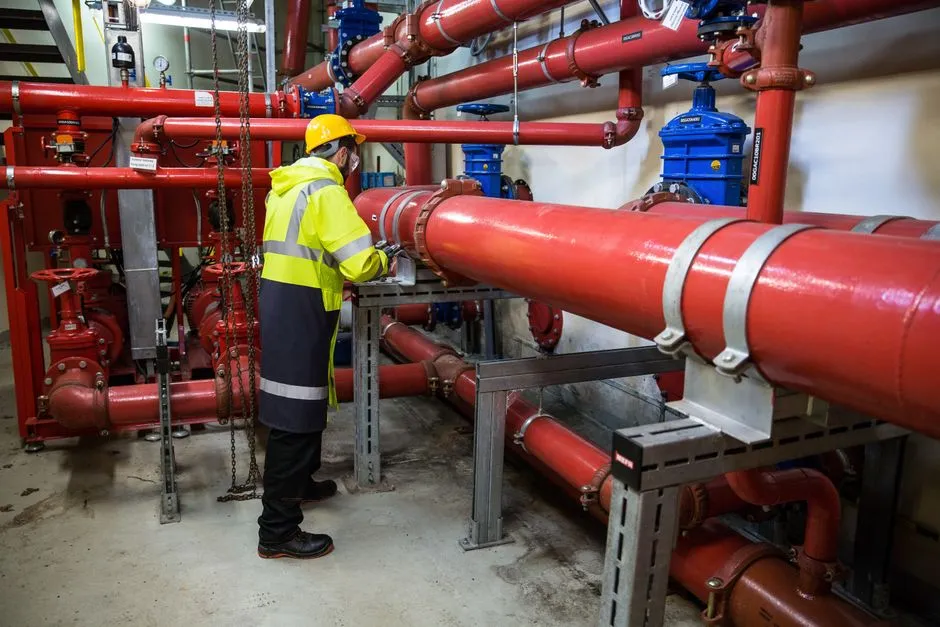
Most 2026 reuse-project failures cluster around four pre-mortem items, and each one is avoidable with a Step 2 envelope check.
- Scale and corrosion in cooling-tower loops. When hardness and silica targets from Step 2 are missed, scale forms on heat-exchange surfaces within weeks of startup, cycles of concentration drop, and the reuse project underperforms from day one.
- Microbial growth in distribution piping. UV leaves no residual. If the distribution loop runs more than a few hundred feet, Legionella and biofilm risk rises sharply; switch to ClO₂ or maintain a low chlorine residual.
- RO fouling. RO membranes foul rapidly when upstream SDI is not controlled. A multi-media filter for SDI control ahead of RO is the standard guard, with UF as the higher-recovery alternative.
- Over-treatment. Polishing every stream to near-potable quality inflates both CAPEX and OPEX with no operational return. The Step 2 fit-for-purpose target is the brake on this.
Frequently Asked Questions
What percentage of water can a Nashville industrial facility realistically reuse in 2026?
Early-stage industrial reuse programs typically offset 20–50% of total water demand, while mature systems with cooling-tower and boiler-feed targets online reach 60–80%. The 2026 federal policy environment, anchored by EPA's Water Reuse Action Plan 2.0 (April 2026), supports investment at the upper end of that range.
How does cooling-tower makeup reuse differ from boiler-feed reuse in practice?
Cooling-tower makeup is a 100–500 µS/cm conductivity, 4–6 cycles-of-concentration target with hardness below 100 mg/L as CaCO₃ and silica below 50 mg/L. Boiler feed is far tighter: hardness below 1 mg/L as CaCO₃ for low-pressure boilers and conductivity below 10 µS/cm for high-pressure service, with silica below 0.7 mg/L.
Is reclaimed water allowed for potable use in Tennessee?
Direct potable reuse is not the standard 2026 path in Tennessee. Indirect potable reuse via environmental buffers is permitted under strict TDEC and EPA Water Reuse Action Plan 2.0 guidelines; most industrial and commercial projects are scoped to non-potable targets such as cooling, boiler feed, irrigation, and process rinse.
What does EPA's Water Reuse Action Plan 2.0 actually change for a 2026 project?
The April 2026 plan sharpens federal emphasis on water reuse for industry, manufacturing, energy, and data-center cooling, giving Tennessee industrial projects a clearer federal alignment argument and a more predictable review path alongside TDEC oversight.
What is the most common failure mode on a first-year reuse project?
Scale and corrosion in cooling-tower loops caused by missing the Step 2 hardness and silica targets, followed by microbial growth when the disinfection step leaves no residual across the distribution loop. Both are caught with routine conductivity, hardness, and microbiological monitoring.