Why a Thermal Dryer Deserves a Line-Item Cost Analysis
Sludge management routinely consumes up to 30% of a wastewater treatment plant's capital budget and roughly 50% of its operating budget, landing near €80 per ton of cake handled (Jiang et al. 2014; Prestigiacomo et al. 2019, as cited in the Seyhan WWTP modeling study, BioResources 21(3), 2025). Mechanical dewatering — typically delivered by a plate and frame filter press upstream of the dryer — only gets cake to 20–30% dry solids, meaning 70–80% of every truckload hauled offsite is water being paid to move. Thermal drying closes that gap by evaporating the bound water, raising the product to 90–92% dry solids and producing a granular, peat-like material with a calorific value of 9–13 MJ/kg, comparable to brown coal (Sewage Sludge Drying Parameters, Sustainability 17(14), 2025-07-16). That single change — going from 25% DS wet cake to 90% DS dried granules — is what turns a hauling problem into a fuel or cement-kiln feedstock opportunity. The rest of this article builds one 2026 worked example, line item by line item, so a procurement engineer can put a defensible dollar figure in front of finance rather than another conceptual white paper.
Worked Example: 100 t/day Dewatered Cake at a Municipal WWTP
Anchor the model on the documented Seyhan WWTP in Adana, Turkey: 100 t/day of dewatered cake at 25–30% DS, which the operators report as 73.5% moisture and 26.5% dry solids (BioResources 21(3), 2025). That implies roughly 26.5 t/day of dry solids and 73.5 t/day of water that has to come out before the product is haul-ready. A thermal dryer sized at 3–4 t of water evaporated per hour, running 20 hours per day, will hit that duty with margin for startup, shutdown, and turndown — a standard sizing practice for municipal biosolids dryers. The mass balance is the most important number in the whole article: 100 t of wet cake at 27% DS becomes about 25 t of dried product at 90% DS, a 4:1 weight reduction that matches the Sustainability 2025 study's finding. The same 25 t/day of dried product, at 9–13 MJ/kg, carries roughly 225–325 GJ/day of recoverable energy — enough to displace coal in a cement kiln or feed a subsequent incinerator with no auxiliary fuel. A municipal plant pairing thermal drying with a high-efficiency sedimentation tank upstream typically produces a more consistent feed, which lets the dryer hold its outlet moisture within ±1% of setpoint.
| Parameter | Value | Source |
|---|---|---|
| Wet cake feed | 100 t/day at 25–30% DS (73.5% moisture) | Seyhan WWTP, BioResources 2025 |
| Dry solids in feed | ~26.5 t/day | Calculated |
| Water to evaporate | ~73.5 t/day | Calculated |
| Dryer evaporation capacity | 3–4 t water/h × 20 h/day | Engineering sizing |
| Dried product | ~25 t/day at 90% DS | Mass balance |
| Weight reduction | 4:1 (wet → dry) | Sustainability 2025 |
| Calorific value of product | 9–13 MJ/kg | Sustainability 2025 |
CAPEX Breakdown: What the Dryer Actually Costs to Buy and Install
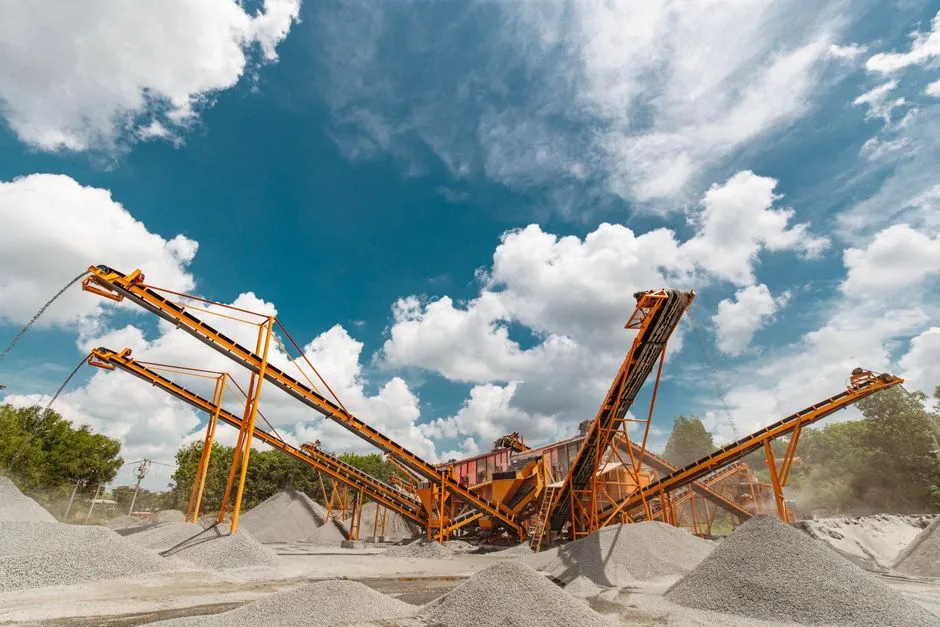
A 3–4 t water/h thermal dryer for municipal biosolids typically carries a 2026 installed cost in the $1.2M–$3.5M range, with the spread driven by dryer type, fuel choice, and the level of building enclosure a site needs. A useful rule of thumb is to budget the major equipment (dryer body, burner or heat exchanger, ID/FD fans, cyclone, and stack) at 55–65% of CAPEX; for this duty class that is roughly $0.7M–$2.0M. Material handling — conveyors, product cooling screws, storage silos, and the pulse-jet baghouse on the dryer exhaust — typically adds 10–15%. Civil works, foundations, structural steel, the building enclosure, and the electrical service drop run another 15–20%. Engineering, commissioning, operator training, spare-parts capitalization, and a contingency allowance close out the budget at 10–15%. Treat these as illustrative 2026 planning numbers, not vendor quotes; a real request for proposal on a named site will narrow the band, but the line-item split is the part finance actually wants to see.
| CAPEX Line Item | % of Total | Illustrative $ (3–4 t water/h) |
|---|---|---|
| Major equipment (dryer, burner/HX, fans, cyclone) | 55–65% | $0.7M–$2.0M |
| Material handling + dust collection (baghouse) | 10–15% | $0.15M–$0.45M |
| Civil, foundations, building, electrical | 15–20% | $0.20M–$0.65M |
| Engineering, commissioning, spares, contingency | 10–15% | $0.15M–$0.45M |
| Total installed CAPEX | 100% | $1.2M–$3.5M |
OPEX Breakdown: Energy, Labor, Maintenance, and Chemicals
Translate the literature figure of 0.6–1.2 kWh per kg of water evaporated (Sustainability 2025) into a daily energy bill: 73.5 t of water per day × 1,000 kg × 0.6–1.2 kWh/kg = 44,100–88,200 kWh/day, or 159–318 GJ/day of thermal energy. At natural gas prices in the $8–$15/GJ range (illustrative 2026 US industrial pricing) that is $1,270–$4,770/day in fuel, or $17–$65 per ton of water evaporated depending on which end of the energy-demand range a site actually hits. Electricity for fans, screws, controls, and the FGD scrubber for the dryer stack typically runs 15–25 kWh per ton of water evaporated, adding $2–$5/ton at industrial tariffs. Operating labor for a mid-sized dryer is commonly 1–2 FTE per shift, supervised by the existing plant operations team. Maintenance, including refractory inspection, burner service, bearing replacement, and baghouse bag changes, lands at 3–5% of CAPEX per year. Aggregated, a fully loaded 2026 OPEX of $25–$55 per ton of water evaporated is a defensible planning number; the spread reflects fuel choice more than any other variable.
| OPEX Line Item | Driver | Illustrative $ Range |
|---|---|---|
| Thermal energy (natural gas, $8–$15/GJ) | 0.6–1.2 kWh/kg water × 73.5 t/day | $17–$65 / t water evaporated |
| Electrical (fans, screws, controls) | 15–25 kWh / t water evaporated | $2–$5 / t water evaporated |
| Operating labor (1–2 FTE/shift) | Allocated to dryer line | $3–$8 / t water evaporated |
| Maintenance (refractory, burner, bearings, bags) | 3–5% of CAPEX/yr | $3–$6 / t water evaporated |
| Fully loaded OPEX | Sum | $25–$55 / t water evaporated |
The Savings Column: Transport, Disposal, and Energy Recovery
Savings come from three places, and the 4:1 weight reduction hits all three at once. First, transport and disposal: hauling 100 t of wet cake at $8–$20/ton becomes hauling 25 t of dried granules at the same per-ton rate, dropping the line item to $2–$5/ton on a like-for-like tonnage basis — a 75% reduction in truck count for any plant more than a few kilometers from the disposal site. Second, the Seyhan THP case documents a real-world anchor: integration of thermal treatment reduced dewatered sludge volume by 4,886 t/year, valued at approximately $122,150 in annual operational savings (BioResources 21(3), 2025). Third, energy recovery: dried biosolids at 9–13 MJ/kg can be sold to cement kilns or used as a coal displacement fuel, generating a credit of $10–$25 per ton of dry product depending on regional coal pricing. Avoided landfill gate fees and avoided tipping taxes are regional variables — California, New Jersey, and parts of New England routinely run $30–$80/ton tipping fees, which by themselves can flip a marginal project into a clear positive.
Dryer Type Comparison: Belt, Rotary Drum, and Fluidized Bed
Three configurations dominate the municipal biosolids market, and the right pick depends on fuel availability, sludge rheology, and dust-control tolerance. Belt dryers run at low outlet air temperatures (100–150°C) with specific thermal demand of 0.7–1.0 kWh/kg, treat biosolids gently, and produce a low-dust granular product — CAPEX mid, OPEX mid, and they pair well with an upstream rotary mechanical bar screen to keep fiber out of the feed. Rotary drum dryers operate at much higher temperatures; the New York City DEP installation runs at 800°F (~427°C) on natural gas, a configuration that handles throughput swings well but loads the dust-collection system heavily — CAPEX mid-high, OPEX mid, fuel flexible. Fluidized bed dryers run cooler (the Frankfurt municipal plant operates at 150°C) and feed on biogas from on-site anaerobic digestion; the compact envelope and high evaporation rate give the lowest OPEX in the class, but CAPEX is the highest of the three. Hybrid dryers (the Tianjin industrial case) combine indirect and direct heating to handle variable-moisture industrial sludges, accepting steam and natural gas interchangeably. Decision rule: fluidized bed wins when on-site biogas from AD is available and free at the burner; rotary drum wins when fuel flexibility matters more than footprint; belt dryer wins when gentle handling and low-dust product are the priority.
| Dryer Type | Outlet Temperature | Specific Energy | Typical Fuel | CAPEX | OPEX |
|---|---|---|---|---|---|
| Belt dryer | 100–150°C | 0.7–1.0 kWh/kg | Natural gas, waste heat, steam | Mid | Mid |
| Rotary drum | ~427°C (NYC case) | 0.8–1.2 kWh/kg | Natural gas (typical) | Mid–High | Mid |
| Fluidized bed | ~150°C (Frankfurt case) | 0.6–0.9 kWh/kg | On-site biogas from AD | High | Lowest when biogas is free |
| Hybrid (direct + indirect) | Variable | 0.7–1.1 kWh/kg | Steam + natural gas | High | Mid |
Payback and Sensitivity: From Numbers to a Decision
Translate the worked example into a payback: net annual savings of $40–$60 per ton of feed (transport reduction plus disposal savings plus product revenue) × 100 t/day × 330 operating days = $1.3M–$2.0M per year. Against the $1.2M–$3.5M installed CAPEX, that is a 1- to 3-year payback on gross savings and a 4- to 7-year payback on net cash after dryer OPEX — the second number is the one a finance committee will hold you to. The single most sensitive lever is fuel price: a 50% rise in natural gas price moves dryer OPEX by $8–$15 per ton of water evaporated, which is why a plant with an existing digester should always evaluate biogas integration. For the reader building a 2026 capital request, thermal drying is defensible when any of the following is true: transport distance exceeds 50 km, tipping fees exceed $30/ton, or on-site biogas from AD is available at the burner. A consistent chemical dosing program upstream of dewatering also tightens the dryer's mass balance, which keeps the energy number on the low end of the 0.6–1.2 kWh/kg range. For broader context, the 2026 cost benchmarks per MGD for water and wastewater infrastructure place this CAPEX range inside the typical planning envelope for mid-sized municipal biosolids upgrades.
Frequently Asked Questions
What is the specific thermal energy demand of a sludge thermal dryer?
Specific thermal energy demand for a fully dried biosolids product at 90–92% DM typically falls in the 0.6–1.2 kWh per kilogram of water evaporated, with belt and fluidized bed configurations at the low end and high-temperature rotary drum systems at the upper end (Sustainability 17(14), 2025-07-16).
What dry solids content can a thermal dryer reach?
A municipal thermal dryer is typically designed to reach 90–92% dry matter, at which point the product is granular, peat-like, and stable for storage or transport. This is the moisture band that the same study identifies as the target for energy-efficient drying (Sustainability 17(14), 2025-07-16).
How much does a sludge thermal dryer cost in 2026?
For a 3–4 t water/h municipal unit (the 100 t/day wet cake class), 2026 installed CAPEX typically runs $1.2M–$3.5M, with OPEX of $25–$55 per ton of water evaporated. The wide bands reflect fuel choice, dryer type, and site-specific civil and electrical work; treat them as planning numbers, not vendor quotes.
Is thermal drying better than solar drying for biosolids?
Thermal drying delivers a consistent 90–92% DS product year-round at a known energy cost (0.6–1.2 kWh/kg). Solar drying uses free solar radiation and produces the same 4:1 weight reduction, but throughput depends on climate, footprint is large, and final moisture is weather-dependent. Solar is a strong fit where land is cheap and the climate is favorable; thermal is the right pick when a guaranteed throughput and product spec are required (Sustainability 17(14), 2025-07-16).
What fuel does a thermal sludge dryer use?
Natural gas is the most common commercial fuel (NYC rotary drum case, 800°F). Biogas from on-site anaerobic digestion powers the Frankfurt fluidized bed installation at 150°C. Waste heat and steam from adjacent industrial processes drive the Tianjin hybrid case. Selection depends on what is already on site and what the plant's 2026 field guide to anaerobic digester problems shows is available at the burner.
Related Equipment
- plate and frame filter press upstream of the dryer — specifications, capacity range, and technical data