Why Poland's small communities still need wastewater systems in 2026
Only about 26% of Poland's rural population is currently served by municipal wastewater treatment plants, compared with roughly 70–75% in Polish cities — a gap that defines where the next decade of capital spending will land (per S2, Sciencedirect, 2024). The national funding architecture reinforces the divide: Poland's program for large agglomerations absorbs the bulk of EU Cohesion Fund resources, while the small-community track operates with a significantly smaller budget and stricter eligibility criteria (per S2). The result is that gminas with 200–5,000 PE are typically tendering either a buried package A/O plant or a containerized MBR — not building a centralized interceptor.
What the S2 data also shows is that the technology is no longer the bottleneck. Many of the small WWTPs already commissioned in rural Poland apply modern biological nutrient removal, and suppliers now stock standardized units for the 50–2,000 m³/day range. The constraint is project finance, not engineering risk. The 2024–2027 EU financial framework (FEnIKS and the Cohesion Fund 2021–2027 closure window) keeps 70–85% co-financing available for compliant rural sanitation through 2026, which is why tender activity from gminas is rising even as headline program budgets stay flat. Engineers sizing a plant in this window should plan for a 12–18 month design-to-commissioning runway and assume the funding envelope will close or tighten after 2027.
Regulatory envelope: EU Directive 91/271/EEC and Polish Water Law
EU Directive 91/271/EEC sets the outer compliance envelope, and Polish Water Law (Prawo wodne, consolidated text Journal of Laws 2024) implements it through the Pozwolenie wodnoprawne (water permit) issued by the regional Water Management Authority. The directive distinguishes small agglomerations (<2,000 PE) from standard ones, but a plant discharging to a sensitive area — which includes most of the Baltic drainage basin covering northern and central Poland — must meet the tighter end-of-pipe limits: BOD ≤25 mg/L, COD ≤125 mg/L, TSS ≤35 mg/L, total nitrogen ≤15 mg/L, and total phosphorus ≤2 mg/L (per Directive 91/271/EEC, Annex I, sensitive-area values). These are the numbers the design must hit, not aspirational targets.
Polish norm PN-EN 12255 (the national adoption of EN 12255) governs design, performance testing, and commissioning of municipal WWTPs and should be cited in the technical specification, alongside ATV-DVWK or DWA rules for any unit-process sizing the contractor references. For tenders, a compliant specification explicitly names the discharge parameters, the load basis, and the test method — typically a 24-hour composite sample over at least 7 days within the first 12 months of operation.
| Parameter | Standard agglomeration limit | Sensitive area limit (Baltic basin) | Typical design target for MBR |
|---|---|---|---|
| BOD5 | ≤25 mg/L | ≤25 mg/L | <10 mg/L |
| COD | ≤125 mg/L | ≤125 mg/L | <50 mg/L |
| TSS | ≤35 mg/L | ≤35 mg/L | <5 mg/L |
| Total nitrogen | ≤15 mg/L | ≤15 mg/L | ≤10 mg/L |
| Total phosphorus | ≤2 mg/L | ≤2 mg/L | ≤1 mg/L |
Sizing a small community system: flow, PE, and seasonal loads
Convert population to design flow using the Polish specific water-consumption range of 100–150 L/(PE·day), which gives 100–150 m³/day for a 1,000 PE cluster before any peaking. Apply a daily peaking factor of 2.5–3.5 for residential catchments to size equalization and hydraulic throughput; tourist or seasonal gminas need a separate peaking calculation, because a 3× winter peak at a ski-resort or a 4× spring/autumn peak at a dairy-cheese catchment will dominate unit sizing. The U.S. EPA defines a small community as ≤10,000 people with average daily flow under 1 MGD (≈3,785 m³/day) — a useful international sizing benchmark, even though Polish law uses its own PE framework and stricter 2,000 PE / 10,000 PE cutoffs for sensitive-area obligations (per EPA, 2024).
For domestic sewage without major industrial input, assume the following influent envelope for tender design: BOD 250–400 mg/L, COD 500–800 mg/L, TSS 300–500 mg/L, NH4-N 30–50 mg/L, total phosphorus 6–10 mg/L. These are the numbers that drive aeration tank volume, membrane flux, and coagulant dose; pulling them from the permit file is non-negotiable. For agri-tourism or dairy catchments, BOD and TSS at the headworks can double during the cheese-making season, and equalization becomes a process-control necessity, not a luxury.
Technology options: package A/O, SBR, MBR, and constructed wetlands
For Polish small communities the realistic shortlist is four technologies: package anoxic-oxic (A/O), sequencing batch reactor (SBR), membrane bioreactor (MBR), and constructed wetlands. Each maps to a different combination of footprint, effluent quality, operator skill, and seasonal-load tolerance, and the right choice depends as much on the gmina's flow regime as on CAPEX.
Package A/O is the workhorse for 200–2,000 PE plants: buried installation, no full-time operator, modular capacity. A buried WSZ package A/O plant handles 1–80 m³/h per unit and delivers BOD 20–30 mg/L — adequate for standard catchments but marginal for sensitive-area nitrogen limits. SBR uses a fill-react-settle-decant cycle in a single tank, which makes it tolerant of variable loads and a good fit for ski-resort or agri-tourism gminas where daily flows swing sharply. MBR is the premium option: an MBR membrane bioreactor system delivers near-reuse effluent with sub-1 µm filtration, TSS <1 mg/L, and a footprint roughly 60% smaller than conventional activated sludge — appropriate for sites with discharge limits below 10 mg/L TSS or where discharge goes to a sensitive lake or reservoir. Constructed wetlands are the lowest-energy option but require 5–10 m²/PE of land area and show seasonal performance variability; they are practical mainly for <500 PE clusters with stable flow and available land. The S1 finding (ASABE, 2001) that combining anaerobic pretreatment, land application, and wetlands creates a carbon-sequestering system with measurable energy savings versus mechanical treatment still holds — but the designer's job is to match the wetland to the load, not to retrofit wetlands onto an overloaded sludge stream.
| Technology | Typical size range | Effluent BOD (mg/L) | Footprint | Operator skill | Seasonal-load tolerance |
|---|---|---|---|---|---|
| Package A/O (WSZ) | 200–2,000 PE | 20–30 | Small (buried) | Low | Moderate |
| SBR | 500–5,000 PE | 15–25 | Small–medium | Medium | High |
| MBR | 500–5,000 PE | <10 | Smallest (60% of CAS) | Medium–high | High |
| Constructed wetlands | <500 PE | 15–30 (seasonal) | 5–10 m²/PE | Low | Low–moderate |
Equipment selection: matching capacity to a Polish gmina plant
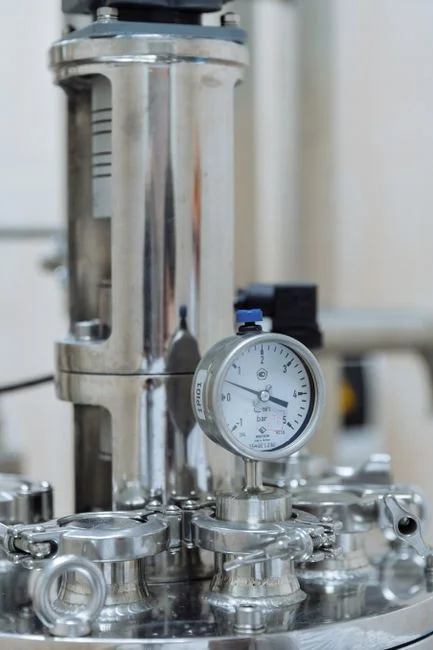
Translate the technology decision into equipment by flow band. Below 50 m³/day, a buried WSZ package A/O plant with integral screening and disinfection is the default; 50–500 m³/day, an MBR or SBR is the right starting point; above 500 m³/day, move to containerized or modular MBR units rated 10–2,000 m³/day. For Polish climate, specify below-grade installation of the biological reactor to prevent freezing, with a service hatch and above-grade landscaping; freeze-protection of pipework and aerators is more reliable than trace heating in rural settings.
Headworks screening matters more than most specs admit. A rotary mechanical bar screen should be specified for all plants above 100 m³/day — without it, wipes and grit destroy downstream membranes and aerator diffusers within months. DAF (dissolved air flotation) is justified only where there is significant FOG or food-processing input. Sludge handling is the line item that gets cut from specs and then retrofitted at 3× cost: even a 1,000 PE plant produces 10–20 m³/day of excess sludge at 1–2% dry solids, and a small plate and frame filter press sized to 1–3 m³/h brings the cake to 18–22% DS, slashing disposal tonnage. Disinfection defaults to a UV sterilizer for Polish small WWTPs because it is chemical-free, effective against Cryptosporidium and Giardia, and does not generate a residual that complicates reuse.
| Design flow (m³/day) | Biological reactor | Headworks | Sludge handling | Disinfection |
|---|---|---|---|---|
| <50 | Buried WSZ package A/O | Inline basket screen | Sludge holding tank, periodic haul | Integral UV or none |
| 50–200 | WSZ or compact SBR | Rotary bar screen (GX) | Plate and frame filter press (1–3 m³/h) | UV sterilizer |
| 200–500 | Containerized SBR or MBR | Rotary bar screen + grit removal | Plate and frame filter press (3–5 m³/h) | UV sterilizer |
| 500–2,000 | Modular MBR (10–2,000 m³/day) | Rotary bar screen + grit + fine screen | Plate and frame filter press + sludge buffer | UV sterilizer; chlorine dioxide if reuse |
Costs, co-financing, and ROI for a 2026 Polish small WWTP
CAPEX per m³/day in 2026 European market conditions runs roughly €300–600 for package A/O, €400–700 for SBR, €700–1,200 for MBR, and €150–300 for constructed wetlands (where land cost dominates). OPEX tracks technology complexity: €0.25–0.45/m³ treated for package A/O, €0.35–0.55/m³ for MBR, and €0.05–0.15/m³ for constructed wetlands, with energy and sludge disposal as the two largest line items. The same plant in lagoon-to-MBR conversion economics typically sees OPEX rise by 30–60% but effluent quality improve enough to drop permit non-compliance risk to near zero — a trade most gminas accept.
EU Cohesion Fund and FEnIKS / FEP windows in 2026 can co-finance 70–85% of CAPEX for compliant small-community projects, which materially changes the gmina's own-contribution and the payback calculation. A representative 1,000 PE package plant at €400,000–600,000 CAPEX with 70% co-financing leaves a gmina-side CAPEX of €120,000–180,000; against typical Polish wastewater tariffs of PLN 5–8/m³ (≈€1.15–1.85/m³), the municipal-side payback lands at 8–12 years. For an engineer preparing a council defense, the relevant comparison is not the absolute tariff but the avoided cost of a non-compliance fine or a failed permit renewal — both of which are now common at rural WWTPs that were never upgraded past primary treatment.
Frequently Asked Questions
What counts as a small agglomeration under EU Directive 91/271/EEC in Poland?
Under Directive 91/271/EEC, a small agglomeration is one discharging less than 2,000 PE — roughly 100–200 m³/day for typical Polish domestic loading. Plants below this threshold are subject to less stringent monitoring, but if they discharge to a sensitive area (most of the Baltic basin qualifies) they must still meet BOD ≤25 mg/L, total nitrogen ≤15 mg/L, and total phosphorus ≤2 mg/L (per Directive 91/271/EEC, Annex I).
What is the current rural wastewater coverage in Poland?
About 26% of Poland's rural population is connected to a municipal wastewater treatment plant (per S2, Sciencedirect, 2024), compared with roughly 70–75% in Polish cities. The remaining rural population relies on septic tanks, household treatment systems, or uncollected discharge, and the national small-community program carries a significantly smaller budget than the large-agglomeration track.
Which technology is best for a 500–2,000 PE gmina with dairy-farm seasonal load swings?
SBR or MBR is the standard answer. SBR tolerates load swings through its batch cycle and is cheaper; MBR delivers tighter effluent and a smaller footprint at higher CAPEX and OPEX. Constructed wetlands are not recommended for this size because the 5–10 m²/PE land requirement becomes 2.5–10 ha, and seasonal BOD swings will push the wetland past design capacity.
How much EU co-financing is available for a 2026 small-community WWTP in Poland?
FEnIKS and the 2021–2027 Cohesion Fund closure window can co-finance 70–85% of eligible CAPEX for compliant rural sanitation projects in 2026. The remaining 15–30% is the gmina's own contribution, which at typical tariffs of PLN 5–8/m³ gives a payback of 8–12 years for a 1,000 PE package plant (HydropureWater field data, 2026).