Why Wrocław Hospitals Need Dedicated Wastewater Treatment
Wrocław’s municipal sewerage network, managed by MPWiK, accepts only pre-treated medical wastewater, as raw hospital effluent is frequently rejected under MPWiK’s 2024 acceptance policy. Discharging untreated medical waste poses significant risks to the city’s hydraulic infrastructure and the Janówek Wastewater Treatment Plant (WWTP). Unlike standard domestic sewage, hospital effluent contains pathogen loads 10 to 100 times higher than municipal levels, with E. coli concentrations ranging from 10⁶ to 10⁸ CFU/100 mL (per PMC/NIH data). The Janówek facility is not designed to neutralize specific medical contaminants such as pharmaceutical residues, contrast agents, or radioactive isotopes.
The regulatory pressure on Wrocław’s healthcare facilities is intensifying due to the EU Urban Waste Water Directive 91/271/EEC, which mandates secondary treatment for hospitals with more than 50 beds. Failure to comply with these standards can result in fines from the Polish Environmental Protection Inspectorate (GIOŚ) reaching up to €100,000 per year. Understanding primary vs secondary treatment for hospital effluent helps facility managers avoid these penalties and ensure the long-term viability of their discharge permits.
Wrocław’s sewerage infrastructure presents unique challenges for medical facilities. The network spans 1,418 km and relies on 40 pumping stations to move waste across the city’s flat terrain. There is no dedicated medical wastewater treatment capacity within the municipal system, so hospitals that fail to pre-treat their waste risk causing biological upsets at the municipal plant or facing immediate disconnection. MPWiK data confirms that the older parts of the network, some dating back to 1850, are particularly sensitive to corrosive or highly contaminated medical discharge. Implementing a dedicated Sewage Treatment Plant (STP) protects the city’s shared water resources.
Wrocław’s Regulatory Requirements for Hospital Wastewater
The EU Urban Waste Water Directive 91/271/EEC and MPWiK regulations necessitate strict discharge limits for hospital effluent.MPWiK Wrocław enforces strict discharge limits for hospital effluent, requiring BOD₅ levels below 25 mg/L, COD below 125 mg/L, and E. coli counts under 1,000 CFU/100 mL (MPWiK 2024 policy). These local standards align with the EU Urban Waste Water Directive 91/271/EEC while addressing the specific capacity limits of the Janówek WWTP. A 2023 amendment to Polish environmental law introduced more rigorous monitoring for pharmaceutical residues, particularly for facilities with high surgical or oncology throughput. To achieve compliance, hospitals must implement multi-stage treatment processes that specifically target these parameters.
| Parameter | MPWiK Wrocław Discharge Limit | Typical Raw Hospital Effluent | Required Reduction % |
|---|---|---|---|
| BOD₅ (Biochemical Oxygen Demand) | < 25 mg/L | 150 – 400 mg/L | 83% – 94% |
| COD (Chemical Oxygen Demand) | < 125 mg/L | 300 – 800 mg/L | 58% – 84% |
| TSS (Total Suspended Solids) | < 35 mg/L | 100 – 300 mg/L | 65% – 88% |
| E. coli | < 1,000 CFU/100 mL | 10⁶ – 10⁸ CFU/100 mL | > 99.9% |
| pH Range | 6.5 – 9.0 | 5.5 – 10.0 | Neutralization Required |
The approval process for a hospital STP in Wrocław involves submitting comprehensive test reports from ISO 17025 accredited laboratories. These reports must demonstrate the system's ability to achieve required kill rates for pathogens—typically a 99.9% reduction for E. coli and viruses using validated disinfection methods like chlorine dioxide or ozone. Continuous monitoring systems for pH, flow, and turbidity must be integrated into the STP design to provide real-time data logging for MPWiK inspections. For guidance on international benchmarks, engineers can review how Taichung hospitals handle medical wastewater compliance.
Common reasons for MPWiK rejecting an application include incomplete disinfection logs, high TSS concentrations exceeding 50 mg/L, or the unapproved use of specific chemicals. Ensuring the STP design accounts for these local constraints is critical for securing a discharge permit within the standard 4-to-6-week review window.
Treatment Technologies for Hospital Wastewater: MBR vs DAF vs Chemical Disinfection
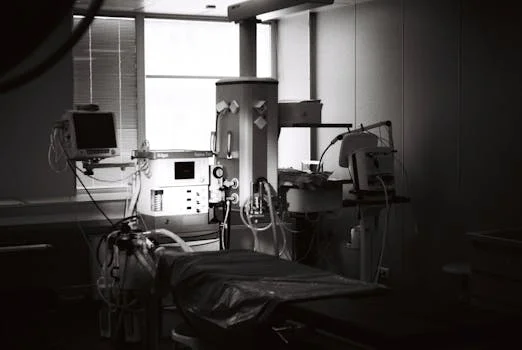
Membrane Bioreactor (MBR) technology achieves a filtration level of less than 1 μm, effectively removing over 99% of pathogens and pharmaceutical residues from medical effluent. For Wrocław hospitals facing limited surface area, MBR systems for hospital wastewater treatment in Wrocław offer a footprint roughly 60% smaller than conventional activated sludge systems. MBR combines biological treatment with membrane filtration, eliminating the need for secondary clarifiers and providing high-quality effluent that often exceeds MPWiK standards. The capital cost is higher—ranging from PLN 2.5M to 3.2M for a 100 m³/day system—but the superior removal of micro-pollutants makes it the preferred choice for large urban hospitals.
Dissolved Air Flotation (DAF) is highly effective for hospitals with high grease loads. DAF systems for high-efficiency TSS removal in hospital wastewater utilize micro-bubbles to float suspended solids and fats to the surface for mechanical skimming. DAF is excellent for removing 90–95% of TSS and FOG (Fats, Oils, and Grease), but must be paired with a robust post-disinfection stage to meet E. coli limits. This combination is often more cost-effective for mid-sized facilities, with capital costs between PLN 800k and 1.5M.
| Feature | MBR (Membrane Bioreactor) | DAF + Disinfection | Chemical Disinfection Only |
|---|---|---|---|
| Retention Time | 8 – 12 hours | 30 – 60 minutes | 15 – 30 minutes |
| Energy Consumption | 0.8 – 1.2 kWh/m³ | 0.3 – 0.5 kWh/m³ | < 0.1 kWh/m³ |
| Sludge Production | 0.1 – 0.2 kg/m³ | 0.3 – 0.5 kg/m³ | Minimal (if pre-settled) |
| Pathogen Removal | 99.99% (Physical) | 99.9% (Chemical) | 99.9% (Chemical) |
| Footprint | Very Small | Moderate | Compact |
For smaller clinics, compact ozone disinfection systems for small medical facilities in Wrocław provide a low-CAPEX solution. Chemical disinfection ensures a 99.9% kill rate for viruses and bacteria. The initial investment is low (PLN 300k–600k), but these systems require rigorous pre-treatment to prevent solids from shielding pathogens from the disinfectant.
Cost Breakdown for Hospital Wastewater Treatment in Wrocław
Capital costs for hospital wastewater treatment systems in Wrocław vary significantly by technology.Capital costs for a 100 m³/day hospital wastewater treatment system in Wrocław range from PLN 300,000 for basic chemical disinfection to PLN 3.2 million for advanced MBR systems (2025 market data). These benchmarks include equipment procurement, installation, and initial commissioning for MPWiK approval. MBR represents the highest initial investment but provides comprehensive protection against future regulatory changes. DAF systems, combined with post-disinfection, offer a middle-ground investment of PLN 1.2M to 1.8M.
| System Type | Capital Cost (CAPEX) | O&M Cost (OPEX) | ROI Timeline |
|---|---|---|---|
| MBR (Membrane Bioreactor) | PLN 2.5M – 3.2M | PLN 18 – 25/m³ | 8 – 10 Years |
| DAF + Disinfection | PLN 1.2M – 1.8M | PLN 12 – 18/m³ | 5 – 7 Years |
| Chemical Disinfection | PLN 300k – 600k | PLN 8 – 12/m³ | 3 – 4 Years |
Operational and maintenance (O&M) costs are influenced by local Wrocław factors, including labor rates for certified operators (PLN 50–70/hour) and sludge disposal fees at regional landfills (PLN 300–500/ton). MBR systems have higher OPEX due to energy requirements and membrane replacement every 5 to 7 years. Hospitals can offset these costs through water reuse for non-potable applications like irrigation or cooling tower make-up, provided it meets EU Drinking Water Directive standards.
The Return on Investment (ROI) for these systems is primarily driven by avoiding MPWiK’s industrial wastewater surcharges. Currently, hospitals discharging effluent that exceeds standard limits may face surcharges of up to PLN 15/m³. A compliant STP can save over PLN 500,000 annually in surcharges alone.
Step-by-Step Guide to MPWiK Approval for Hospital STPs
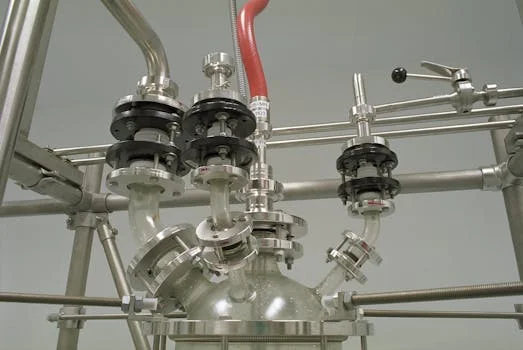
The first step is conducting comprehensive influent and effluent testing through an ISO 17025 certified laboratory. This baseline data must include BOD₅, COD, TSS, E. coli, and pH levels. For hospitals with more than 50 beds, MPWiK increasingly requests data on pharmaceutical residues. This testing phase typically takes 2 to 3 weeks.
Step 2 involves submitting the STP design to MPWiK’s technical department, including a detailed process flow diagram, technical specifications, and a disinfection validation report. MPWiK’s review process for this design phase generally lasts 4 to 6 weeks. The design must include continuous monitoring sensors for pH, turbidity, and flow.
Once the system is installed, Step 3 requires calibrating sensors and establishing an operator training log. MPWiK will then schedule a physical inspection (Step 4). Upon successful inspection, final approval is typically granted within 1 to 2 weeks.
Frequently Asked Questions
What is an STP plant in a hospital?
A Sewage Treatment Plant (STP) in a hospital treats medical wastewater to remove pathogens, pharmaceuticals, and contaminants before discharge into Wrocław’s sewerage network. MPWiK requires hospitals to install STPs if their effluent exceeds BOD₅ 25 mg/L or E. coli 1,000 CFU/100 mL.
How is hospital wastewater treated?
Hospital wastewater is treated using physical, biological, and chemical processes. Wrocław hospitals