What Is a Package Treatment Plant and When Does It Make Sense
A package treatment plant is a factory-built, skid- or tank-mounted wastewater treatment system that arrives on site ready to install, typically handling 25,000 to 1,000,000 gallons per day. The U.S. EPA places appropriate package plant flows between 25,000 and 6,000,000 GPD (per EPA guidance cited in S3); the 25,000–1,000,000 GPD sub-band covers the majority of industrial buyers, small municipalities, and decentralized commercial sites. Common designs include extended aeration, sequencing batch reactor (SBR), oxidation ditch, and membrane bioreactor (MBR) configurations, each suited to different influent loads, footprints, and discharge targets.
The unit arrives with all major treatment stages — screening, biological treatment, clarification, and disinfection — pre-assembled in one or two steel or FRP vessels rather than field-built concrete basins (per S3). A pre-treatment bar screen or grinder catches debris at the inlet, transfer pumps move flow between internal zones, and airlift pumps recirculate sludge back to the aeration stage to keep biomass active (per S3).
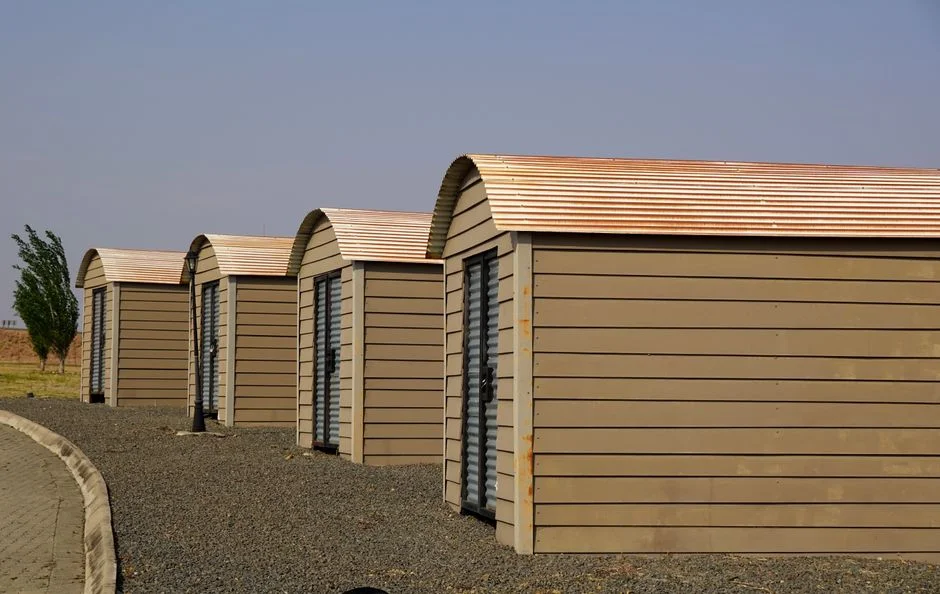
Package plants make sense for small communities, residential developments, hotels, hospitals, schools, military bases, and construction camps where connecting to a municipal sewer is impractical or too expensive (per S3, S5). Industrial sites that fit include food processing plants with moderate BOD loads, textile facilities, light metal finishing operations, and semiconductor fabs where reuse-quality effluent is required. They do not fit sites with influent BOD above 2,000 mg/L or heavy categorical metal loads that demand a dedicated full pretreatment train ahead of any biological stage. For those cases, a 2026 comparison of packaged STP vs cast-in-place concrete STP for high-BOD FOG wastewater is a better starting point.
How a Package Treatment Plant Works: The Four Process Designs Compared
All four common designs rely on the same activated-sludge principle — microorganisms oxidize organics in an aerated tank — but they package the stages differently. The differences in tank geometry, cycle control, and downstream separation drive every selection decision downstream.
Extended aeration uses a single rectangular or circular tank divided into five zones: inlet/equalization, anoxic, aeration, clarification, and disinfection. Hydraulic retention time runs 18–36 hours, which gives the biomass a long contact window and produces a stable, well-clarified effluent. It is the workhorse design for flows of 25,000–500,000 GPD with moderate BOD₅ in the 150–400 mg/L range and is forgiving of operator skill gaps (per S3, S6). The WSZ underground integrated package plant is a representative A/O (anoxic/oxic) extended-aeration unit rated at 1–80 m³/h that ships fully assembled and can be buried below grade.
Sequencing batch reactor (SBR) collapses the process into one tank that operates in timed cycles — fill, react, settle, decant — controlled by level sensors and automated valves (per S3). Because the same vessel performs aeration and settling sequentially, SBRs handle intermittent or seasonal flows well: a resort busy on weekends and quiet midweek fits the SBR operating envelope better than a continuous-flow design.
Oxidation ditch uses a looped racetrack basin with mechanical aerators or jet mixers that circulate mixed liquor around the channel. The geometry provides 24+ hours of HRT and tolerates hydraulic and organic surges, which is why oxidation ditches are common in small municipalities with variable influent (per S3). Footprint is larger than the other three designs.
Membrane bioreactor (MBR) couples conventional activated sludge with submerged PVDF ultrafiltration membranes at roughly 0.1 μm pore size. Solids are retained physically rather than by gravity settling, so the clarifier is eliminated. Effluent BOD and TSS drop to sub-30/5 mg/L routinely, the footprint shrinks by about 60% versus a comparable extended-aeration plant, and the permeate is suitable for on-site reuse (per S3, internal MBR product spec). The integrated MBR package system is offered in 10–2,000 m³/day ratings for sites that need reuse-quality discharge.
Package Treatment Plant Selection Matrix: Matching Design to Site
The matrix below compares all four process types across the variables a buyer actually weighs. Use it to eliminate options in five minutes before you write the RFP.
| Variable | Extended aeration | SBR | Oxidation ditch | MBR |
|---|---|---|---|---|
| Typical flow band | 25,000–500,000 GPD | 25,000–500,000 GPD | 50,000–1,000,000 GPD | 25,000–1,000,000 GPD |
| Footprint (relative) | 1.0× baseline | 0.9–1.0× | 1.5–2.0× | 0.4× (≈60% smaller) |
| Effluent BOD / TSS | ≤30 / 30 mg/L | ≤30 / 30 mg/L | ≤30 / 30 mg/L | <5 / <5 mg/L |
| Effluent NH₃-N | 1–5 mg/L (nitrifies) | 1–5 mg/L (nitrifies) | 1–5 mg/L (nitrifies) | <1 mg/L with enrichment |
| Operator skill required | Low–moderate | Moderate (timed controls) | Moderate (mechanical) | Moderate–high (membranes) |
| Membrane/mechanical complexity | Low | Low–moderate | Moderate | High (CIP, aeration scour) |
| Typical CapEx band (per MGD) | Lowest of the four | Low–moderate | Moderate | Highest (membranes) |
| Best-fit site type | Steady flow, limited operator | Intermittent / seasonal flow | Municipal-grade operator, variable load | Reuse water, tight footprint, strict limits |
The decision rule is straightforward: choose MBR if the site needs reuse water or has less than 0.5 acre available for a 100,000 GPD plant; choose extended aeration if flows are steady and operator skill is limited; choose SBR if flows are intermittent; choose oxidation ditch if influent varies and a municipal-grade operator is on staff. Because capacity is fixed at manufacture, growth typically means parallel units rather than retrofits — a fact that has to be priced into the Phase 2 budget (per S3). All four designs meet typical NPDES BOD/TSS limits, but nutrient removal to TN <10 mg/L and TP <1 mg/L usually requires an add-on stage such as a denitrification filter or chemical precipitation. For sites targeting nutrient-tight discharge, the DF series flat-sheet MBR membrane module is one of the few packaged options that hits those limits without a tertiary stage.
Design Basis: Influent Parameters, Footprint, and Tank Materials
Before you size a package plant, compile the influent parameters a vendor will demand on the data sheet: average and peak daily flow in GPD or m³/d, BOD₅, COD, TSS, NH₃-N, total phosphorus, pH, temperature, FOG (for food sites), and any categorical pollutants — metals, phenols, cyanides — tied to the site's SIC code (per S3, S5). Peak flow, not average, is what sizes the equalization volume and the disinfection contact chamber; underestimating peak flow is the most common cause of permit excursions on small plants.
Footprint is the second binding constraint. A typical extended-aeration package plant needs roughly 0.1–0.3 acres per 100,000 GPD, including tankage, access road, and setback for odor control; an MBR cuts that envelope by about 60% because the membrane cassette replaces the clarifier and most of the footprint (per internal MBR product spec). For sites needing pretreatment polishing ahead of the biological stage, a high-rate sedimentation unit such as the HydropureWater lamella clarifier (20–40 m/h surface loading) can be bundled into the same skid envelope.
| Material | Typical service life | Corrosion regime | Best-fit conditions |
|---|---|---|---|
| Coated carbon steel | 20–40+ years | Annual coating inspection, re-coat at 10–15 yr | Above-grade, mobile, or relocatable units |
| FRP (fiberglass) | 15–30 years | Resists corrosion naturally; check for impact damage | Aggressive chemistry, buried, coastal sites |
| Concrete (field-erected) | 30–50 years | Crack and joint inspection every 5 yr | Permanent installations above 1 MGD |
Confirm with the vendor which configuration — factory-built, field-erected, steel, or concrete — is being quoted; capacity bands shift significantly between these classes (per S2, S5). Buried steel units like the WSZ need a soil and groundwater table check before foundation design, and mobile trailer-mounted units need traffic-rated placement.
Compliance and Permitting: NPDES, Pretreatment, and Operator Certification
Any package plant discharging to U.S. waters requires an NPDES permit under the Clean Water Act. Small facilities usually qualify for a general permit, which is faster to obtain than an individual permit and sometimes provides coverage within weeks rather than months (per S3). The permit sets the effluent water-quality standards — BOD, TSS, ammonia, residual chlorine, sometimes nutrients and metals — but it does not dictate the technology inside the tank; the buyer chooses the process to meet the limits.
Industrial sites must also check categorical pretreatment standards under 40 CFR Parts 405–471. Metal finishing falls under 40 CFR 433, mineral mining under 40 CFR 436, and centralized waste treatment under 40 CFR 437. Even when the package plant discharges to a POTW rather than a waterway, local pretreatment limits apply, and the package plant alone rarely meets categorical metal limits without a dedicated upstream precipitation or ion-exchange stage. Buyers preparing a discharge application should work through the 2026 NPDES industrial discharge permit document checklist before locking in a process selection. For U.K. sites, the UK wastewater treatment regulations 2026 compliance guide covers the equivalent consent regime.
Most U.S. states require a certified operator to oversee the package plant, but the certification level is typically lower than for a large municipal plant (per S3). The single most common compliance failure on small package plants is inconsistent maintenance — when the biological process is neglected, dissolved oxygen drops, biomass washes out, and the discharge violates permit limits. This is an O&M cost risk the buyer should price into the lifecycle budget, not a design risk.
Cost Benchmarks, Lead Times, and Procurement Checklist
Factory-built package plants typically carry lower CapEx and faster install times than cast-in-place concrete WWTPs of equivalent capacity. Standard units ship in 8–16 weeks from order submission; one vendor reports as little as 12 weeks for clarifier internals as a benchmark (per S5). Lease and lease-to-purchase options of 5 and 10 years are available from several vendors, which defers capital outlay for phased developments or temporary capacity needs such as construction camps (per S5). For the actual 2026 dollar figures per MGD across steel, FRP, and concrete construction, see the 2026 cost benchmarks per MGD for water treatment infrastructure.
| Item | Typical value (2026) |
|---|---|
| Standard unit lead time | 8–16 weeks |
| Lease term options | 5-year, 10-year, lease-to-purchase |
| Steel service life | 20–40+ years |
| FRP service life | 15–30 years |
| Concrete field-erected service life | 30–50 years |
| Extended-aeration footprint | 0.1–0.3 acres per 100,000 GPD |
| MBR footprint reduction vs extended aeration | ≈60% |
Procurement checklist — include these in the RFP and you will cut a month off the technical clarification loop:
- Influent characterization (BOD₅, COD, TSS, NH₃-N, TP, pH, temperature, FOG, categorical pollutants).
- Peak vs average daily flow with diurnal curve, not just a daily number.
- Discharge limits — NPDES, POTW pretreatment, or on-site reuse criteria (BOD, TSS, TN, TP, fecal coliform).
- Footprint envelope and setbacks, including any odor or noise buffer requirements.
- Operator certification level available on site and the certification the state requires.
- Power supply — three-phase availability, generator backup, and peak demand in kW.
- Geotechnical data for buried units: soil bearing capacity and seasonal groundwater table.
- Local code compliance — building, seismic, flood-plain, and fire.
Ancillary items typically bundled with a package plant bid include the GX series rotary bar screen for inlet protection and the automatic chemical dosing system for phosphorus polishing or pH trim. For sizing depth on a specific vertical, the 2026 guide to choosing a packaged MBR STP for a hotel in London walks through a 200-room case study with actual flow and reuse figures.
Frequently Asked Questions
What flow range is appropriate for a package treatment plant?
The U.S. EPA places appropriate package plant flows between 25,000 and 6,000,000 GPD; most industrial and small-municipal buyers operate in the 25,000–1,000,000 GPD sub-band (per S3). Below roughly 25,000 GPD, decentralized systems or on-site treatment are usually more cost-effective; above 1 MGD, factory-built units become marginal and field-erected configurations take over (per S2).
How does a package treatment plant cost compare to a cast-in-place concrete WWTP?
Package plants typically carry lower CapEx and shorter install times than equivalent concrete plants, with standard lead times of 8–16 weeks; concrete field-erected units have a longer service life (30–50 years vs 20–40+ years for steel) but at higher upfront cost (per S3, S5). The 2026 dollar figures per MGD are laid out in the 2026 cost benchmarks per MGD for water treatment infrastructure.
Which regulations apply to a package plant discharge?
Any discharge to U.S. waters requires an NPDES permit under the Clean Water Act; industrial sites must also comply with categorical pretreatment standards under 40 CFR Parts 405–471 (for example, 40 CFR 433 for metal finishing and 40 CFR 437 for centralized waste treatment). POTW discharges still trigger local pretreatment limits even when no direct waterway discharge is involved.
When should an MBR package be specified over an extended-aeration package?
Specify an MBR when the site needs reuse-quality effluent (sub-5 mg/L BOD/TSS), has a tight footprint under 0.5 acre for 100,000 GPD, or must meet nutrient limits tighter than 10 mg/L TN without adding a tertiary stage (per S3). For steady municipal-strength influent with a moderate-skill operator and a relaxed discharge envelope, extended aeration remains the lower-CapEx choice.