
Why London Hotels Default to Packaged MBR Over Conventional STPs
Choose a packaged MBR STP for a London hotel by sizing to 200–250 L per guest per day, confirming a sealed submerged membrane MBR (PVDF flat-sheet or hollow-fibre, 0.03–0.1 µm) fits the footprint, and verifying compliance with Building Regs Part H2, the Environment Agency MCPD/permit and either Thames Water Section 104 adoption or a stand-alone EA permit. Expect 2026 packaged MBR CAPEX of £25,000–£70,000 per 10 m³/d plus £0.15–£0.45/m³ OPEX.
Central-London hotel plots — Mayfair mews, City fringe infill, Docklands refurbishments — rarely have room for separate aeration, clarification and sludge-storage tanks. A factory-built integrated MBR wastewater treatment system combines biological and membrane stages in a single 20–40 ft pre-engineered container, halving the plan area of a conventional activated-sludge plant and removing the secondary clarifier entirely. The format also suits basement or podium-deck installations where crane-lift access is limited to a single delivery.
The closest real-world benchmark is the 200-bed, 5-star hotel where an Imemflo HF/FS MBR was installed at 250 m³/d and has met the wastewater reuse standard since start-up (per imemflo.com, accessed 2026). Against alternatives, MBBR struggles with peak laundry surges because biofilm carriers cannot buffer a 2× shock load; SBR requires multiple batch basins and a larger equalisation footprint; and conventional activated sludge (ASP) demands a separate clarifier and produces an effluent of 20–30 mg/L TSS — too poor for the toilet-flushing or irrigation reuse that BREEAM Wat 01 rewards. MBR's headline 90–95% removal of harmful substances (per imemflo.com) is the differentiator that makes a reuse loop economically viable on a hotel site.
UK Compliance Stack for a Packaged Hotel MBR in London
Four compliance layers must be cleared before a packaged hotel MBR can be commissioned in Greater London, and they must be sequenced correctly: Building Regulations Part H2 (2010 edition with 2022 amendments) sets the minimum effluent standard for any non-mains drainage serving a building; the design must satisfy the British Water Code of Practice for Flows and Loads and the BS 6297 treatment-performance test. If the treated effluent is to enter the public sewer, the project follows a Section 104 adoption agreement with Thames Water and a Section 106 connection (or a Build-Over agreement where the asset crosses existing infrastructure); if it is to discharge to surface water or ground, an Environment Agency standard-rules permit or bespoke MCPD application is required instead. The DEFRA/EA small-discharge threshold sits at 2 m³/d — above this, a regulated permit is mandatory and the operator must register the discharge on the public register.
BREEAM Wat 01 (water efficiency) and Wat 03 (legionella / water reuse) credits are typically the route to a BREEAM Very Good or Excellent rating for a new-build London hotel; treated MBR effluent at <20 mg/L BOD, <5 mg/L TSS and <5 mg/L NH3 can be routed to toilet flushing, irrigation or laundry make-up under a documented risk assessment. London's sustainable drainage hierarchy — activated for the capital in 2021 under Schedule 3 of the Flood and Water Management Act — means surface-water and treated-effluent pathways must be considered together, with a SuDS pro forma and a drainage hierarchy statement submitted to the Local Planning Authority. The Greater London Authority also expects a Circular Economy statement for any development above the 150-bed threshold.
| Layer | Authority | Trigger | Key Document / Number |
|---|---|---|---|
| Building Regulations Part H2 | Building Control / LPA | Any new-build or refurbishment | 2010 edition + 2022 amendments; BS 6297 |
| Thames Water S104 / S106 | Thames Water | Connection to public sewer | S104 adoption, S106 connection, Build-Over agreement |
| EA MCPD / standard-rules permit | Environment Agency | Discharge to surface water or ground, >2 m³/d | MCPD application; standard-rules permit SR-2010-3 |
| BREEAM Wat 01 / Wat 03 | BREEAM Assessor | BREEAM-rated new-build | Wat 01 ≤ 100 L/person/day; Wat 03 reuse credits |
| London SuDS / GLA | LPA + GLA | Any development > threshold | Schedule 3 Flood and Water Management Act 2021; GLA Circular Economy statement |
Sizing the MBR for a London Hotel: Beds, Flow and Load

Defensible sizing for a London hotel MBR starts at 200–250 L per guest per day plus a food-and-beverage and staff allowance: 1 staff ≈ 60 L/d, 1 restaurant cover ≈ 25 L/d. The Imemflo 200-bed, 5-star reference at 250 m³/d implies a 1,250 L/bed design point — appropriate for a 5-star with full F&B, spa and back-of-house laundry; a 3-star limited-service site can justify 200 L/bed.
Worked example for a 150-bed boutique hotel in central London: 80% occupancy, 35 staff, 60 restaurant covers, 30 m³/d design flow, requiring a 35–40 m³/d duty MBR (with one unit in standby or parallel for resilience). Apply a 1.5–2× peak factor for the 07:00–09:00 guest wash-out and the mid-morning laundry surge when sizing the inlet screen channel, the equalisation tank and the membrane aeration blowers — not the daily average, which will mislead on blower duty. A 35 m³/d unit with one duty and one standby train typically occupies a 4 m × 8 m plantroom footprint plus 3 m headroom for cassette withdrawal.
| Parameter | Unit | Typical Hotel Range | Imemflo Reference (S1) | Design Note |
|---|---|---|---|---|
| Flow per guest | L/d | 200–250 | 1,250 (5-star full service) | Add F&B and staff |
| BOD | mg/L | 250–400 | 250–400 | Higher in F&B-heavy sites |
| COD | mg/L | 500–900 | 500–900 | BOD:COD ≈ 0.4–0.5 |
| TSS | mg/L | 200–350 | 200–350 | Pre-screen to 3 mm |
| FOG | mg/L | 50–150 | 50–150 | DAF if > 100 mg/L |
| Peak factor | × | 1.5–2.0 | — | Apply to equalisation, blowers |
Hollow-Fibre vs Flat-Sheet MBR Membranes: Which Suits a London Site
The two submerged membrane formats — hollow-fibre (HF) and flat-sheet (FS) — behave very differently on a hotel duty cycle, and the wrong choice creates either a fouling crisis or a maintenance burden the on-site team cannot absorb. Hollow-fibre MBR delivers the highest packing density and the smallest tank footprint, but the bundled fibres are sensitive to fouling from hair, lint and FOG solids and require regular pressure-decay integrity testing; commercial modules are widely available from Suez, Dow/DuPont and Mitsubishi (per imemflo.com, accessed 2026). Flat-sheet MBR uses 0.1 µm PVDF plates with an integrated aeration box for continuous scouring; plates are individually replaceable and clean-in-place on average once every six months without system shutdown (per smithandloveless.com, accessed 2026).
For a hotel with intermittent occupancy, contractor-controlled operation and no full-time wastewater engineer, flat-sheet MBR is the lower-risk specification: the cleaning interval is longer, the integrity test is built into the air-scour sequence rather than a separate pressure test, and individual element replacement does not require a membrane cassette swap-out. Hollow-fibre wins on footprint at large 200+ bed, 5-star sites where a full-time maintenance contract with a UK service partner is in place and where the operator can commit to a quarterly integrity-test regime. The decision should be framed around cleaning interval, operator skill and failure mode — not on the £/m² membrane cost, which differs by less than 15% on a packaged unit.
| Attribute | Hollow-Fibre MBR | Flat-Sheet MBR |
|---|---|---|
| Membrane material | PVDF, 0.03–0.1 µm | PVDF, 0.1 µm |
| Packing density | High (smallest footprint) | Moderate (≈ 20–30% larger) |
| Cleaning interval | Weekly CIP typical | CIP every 6 months, no shutdown (per S2) |
| Integrity test | Pressure-decay, quarterly | Air-scour based, continuous |
| Best for | 200+ bed with full-time engineering | Hotel with intermittent load and contractor maintenance |
| Module replacement | Cassette swap-out | Individual plate |
Pretreatment, Sludge and Reuse: What Sits Around the MBR
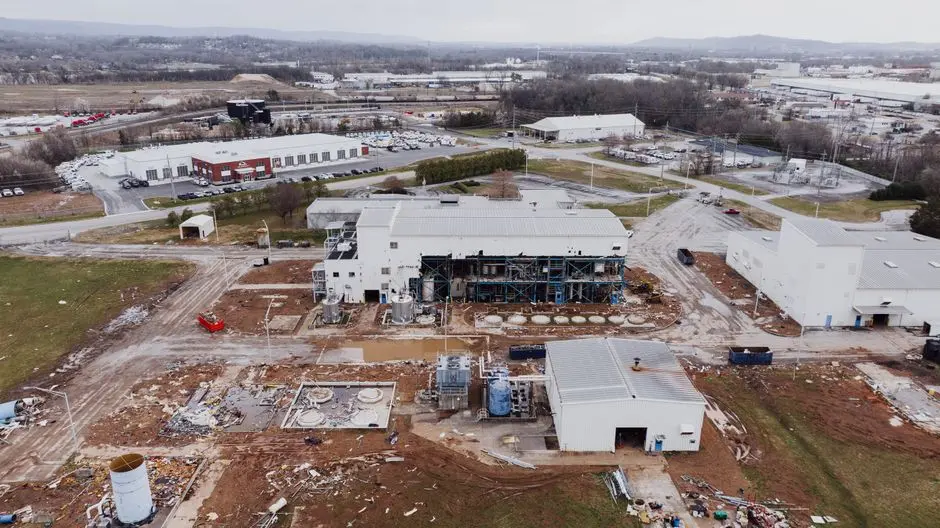
An MBR will not survive a hotel duty cycle without adequate pretreatment, and a planning submission that omits the ancillary kit looks amateur. The first line of defence is a 3 mm fine inlet screen to strip rags, hair and FOG solids that would otherwise blind the membrane (per smithandloveless.com, accessed 2026). Where FOG routinely exceeds 100 mg/L — typical of hotel kitchens with high-cover restaurants — specify a dissolved air flotation pre-treatment unit ahead of the bioreactor to keep oil out of the mixed liquor and protect membrane permeability.
Sludge handling is the line item most often under-budgeted. Include a sludge dewatering filter press or lamella thickener, and plan desludging on a 3–6 month interval at typical hotel loading — the concentrated MBR waste-activated sludge reaches 1.5–2.5% dry solids, so a small filter press yields a 20–25% DS cake suitable for off-site incineration. For the reuse loop, route the MBR permeate through a treated-water tank and a UV disinfection of treated effluent unit (or chlorine dioxide dosing) to a black-water or irrigation network; this is where the 90–95% removal headline is monetised through potable-water savings of 30–60% on a London hotel (per imemflo.com).
2026 CAPEX and OPEX Benchmarks for a Packaged Hotel MBR in London
2026 packaged MBR CAPEX for a pre-engineered, containerised unit sits at £25,000–£70,000 per 10 m³/d of design capacity, with flat-sheet systems at the upper end and hollow-fibre at the lower end (HydropureWater field data, 2026). A 35 m³/d hotel MBR therefore lands at £90,000–£245,000 in equipment CAPEX, before civils, M&E and adoption fees. OPEX runs £0.15–£0.45 per m³ treated, dominated by aeration energy (typically 0.6–1.2 kWh/m³), membrane cleaning chemicals (£0.01–£0.03/m³) and periodic membrane replacement at 8–12 year intervals — a £40,000–£80,000 event amortised over the operating life.
Thames Water Section 104 adoption and Section 106 connection fees, plus the Environment Agency MCPD application charge, are separate cost lines that materially affect a London hotel project and should appear as a dedicated line in any cost plan. The Imemflo 250 m³/d, 200-bed hotel (per imemflo.com) is a useful single-point reference for sanity-checking budget submissions: a like-for-like London build at 2026 prices would sit in the £625,000–£1.75M CAPEX envelope excluding civils.
| Cost Line | 2026 Range | Basis | Notes |
|---|---|---|---|
| Equipment CAPEX | £25,000–£70,000 per 10 m³/d | Packaged containerised MBR | Flat-sheet at upper end |
| OPEX (energy + chemicals) | £0.15–£0.45/m³ | Aeration-dominated | Excludes labour |
| Membrane replacement | £40,000–£80,000 event | Every 8–12 years | Amortise to £0.02–£0.05/m³ |
| Thames Water S104/S106 | Project-specific | Application + inspection | Confirm with TW at feasibility |
| EA permit | Project-specific | MCPD or standard-rules | Standard-rules ~£2,000–£5,000 |
Six-Point Supplier Checklist Before You Buy
1. Confirm a CE-marked packaged unit to BS EN 12255 with a Declaration of Performance for the membrane module, and a membrane warranty of at least 5 years pro-rata.
2. Require a UK-based service partner able to attend a London site within 24 hours for membrane integrity issues; a contract that is fulfilled by a fly-in engineer from mainland Europe is a non-starter for a hotel.
3. Ask for a guaranteed effluent quality — typically BOD <20 mg/L, COD <50 mg/L, TSS <5 mg/L, NH3 <5 mg/L — backed by a process-performance warranty linked to the inlet load envelope.
4. Check that the PLC supports remote monitoring and SMS alarming; remote monitoring for packaged wastewater plants is essential where a hotel has limited on-site engineering cover.
5. Verify Thames Water Section 104 adoption history for the specific supplier on a comparable hotel or commercial site; request the reference and a contact at Thames Water developer services.
6. Insist on a one-stop scope including pretreatment, sludge handling and disinfection; split-supplier interfaces are where most London hotel MBR projects suffer commissioning delays.
Frequently Asked Questions
Do I need a Thames Water Section 104 agreement or an Environment Agency permit for a hotel MBR in London?
It depends on the discharge route. If the treated effluent connects to the public sewer, the project follows a Section 104 adoption agreement with Thames Water and a Section 106 connection; the Building Regulations Part H2 pack still applies. If the discharge is to surface water or ground, an Environment Agency MCPD application or standard-rules permit is required once the flow exceeds the 2 m³/d small-discharge threshold (per DEFRA/EA guidance, 2026).
What is the typical design flow for a 150-bed London hotel?
At 200 L per guest per day with 80% occupancy (120 guests equivalent), 35 staff at 60 L/d and 60 restaurant covers at 25 L/d, a 150-bed boutique hotel generates approximately 30 m³/d. The duty MBR should be sized at 35–40 m³/d to absorb a 1.5–2× peak factor from morning wash-out and laundry surges (HydropureWater field data, 2026).
What is the indicative 2026 CAPEX for a 35 m³/d packaged hotel MBR in London?
At £25,000–£70,000 per 10 m³/d for a pre-engineered containerised unit, the equipment CAPEX for a 35 m³/d MBR lands at £90,000–£245,000 in 2026, with flat-sheet at the upper end and hollow-fibre at the lower end (HydropureWater field data, 2026). Civils, M&E, Thames Water adoption fees and EA permit fees are additional and should be carried as separate cost lines.
Related Equipment
- PVDF flat-sheet MBR module — specifications, capacity range, and technical data