Why Indian plants are revisiting ozone in 2026
Capital cost for installing an ozone system at an Indian industrial water treatment plant in 2026 typically ranges from ₹18 lakh to ₹90 lakh for a 1–10 kg O₃/h skid, or roughly ₹6,000–₹18,000 per kg O₃/h of installed capacity, including generator, contactor, off-gas destruct, oxygen feed and PLC. Final price is driven by plant flow, target dose (typically 1–10 mg/L for water reuse), feed-gas choice, and Indian site conditions such as high ambient temperature and grid backup requirements.
Three forces are bringing ozone back onto Indian procurement shortlists. First, the Central Pollution Control Board and state SPCBs continue to tighten discharge norms; treated effluent destined for reuse typically must meet BOD below 30 mg/L and COD below 250 mg/L (per the CPCB 2024–2025 ETP/STP consolidated instructions referenced by most SPCB consent orders), and reused process water increasingly needs polishing to meet pharma and textile inlet specs. Second, chlorination by-products — trihalomethanes, chloramines — plus the cost of storing 900 kg chlorine cylinders inside dense Indian plant boundaries are pushing engineers toward alternatives such as ozone or UV. Third, the 2025–2026 retrofit wave in Indian pharma, textile and food plants is adding a polishing/disinfection step after MBR or UF, which is the standard entry point for an industrial ozone generator skid.
What is actually inside an ozone system for a water plant
An ozone disinfection system is not a single box; it is five integrated blocks, and the CAPEX split between them is what drives your installed price.
- Generator: corona-discharge cell fed with either dry air or oxygen, producing 3–12% by weight ozone from air and 6–14% from oxygen. This block alone is 30–40% of the skid price.
- Feed-gas package: oil-free air compressor + desiccant dryer for air-fed systems, or PSA/LHO oxygen generator for higher-concentration duty. The feed-gas package is 10–15% of CAPEX on an air-fed skid and can hit 25–30% on an oxygen-fed one.
- Contactor: typically FRP or SS316 vessel with venturi injection plus fine-bubble diffusers, sized for 6–10 minutes hydraulic retention at peak flow. Expect 15–20% of the installed price.
- Off-gas destruct unit: thermal (550–650 °C) or catalytic destroyer that breaks residual ozone before vent. Mandatory under Indian factory safety audits and 8–12% of CAPEX.
- PLC and instrumentation: ORP/ozone-residual probes, flow meters, VFDs, and the panel that interlocks the compressor, generator and destruct. Plan 5–8% here.
One practical point for buyers: the same vendor scope can cover a lab-scale portable unit, a 1 kg/h benchtop cabinet, or a 10 kg/h industrial skid, because modern ozone systems are modular. A standard cabinet-format ozone generator with water-tank self-cleaning options is often the same product family as the larger industrial skid, which simplifies spares, training and service contracts across multiple sites in one Indian cluster.
Sizing an ozone system for an Indian water plant
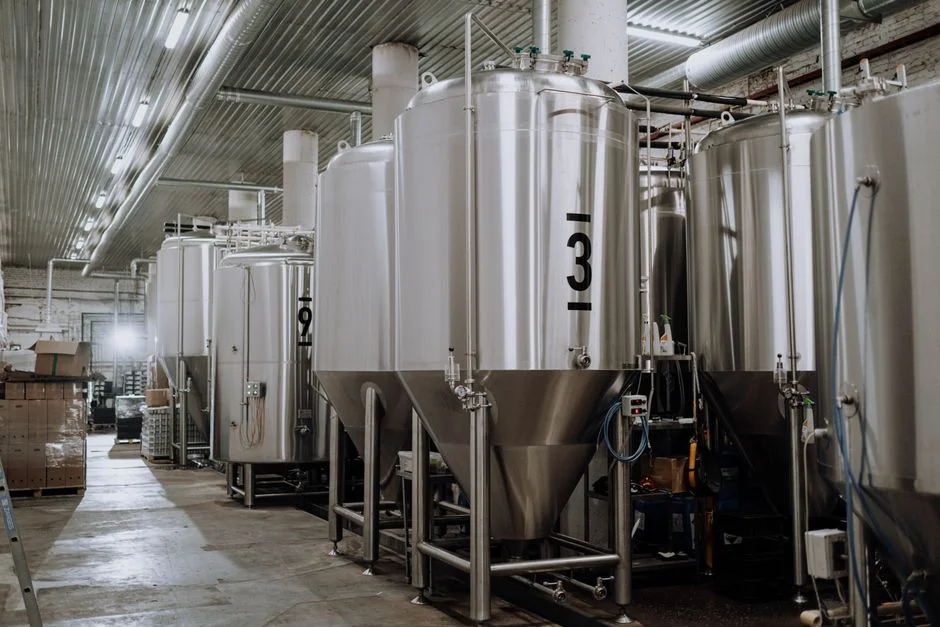
Size the system from your actual plant flow, not the marketing brochure. The standard formula is:
Ozone capacity (kg O₃/h) = Plant flow (m³/h) × Target dose (mg/L) ÷ 1000 ÷ Transfer efficiency
Target dose depends on the job: 1–3 mg/L is typical for tertiary disinfection after MBR or UF, while 5–10 mg/L is used for colour and refractory COD polishing in textile and pharma reuse (per HydropureWater field data, 2025–2026). Transfer efficiency from gas to water sits between 85% and 95% in a properly designed bubble-diffuser contactor.
Worked example. A 100 m³/h textile ETP targeting 3 mg/L for reuse: 100 × 3 ÷ 1000 = 0.30 kg O₃/h at the contactor. Dividing by 0.90 transfer efficiency gives 0.33 kg O₃/h of generator output. Round up to a standard 0.5 kg/h cabinet skid. If the same plant is also polishing for colour to 5 mg/L, the same math gives 0.55 kg/h, which pushes the next standard size to 1 kg/h.
| Plant flow (m³/h) | Dose (mg/L) | Generator output required (kg O₃/h) @ 90% TE | Recommended standard skid |
|---|---|---|---|
| 20 | 3 | 0.07 | 0.1–0.2 kg/h cabinet |
| 50 | 3 | 0.17 | 0.2–0.5 kg/h cabinet |
| 100 | 3 | 0.33 | 0.5 kg/h skid |
| 100 | 5 | 0.56 | 1 kg/h skid |
| 250 | 5 | 1.39 | 2 kg/h skid |
| 500 | 8 | 4.44 | 5 kg/h skid |
One Indian-specific derating to apply: high ambient temperature (35–45 °C in summer across most industrial belts) and monsoon humidity (often 80–95% RH) reduce corona-discharge output by 5–15% versus nameplate. Oversize the generator by 10–20% over the calculated value, or specify a generator that is rated at 40 °C and 80% RH, not the European 25 °C / 60% RH reference.
Capital cost breakdown: what you actually pay in India in 2026
The planning benchmark for a complete ozone skid in India in 2026 is ₹6,000–₹18,000 per kg O₃/h of installed capacity, which translates to ₹18 lakh–₹90 lakh for the 1–10 kg/h range most commonly specified for industrial ETPs and STPs (HydropureWater field data, 2026; treat as planning benchmark, not a binding quote). The wide range reflects two design choices that swing price by 2–3×: air-fed versus oxygen-fed, and FRP versus SS316 contactor.
| Line item | % of skid CAPEX | Typical 2026 INR range | Notes for Indian buyers |
|---|---|---|---|
| Ozone generator (corona discharge cell) | 30–40% | ₹3,000–₹6,000 per kg O₃/h | Larger cells have lower unit cost; 5–10 kg/h is the sweet spot |
| Contactor + venturi/diffuser injection | 15–20% | ₹1,500–₹3,000 per kg O₃/h | FRP/HDPE lower end, SS316 upper end; 2 kL vessel typical for 100 m³/h |
| Off-gas destruct (thermal or catalytic) | 8–12% | ₹800–₹1,500 per kg O₃/h | Mandatory; catalytic saves OPEX but costs more upfront |
| Feed-gas package (compressor + dryer, or PSA/LHO) | 10–15% air-fed, 25–30% oxygen-fed | ₹1,200–₹5,000 per kg O₃/h | Single biggest cost swing between designs |
| PLC + instrumentation panel | 5–8% | ₹500–₹1,000 per kg O₃/h | ORP probe, residual ozone analyser, VFDs included |
| Installation, piping, electrical | 12–18% | ₹1,200–₹2,200 per kg O₃/h | Includes FRP/SS piping, cabling, MCC integration |
| Air-fed total | 100% | ₹6,000–₹9,000 per kg O₃/h | Lower dose, larger contactor assumed |
| Oxygen-fed (PSA/LHO) total | 100% | ₹11,000–₹18,000 per kg O₃/h | Higher concentration, smaller contactor, premium feed-gas |
Three add-ons most Indian buyers miss in the first budget pass: a 50–80 kVA diesel generator backup for the air compressor and ozone cell (₹4–₹7 lakh extra), room ventilation to keep ambient below 30 °C around the generator (₹1.5–₹3 lakh for a 5,000–8,000 cfm axial fan + louvre package), and a 2 kL FRP contactor for a 100 m³/h plant (₹1.8–₹2.5 lakh if bought separately). Price these explicitly in the RFQ or they will land as a change order during commissioning.
Cost drivers that move the number up or down
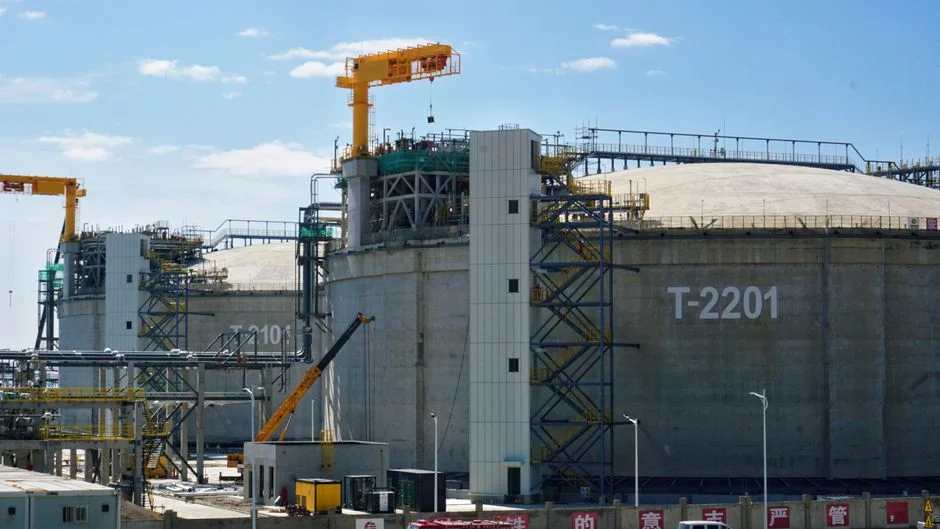
Knowing which design choices swing the price by 30–50% is the only way to negotiate from a position of strength rather than accept the first quote.
Up-cost drivers. Switching from air-fed to oxygen-fed (PSA or LHO) is the largest single lever, lifting installed cost from ₹6,000–₹9,000 to ₹11,000–₹18,000 per kg O₃/h. SS316 contactor instead of FRP/HDPE adds 20–35% to the contactor line. ATEX/IECEx-rated panels for pharma-grade or solvent-handling sites add ₹1.5–₹3 lakh. Remote-site delivery beyond 500 km from the manufacturer's Indian facility adds 4–8% in transport and re-assembly. Specifying a custom containerised package instead of a standard cabinet skid adds 12–20%.
Down-cost drivers. A standard cabinet skid rather than a custom build saves 10–18%. Air-fed operation is viable when the dose is ≤4 mg/L and the plant flow is under 200 m³/h. Bundling the ozone skid with an existing MBR or UF retrofit to share the PLC, MCC and operator SCADA saves 5–10% on integration. Indian-standard 415 V / 50 Hz supply without harmonic filters keeps the panel simpler.
Operating-cost context to price separately: 8–14 kWh per kg O₃/h for the generator itself, plus another 6–10 kWh per kg O₃/h for the air compressor (HydropureWater field data, 2025–2026). At Indian industrial tariffs of ₹7–₹10/kWh, the electricity OPEX for a 1 kg/h air-fed skid running 16 hours/day is roughly ₹1.6–₹3.0 lakh per month. When integrating ozone downstream of an MBR upstream of ozone polishing, or after UF pretreatment before ozone contact, the lower TSS and turbidity typically let you drop the dose 20–30%, which directly reduces both CAPEX (smaller generator) and OPEX (less power, less oxygen).
How ozone CAPEX compares with chlorine dioxide and UV in India
Place ozone on the same spreadsheet as the two most common alternatives before issuing the RFQ. The 2026 Indian installed CAPEX order of magnitude, per m³/h of treated flow, is approximately: UV skid ₹3,000–₹7,000, ozone skid ₹6,000–₹15,000, chlorine dioxide generator + dosing skid ₹4,000–₹9,000. UV looks cheapest per m³/h but the dose, retention time and target log reduction change the ranking significantly.
| Parameter | Ozone (O₃) | UV | Chlorine dioxide (ClO₂) |
|---|---|---|---|
| 2026 India CAPEX per m³/h treated | ₹6,000–₹15,000 | ₹3,000–₹7,000 | ₹4,000–₹9,000 |
| Typical dose for tertiary disinfection | 1–3 mg/L | 30–40 mJ/cm² | 0.5–1.5 mg/L |
| Effective against colour / refractory COD | Yes | No | Partial |
| By-products of concern | Bromate (regulated), no halogenated DBPs | None, but no residual | Chlorite, chlorate (regulated) |
| Residual in distribution / reuse loop | Short half-life, often paired with low Cl₂ | None | Yes, controllable |
| Best fit in Indian plants | Textile, pharma, food reuse; colour/COD polish | Simple BOD/COD targets, no reuse, tight CAPEX | Drinking water, large STPs with existing chlorination |
Where ozone wins decisively: colour removal, refractory COD polishing, and reuse duty in pharma and textile plants. UV and ClO₂ both underperform on colour (UV does nothing, ClO₂ bleaches partially) and on non-biodegradable COD fractions. Where ozone loses: small community STPs with simple BOD targets and no reuse requirement, where the CAPEX premium is hard to recover and the lack of residual disinfection is a real liability. For sites already running chlorination, a retrofit to a chlorine dioxide dosing skid or a UV steriliser is often a faster, cheaper decision.
A practical RFQ checklist for Indian buyers in 2026
Before issuing the RFQ, lock down the inputs the vendor needs. Give them: design flow in m³/h (with peak factor), influent BOD/COD/TSS/colour, target reuse or discharge limits as per your state SPCB consent, ambient temperature and humidity range (Indian summer is non-negotiable), available floor area and headroom for the contactor, and the electrical supply detail (kV, kVA, fault level, harmonic profile). Without these, every quote will be qualified and they will not be comparable.
Demand these back in the quote: kg O₃/h nameplate capacity at Indian summer conditions (40 °C / 80% RH), feed-gas type and concentration, contactor material and retention time, off-gas destruct method, expected transfer efficiency at your design dose, and an itemised CAPEX that maps to the line items in the table above. Ask for an Indian reference site of similar size visited in the last 24 months, plus a one-page list of consumables, spares and the recommended diesel backup rating. For plants in Tamil Nadu, also see the related guidance on ETP cost and technology selection in Chennai; for West Bengal, the STP engineering in Kolkata guide; and for RO polishing downstream, the RO system design parameters for Indian plants reference.
Frequently Asked Questions
What is the capital cost per kg O₃/h of an ozone system in India in 2026?
Planning benchmark is ₹6,000–₹18,000 per kg O₃/h of installed capacity in 2026, with full skid CAPEX of ₹18 lakh–₹90 lakh for the 1–10 kg/h range (HydropureWater field data, 2026). Air-fed systems sit at the low end (₹6,000–₹9,000), oxygen-fed PSA/LHO systems at the high end (₹11,000–₹18,000).
What is the operating cost of an ozone system in India?
Plan 8–14 kWh per kg O₃/h for the generator plus 6–10 kWh per kg O₃/h for the air compressor. At Indian industrial tariffs of ₹7–₹10/kWh, a 1 kg/h air-fed skid running 16 hours/day costs roughly ₹1.6–₹3.0 lakh per month in electricity, excluding oxygen consumables and maintenance.
How do I size an ozone system for a 100 m³/h plant?
Use the formula flow × dose ÷ 1000 ÷ transfer efficiency. At 100 m³/h and 3 mg/L dose with 90% transfer efficiency, you need about 0.33 kg O₃/h at the contactor, so specify a standard 0.5 kg/h skid. Add 10–20% oversize for Indian summer derating at 35–45 °C and monsoon humidity.
Should I choose air-fed or oxygen-fed (PSA/LHO) for my plant?
Air-fed is cheaper (₹6,000–₹9,000 per kg O₃/h) and is fine for doses up to 4 mg/L. Oxygen-fed (₹11,000–₹18,000 per kg O₃/h) gives higher ozone concentration, smaller contactor, and better dose control — required for doses above 5 mg/L, colour polishing, or pharma reuse duty.
When is ozone the wrong choice for an Indian plant?
Avoid ozone for small community STPs (under 50 m³/h) with only BOD discharge targets, no reuse requirement, and unreliable 50–80 kVA power backup. In those cases a UV skid or chlorine dioxide dosing skid delivers lower CAPEX, simpler operation, and a measurable residual in the distribution line.