What Counts as a 'Small' Wastewater System in Chile
A small community wastewater system in Chile typically serves 200–10,000 people, matching the U.S. EPA threshold of ≤10,000 population and average daily flow <1 MGD (≈3,785 m³/day) (per EPA small-systems research, 2026). For most Chilean villages and rural subdivisions, the practical options in 2026 are a packaged MBR plant (10–2,000 m³/day, <1 μm effluent), a buried WSZ A/O unit (1–80 m³/h), or a constructed wetland — selected by site footprint, operator skill, and NCh 1333 discharge targets.
This class matters because the barriers EPA formally names — economic and financial limitations, inability to sustain community-wide systems, inability to attract and maintain system operators, lack of managerial training, extreme topography, geographic isolation — describe Chilean rural communes almost verbatim. A packaged decentralized wastewater system in Chile serving 500–5,000 people faces the same per-cubic-metre capex pressure, the same operator-staffing gap, and the same intermittent-power risk as its U.S. counterpart.
The Chile-specific overlay is what reshapes the answer. Most Chilean small communities sit in seismic zone 2, 3, or 4 per NCh 433, have high groundwater in central and southern regions, and rely on APR (Agua Potable Rural) committees to own and operate the works. Design population is now normalized against the 2024 Chilean CENSUS rather than older INE projections — Biobío-region wastewater datasets published in 2024–2025 already use 2024 census denominators for flow normalization (Data Brief, 2025). For a tender, this means the sizing basis, the ownership model, and the seismic design basis are all set before technology selection begins.
Chilean Design Constraints: Climate, Seismicity, and Influent
Chilean small-community influent typically falls in BOD 200–400 mg/L, TSS 200–350 mg/L, NH₃-N 20–45 mg/L, and total coliforms 10⁶–10⁸ CFU/100 mL — standard domestic sewage, with seasonal tourism or mining-camp peaking multipliers of 1.5–2.5× during high season. These values are the working envelope HydropureWater uses for packaged plant sizing in the 50–2,000 m³/day class, and they line up with the Biobío WWTP influent data published in the 2024–2025 surveillance dataset (per Data Brief, 2025).
The climate envelope drives reactor sizing. Northern Chile (Atacama, Coquimbo) is arid with high evaporation and influent concentration; central Chile (Valparaíso, Maule) is Mediterranean with mild winters and standard kinetics; southern Chile (Biobío, Los Lagos) brings 1,000–2,500 mm/yr rainfall, dilute inflow, and winter temperatures of 2–5 °C that slow nitrification rates by 30–50%. Under-sized basins or low-rate processes will fail NH₃-N targets in the south from May to September.
Seismic design per NCh 433 is non-negotiable. Underground tanks, packaged skids, and any buried flow-splitting chambers must be designed for the site's soil profile and seismic zone — typically zone 3 (central) or zone 2 (north-central) — and stamped by a Chilean structural engineer. This is the explicit differentiator versus U.S. or EU packages, which are routinely shipped without seismic certification.
Power reliability is the fourth constraint. Many APR systems run on intermittent grid or genset with 4–8 hours of outage per week, so favor low-energy biological processes (A/O contact oxidation, wetland) and avoid high-rate diffused aeration unless power is secured. Land availability usually favors rural sites, but inner-periphery urban sites (peri-Santiago, peri-Concepción) push the choice toward high-rate mechanical plants like the WSZ underground A/O package plant.
| Parameter | Northern Chile (Atacama–Coquimbo) | Central Chile (Valparaíso–Maule) | Southern Chile (Biobío–Los Lagos) |
|---|---|---|---|
| Climate type | Arid, high evaporation | Mediterranean, mild winters | Temperate-rainy, cold winters (2–5 °C) |
| Influent BOD (mg/L) | 300–400 | 200–300 | 150–250 (rain dilution) |
| Winter rain (mm/yr) | 50–150 | 400–800 | 1,000–2,500 |
| Seismic zone (NCh 433) | Zone 2–3 | Zone 3 | Zone 3 (coast) / 2 (inland) |
| Typical process fit | MBR, WSZ (reuse demand) | WSZ, MBR, wetland | Wetland, hybrid, MBR (warm enclosure) |
Three Process Options That Actually Work for Chilean Small Communities
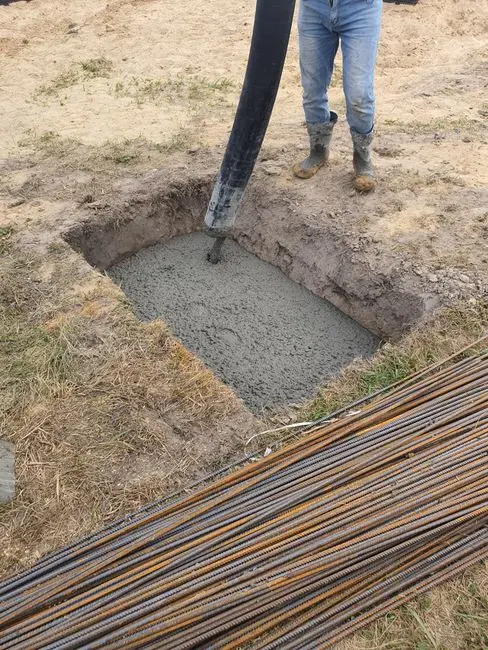
Three process trains cover the practical design space for a packaged wastewater treatment plant in Chile in 2026: MBR, WSZ A/O, and constructed wetland — with anaerobic-plus-wetland hybrids for the right sites.
Option A — MBR membrane bioreactor. Capacities of 10–2,000 m³/day, effluent <1 μm TSS, footprint roughly 60% smaller than conventional activated sludge, near-reuse quality (typically BOD <5 mg/L, TSS <1 mg/L, NH₃-N <1 mg/L with post-anoxic polishing). Best when irrigation reuse is planned for parks, golf courses, vineyards, or agricultural reuse under WHO 2006 guidelines. The MBR membrane bioreactor system uses submerged hollow-fiber modules (80–225 m² per skid) and needs reliable power plus a maintenance contract.
Option B — WSZ underground A/O package plant. Capacities of 1–80 m³/h (24–1,920 m³/day), fully buried, anoxic/aerobic contact oxidation + sedimentation + disinfection, designed for unattended operation. Best for tight urban sites, hotels, hospitals, mining camps, and rural communities without a reuse requirement. No operator on site, weekly visual inspection by an APR caretaker is enough.
Option C — Constructed wetland. Surface or subsurface flow; removes BOD/TSS/nitrogen; low energy, low O&M, but 2–5 m² of wetland per person served and seasonal performance variation. ASABE 2001 work on small-community wetlands flagged this seasonal fluctuation and called out that combining anaerobic pretreatment and land application with a wetland polish creates a "carbon sequestering system" with significant energy savings versus mechanical plants (per ASABE 2001, doi:10.13031/2013.6072).
Skip the wetland when the site is high-density peri-urban, in a very cold southern valley, has no buffer for odor and vector control, or needs BOD <30 mg/L year-round without downstream polishing. In those cases, an MBR or WSZ is the safer bid.
| Option | Flow envelope | Footprint | Operator demand | Best-fit Chilean site |
|---|---|---|---|---|
| MBR | 10–2,000 m³/day | ~0.3–0.5 m² per m³/day | Part-time trained operator + quarterly CIP | Reuse demand, peri-urban, secure power |
| WSZ A/O | 1–80 m³/h (24–1,920 m³/day) | Buried, no surface footprint | None on site, weekly inspection | Hotels, hospitals, tight urban, no reuse |
| Constructed wetland | 20–500 m³/day | 2–5 m² per person | Seasonal macrophyte work | Rural APR, land available, central climate |
| Anaerobic + wetland hybrid | 20–300 m³/day | 1.5–3 m² per person | Low; biogas/sludge handling | Rural commune, agronomic land application |
MBR vs. WSZ vs. Wetland: Side-by-Side Selection
This table is the one to paste into a feasibility report or tender. Flow envelopes come from the MBR (10–2,000 m³/day) and WSZ (1–80 m³/h) product specifications; the 60% footprint reduction versus conventional activated sludge is a standard MBR process claim (HydropureWater MBR product spec, 2026); wetland energy savings are taken from the ASABE 2001 hybrid-wetland paper.
| Criterion | MBR | WSZ A/O | Constructed wetland |
|---|---|---|---|
| Flow envelope | 10–2,000 m³/day | 1–80 m³/h | 20–500 m³/day |
| Footprint | ~60% smaller than CAS | Fully buried, zero surface | 2–5 m²/person |
| Effluent BOD (mg/L) | <5 | ≤20 (≤10 with polish) | ≤30 seasonal |
| Effluent NH₃-N (mg/L) | <1 | ≤15 | ≤20 (cold-season risk) |
| Energy (kWh/m³) | 0.6–1.2 | 0.3–0.6 | 0.05–0.15 |
| Operator skill | Part-time trained + CIP contract | None on site | Seasonal macrophyte/hydraulic |
| Capex band (relative) | High | Medium | Low–medium (land-dependent) |
| Opex band (relative) | Medium (membrane lifecycle) | Low | Low |
| Pick this if… | |||
| Site reality | Reuse contract in hand, secure power, footprint-constrained | Seismic zone, intermittent power, no reuse, tight urban | Land available, agricultural labor, low-energy priority |
One constraint to flag in tender docs: submerged membrane modules (DF series, 80–225 m²) need periodic chemical CIP — typically a quarterly clean-in-place with citric acid or NaOCl — and a service contract that remote APR committees often forget to budget. An MBR without a maintenance contract will fail within 18–24 months.
Compliance Targets: NCh 1333 and What 'Treated' Means in Chile
Small Chilean communities discharging to inland surface water typically need to align with NCh 1333, while those discharging to a sewer fall under DS 90/2000. For tender design, treat the following as typical engineering design values rather than legal text: BOD₅ ≤35 mg/L, TSS ≤80 mg/L, NH₃-N ≤15 mg/L in summer and ≤25 mg/L in winter, and fecal coliforms <1,000 CFU/100 mL in the receiving water body.
For irrigation reuse (parks, golf courses, agricultural reuse), align with WHO 2006 targets — MBR effluent meets these comfortably with UV disinfection for reuse water or an on-site ClO₂ generator; WSZ effluent typically needs tertiary filtration plus UV or ClO₂ polishing before unrestricted reuse. Where discharge is to a sensitive receiver (lake, reservoir, irrigation canal), spec the MBR configuration and confirm reuse-class disinfection.
Monitoring matters. The Biobío surveillance dataset was built on 24-hour flow-proportional influent sampling at the city WWTP, with daily influent flow and census-normalized loads (per Data Brief, 2025). For any Chilean small plant, the right monitoring kit is a refrigerated autosampler for composite influent and a basic online UV254 probe at the effluent as a BOD/COD proxy — the kind of instrumentation that turns operations from guesswork into defensible compliance data. A Latin American wastewater compliance reference covers how to structure the same program in Brazilian jurisdictions.
Operator Reality: How Much Skilled Staff a Chilean Small Plant Actually Needs
EPA's "inability to attract and maintain system operators" barrier is exactly the constraint an APR committee faces in 2026. Match the technology to the operator pool you actually have.
WSZ underground units are built for unattended operation with PLC automation and remote telemetry; a weekly visual inspection by an APR caretaker is sufficient. No licensed operator is required, which is why municipalities, hotels, and mining camps pick this configuration when the site is remote. MBR plants need a part-time trained operator (1–2 hours/day for screen cleaning, MLSS checks, permeate SDI) plus quarterly membrane CIP support — budget a 24-month service contract into the tender, otherwise membrane life collapses.
Constructed wetlands need seasonal macrophyte and hydraulic management (harvesting, level control, mosquito/vector checks) but minimal daily attention, and they pair well with rural communities that already have agricultural labor. For tender O&M budgeting, factor in a 2–3 day operator handover at commissioning — short enough to be realistic, long enough to cover HMI walkthroughs and alarm logic. A PLC and remote monitoring for small plants guide covers how to structure that handover and the alarms that actually matter on a remote Chilean site.
For chemical-feed reliability across all three options, an automatic chemical dosing system sized to the chlorine or coagulant demand removes a manual step and stabilizes disinfection residuals.
How to Specify and Procure a Small Chilean Wastewater Plant in 2026
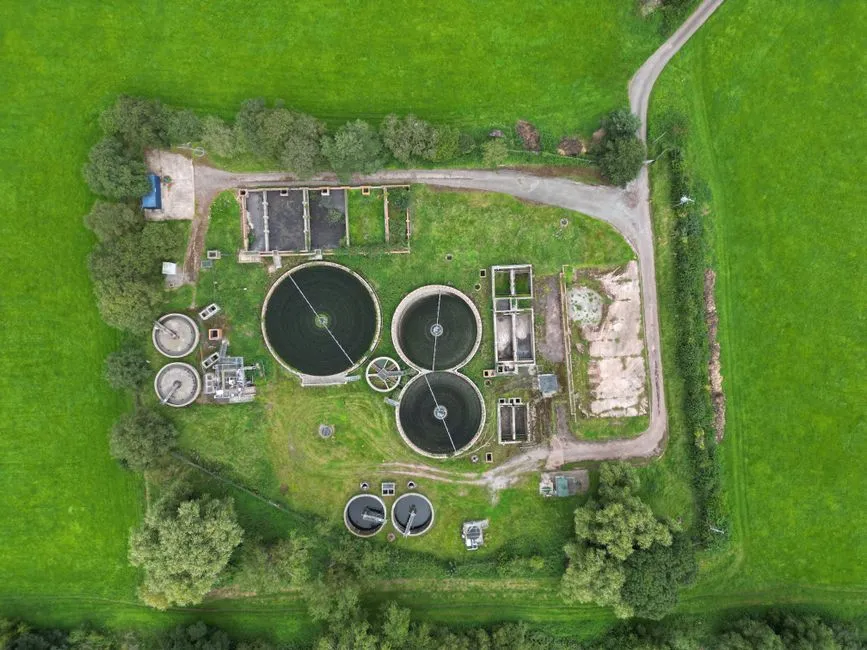
A defensible 2026 tender packs the following into a single specification sheet. Design population with seasonal/tourism peaking (typically 1.5–2.5× for resort and camp sites); design flow in m³/day; influent characterization (BOD, TSS, NH₃-N, fecal coliforms); effluent targets (NCh 1333 or WHO 2006 reuse class); footprint limit; seismic zone per NCh 433; power availability and quality; and the required O&M skill level.
Require vendors to deliver: factory acceptance test (FAT), site acceptance test (SAT), seismic design certificate to NCh 433 stamped by a Chilean structural engineer, Spanish-language HMI, PLC with remote telemetry (4G/RTU or equivalent), and a 24-month spare parts list. Ask for documented reference plants in Chile or comparable seismic, hot-arid, or cold-temperate Latin American sites — not generic overseas references. Prefabricated equipment also needs proper inlet screening and primary solids handling; spec a rotary mechanical bar screen ahead of the biological stage, and a dissolved air flotation unit where sludge thickening or grease removal is needed. For a domestic sewage reference case in a similarly dense urban context, see this domestic sewage treatment engineering guide.
Plan for monitoring from day one: a refrigerated autosampler, composite influent sampling matched to the Biobío WBE protocol (24-hour flow-proportional), and a basic online UV254 probe at the effluent as a BOD/COD proxy. Flow-normalized influent data is what makes operations defensible when regulators audit compliance.
Frequently Asked Questions
What is the typical flow range for a Chilean small community WWTP?
50–2,000 m³/day covers most villages, rural subdivisions, APR committees, mining camps, and small towns up to about 10,000 residents, with seasonal peaking multipliers of 1.5–2.5× for resort or camp sites.
Do I need an operator on site?
WSZ underground A/O units are designed for unattended operation with PLC automation — a weekly visual inspection by an APR caretaker is sufficient. MBR plants need a part-time trained operator (1–2 hours/day) plus a quarterly membrane CIP service contract. Constructed wetlands need only seasonal macrophyte and hydraulic management.
Can the treated water be reused for irrigation?
Yes. MBR effluent meets typical reuse targets comfortably with UV or ClO₂ polishing. WSZ effluent needs tertiary filtration plus UV or ClO₂ polishing before unrestricted reuse. Constructed wetland effluent is generally not suitable for unrestricted reuse without additional disinfection.
What Chilean standard applies to discharge?
NCh 1333 governs wastewater discharge to inland surface water bodies, while DS 90/2000 governs discharge to sanitary sewer. Reuse targets for parks, golf courses, and agricultural irrigation are typically aligned with WHO 2006.
How long does a packaged plant take to install?
WSZ units typically need 4–8 weeks including civil works and burial. MBR skids need 8–16 weeks depending on tankage, seismic certification, and PLC integration. Constructed wetlands are the longest, with 12–24 weeks for earthworks, liner installation, and vegetation establishment before reliable operation begins.