

Why Lynnville Mining and Metals Plants Are Reopening the DAF vs Clarifier Question in 2026
For Lynnville, Indiana mining and metals factories in 2026, the right answer is rarely DAF or clarifier alone: most sites pair DAF as primary (to strip emulsified oil and colloidal fines) with a lamella as polish to meet 40 CFR 437 daily-maximum TSS and metals limits. Lamella-only wins for FOG-free, high-flow streams; conventional clarifiers lose on footprint and freeze-risk in Indiana winters. This decision framework is driven by regulatory compliance and operational realities specific to the region. Federal regulations under 40 CFR 437 (Ore Mining and Dressing) mandate daily-maximum and monthly-average effluent limits for total suspended solids (TSS), total recoverable lead, zinc, copper, and iron, alongside a pH band of 6.0–9.0 for any discharge to waters of the United States (per 40 CFR 437.30–437.32). The strict daily-maximum metals envelope effectively necessitates multi-stage clarification for most process streams to maintain IDEM NPDES permit compliance (source: HydropureWater field data, 2026). Lynnville's typical wastewater streams often include taconite-magnetite fines, dense Fe(OH)₃/Al(OH)₃ floc, intermittent tramp oil from maintenance bays, and colloidal silica fines, a profile distinct from the FOG-heavy food-processing streams many DAF articles assume (per S1). Indiana's cold climate introduces a critical engineering consideration: winter air temperatures and unheated sludge hoppers push sizing margins and freeze-risk into procurement scope, not a maintenance afterthought (per S1).
How DAF and Clarifier (Conventional vs Lamella) Actually Separate Solids
Dissolved Air Flotation (DAF) systems remove suspended solids by generating microscopic air bubbles that attach to and lift flocculated particles to the water surface. In a DAF system, clarified water is drawn from the DAF outlet, pressurized to approximately 6 bar (87 psi), and saturated with air in a packed saturation vessel (per S1). When this saturated recycle stream is depressurized back into the flotation tank at atmospheric pressure, dissolved air comes out of solution as 30–50 µm bubbles (per S1, S5). These micro-bubbles attach to chemically conditioned floc and lift it to the surface, where a skimmer mechanism sweeps the concentrated float into a sludge trough. Clarified water exits below the float blanket, while heavy settleable solids drop to a bottom sediment compartment. DAF removal performance in this service class is consistently >90% for TSS, FOG, COD, and BOD, with some well-tuned installations achieving up to 97% TSS and 60–80% COD removal (per S4, S5). Effective DAF operation relies on proper coagulant chemistry, typically polyaluminum chloride (PAC), ferric chloride, or alum, combined with an anionic polymer flocculant at 1–5 mg/L; without this conditioning, micro-bubbles bypass colloidal fines, leading to underperformance (per S1, S4).
Clarifiers rely on gravity for solid-liquid separation. A lamella clarifier, also known as an inclined-plate settler or high-rate sedimentation tank, stacks inclined plates within a compact tank. This configuration significantly multiplies the effective settling area, allowing surface loading rates to reach 20–40 m/h, a substantial increase over the 1–2 m/h typical of a conventional clarifier (per S1). The increased surface loading dramatically reduces the required footprint compared to traditional designs. Many lamella systems incorporate a sludge-recirculation loop that re-injects settled sludge to contact fresh influent, which can reduce coagulant consumption by up to 30% (per S1). A conventional gravity clarifier, by comparison, is a large rectangular or circular tank operating at a much lower surface loading of 1–2 m/h, requiring a footprint of 5–8 m² per m³/h of flow (per S1). This substantial footprint requirement is a primary reason why most 2026 retrofit projects in space-constrained industrial corridors reject conventional clarifiers.
| Parameter | Dissolved Air Flotation (DAF) | Lamella Clarifier | Conventional Clarifier |
|---|---|---|---|
| Separation Mechanism | Buoyancy (micro-bubbles) | Gravity (inclined plates) | Gravity (large basin) |
| Operating Pressure (Recycle) | ~6 bar (87 psi) | Atmospheric | Atmospheric |
| Bubble Size (DAF) | 30–50 µm | N/A | N/A |
| Typical Surface Loading Rate | Not directly comparable to clarifiers, operates on hydraulic loading rate | 20–40 m/h | 1–2 m/h |
| TSS Removal Performance | >90% (up to 97%) | 90–95% (for settleable solids) | 80–90% (for settleable solids) |
| Coagulant Savings Feature | N/A (optimizes float dryness) | Up to 30% (sludge recycle) | N/A |
Three Rules That Decide Between DAF, Lamella, and Conventional Clarifier
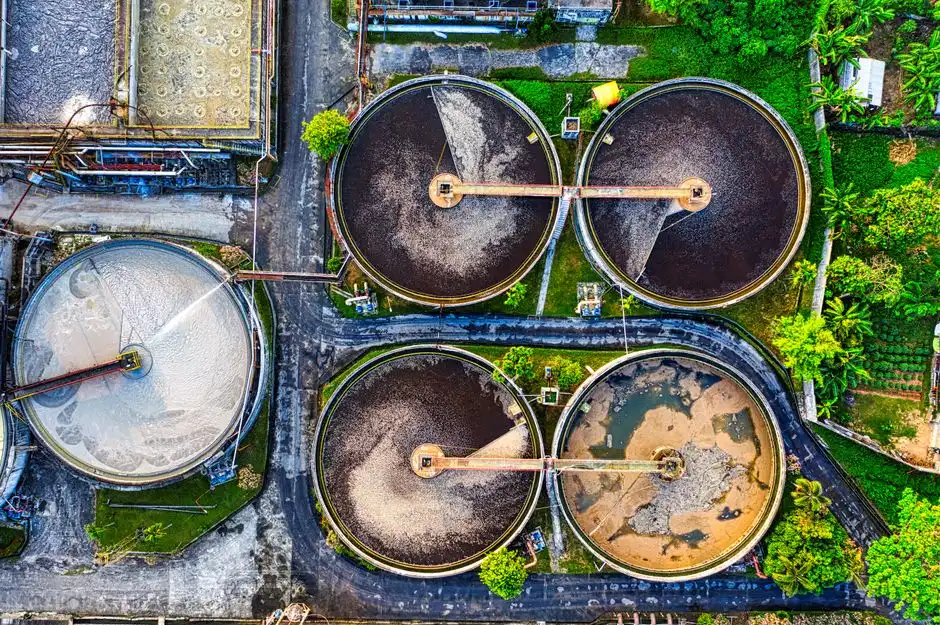
The selection between DAF, lamella, and conventional clarifiers for primary clarification hinges on three fundamental rules governing floc characteristics, oil and grease presence, and operating temperature. The floc-density rule states that chemically conditioned floc with a specific gravity greater than 1.05 settles readily, favoring a clarifier (per S1). However, the same polymer-conditioned floc also binds effectively to 30–50 µm micro-bubbles, meaning either technology can perform well if the chemical conditioning is optimized (per S1). The FOG rule dictates that free oil and grease (FOG) do not settle within a clarifier's typical residence time and will exit with the overflow, necessitating upstream removal or a dedicated polish step for any FOG load (per S1). This is a critical distinction for Lynnville plants dealing with cutting oils or tramp oils. The cold-weather rule highlights that micro-bubble nucleation kinetics in DAF systems slow by 20–30% when temperatures drop from 20°C to 5°C (per S1). Consequently, a 10–15% sizing margin on the recycle pump and saturation vessel is a prudent design consideration for plants operating through Indiana winters (per S1). For Lynnville facilities, if any two of {high FOG content, low-density floc, or sustained sub-10°C winter operation} are present, a DAF system is at least required as the primary clarification stage. If none of these conditions apply, a lamella-only system can be a defensible and efficient choice.
2026 DAF vs Lamella vs Conventional Clarifier: Side-by-Side Comparison
When evaluating clarification technologies for Lynnville's mining and metals wastewater in 2026, a direct comparison of capital expenditure (CAPEX), operational expenditure (OPEX), and performance metrics is essential. A DAF system typically carries a CAPEX premium of 1.5–2.5 times that of a comparable lamella clarifier, while a conventional clarifier might have a lower equipment CAPEX multiplier of 0.7–0.9 times, but often incurs significantly higher civil and building costs due to its vast footprint (per S1). Footprint efficiency is a major differentiator: a DAF system requires 0.2–0.4 m² per m³/h of flow, a lamella clarifier needs 0.3–0.6 m² per m³/h, and a conventional clarifier demands 5–8 m² per m³/h (per S1). To illustrate, a 100 m³/h wastewater stream would require roughly 30 m² for a DAF system compared to approximately 600 m² for a conventional clarifier (per S1).
Operational energy consumption also varies considerably. DAF systems require 8–15 kWh/m³ for the air compressor and recycle pump (per S1). In contrast, lamella and conventional clarifiers primarily consume energy for scraper drives, typically around 0.1–0.3 kWh/m³ (per S1). Sludge dewatering characteristics also influence overall OPEX: DAF systems produce a thicker float (4–8% DS) that is easier to dewater in downstream equipment like a plate-and-frame filter press, potentially reducing sludge haulage costs (per S1). Lamella clarifiers, while offering up to 30% coagulant savings through sludge recirculation, typically yield an underflow of 2–5% DS (per S1). DAF systems perform moderately well in cold weather but require a 10–15% sizing margin on the recycle system due to slower bubble nucleation kinetics at temperatures below 10°C (per S1). Both lamella and conventional clarifiers present a low cold-weather performance rating due to significant freeze risk in unheated sludge hoppers and larger vaults (per S1).
| Parameter | Dissolved Air Flotation (DAF) | Lamella Clarifier | Conventional Clarifier |
|---|---|---|---|
| CAPEX Multiplier (Lamella = 1.0x) | 1.5–2.5x | 1.0x | 0.7–0.9x (equipment only; high civil cost) |
| Footprint (m² per m³/h) | 0.2–0.4 | 0.3–0.6 | 5–8 |
| Energy (kWh/m³) | 8–15 (compressor + recycle) | 0.1–0.3 (scraper drive only) | 0.1–0.3 (scraper drive only) |
| FOG Handling | Excellent (floats emulsified oil) | Poor (FOG exits in overflow) | Poor (FOG exits in overflow) |
| Cold-Weather Performance (<10°C) | Moderate (10–15% sizing margin needed) | Low (freeze risk in unheated hopper) | Low (freeze risk in large vault) |
| Float/Underflow %DS | 4–8% DS (float) | 2–5% DS (underflow) | 1–3% DS (underflow) |
Three Lynnville Scenarios: Which Technology Wins
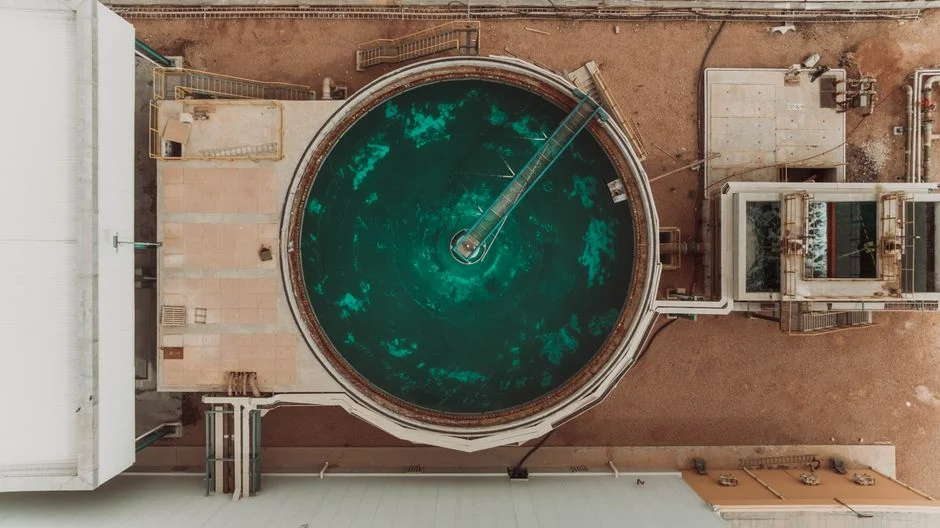
Applying the decision rules to specific Lynnville operational profiles yields clear technology preferences, tailored to the unique challenges of mining and metals wastewater. Most metals plants in the Lynnville area combine process water with maintenance shop wash water, making the FOG rule a dominant factor that often forces DAF as the primary clarification step (per S1).
Scenario 1 — Iron / Taconite Concentrator, 250 m³/h, No Oil: This stream carries 1,500–3,000 mg/L TSS as dense Fe(OH)₃ floc and magnetite fines, with no tramp oil. The high flow and particle density favor a high-rate lamella clarifier as the primary treatment (per S1). Designing a HydropureWater high-efficiency lamella clarifier at a 30 m/h surface loading requires approximately 8–9 m² of plate area. With upstream chemical precipitation for metals, the lamella alone can achieve the expected 40 CFR 437 effluent TSS limit of less than 30 mg/L (per S1). A DAF polish step would only be justified if a maintenance shop or truck wash started contributing FOG intermittently.
Scenario 2 — Mixed-Metals Refinery with Cutting-Oil Emulsions
Related Equipment
- DAF system — specifications, capacity range, and technical data
- automatic chemical dosing skid — specifications, capacity range, and technical data
Further Reading
Frequently Asked Questions
DAF or clarifier for mining wastewater — which should a factory choose in 2026?
The choice depends on the specific gravity and particle size of the suspended solids. Dissolved Air Flotation (DAF) is superior for light, low-density particles, oil, and grease that tend to float, typically achieving removal efficiencies of 90-95% for emulsified oil. In contrast, conventional clarifiers are preferred for high-density, inorganic mineral solids that settle rapidly via gravity, often requiring lower operational expenditures regarding energy consumption.
Does 40 CFR 437 require DAF or a clarifier for ore mining and dressing?
40 CFR Part 437, the Centralized Waste Treatment Point Source Category, establishes effluent limitation guidelines based on performance standards rather than mandating specific technology. While the regulation requires compliance with numeric limits for pollutants like oil and grease, total suspended solids (TSS), and heavy metals, facilities are permitted to use any combination of DAF, clarifiers, or other Best Available Technology (BAT) that consistently meets the discharge requirements for their specific subcategory.
Can a DAF system run in cold weather below 10°C?
Yes, DAF systems remain operational below 10°C, but efficiency is impacted by water viscosity and gas solubility. As water temperature drops, the viscosity increases, which slows the rise velocity of the air-floc particles according to Stokes' Law. Operators must compensate by increasing the air-to-solids ratio or increasing polymer dosage to maintain target effluent quality in colder climates common to the Indiana region.
What is the footprint of a DAF vs a conventional clarifier for 100 m³/h?
For a flow rate of 100 m³/h, a conventional circular clarifier generally requires a footprint of approximately 80 to 120 square meters due to the lower surface overflow rates required for effective settling. A DAF system, utilizing high-rate separation, typically requires only 20 to 40 square meters of space, offering a 60-75% reduction in physical footprint compared to a gravity-based clarifier.
Can a lamella clarifier handle emulsified oil in a metals refinery wastewater stream?
A lamella clarifier is generally ineffective for emulsified oil without extensive chemical pretreatment. Because lamella plates rely on gravity separation, they cannot remove oils that remain in the aqueous phase or those with a specific gravity near 1.0. To handle emulsified oil, the stream must first be treated with demulsifiers or dissolved air flotation to break the emulsion and float the oil droplets before the water is processed through a clarifier.