Why Istanbul Hotels Need a Packaged MBR, Not a Conventional STP
Istanbul hotel projects face three forces that push packaged MBR ahead of conventional activated sludge (CAS): a tight urban plot, ISKI discharge fees that punish COD excursions, and a kitchen-and-laundry sewage mix that overwhelms secondary clarifiers. ISKI applied 50% higher discharge fees in 2024 for facilities exceeding COD limits, with mid-sized operations absorbing penalties above €15,000 per month (per HydropureWater 2026 Turkey guide). On the energy side, TEİAŞ reported a 15% increase in industrial electricity prices in 2024 (per HydropureWater 2026 Turkey guide), so any technology that minimizes aeration energy and avoids ISKI surcharges pays back faster.
MBR delivers measurable performance advantages over CAS on hotel duty. Field plants report 95%+ TSS removal and 90%+ COD reduction through 0.1 μm PVDF membranes (per HydropureWater 2026 Turkey guide), versus 10–30 mg/L TSS in typical CAS secondary effluent. Turkish municipal WWTPs in Ankara and Izmir have recorded up to 30% space savings versus CAS. A 500 m³/d Bursa textile plant using an integrated MBR membrane bioreactor system cut footprint from 800 m² to 300 m², avoiding a €2M land purchase (per HydropureWater 2026 Turkey guide) — the exact economics a central Istanbul hotel faces.
Reuse is the third driver. A 0.1 μm membrane provides 6-log bacteria removal and 3–4-log virus reduction when integrity is intact (per HydropureWater 2026 Turkey guide), enough to feed laundry, landscape irrigation, and cooling-tower make-up without a separate sand filter. For a hotel where every cubic meter reused offsets a tariff-plus-discharge double charge, that barrier is the cheapest insurance on the plot.
How Hotel Sewage Differs from Municipal or Industrial Wastewater
Hotel sewage is not a domestic sewage stream, and designing it as one is the most common procurement mistake. Hotel wastewater carries high BOD/COD swings, kitchen FOG, lint and surfactants from on-site laundry, and sharp occupancy-driven peaks on weekends, conferences, and high season (per imemflo hotel MBR documentation). The same source documents a working 200-bed 5-star installation at 250 m³/d. Reverse-engineered, that plant runs at about 1.25 m³/day per 5-star bed, which lines up with a planning band of 1.0–1.5 m³/day per 5-star room and roughly 1.0 m³/day per 3-star room once kitchen and laundry contributions are folded in.
Those organics and FOG concentrations set the MBR envelope. MBR mixed liquor runs at 8,000–12,000 mg/L versus 3,000–5,000 mg/L in CAS, with HRT 4–8 h and SRT 15–30 d (per HydropureWater 2026 Turkey guide). The long SRT favors nitrifiers and cuts sludge mass 30–50% versus short-SRT CAS. Membrane flux on hotel duty should sit at the low end — 10–20 LMH is the design window, with 10 LMH the safe setting when kitchen FOG is variable (per HydropureWater 2026 Turkey guide).
Laundry greywater can be split off and routed to a smaller dedicated train to keep lint, dyes, and surfactants away from the main MBR membranes (per imemflo hotel MBR documentation). That separation is cheap relative to membrane replacement and protects flux on the main hotel train. For Istanbul, where many 4- and 5-star properties run in-house laundry, this is a sizing and operating decision that should be locked in the RFP, not improvised at commissioning.
Sizing a Packaged MBR for an Istanbul Hotel: The 10-Step Buyer Framework
- Build the flow matrix. Multiply rooms × expected occupancy × per-capita sewage (~150 L) plus kitchen waste and laundry reject, then apply a 1.3 peaking factor for occupancy surges (per HydropureWater 2026 Turkey guide).
- Set effluent targets. BOD <25 mg/L and COD <125 mg/L remain the baseline under the EU Urban Waste Water Directive 91/271/EEC, to be replaced by Directive (EU) 2024/3019 from 1 August 2027, plus any stricter ISKI adders for the receiving water (per HydropureWater 2026 Turkey guide).
- Pick the membrane. 0.1 μm PVDF flat sheet, design flux 15–20 LMH for municipal-strength hotel sewage, dropping to 10 LMH when FOG loads are variable (per HydropureWater 2026 Turkey guide).
- Specify MLSS, HRT, SRT. 8,000–12,000 mg/L, HRT 4–8 h, SRT 15–30 d at 15–25 °C (per HydropureWater 2026 Turkey guide).
- Lay out the pretreatment chain. Rotary bar screen at ≤3 mm, then a DAF system for hotel FOG pretreatment, then flow equalization ahead of the bioreactor.
- Set aeration and scour. Load-based DO control with duty/standby blowers, and price one installed spare cassette into the base bid (per HydropureWater 2026 Turkey guide).
- Pick disinfection. UV or ClO₂ to deliver the 6-log bacteria target the 0.1 μm membrane already provides (per HydropureWater 2026 Turkey guide and imemflo hotel MBR documentation).
- Size the sludge line. Plate-and-frame filter press sized to the 30–50% lower sludge volume expected versus CAS (per HydropureWater 2026 Turkey guide).
- Specify SCADA and instrumentation. TMP, MLSS, DO, flow, and level transmitters with daily TMP logging during commissioning (per HydropureWater 2026 Turkey guide).
- Lock permits and timeline. ISKI discharge permit 6–12 months, EIA only required above 10,000 m³/d (per HydropureWater 2026 Turkey guide).
| Step | Decision | Typical Istanbul hotel value |
|---|---|---|
| Flow build-up | Per-capita × occupancy × rooms + kitchen + laundry | 1.0–1.5 m³/d per 5-star room |
| Peaking factor | Occupancy surges, weekend events | 1.3× |
| Effluent BOD / COD | EU + ISKI adder | <25 / <125 mg/L |
| Membrane | PVDF flat sheet, 0.1 μm | 10–20 LMH design flux |
| MLSS / SRT / HRT | Biomass envelope | 8,000–12,000 mg/L / 15–30 d / 4–8 h |
| Pretreatment | Screen → DAF → equalization | ≤3 mm screen, DAF |
| Permit timeline | ISKI / EIA | 6–12 months; EIA > 10,000 m³/d |
MBR Parameter Table: What to Specify for an Istanbul Hotel Plant
The specification below is a copy-ready envelope for a packaged hotel MBR, benchmarked to the HydropureWater DF-series 0.1 μm PVDF flat sheet module and to Turkish field data. Effluent values assume a stable train after biofilm conditioning; expect higher variability during the first 8–12 weeks.
| Parameter | Design value | Notes / source |
|---|---|---|
| Membrane type | 0.1 μm PVDF flat sheet | DF series 0.1 μm PVDF flat sheet membrane modules (per HydropureWater 2026 Turkey guide) |
| Module area | 80–225 m² per module | DF series catalog |
| Cassette throughput | 32–135 m³/d per cassette | DF series catalog |
| Design flux | 10–20 LMH (15 LMH steady hotel sewage) | Drop to 10 LMH if FOG is poorly stabilized (per HydropureWater 2026 Turkey guide) |
| MLSS | 8,000–12,000 mg/L | vs 3,000–5,000 mg/L in CAS (per HydropureWater 2026 Turkey guide) |
| SRT | 15–30 d | Favors nitrification (per HydropureWater 2026 Turkey guide) |
| HRT | 4–8 h at 15–25 °C | vs 12–24 h in CAS (per HydropureWater 2026 Turkey guide) |
| Effluent BOD / COD / TSS | <25 / <125 / <1 mg/L | TSS <1 NTU on stable trains (per HydropureWater 2026 Turkey guide) |
| Turbidity | <1 NTU on stable trains | per HydropureWater 2026 Turkey guide |
| Aeration energy | 0.8–1.2 kWh/m³ | Priced at €0.10–€0.15/kWh 2024 industrial band (per HydropureWater 2026 Turkey guide) |
| Sludge yield | 30–50% lower than short-SRT CAS | Plate-and-frame dewatering (per HydropureWater 2026 Turkey guide) |
2026 Cost Benchmarks for a Packaged Hotel MBR in Turkey
CAPEX for full turnkey packaged MBR plants in Turkey still clusters at €1.2M–€8M for 100–2,000 m³/d installations, covering civil works, membrane modules, instrumentation, and SCADA (per HydropureWater 2026 Turkey guide). A 200-key Istanbul hotel at roughly 250 m³/d typically lands near the lower end of that band. For benchmarking against other Mediterranean hotel projects, the comparable Madrid hotel MBR buyer's guide applies the same envelope with Iberian tariff inputs.
OPEX runs €0.20–€0.40 per m³ treated on plants audited under Turkish industrial tariffs. Energy takes about 50% of that figure, membrane replacement about 20%, and labor plus CIP chemicals the remaining 30% (per HydropureWater 2026 Turkey guide). PVDF flat sheet replacement is €50–€100 per m², with an annual sinking fund of €10,000–€30,000 for a 1,000 m³/d plant — scale down proportionally for a 250 m³/d hotel train (per HydropureWater 2026 Turkey guide).
Power is the swing variable. Historical 2024 industrial rates near €0.10–€0.15/kWh remain a workable planning band (per HydropureWater 2026 Turkey guide). Modern load-based aeration can claw back about 20% energy versus older biological trains, which offsets the 15% 2024 TEİAŞ tariff increase (per HydropureWater 2026 Turkey guide). The CFO model is sensitive to those two numbers — every 0.01 €/kWh shift on a 250 m³/d train compounds across 8,760 hours.
Supplier Checklist: Picking the Right Packaged MBR Vendor for Istanbul
A short, hard-edged vendor list tuned to Turkish service realities keeps procurement from buying a membrane that nobody in the country can CIP.
| Item | What to require | Source / reason |
|---|---|---|
| Local service | Service engineers and spares inside Turkey; references on hotel or food-FOG duty | per HydropureWater 2026 Turkey guide |
| Membrane warranty | Minimum 5 years on PVDF flat sheets, with flux and TMP guarantees at design temperature | per HydropureWater 2026 Turkey guide |
| CIP / CEB | Documented CIP chemical list, CEB frequency, and clear OEM vs civil EPC responsibility split in the contract | per HydropureWater 2026 Turkey guide |
| SCADA / BMS | Confirmed integration with on-site BMS | per HydropureWater 2026 Turkey guide |
| Spare parts in base bid | One spare membrane cassette plus duty/standby blowers priced into the base offer, not as optional adders | per HydropureWater 2026 Turkey guide |
Specify a rotary mechanical bar screen for the head of the train to protect downstream cassettes, and confirm the supplier's DAF system for hotel FOG pretreatment is sized to the kitchen peak hour, not the daily average.
ROI Worked Example: 200-Room Istanbul Hotel, 250 m³/day
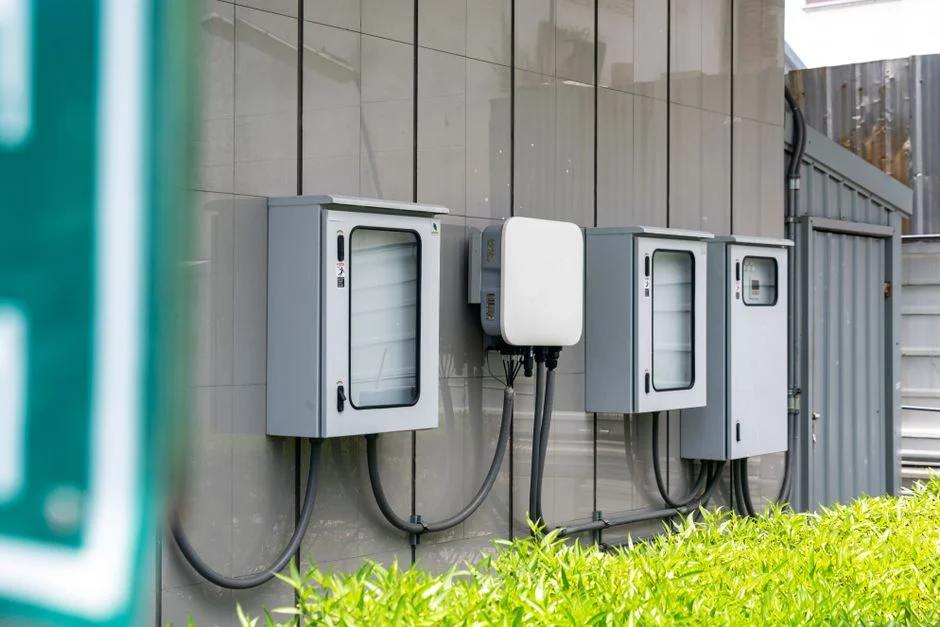
Using the imemflo 200-bed 5-star benchmark at 250 m³/d as a real operating reference, the payback math builds from ISKI fee economics and 2024 power tariffs. Assume combined water plus discharge fees of about €1.00/m³ as a planning midpoint (per HydropureWater 2026 Turkey guide).
Annual savings flow from three lines: 70% permeate reuse at €0.30–€1.00/m³ of avoided water cost, a 50% sludge cut at €150/ton disposal cost, and avoided 50% ISKI surcharges for COD exceedances (per HydropureWater 2026 Turkey guide). CAPEX for a packaged MBR-only upgrade at this scale sits near €600,000, before any RO polishing for full reuse (per HydropureWater 2026 Turkey guide). Simple payback lands in the 3–5 year band for hotel duty when reuse and avoided penalties are both counted, and tightens further when FOG pretreatment is well designed (per HydropureWater 2026 Turkey guide). For peer benchmarking on Mediterranean hotel projects, the Barcelona hotel MBR buyer's guide applies the same model with Spanish tariff inputs.
Frequently Asked Questions
What flow should I size a packaged MBR for in a 200-bed Istanbul hotel?
Plan for roughly 1.0–1.5 m³/day per 5-star room and 1.0 m³/day per 3-star room once kitchen and laundry contributions are included, then apply a 1.3 peaking factor. The imemflo 200-bed 5-star installation at 250 m³/d is the working benchmark.
What are the ISKI discharge limits for a hotel STP in Istanbul?
Baseline is BOD <25 mg/L and COD <125 mg/L under the EU Urban Waste Water Directive 91/271/EEC (replaced by Directive (EU) 2024/3019 from 1 August 2027), with ISKI typically adding local pathogen or heavy-metal caps. ISKI applied 50% higher discharge fees in 2024 for COD exceedances (per HydropureWater 2026 Turkey guide).
MBR vs MBBR for a hotel — which wins?
MBR wins when the project needs <1 mg/L TSS for reuse, has a tight urban footprint, or faces strict discharge limits. MBBR plus a clarifier or DAF is cheaper for coarse polishing on sites with abundant land and looser permits (per HydropureWater 2026 Turkey guide). For a broader view of hotel reuse economics, the Dubai hotel wastewater treatment guide covers high-temperature operating envelopes.
Does a hotel MBR always need a DAF for FOG pretreatment?
Yes when kitchen FOG is variable. A DAF system for hotel FOG pretreatment strips fats, oils, and grease that would otherwise foul PVDF sheets and keep flux outside the 10–20 LMH design window.
How long does ISKI permitting take for a packaged MBR in Istanbul?
ISKI discharge permits typically take 6–12 months for municipal projects, extending to 18 months when an EIA is required (per HydropureWater 2026 Turkey guide). EIA applies above 10,000 m³/d, so most 100–500-key hotels sit below that threshold. An underground package sewage treatment plant can shorten the civil phase on tight plots, but the ISKI clock starts at application, not at delivery.