What Counts as Domestic Sewage in India — and What 'Treated' Must Mean
Domestic sewage in India is the combined discharge from toilets (black water) and kitchens, bathrooms, and laundries (grey water), quantified at roughly 100–150 litres per capita per day (LPCD) in residential layouts and 50–80 LPCD in commercial premises such as hotels, hospitals, and IT parks (per CPHEEO Manual for Sewerage and Sewage Treatment, 2013, with 2024-2026 State PCB enforcement updates). Industrial effluent from manufacturing is a separate regulatory stream under consent categories 17 and 31 of the Water Act, 1974, and falls outside the scope of any domestic sewage treatment plant specification.
For discharge into surface water under the 2026 regulatory finish line, CPCB Schedule-VI General Standards demand treated effluent of BOD ≤30 mg/L, TSS ≤100 mg/L, COD ≤250 mg/L, and fecal coliform ≤230 MPN/100 mL. For land irrigation the fecal coliform limit tightens to ≤1,000 MPN/100 mL in many State PCB notifications (Maharashtra MPCB, 2025; Karnataka KSPCB, 2025), and for toilet-flushing reuse several State PCBs now require BOD ≤10 mg/L, TSS ≤10 mg/L, and fecal coliform "nil" per 100 mL — a tertiary-treatment finish that the comparative Iranian reuse framework also converges on. Always verify the State PCB notification before freezing a design, because the State number is the enforceable one.
| Parameter | CPCB Schedule-VI (surface water) | Typical State PCB land-irrigation | Toilet-flushing reuse (selected states) |
|---|---|---|---|
| BOD₃ (mg/L) | ≤30 | ≤30 | ≤10 |
| TSS (mg/L) | ≤100 | ≤100 | ≤10 |
| COD (mg/L) | ≤250 | ≤250 | ≤50 |
| Fecal coliform (MPN/100 mL) | ≤230 | ≤1,000 | Nil (as "not detectable") |
| pH | 5.5–9.0 | 5.5–9.0 | 6.5–8.5 |
The Four Process Families That Dominate Indian Packaged STPs
Almost every packaged STP in India specified in 2026 falls into one of four families: MBR, SBR/CASS, FBB/MBBR, or FMBR. The differences come down to how the biology is held in the reactor, how solids are separated from the water, and how much downstream polishing is required to hit the reuse or discharge target.
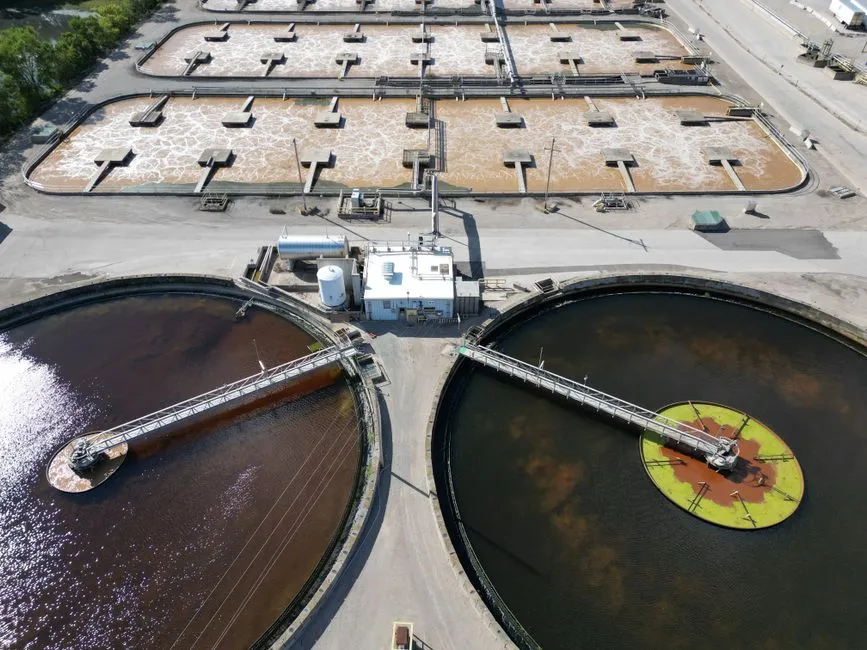
MBR (Membrane Bioreactor). Conventional activated sludge coupled with submerged PVDF ultrafiltration membranes, nominal pore size 0.1–0.4 μm, removes particulates physically rather than by gravity settling. The HydropureWater MBR membrane bioreactor covers 10–2,000 m³/day, runs at MLSS 8,000–12,000 mg/L, and produces a near-turbidity-free permeate. Footprint is roughly 60% of conventional activated sludge (CAS) at the same throughput, but specific energy demand sits at 0.6–0.9 kWh per m³ treated because of membrane aeration.
SBR / CASS. Sequencing Batch Reactor and Cyclic Activated Sludge System run a fill-react-settle-decant cycle in a single tank. Controls are simpler and capital cost is lower than MBR, which is why SBR dominates Indian hotels and mid-size townships in the 50–500 m³/day band. Effluent TSS sits at 20–40 mg/L; downstream filtration is needed for any reuse target tighter than Schedule-VI surface water.
FBB / MBBR (Moving Bed Biofilm Reactor). Plastic carrier media (PE/PP, 500–700 m²/m³ specific surface area) provides the biofilm surface area; MLSS is held lower than MBR. FBB tolerates influent load swings of ±30% with stable effluent, which is why FBB packages are popular for small communities, schools, and seasonal hotels. Sludge yield is lower than CAS, typically 0.3–0.4 kg TSS per kg BOD removed.
FMBR (Fibrous / Anaerobic-Aerobic Hybrid). A newer entrant that combines anaerobic digestion with attached-growth aerobic polishing in a compact footprint. FMBR units are attractive in basements and small plots but lack a long Indian track record above 500 m³/day; design them with a parallel polishing filter as a contingency.
| Process | Influent BOD range (mg/L) | Typical effluent BOD (mg/L) | Sludge yield (kg/kg BOD) | Specific energy (kWh/m³) |
|---|---|---|---|---|
| MBR | 200–500 | ≤5 | 0.25–0.35 | 0.6–0.9 |
| SBR / CASS | 150–400 | ≤20 | 0.35–0.45 | 0.3–0.5 |
| FBB / MBBR | 150–500 | ≤20 | 0.30–0.40 | 0.3–0.5 |
| FMBR | 200–600 | ≤30 | 0.10–0.20 | 0.2–0.4 |
MBR vs SBR vs FBB vs FMBR: Which One to Specify
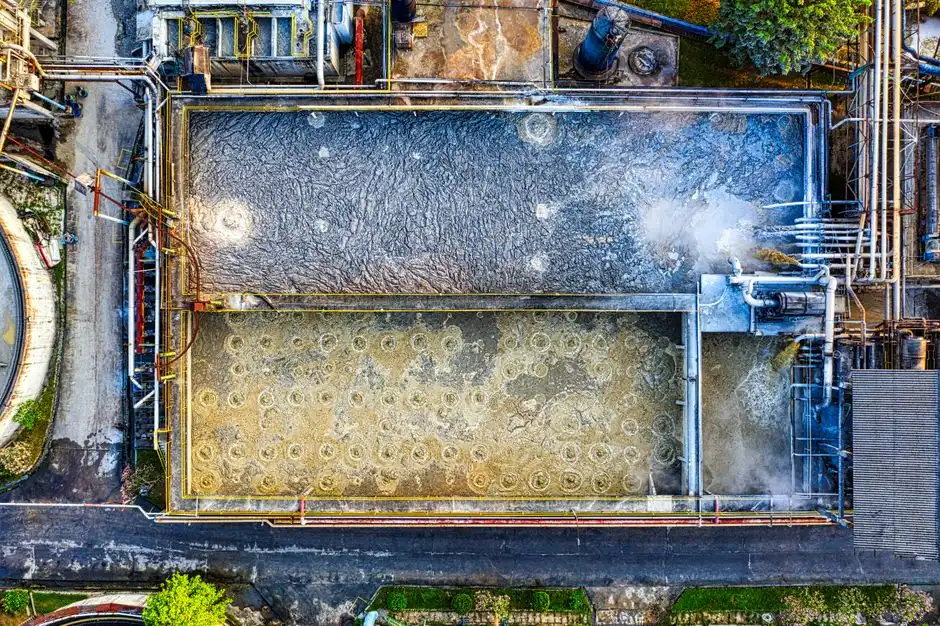
The decision in 2026 is rarely about process novelty; it is about flow band, plot area, reuse target, and operator skill. Land-constrained urban sites with a reuse mandate (apartments, basements, hotels near water bodies) almost always end up at MBR. Decentralized SBM-G and Jal Jeevan Mission village schemes default to FBB or packaged A/O because of lower energy and operator demand.
| Process | Ideal flow range (m³/day) | Footprint (m² per 100 m³/day) | Effluent TSS (mg/L) | CAPEX index | OPEX index | Operator skill |
|---|---|---|---|---|---|---|
| MBR | 50–2,000 | 35–50 | ≤1 | 1.2–1.5× | 1.3–1.6× | Medium |
| SBR / CASS | 50–500 | 55–75 | 20–40 | 1.0× (baseline) | 1.0× | Low–medium |
| FBB / MBBR | 10–500 | 45–65 | 20–40 | 0.9–1.0× | 0.8–1.0× | Low |
| FMBR | 10–500 | 25–40 | 20–50 | 0.8–1.0× | 0.6–0.8× | Low |
Apply this decision logic when briefing a vendor:
- <50 m³/day: FBB or underground A/O package — the WSZ underground package STP is the default for residential colonies, schools, and small hotels.
- 50–500 m³/day: SBR/CASS for surface-water discharge on a budget; MBR when reuse or land scarcity drives the spec.
- 500–2,000 m³/day: MBR is the engineering default; FMBR remains unproven at the upper end.
- >2,000 m³/day: Conventional activated sludge with MBR polishing — beyond the packaged-STP envelope.
For intermittent duty — boarding schools, seasonal hill hotels, pilgrim-season dharamshalas — SBR or MBR with a 12–24 hour equalization tank handles the load swing without biomass washout. For 24×7 commercial duty, FBB's load tolerance is harder to beat at the lowest OPEX.
2026 Equipment Specs: What a Packaged Indian STP Actually Looks Like
When you request a quote in 2026, the vendor should be able to size the unit against the following equipment anchors. The WSZ underground package STP runs 1–80 m³/h (≈10–1,900 m³/day), combines A/O biological contact oxidation, sedimentation, and disinfection in a single buried or trailer-mounted skid, and is rated fully automatic with no on-site operator — a direct fit for apartment basements, staff colonies, and rural SBM-G schemes. The MBR integrated system covers 10–2,000 m³/day with submerged PVDF membranes, footprint roughly 60% of an equivalent CAS plant, and an effluent turbidity that drives downstream reuse decisions. The DF flat-sheet MBR module (80–225 m², 0.1 μm PVDF, 32–135 m³/day per cassette) draws 10–20× less energy than cross-flow tubular modules and slots into retrofit upgrades where existing tanks are being repurposed as bioreactors.
Headworks matters as much as the biology: a rotary mechanical bar screen at 3–6 mm aperture followed by a grit chamber protects downstream membranes and pump impellers, which is the single most common reason Indian MBR plants underperform. For disinfection, pair the biology with a UV sterilizer at 30–40 mJ/cm² for reuse duty, or a chlorine dioxide generator for sites where residual disinfection is required in the distribution piping. Sludge is taken off the bioreactor at 0.8–1.2% dry solids and dewatered on a plate-and-frame filter press to 25–35% cake — sizing rule of thumb is 1.5–2.0% of plant throughput in plate area.
CAPEX, OPEX and Payback for an Indian Domestic STP in 2026
Order-of-magnitude CAPEX for a packaged MBR delivered and commissioned at an Indian site in 2026 sits at roughly ₹15–25 lakh at 50 m³/day, ₹25–45 lakh at 100 m³/day, ₹1.0–1.8 Cr at 500 m³/day, and ₹2.0–3.5 Cr at 1,000 m³/day (HydropureWater field data, 2025-2026, ex-works; civil and ETP integration are extra). SBR/CASS at the same flow drops CAPEX by 15–25%; FBB by 20–30%. OPEX is dominated by power: a 100 m³/day MBR drawing 70–90 kW draws roughly ₹1.5–2.5 lakh/month at ₹8/kWh industrial tariff, of which 60–70% is aeration and membrane scouring air. Sludge handling adds 5–8% to OPEX. A plate-and-frame filter press in the 1–500 m² range is the standard dewatering package; downstream reuse polishing through a multi-media filter opens up toilet flushing and gardening markets at ₹8–15/kL against tanker-supplied potable at ₹20–40/kL in most Indian metros, giving a 3–5 year payback on the reuse upgrade.
| Plant size (m³/day) | Process | CAPEX order-of-magnitude (₹) | Monthly power OPEX (₹) | Reuse payback (years) |
|---|---|---|---|---|
| 50 | MBR / FBB | 15–25 lakh | 70k–1.1 lakh | 4–6 |
| 100 | MBR / SBR | 25–45 lakh | 1.5–2.5 lakh | 3–5 |
| 500 | MBR | 1.0–1.8 Cr | 6–9 lakh | 3–4 |
| 1,000 | MBR | 2.0–3.5 Cr | 11–16 lakh | 2–3 |
Compliance, SBM-G and Jal Jeevan Mission: What Changed in 2024–2026
Three policy shifts are reshaping Indian STP procurement right now. SBM-G 2.0 (Swachh Bharat Mission – Grameen, Phase II) and the Jal Jeevan Mission are pushing decentralized, village- and ward-level packaged STPs rather than large trunk-sewer schemes, which means smaller skid-mounted units with low operator demand are now the default below 500 m³/day. NGT orders since 2023 (notably the Ganga tributaries and Bengaluru lake-sewer directives, 2024-02 and 2025-08) have made compliant operation non-optional for hotels, hospitals, and large apartment complexes — closure and water-body restoration damages are the enforcement teeth. The 2024-2026 CPCB review of reuse standards is pushing more sites toward tertiary treatment (UF/RO) so that treated water can be reused for toilet flushing and irrigation, which is why MBR — not SBR — is winning the high-end procurement in 2026. The same drivers show up in the wastewater requirements that multinationals are bringing into Indian plant acquisitions in 2026.
5-Step Selection Checklist for an Indian Domestic STP in 2026
- Fix design flow. Average dry-weather flow × peak factor 1.5–2.0; collect 24-hour composite samples to characterize influent BOD (typical 200–400 mg/L), COD (400–800 mg/L), TSS (200–500 mg/L), and oil & grease (10–50 mg/L from canteens).
- Confirm the discharge destination. Surface water, land irrigation, or reuse — and pull the current State PCB notification. In Maharashtra, Karnataka, Tamil Nadu, Gujarat, and Kerala the State limit is tighter than CPCB Schedule-VI.
- Pick the process family from the matrix above. Flow band, plot area, and reuse target should each narrow the field; do not let the vendor choose for you.
- Match equipment to site constraints. Footprint, burial, power availability (three-phase vs single-phase + DG), operator availability, and winter/summer load swings. The WSZ package is the right answer for buried, unattended sites.
- Demand a 7-day performance test, 1-year warranty, and an O&M manual. These are the standard Indian procurement terms; make them non-negotiable in the purchase order, including a defined membrane-replacement cost ceiling (typically ₹1,800–2,500/m² for PVDF at 2026 prices).
Frequently Asked Questions
What is the CPCB effluent standard for a domestic STP in India in 2026?
CPCB Schedule-VI General Standards require BOD ≤30 mg/L, TSS ≤100 mg/L, COD ≤250 mg/L, and fecal coliform ≤230 MPN/100 mL for surface-water discharge, with several State PCBs imposing tighter reuse-oriented limits for irrigation and toilet flushing.
Which STP technology is best for an Indian apartment complex in 2026?
For 50–500 m³/day urban apartments with a reuse mandate and tight footprint, MBR is the engineering default because the submerged-membrane polish hits reuse BOD ≤10 mg/L / TSS ≤10 mg/L at roughly 60% of the CAS footprint.
What does a 100 KLD packaged STP cost in India in 2026?
A 100 m³/day packaged MBR costs roughly ₹25–45 lakh ex-works delivered, with monthly power OPEX of ₹1.5–2.5 lakh; SBR/CASS at the same flow runs 15–25% lower on CAPEX but does not deliver reuse-grade effluent without a downstream filter. See the CAPEX table above.
How is the Jal Jeevan Mission changing STP procurement in 2026?
Jal Jeevan Mission and SBM-G 2.0 are funding decentralized, village- and ward-level packaged STPs rather than trunk-sewer schemes, which means skid-mounted low-operator units in the 10–500 m³/day range are now the default specification for rural and peri-urban sites.
What is the difference between MBR and SBR for a domestic STP?
SBR runs a fill-react-settle-decant batch cycle with gravity settling and produces 20–40 mg/L TSS; MBR adds submerged PVDF ultrafiltration to activated sludge and produces ≤1 mg/L TSS at higher CAPEX and energy but roughly 60% smaller footprint. The MBR module page lists the cassette-level data.