
Why São Paulo 2026 Is a Different Problem from Any Other Brazilian Metro
A 2026 São Paulo semiconductor fab or hyperscale data-hall campus must treat process wastewater as two parallel trains — fab-side (UPW rejects, HF/BOE etch, CMP slurry) and data-hall-side (cooling-tower blowdown plus sanitary) — engineered against CONAMA Resolution 430/2011 with CETESB's 2026 two-stream biocide-vs-BOD split. Above 1,500 mg/L basin TDS in the Alto Tietê or PCJ sub-basins, zero liquid discharge becomes defensible; otherwise side-stream RO at R$15/m³ SABESP industrial tariffs pays back inside 36 months.
The Brazil data-center water and wastewater treatment equipment market is valued at USD 66.8 million in 2026, projected to reach USD 119.2 million by 2031 at a 12.3% CAGR (MarketsandMarkets, 2026), with São Paulo absorbing the largest demand concentration. A 2026 design here cannot reuse a Brasília or Belo Horizonte template because the basin math, the regulatory stack, and the industrial tariff trajectory are steeper. Three basins supply the metro — Cantareira, PCJ, and Alto Tietê — each with its own DAEE sub-office issuing outorga, and all three were classified "high to very high" water stress in the 2024 IPT/ANA São Paulo metro study. The Cantareira system hit a 5% storage floor in 2014–2015, and the 2024–2026 ANA Alto Tietê/PCJ rotating allocation cycle keeps industrial outorga decisions under scarcity protocols rather than a stable annual cap.
Two engineering rules govern 2026 design. First, fab and data-hall streams must be treated as two separate trains from day one — CETESB's biocide-toxicity caps on blowdown are decoupled from BOD/TSS caps on sanitary, and a single combined train fails the biocide cap. Second, federal outorga (ANA) must be sequenced before state licence (CETESB) to avoid delivery slip on long-lead membrane and RO skids.
Stream-by-Stream Chemistry: Fab Side and Data-Hall Side
A complete front-end mass balance for a São Paulo fab-and-data-hall campus requires every effluent to be inventoried before equipment is sized. Fab-side and data-hall-side streams diverge sharply in chemistry and must stay on separate trains through the entire treatment chain.
Fab streams carry process-specific contaminants that the data-hall train cannot handle. UPW rejects arrive at 10–18 MΩ·cm feed quality — low flow but high purity loss, with trace organics from resin regeneration. BOE and HF etch streams discharge at pH 1–3 with fluoride loads that demand neutralization before joining any common line. CMP slurry carries colloidal silica and Cu nanoparticles that blind membranes and foul softener resin if not precipitated upstream. POU condensate runs low in TDS but picks up trace solvents from the cleanroom envelope.
Data-hall cooling-tower blowdown at 4–6 cycles of concentration runs 1,500–2,500 mg/L TDS, 400–800 mg/L CaCO₃ total hardness, 5–30 mg/L TSS, and 5–50 mg/L free chlorine or bromine residual (HydropureWater field data, 2026). The blowdown volume is governed by the relationship Blowdown = Makeup / (COC − 1), running 0.3–0.8% of makeup volume; at a 40 MW site with PUE 1.4 and an adiabatic/economizer hybrid cooling loop, that translates to 60–240 m³/day. Data-hall sanitary flows run 50–100 L/person/day with BOD 150–300 mg/L, TSS 150–250 mg/L, and NH₃-N 20–40 mg/L, governed by the SABESP interceptor and CONAMA 430 sanitary caps unless the effluent is reused on site. CETESB's 2026 enforcement decouples the biocide toxicity cap on blowdown from the BOD/TSS cap on sanitary — a single combined train fails the biocide cap.
| Stream | Key Parameters | Treatment Target |
|---|---|---|
| UPW rejects (fab) | 10–18 MΩ·cm feed, trace organics | Neutralize / segregate |
| BOE / HF etch (fab) | pH 1–3, fluoride load | Neutralization tank upstream |
| CMP slurry (fab) | Colloidal silica, Cu nanoparticles | Precipitation, sediment |
| POU condensate (fab) | Low TDS, trace solvents | Carbon polish, segregate |
| Cooling-tower blowdown (data-hall) | 1,500–2,500 mg/L TDS, 400–800 mg/L hardness, 5–50 mg/L free Cl/Br | CETESB biocide cap, CONAMA 430 |
| Sanitary (data-hall) | 50–100 L/person/day, BOD 150–300 mg/L | SABESP interceptor, CONAMA 430 sanitary |
The Five-Step Treatment Train and the ZLD Upgrade Trigger
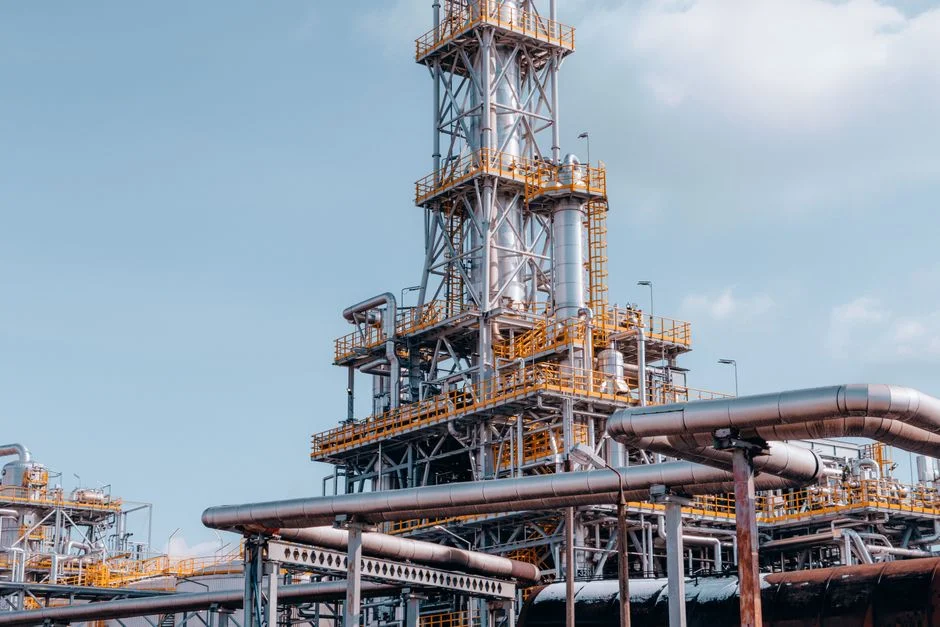
The São Paulo treatment train is five unit operations designed to hit either CONAMA 430 discharge or cooling-makeup reuse without changing the upstream sequence. Fab-side etch neutralization and CMP precipitation sit in Phases 1–2 so HF and colloidal silica never reach the common RO train, mirroring the sequencing documented in the Luanda semiconductor and data-hall process guide.
Step 1 is equalization — a 24–48 h hold-and-decay tank sized to blowdown volume, with sodium bisulfite dosing to drop free Cl/Br residual to ≤0.5 mg/L at the discharge point (CONAMA 430 biocide toxicity cap). Step 2 is DAF clarification, deployed only when inlet TSS exceeds 20 mg/L or oils and greases are present; the catalogue envelope of 4–300 m³/h covers colocation to mid-size hyperscale flow rates, and pairing it with a lamella clarifier cuts chemical consumption by up to 30% versus conventional trains. Step 3 is lime-soda softening with an industrial water softener in the 1–45 T/h twin-tank envelope — pulling Ca²⁺, Mg²⁺, and silica below the scaling threshold so the downstream RO can run at 75–95% recovery without antiscalant overdose. Step 4 is the industrial RO system at 50,000 GPD, $250,000–500,000 installed, OPEX $1.50–3.00/kgal, with multi-media plus 5 µm cartridge pretreatment and permeate TDS of 10–50 mg/L suitable for cooling-tower makeup. Step 5 is a ClO₂ generator on the reuse loop in the 50 g/h to 20,000 g/h on-site generation range, EPA/EU/WHO compliant, controlling biofilm in the polished-water storage tank without forming trihalomethanes.
The ZLD upgrade trigger fires when Alto Tietê or PCJ basin TDS crosses 1,500 mg/L during a declared scarcity. At that point, the train upgrades by adding MVC (15–25 kWh/kgal distillate, 95–98% recovery) and a forced-circulation crystallizer — CAPEX $3–8M, OPEX $5–15/kgal, 95–99% overall recovery.
| Step | Unit Operation | Operating Envelope | Key Limit |
|---|---|---|---|
| 1 | Equalization + bisulfite | 24–48 h hold | ≤0.5 mg/L free Cl |
| 2 | DAF clarification | 4–300 m³/h | Triggered above 20 mg/L TSS |
| 3 | Lime-soda softening | 1–45 T/h, twin-tank | Ca²⁺/Mg²⁺/SiO₂ cut |
| 4 | Industrial RO | 50,000 GPD | 75–95% recovery, $250–500k |
| 5 | ClO₂ generator | 50 g/h to 20,000 g/h | Biofilm control, no THMs |
| ZLD upgrade | MVC + crystallizer | 15–25 kWh/kgal distillate | Defensible above 1,500 mg/L TDS |
Sanitary Train: WSZ vs. MBR Based on Reuse Intent
Sanitary train selection pivots on a single question: where does the treated effluent go? If the stream discharges to a SABESP interceptor with no reuse intent, a WSZ underground packaged STP in the 1–80 m³/h envelope handles the load fully buried — no on-site operator, single annual sludge pump-out — and fits the colocation tier. For a 40–80 MW site that wants to reuse treated sewage for cooling-tower makeup, irrigation, or toilet flush, specify an integrated MBR system with submerged PVDF at <1 µm pore size — 60% smaller footprint than CAS, effluent BOD <5 mg/L, TSS <1 mg/L, meeting reuse targets without tertiary polishing. DF-series flat-sheet membrane modules cover 10–2,000 m³/day campus WWTPs and clean in place with standard CIP chemistry, which matters when CETESB audits the membrane integrity log. Sludge handling scales with the train: a plate-and-frame filter press at 1–500 m² filtration area handles MBR waste-activated sludge volume for hyperscale sites; colocation WSZ units drain to a sludge holding tank and are pumped out annually.
Discharge, Side-Stream RO, or ZLD: The 2026 Decision Framework
Three deployment tiers, each tied to cycles of concentration and reuse targets, let a procurement manager pick a scope by campus size and water-stewardship ambition rather than forcing a one-size-fits-all tender. Tier 1 (colocation, <5 MW) is a WSZ packaged sanitary plant with blowdown discharged to SABESP interceptor under CETESB; no RO, no softening, DAF only if oils or TSS exceed 20 mg/L. Tier 2 (mid-size, 5–30 MW) layers WSZ or MBR sanitary plus DAF + softener + side-stream RO on blowdown, ClO₂ on the reuse loop, pushing COC to 6–8 to cut blowdown volume. Tier 3 (hyperscale, 30+ MW) is the full MBR sanitary, full pretreatment-RO train on blowdown, optional ZLD when basin TDS exceeds 1,500 mg/L, and reclaimed-SABESP-effluent makeup enabled through a SABESP concession.
Side-stream RO pays back in under 36 months when municipal potable tariffs exceed roughly R$15/m³ — a threshold SABESP has now crossed for industrial allocations, with the 2024–2026 trajectory continuing upward (HydropureWater field data, 2026). A 50,000 GPD RO on blowdown installs for $250,000–500,000 with OPEX of $1.50–3.00/kgal; against a SABESP industrial tariff above R$15/m³, the displaced-potable line alone clears the capex inside 36 months. The discharge-fee offset in water-stressed regions ($5–15 per thousand gallons) adds a second economic line. CAPEX bands adapted from the Luanda process guide: 10 MW $1.2M–$3.5M, 25 MW $3.5M–$6M, 50 MW $6M–$8.5M — adjust upward 15–25% for São Paulo regulatory compliance and any ZLD upgrade.
| Tier | Scope | Reuse Target | ZLD Trigger |
|---|---|---|---|
| 1 (colocation, <5 MW) | WSZ sanitary + blowdown to SABESP | Discharge; DAF if TSS >20 mg/L | Not applicable |
| 2 (5–30 MW) | WSZ or MBR + DAF + softener + side-stream RO + ClO₂ | Cooling makeup, COC 6–8 | Above 1,500 mg/L TDS |
| 3 (30+ MW) | Full MBR + full pretreatment-RO + optional ZLD + SABESP concession | Reclaimed-effluent makeup, 60–80% draw cut | Above 1,500 mg/L TDS |
Permit Sequencing: ANA, DAEE, and CETESB in the Right Order
Sequencing the water-rights calendar against the equipment-delivery calendar is the most common 2026 procurement trap. Step 1 is the ANA outorga federal for raw-water allocation — lock this before any state conversation. Step 2 is the DAEE outorga estadual, scoped to the specific sub-basin (Cantareira, PCJ, or Alto Tietê), each with its own sub-office and rotating scarcity declaration cycle. Step 3 is the CETESB licença estadual for discharge; for 2026, the licence must explicitly list the two-stream split (blowdown biocide cap vs. sanitary BOD/TSS cap) and any Alto Tietê or PCJ drought-season overlay. Step 4 is the SABESP concession for reclaimed-effluent reuse if a Tier 3 site is taking the Barueri/ABC polishing path — raise it in front-end engineering so the timeline matches the water-rights calendar, not the equipment-delivery calendar.
Frequently Asked Questions
At what SABESP tariff does side-stream RO pay back in São Paulo?
Side-stream RO pays back in under 36 months when municipal potable tariffs exceed roughly R$15/m³ — a threshold SABESP crossed for industrial allocations in 2024, with the 2024–2026 trajectory continuing upward (HydropureWater field data, 2026).
When does ZLD become defensible in the Alto Tietê or PCJ basins?
ZLD becomes defensible when basin TDS exceeds 1,500 mg/L during a declared scarcity; budget $3–8M CAPEX with $5–15/kgal OPEX at 95–99% overall recovery, adding MVC and a forced-circulation crystallizer to the standard five-step train.
What are the CONAMA 430 and CETESB limits governing a São Paulo fab and data-hall campus?
CONAMA Resolution 430/2011 sets the national floor (pH 5–9, BOD ≤120 mg/L for sewer, O&G ≤50 mg/L); CETESB layers tighter TDS, chloride, sulfate, and biocide caps in drought-sensitive Alto Tietê and PCJ sub-basins, with the 2026 enforcement decoupling biocide toxicity on blowdown from BOD/TSS on sanitary.
Why must fab and data-hall streams be treated as two separate trains?
Fab-side streams carry HF at pH 1–3, colloidal silica, and Cu nanoparticles that damage RO membranes; data-hall blowdown carries 1,500–2,500 mg/L TDS and 5–50 mg/L free Cl/Br residual under a biocide cap. A single combined train fails the biocide cap and risks fluoride/silica breakthrough — the two-train split is now a CETESB permit-level requirement in 2026.