Why Luanda is a different wastewater problem in 2026
A Luanda refinery recently absorbed a $250,000 Decree 7/09 fine for repeated COD exceedance, with production losses estimated at $10,000 per hour during the resulting halts (per HydropureWater 2026 Luanda engineering guide). That is the opening number for any 2026 board paper on semiconductor or hyperscale wastewater in Angola: wastewater is a financial-tail-risk line, not an environmental chore. Two Luanda-specific design drivers are missed by global guides and must be loaded into the front end of the engineering basis. First, raw-water total suspended solids (TSS) at Luanda intakes runs 300–1,200 mg/L because laterite soils bleed fines into stormwater and reservoir feeds, versus a global industrial average of 50–200 mg/L — standard sand-media intake screens sized for that global average routinely pass enough fines to foul downstream membranes and force premature blowdown (HydropureWater field data, 2025). Second, the macro context is the 2025 Angola Urban Water Supply and Sanitation Project, which frames Luanda as a water-stressed coastal basin where any reuse versus discharge decision carries a public-permit signal. The first engineering rule that follows: fab wastewater (ultrapure water rejects, HF-bearing etch, chemical-mechanical planarisation slurry) and data-hall wastewater (cooling-tower blowdown, sanitary, humidification bleed-off) must be treated as two separate trains. The unit processes, flows, and compliance envelopes differ, and conflating them is the single most common early-stage design error on Luanda sites.
What Decree 7/09 actually requires in 2026
Decree 7/09 sets a binding numerical envelope for any industrial discharge to a municipal sewer or water body in Angola: COD below 250 mg/L, TSS below 60 mg/L, and pH between 6 and 9. The reuse envelope is site-specific for cooling-tower makeup, and BOD must drop below 10 mg/L if irrigation reuse is contemplated. Two operational realities sit on top of those limits. First, the Luanda Municipal Water Authority (LMWC) industrial discharge permit routinely takes 6–12 months to issue, which means permit sequencing must run in parallel with, not after, mechanical design — the wrong order adds a year of idle capital to a Luanda build. Second, the financial tail-risk is real: the same refinery precedent that produced the $250,000 Decree 7/09 fine also generated an estimated $10,000 per hour in lost production (per HydropureWater 2026 Luanda engineering guide). That figure should be loaded as a compliance-risk premium into every 2026 ROI sketch, because the avoided fine and avoided downtime together compress simple payback into the 3–5 year band CFOs will sign off on.
| Parameter | Discharge limit (Decree 7/09) | Reuse target | Permit/sequencing note |
|---|---|---|---|
| COD | < 250 mg/L | Site-specific (cooling-tower makeup) | Reuse for irrigation: BOD < 10 mg/L |
| TSS | < 60 mg/L | < 15 mg/L preferred for RO feed | Drives intake screen and side-stream filter spec |
| pH | 6–9 | 7–8.5 for cooling-tower makeup | Etch neutralisation must precede any common train |
| LMWC permit | 6–12 month lead time | — | Sequence ahead of mechanical design freeze |
| Financial exposure | $250,000 fine precedent | — | Plus $10,000/hr production loss tail |
The two streams every Luanda fab and data hall must separate
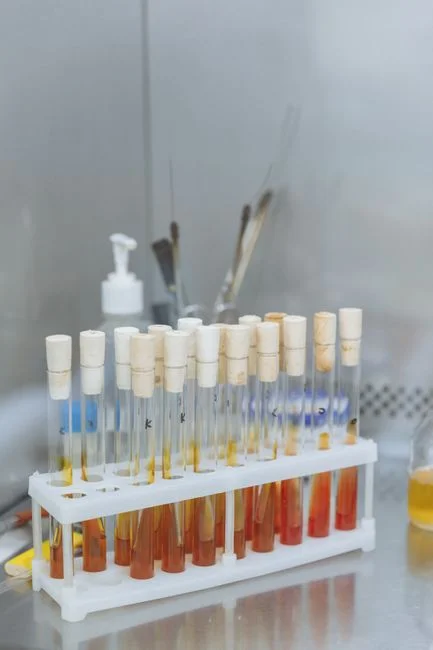
A Luanda fab and a Luanda hyperscale data hall each generate two wastewater streams that cannot share a single treatment train without creating compliance or operational problems. On the data-hall side, evaporative cooling-tower blowdown (CTBD) is the larger, more chemistry-constrained flow — roughly 25–30% of makeup, or 2.5–3 MGD for a 10 MGD facility, at 1,200–6,000 mg/L TDS (4–8× makeup), 10–50 mg/L TSS from corrosion products, biofilm, and airborne laterite dust, and 50–200 mg/L COD, but biocide-laden. The data-hall sanitary and process stream is small by flow but heavy by loading: 250–600 mg/L COD and 150–350 mg/L BOD with surfactants, food oils, and nitrogen — about 5–10× the organic loading per cubic metre of CTBD. Humidification bleed-off behaves as a low-TDS, high-volume blowdown and is typically blended with CTBD. On the fab side, ultrapure water (UPW) rinse waste is the largest single fab flow, and for every unit of UPW produced, 1.4–1.6 units of municipal water are consumed (IDE Tech, 2024) — that multiplier is what the 2026 Luanda engineering basis must carry. HF-bearing etch waste and chemical-mechanical planarisation (CMP) slurry are smaller in flow but require dedicated neutralisation and precipitation before they can join any common treatment train, because fluoride and colloidal silica will poison downstream RO and MVC units within hours if routed untreated. The two-stream rule is therefore structural, not optional.
| Stream | Typical flow share | TDS / TSS | COD / BOD | Key constraint |
|---|---|---|---|---|
| CTBD (data hall) | ~25–30% of makeup (2.5–3 MGD @ 10 MGD facility) | 1,200–6,000 mg/L TDS; 10–50 mg/L TSS | 50–200 mg/L COD; low BOD | Biocides, silica, scaling at high CoC |
| Sanitary + process (data hall) | ~5–10% of CTBD flow | Low TDS | 250–600 mg/L COD; 150–350 mg/L BOD | 5–10× higher per-m³ loading than CTBD |
| UPW reject (fab) | Largest single fab flow | Low TDS, high purity baseline | Low COD | Volume; 1.4–1.6× municipal multiplier |
| Etch waste (fab) | Small, batch | HF-bearing, low TSS | Variable | Neutralisation to pH 6–9 before any common train |
| CMP slurry (fab) | Small, batch | Colloidal silica, abrasive particles | Variable | Precipitation/sedimentation required pre-RO |
| Humidification bleed-off | Variable, low TDS | < 200 mg/L TDS | Low | Blended with CTBD |
Cooling-tower blowdown: chemistry, cycles of concentration, and the 4-vs-6 CoC trap
Cycles of concentration (CoC) drive the entire water balance for a Luanda cooling system, and the right CoC is a function of local water cost, not a generic sustainability target. The blowdown ratio is 1/(CoC − 1): at 4 CoC the blowdown is 25% of makeup, at 6 CoC it drops to 20% (Genesis Water Technologies, 2025). That is a 5 percentage-point gain — a 20% reduction in blowdown volume, not the 50% improvement many sustainability leads assume when they hear "raise CoC from 4 to 6." Above 5–6 CoC, biological growth, scaling, and microbiologically influenced corrosion (MIC) rise sharply unless 10–25 µm side-stream filtration is already pulling colloidal fines, and tablet-based non-oxidant chemistry (such as Genclean-S-style products) is keeping the biological load under control. Luanda's coastal wet-bulb of 26–27 °C and high ambient dust loading make high-CoC operation fragile without that filtration, because heat-exchange surfaces foul fast under combined silica and biofilm stress. The defensible decision rule for a 2026 Luanda build: stay at 4–5 CoC when marginal makeup cost is below ~$1/m³ and discharge is unconstrained, and push to 6–8 CoC with side-stream filtration plus non-oxidant chemistry when marginal makeup rises above ~$3/m³ or discharge fees begin to bind. The decision is operational, not aspirational, and the numbers should be re-checked against actual metered makeup every quarter.
The 2026 Luanda treatment train: from side-stream filtration to ZLD
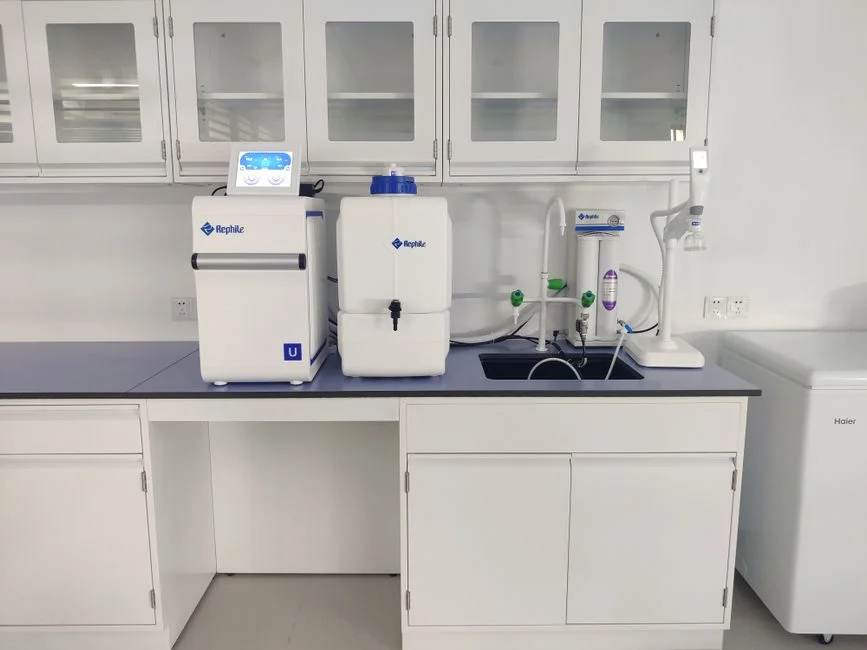
The train below is sized for the 50–500 m³/h envelope typical of a 10–50 MW hyperscale or colocation site, and is laid out the way an engineer would draw it on a P&ID. Step 1 — Side-stream filtration. A self-cleaning spiral filter at 10–25 µm, taking 1–5% of circulation flow, drops blowdown TSS below 15 mg/L and protects every downstream membrane from the laterite fines that global-average intake screens miss. Step 2 — DAF or lamella clarification. A DAF system for Luanda blowdown pretreatment (Luanda refinery precedent) or a lamella clarifier handles intake laterite carryover; the DAF range of 4–300 m³/h covers most hyperscale flows. Step 3 — UF pretreatment. A hollow-fibre UF as RO pretreatment at 0.01–0.1 µm, 10–30 psi, and 90–95% recovery tolerates feed up to 300 NTU and shields the RO from Luanda's dust-laden raw water. Step 4 — RO or NF. An industrial RO for cooling-tower makeup recovery at 150–400 psi delivers 50–85% recovery, capped at 75–80% on Luanda silica-rich CTBD; choose nanofiltration at 75–150 psi and 70–85% recovery when hardness — not TDS — is the binding constraint. Step 5 — Polishing. An on-site chlorine dioxide generator for reuse polishing at 0.2–1.0 mg/L, or UV at 30–40 mJ/cm², controls microbial load to the reuse spec; ClO₂ is preferred under high microbial load (SGS Angola precedent). Step 6 (optional ZLD) — MVC. Mechanical vapour compression on RO concentrate achieves 95–98% recovery with distillate below 10 mg/L TDS, at 15–25 kWh per 1,000 gallons; integrating MVC with on-site diesel-generator waste heat is the single largest OPEX lever available on a Luanda site. Fab streams need their own upstream steps — neutralisation of HF-bearing etch waste and precipitation of CMP slurry — before any flow is allowed to join a common RO or MVC train. For the design basis, an engineer should anchor RO energy at 0.4–0.6 kWh/m³ against MBR at 0.8–1.2 kWh/m³, because Luanda grid instability makes pump-heavy trains materially more palatable than aeration-heavy ones, and the 2026 reverse osmosis design criteria confirm the same envelope.
| Step | Unit process | Operating envelope | Angola-specific note |
|---|---|---|---|
| 1 | Self-cleaning spiral side-stream filter | 10–25 µm; 1–5% of circulation | Drops CTBD TSS < 15 mg/L pre-membrane |
| 2 | DAF or lamella clarifier | 4–300 m³/h | Luanda refinery DAF precedent for laterite |
| 3 | Hollow-fibre UF (PVDF) | 0.01–0.1 µm; 10–30 psi; 90–95% recovery | Tolerates up to 300 NTU feed |
| 4 | BWRO (or NF if hardness-limited) | RO 150–400 psi, 50–85% recovery (75–80% on Luanda silica); NF 75–150 psi, 70–85% recovery | Cap BWRO at 75–80% on silica; pick NF when hardness is the limiter |
| 5 | ClO₂ or UV polishing | 0.2–1.0 mg/L ClO₂; 30–40 mJ/cm² UV | ClO₂ preferred under high microbial load |
| 6 | MVC (optional ZLD) | 95–98% recovery; 15–25 kWh/1,000 gal | Generator waste-heat integration is the largest OPEX lever |
Sanitary and process wastewater: why MBR is the right answer even at low flow
Sanitary and process wastewater at 250–600 mg/L COD and 150–350 mg/L BOD carries 5–10× the organic loading per cubic metre of CTBD, so an MBR for sanitary and process wastewater is correctly sized even when its flow is one-tenth of the blowdown stream. A submerged PVDF MBR at 0.1 µm delivers roughly 60% footprint saving versus conventional activated sludge, but on a Luanda site the binding constraint is grid instability, not footprint — operators need a biological stage that tolerates power dips, and the MBR retrofit and upgrade engineering guidance covers the same envelope for brownfield conversions. Integrated MBR packages of 10–2,000 m³/day and flat-sheet DF modules at 32–135 m³/day across 80–225 m² cover the data-hall sanitary range comfortably, and the MBR permeate can be blended with the RO train for cooling-tower makeup or polished separately for irrigation reuse (BOD below 10 mg/L per Decree 7/09).
2026 CAPEX, OPEX, and payback for a Luanda build
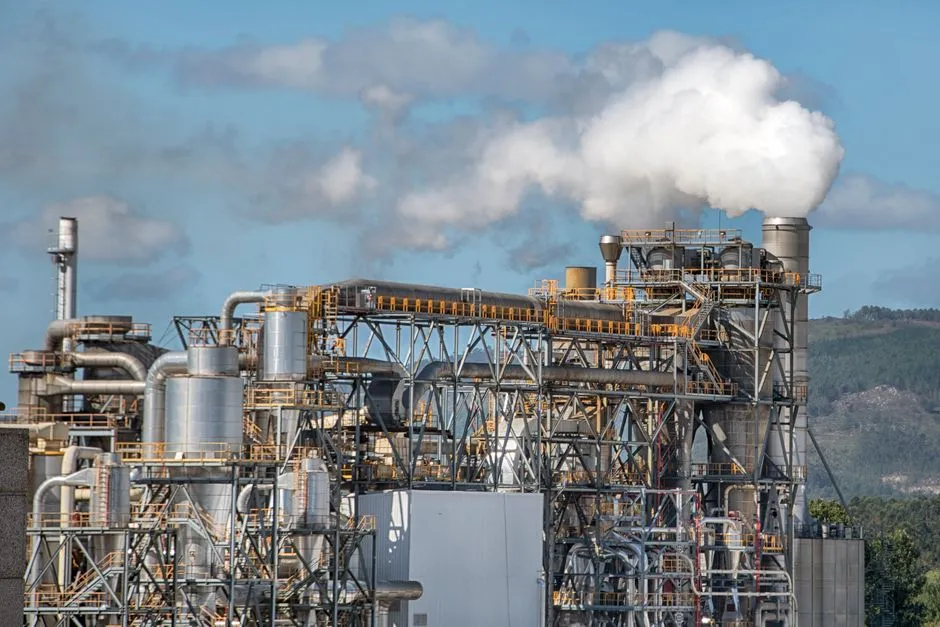
For a 50–500 m³/h Luanda plant, anchored to the 2026 turnkey benchmark, CAPEX runs from $1.2M at 50 m³/h to $8.5M at 500 m³/h. Translated to capital intensity by site size: a 10 MW data hall typically needs 50–150 m³/h of treatment capacity ($1.2M–$3.5M), a 25 MW site 150–300 m³/h ($3.5M–$6M), and a 50 MW hyperscale build 300–500 m³/h ($6M–$8.5M). ZLD uplift adds $3–8M of CAPEX and $5–15 per 1,000 gallons of OPEX, with MVC at 15–25 kWh per 1,000 gallons of distillate. Angola-specific adders worth pre-loading into the board paper: 15–25% logistics premium on imported skids, ISO 668 containerised freight via Luanda port, and 7-day on-site chemical storage to ride out fuel-port strike risk. The reuse-versus-discharge crossover sits at roughly $2.50/m³ of makeup — once marginal water cost rises above that, reuse beats discharge on OPEX alone, before any fine or downtime avoidance is credited. A worked example: a 15 MW site recovering 60% of blowdown (about 3 million gallons per year) at $200,000 of capital hits a 6.7-year simple payback on water alone, but crediting avoided discharge fees, avoided Decree 7/09 fines, and avoided $10,000/hr production-loss risk compresses payback to 3–5 years (per Genesis Water Technologies, 2025) — inside the band most CFOs accept for sustainability infrastructure.
| Site size | Treatment capacity | Turnkey CAPEX (2026) | ZLD uplift | Simple payback on water alone | Payback with fine + downtime credit |
|---|---|---|---|---|---|
| 10 MW data hall / fab auxiliary | 50–150 m³/h | $1.2M–$3.5M | + $3–5M | 6–7 years | 3–5 years |
| 25 MW hyperscale / mid-scale fab | 150–300 m³/h | $3.5M–$6M | + $5–7M | 6–7 years | 3–5 years |
| 50 MW hyperscale / large fab | 300–500 m³/h | $6M–$8.5M | + $6–8M | 6–7 years | 3–5 years |
A 24-month rollout sequenced around the LMWC permit
The 6–12 month LMWC permit lead time is the single largest scheduling constraint on a Luanda build, and the rollout below is sequenced to keep mechanical design moving while the permit works through review. Phase 1 (months 0–3): baseline monitoring on makeup, blowdown, evaporation, conductivity, pH, and TSS; expect actual blowdown to run 15–30% above theoretical (Genesis Water Technologies, 2025) because unmeasured leaks and emergency dumps account for the gap. Phase 2 (months 3–6): leak repair, control-logic tuning, and a switch to tablet-based non-oxidant chemistry to lift effective CoC without raising blowdown TDS. Phase 3 (months 6–12): deploy modular 100–300 GPM side-stream filtration and a DAF or lamella clarifier while the LMWC permit works through its 6–12 month review (per HydropureWater 2026 Luanda engineering guide). Phase 4 (months 12–18): install UF plus RO (or NF if hardness-limited), blend permeate into cooling-tower makeup, and tie in ClO₂ or UV polishing. Phase 5 (months 18–24, optional): add MVC plus crystalliser for ZLD if site water stress and Decree 7/09 enforcement tighten; commission a waste-heat integration study with the generator OEM before sizing the thermal skid. For fab builds, layer in etch neutralisation and CMP precipitation during Phases 1–2 so HF and colloidal silica do not reach the common RO train, and reference the silicon wafer wastewater reuse blueprint for fab-side stream-by-stream detail.
Frequently Asked Questions
What are the binding Decree 7/09 discharge limits for a Luanda fab or data hall in 2026?
COD must stay below 250 mg/L, TSS below 60 mg/L, and pH between 6 and 9 for any industrial discharge. Reuse targets are site-specific for cooling-tower makeup, and BOD must drop below 10 mg/L if irrigation reuse is contemplated.
How long does an LMWC industrial discharge permit take in Luanda, and when should it be sequenced?
The LMWC permit routinely takes 6–12 months and must be filed in parallel with — not after — mechanical design, otherwise the project absorbs roughly a year of idle capital. Sequencing the permit ahead of the design freeze is the cheapest schedule decision on a Luanda build.
What is the realistic financial exposure for a Decree 7/09 non-compliance event?
A Luanda refinery recently absorbed a $250,000 Decree 7/09 fine plus an estimated $10,000 per hour in lost production (per HydropureWater 2026 Luanda engineering guide). That fine-plus-downtime tail is the number to credit into a 2026 ROI sketch for any reuse or ZLD upgrade.
When is ZLD with MVC justified on a Luanda site?
ZLD is justified only when site water stress and Decree 7/09 enforcement make any liquid discharge unacceptable. A BWRO + MVC stack achieves 95–99% overall recovery at $3–8M of CAPEX and $5–15 per 1,000 gallons of OPEX, with MVC alone at 15–25 kWh per 1,000 gallons of distillate. Generator waste-heat integration is the single largest OPEX lever.
Why is BWRO recovery capped at 75–80% on Luanda CTBD?
Luanda CTBD is silica-rich, and conventional BWRO hits a silica scaling ceiling at 75–80% recovery. NF is the better choice when hardness — not silica — limits reuse, and high-recovery salt-precipitation reactors are a second-phase upgrade rather than a first-of-kind baseline.