The Three-Layer Regulatory Stack That Governs Springdale F&B Discharges
Food and beverage plants in the Springdale, Arkansas corridor face a stacked regulatory regime where each layer can independently trigger enforcement, and the local permit ceiling is almost always the binding number. Layer 1 is EPA's National Pretreatment Program at 40 CFR 403, which delegates enforcement to local POTWs acting as Control Authorities — Springdale Water Utilities in this case. Layer 2 is the F&B-specific categorical standards: 40 CFR 405 (Dairy), 406 (Grain Mills), 407 (Canned Fruits/Vegetables), 408 (Canned Seafood), 409 (Meat Products), and critically 40 CFR 432 (Poultry Products), which is the dominant standard for the Tyson Foods headquarters and Northwest Arkansas cluster. Layer 3 is the site-specific Springdale Water Utilities discharge permit, which can set local limits stricter than the federal categorical floor where the receiving plant has limited hydraulic capacity or sensitive biosolids handling. The practical hierarchy: federal categorical = floor, local POTW permit = enforceable ceiling, engineering design must hit both.
40 CFR 432 sets the poultry-specific numerical limits for BOD, TSS, FOG, and pH on a process-by-process basis, and a Springdale-area poultry plant that ignores it because it is "only" discharging to a POTW is leaving itself exposed to a 40 CFR 403 categorical-violation enforcement path. The local permit is where the Springdale Water Utilities pretreatment coordinator translates federal floors into enforceable daily maxima, mass-based limits, and monitoring frequencies that reflect the plant's actual flow and load contribution to the collection system. Where the receiving plant has limited hydraulic capacity — common in the Springdale collection system during wet-weather events — local mass-based TP and BOD limits are routinely set tighter than the federal categorical ceiling.
| Layer | Citation | Governs | Enforced By |
|---|---|---|---|
| 1 — Federal framework | 40 CFR 403 | General pretreatment prohibitions, SIU definition, local limits authority | EPA Region 6 + delegated Control Authority |
| 2 — F&B categorical standards | 40 CFR 405, 406, 407, 408, 409, 432 | Process-specific BOD, TSS, FOG, pH numerical floors | EPA / Arkansas DEQ / delegated POTW |
| 3 — Site-specific POTW permit | Springdale Water Utilities discharge permit + Arkansas DEQ delegation | Local daily maxima, mass limits, monitoring frequency, reporting | Springdale Water Utilities (Control Authority) |
What Springdale Plants Are Actually Discharging: Raw Wastewater Characteristics
Poultry processing is the dominant F&B wastewater source in the Springdale corridor, and its raw-stream envelope drives most of the design basis. A typical 2026 raw poultry wastewater runs 1,000–3,000 mg/L BOD, TSS 500–2,000 mg/L, FOG 500–2,000 mg/L, ammonia-N 10–50 mg/L, and total phosphorus 10–100 mg/L as P. Rendering and stickwater sidestreams at the same plant can push FOG above 10,000 mg/L, which is the high-end envelope that determines DAF air-to-solids ratio and recycle rate selection rather than the average. Total phosphorus in cereal, dairy, and meat wastewaters commonly falls between 10 and 100 mg/L as P, well above the 1 mg/L ceiling most POTWs apply at the headworks (HydropureWater field data, 2026).
Temperature excursions above 40 °C from clean-in-place (CIP) and cooking operations are routine in poultry plants and can shut down downstream nitrification biology if not equalized to the 25–35 °C band that MBR or conventional activated sludge expect. Organic loading to municipal sewers is also climbing for reasons unrelated to plant operations: a 2024 Nature Food analysis concluded that US food loss and waste policy alone cannot meet the federal target of 74 kg per capita by 2030, with state-level diversion potential of only 5–14 kg per capita and continued rising generation in most states (Springer / Nature Food, 2024). Translated to the POTW headworks: more organic mass is reaching collection systems in 2026, and control authorities are scrutinizing high-strength F&B discharges more closely than they did five years ago.
| Parameter | Poultry Processing (Typical) | Rendering / Stickwater (High-End) | Design Driver |
|---|---|---|---|
| BOD (mg/L) | 1,000–3,000 | 5,000–10,000+ | Biological reactor sizing |
| TSS (mg/L) | 500–2,000 | 2,000–5,000 | DAF underflow, sludge handling |
| FOG (mg/L) | 500–2,000 | 10,000+ | DAF air-to-solids, recycle rate |
| Ammonia-N (mg/L) | 10–50 | 50–150 | Nitrification HRT, DO setpoint |
| Total P (mg/L as P) | 10–100 | 30–80 | Chemical dose, biological luxury uptake |
| Temperature (°C) | 25–45 (CIP spikes) | 50–70 (cooking drains) | EQ basin sizing, nitrification protection |
The Six Parameters That Drive the Design Basis
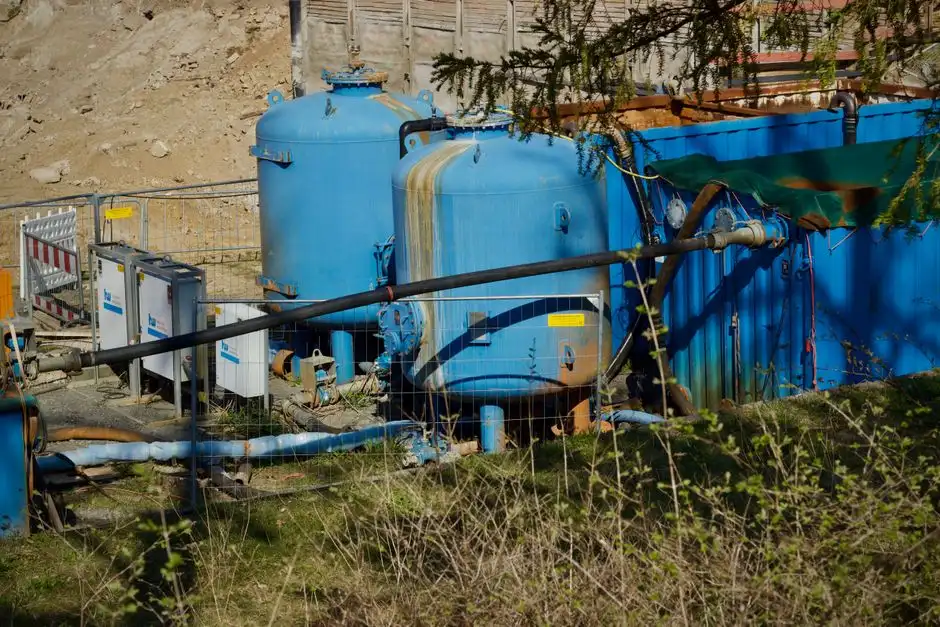
Six parameters govern almost every Springdale F&B pretreatment design basis, and the engineer who can map each to a specific treatment stage is the one who stops over-sizing. BOD/COD runs 1,000–10,000 mg/L raw across the F&B subcategories, must hit 250–500 mg/L after DAF, and needs to land below 30 mg/L after the MBR or activated sludge stage to satisfy typical local ceilings (HydropureWater field data, 2026). TSS is capped at roughly 100 mg/L under most categorical permits, with 25–50 mg/L achievable after biological polishing. FOG has a categorical ceiling near 100 mg/L, and a properly dosed DAF routinely delivers 25–50 mg/L in the underflow (HydropureWater field data, 2026).
Total phosphorus at 10–100 mg/L raw must come down to <1 mg/L at the POTW headworks; biological luxury uptake by biomass removes 5–15 mg/L of P on its own, and a downstream chemical precipitation stage carries the rest. pH must hold 6.0–9.0 standard units per 40 CFR §133.102 secondary-treatment baseline (EPA, 40 CFR Part 133), and the federal floor is almost always the local ceiling as well. Temperature is the silent killer of F&B biological trains — a 4-hour CIP cycle passing a 10× pH spike or a 50 °C thermal pulse straight to MBR will collapse nitrification within hours if the equalization basin is undersized or missing entirely.
The Defensible 2026 Pretreatment Train for a Springdale F&B Plant
The defensible 2026 train for a Springdale-area poultry or F&B plant is screening, equalization, dissolved air flotation (DAF), biological treatment, chemical precipitation, and final polishing/disinfection in that order. Each stage is justified by a specific pollutant and a measurable performance band.
Stage 1 — Screening. A GX rotary mechanical bar screen removes rags, plastics, feathers, and fibrous debris that would otherwise foul DAF pumps and shred MBR membranes. Bar spacing typically 3–6 mm for F&B service; coarser spacing lets through material that will plug the recycle saturation tank.
Stage 2 — Equalization. 6–24 h HRT basin dampens CIP hydraulic and pH surges. Without it, a 4-hour CIP cycle passes a 10× pH spike and a 2× hydraulic pulse straight to the biological stage. Aerated EQ basins at 0.5–1.0 SCFM per gallon of basin volume also strip odor and prevent septicity in the FOG-rich layer.
Stage 3 — DAF. The dissolved air flotation system runs at surface loading 4–25 m/h depending on influent FOG and TSS, air-to-solids ratio 0.005–0.02, and recycle 20–40% of forward flow. A poultry stream at 1,500 mg/L FOG sits mid-range; a rendering stream at 10,000+ mg/L FOG pushes toward the higher recycle rate. A properly conditioned DAF delivers O&G of 25–50 mg/L and TSS of 50–100 mg/L in the clarified stream (HydropureWater field data, 2026).
Stage 4 — Biological treatment. An integrated MBR membrane bioreactor at HRT 4–10 h, MLSS 8,000–12,000 mg/L, and DO 1.5–2.5 mg/L suits plants with tight footprint or <30 mg/L BOD / <5 mg/L TSS targets. Conventional activated sludge (HRT 8–24 h, MLSS 3,000–5,000 mg/L, DO 1.5–2.5 mg/L) is the lower-CAPEX path for brownfield retrofits.
Stage 5 — Chemical precipitation. A PLC-controlled chemical dosing skid feeds 50–250 mg/L alum or 30–150 mg/L ferric chloride, trimmed flow-proportionally to cut chemical consumption 10–20% versus manual feed. Biological luxury uptake by biomass removes 5–15 mg/L of P first; the chemical stage polishes total phosphorus to 0.5–1 mg/L before discharge.
Stage 6 — Final polishing and disinfection. pH trim to 6.0–9.0, optional lamella clarifier at 20–40 m/h surface loading for older grandfathered permits, then chlorine dioxide residual of 0.1–0.5 mg/L before the discharge sampling point. The corresponding coagulant dosing system selection guide for food processing covers the dose-control logic in more detail for plants that need a deeper dive.
| Stage | Equipment | Design Input / Range | Effluent Target |
|---|---|---|---|
| 1. Screening | GX rotary bar screen | 3–6 mm bar spacing | Removal of rags, feathers, plastics |
| 2. Equalization | Aerated EQ basin | 6–24 h HRT; 0.5–1.0 SCFM/gal | Dampens CIP pH/thermal/hydraulic spikes |
| 3. DAF | DAF unit | 4–25 m/h; A/S 0.005–0.02; recycle 20–40% | O&G 25–50 mg/L; TSS 50–100 mg/L |
| 4. Biological | MBR or activated sludge | MBR HRT 4–10 h, MLSS 8,000–12,000 mg/L | BOD <30 mg/L; TSS <5 mg/L (MBR) |
| 5. Chemical P precipitation | PLC-controlled dosing skid | Alum 50–250 mg/L or FeCl₃ 30–150 mg/L | TP 0.5–1 mg/L |
| 6. Polishing / disinfection | Lamella + ClO₂ | 20–40 m/h; ClO₂ residual 0.1–0.5 mg/L | pH 6.0–9.0; permit compliance |
Sizing the Equipment: The Four Numbers a Springdale Engineer Must Calculate First
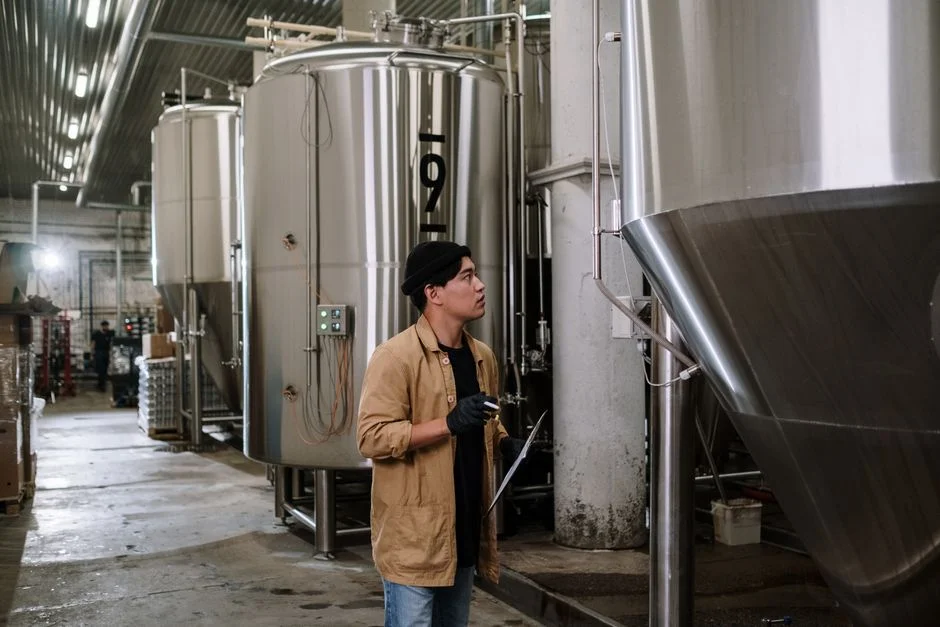
Equipment sizing for F&B pretreatment flows from four inputs, and any vendor quoting before seeing all four is guessing. First, forward flow (m³/h) — the design average, not the peak, or the EQ basin will be oversold and the DAF will underperform during a normal CIP day. Second, peak-to-average ratio — typically 2–4× for plants with batch CIP, and the EQ basin must be sized against the peak, not the average. Third, raw BOD (mg/L) — from a 24-hour composite, not a grab sample, because a single grab from a 4-hour rendering dump can be 2× the daily mean. Fourth, raw FOG (mg/L) — drives DAF air-to-solids ratio and recycle rate selection; a 1,500 mg/L FOG stream and a 5,000 mg/L FOG stream do not share a single design point.
Sludge handling is the line item that usually surfaces after the RFQ goes out, not before. A plate and frame filter press in the 1–500 m² filtration area range dewaters combined DAF skimmings and waste activated sludge (WAS) to 22–28% dry matter, small enough to landfill or send to a digester. For plants near the Springdale cluster looking at adjacent-border designs, the comparable F&B pretreatment guide for plants near the Mexico, US border covers the same train in a different regulatory overlay and is a useful cross-check.
The 2026 Compliance Stack: Why a Passing Sample Is Not Enough
Most F&B categorical permits require 24-hour composite sampling for BOD, TSS, FOG, and TP at frequencies ranging from monthly to quarterly, with continuous monitoring of pH and flow for Significant Industrial Users. A passing sample on a Friday afternoon is not the same as a defensible compliance record; the record has to show when the sample was taken, how the autosampler was calibrated, and whether any noncompliance events were logged in the SCADA event journal. In 2026, electronic reporting is the default: the SCADA event log, the eDMR submission, and the Arkansas DEQ noncompliance portal together form the compliance stack that control authorities now audit first (HydropureWater field data, 2026).
The practical implication is that SCADA or CMMS systems that cannot push compliant event data into state portals are increasingly a compliance liability. Connecticut's RCSA Section 22a-430 explicitly requires electronic noncompliance notification through the state online form (CT.gov Pretreatment Program), and Springdale-area plants operate under the equivalent Arkansas DEQ electronic reporting pathway. An unreported excursion on a Saturday CIP drain now carries the same enforcement weight as a chronic violation, so the SCADA historian must be configured to flag, log, and route any parameter breach automatically rather than waiting for an operator to acknowledge it on Monday morning.
Diagnosing POTW Rejections: What Each Failure Mode Tells You About the Train
Rejection events at the POTW headworks map almost one-to-one to weaknesses in a specific stage of the train, and a good engineer can triage them in minutes without waiting on a consultant. The four most common failure modes in a Springdale F&B plant are FOG pass-through, pH excursion, hydraulic overload during a CIP cycle, and solids breakthrough on the TP limit. The table below is built for fast lookup and is not the kind of cross-reference the generic F&B guides publish.
| Rejection Symptom at POTW | Most Likely Train Weakness | First Check |
|---|---|---|
| FOG pass-through | Under-dosed DAF coagulant or hydraulic overload on the flotation cell | Verify A/S ratio 0.005–0.02; check recycle pump pressure |
| pH excursion (6.0–9.0 SU range) | Inadequate equalization or failed trim loop | Confirm EQ basin HRT ≥6 h; check pH probe calibration on the trim skid |
| Hydraulic overload during 4-h CIP cycle | Undersized EQ basin | Compare peak-to-average ratio against design; verify equalizer level control |
| Solids breakthrough on TP limit (<1 mg/L) | Poor flocculation control in chemical precipitation | Check alum/FeCl₃ dose; verify mixing energy and floc blanket in clarifier |
Frequently Asked Questions
What federal categorical standard applies to a Springdale-area poultry plant?
40 CFR 432 (Poultry Products) is the dominant categorical standard for the Springdale, Arkansas corridor, since Tyson Foods' headquarters and the Northwest Arkansas poultry cluster are concentrated in this region. The standard sets process-specific numerical floors for BOD, TSS, FOG, and pH that any pretreatment train must meet before discharge to the Springdale Water Utilities collection system (per EPA 40 CFR 403 + 432).
How does the Springdale Water Utilities local permit interact with the federal categorical floor?
Springdale Water Utilities acts as the delegated Control Authority under 40 CFR 403 and can set local daily maxima, mass-based limits, and monitoring frequencies that are stricter than the federal 40 CFR 432 floor. Where the receiving plant has limited hydraulic capacity or sensitive biosolids handling, the local permit ceiling typically becomes the binding number rather than the federal floor.
What raw wastewater profile should I size a Springdale poultry DAF for?
Poultry processing raw wastewater typically runs 1,000–3,000 mg/L BOD, TSS 500–2,000 mg/L, and FOG 500–2,000 mg/L, with rendering and stickwater sidestreams pushing FOG above 10,000 mg/L. A DAF sized at 4–25 m/h surface loading with 20–40% recycle and air-to-solids ratio 0.005–0.02 is the standard envelope (HydropureWater field data, 2026).
What chemical dose removes total phosphorus to below 1 mg/L in an F&B wastewater train?
Biological luxury uptake by biomass removes 5–15 mg/L of P first, and a downstream PLC-controlled chemical precipitation stage dosing 50–250 mg/L of alum (or 30–150 mg/L of ferric chloride) polishes TP to 0.5–1 mg/L before discharge. Flow-proportional control typically cuts chemical consumption 10–20% versus manual feed (HydropureWater field data, 2026).