Why an EV or Auto Plant in Springfield Is a Significant Industrial User in 2026
An EV battery plant, EV assembly plant, or tier-1/2 auto-parts supplier that discharges process wastewater to any of the three Springfields in the US is a Significant Industrial User (SIU) before any flow threshold is checked, because the controlling categorical standard is the trigger. Federal rule 40 CFR 403.3(v) defines an SIU in part by categorical-subject status, and the 40 CFR 403.5(a) pass-through ban (defined at 40 CFR 403.3(p)) and the 40 CFR 403.5(b) interference ban (defined at 40 CFR 403.3(k)) sit on top of any numeric limit (per EPA, 2026). Three categorical standards bind the EV/auto profile by SIC code and process: 40 CFR Part 433 (Automotive Manufacturing) for body assembly, paint, e-coat, and general parts plants; 40 CFR Part 467 (Aluminum Forming) for aluminum-intensive battery enclosures, extrusions, and body panels; and 40 CFR Part 465 (Metal Finishing) for any on-site plating, anodizing, or conversion-coating line. The applicable Part is selected by SIC and regulated process, not by plant name, so a "battery plant" with an on-site plating line can sit under both Part 433 and Part 465 at the same outfall.
| Layer | Citation | What it does | Numeric? |
|---|---|---|---|
| Pass-through ban | 40 CFR 403.5(a); 40 CFR 403.3(p) | Bans discharges that exit the POTW in violation of its NPDES permit | No |
| Interference ban | 40 CFR 403.5(b); 40 CFR 403.3(k) | Bans discharges that disrupt the POTW, collection system, or sludge handling | No |
| Categorical standard | 40 CFR Part 433 / 467 / 465 | Federal floor for assembly, aluminum forming, and metal finishing | Yes |
| SIU definition | 40 CFR 403.3(v) | Categorical-subject status alone triggers SIU designation | No |
| Local limit | MWMC Model SUO / Commission IPP / Chapter 120 | Site-specific cap; can be tighter than the federal floor | Yes |
Under the Springfield, OR Industrial Pretreatment Code (Article 3, Ord. 6457, 5/15/2023), existing sources subject to a categorical standard have a three-year default compliance window from the standard's effective date; new sources must comply within 90 days of beginning discharge and have all pretreatment equipment in operating condition before the first process water hits the sewer (source: springfield-or.gov, 2026).
Which Springfield, US Applies — OR, MA, or MO
"Springfield" in a US EV/auto engineer's compliance plan is three different cities with three different pretreatment authorities, and the wrong one means a rejected permit application, a missed 90-day window, or a permit naming the wrong control authority. Springfield, Oregon discharges to the Eugene/Springfield regional plant on River Avenue, which is regulated by the Metropolitan Wastewater Management Commission (MWMC) under its Model Sewer Use Ordinance; the City of Springfield's Environmental Services Division is the day-to-day authority at 541-726-3694, with signed forms submitted to 225 5th Street, Springfield, OR 97477 (source: springfield-or.gov, 2026). Springfield, Massachusetts is served by the Springfield Water & Sewer Commission Industrial Pretreatment Program (IPP), established in 1986, with jurisdiction over eight municipalities — Agawam, a portion of Chicopee, East Longmeadow, Longmeadow, Ludlow, Springfield, West Springfield, and Wilbraham — whose wastewater flows to the Springfield Regional Wastewater Treatment Facility and onward to the Connecticut and Chicopee Rivers; the Commission is reachable at 413-310-3449, 71 Colton Street, Springfield, MA 01109 (source: waterandsewer.org, 2026). Springfield, Missouri runs an IPP approved by EPA and the Missouri Department of Natural Resources in 1985 and codified in Chapter 120; the program logged analysis on more than 10,800 wastewater pollutant samples from industrial and commercial facilities in calendar year 2023 (source: springfieldmo.gov, 2026).
| Authority | Document | Established | Contact |
|---|---|---|---|
| Springfield, OR — Environmental Services Division | MWMC Model Sewer Use Ordinance (city code Article 3) | Ord. 6457, 5/15/2023 | 541-726-3694; 225 5th Street, Springfield, OR 97477 |
| Springfield, MA — Water & Sewer Commission IPP | Commission IPP allowable-discharge list | 1986 | 413-310-3449; 71 Colton Street, Springfield, MA 01109 |
| Springfield, MO — Utilities IPP | Chapter 120 of the city code | 1985 (EPA/MoDNR approved) | City of Springfield, MO; 10,800+ samples logged in 2023 |
The simplest routing rule: the authority is the one that issues the discharge permit to the building's physical address, not the one that appears on a corporate mailing label. For multi-Springfield operators, this section is the one to lock in on day one of the project.
The Binding Pollutants for an EV or Auto Plant
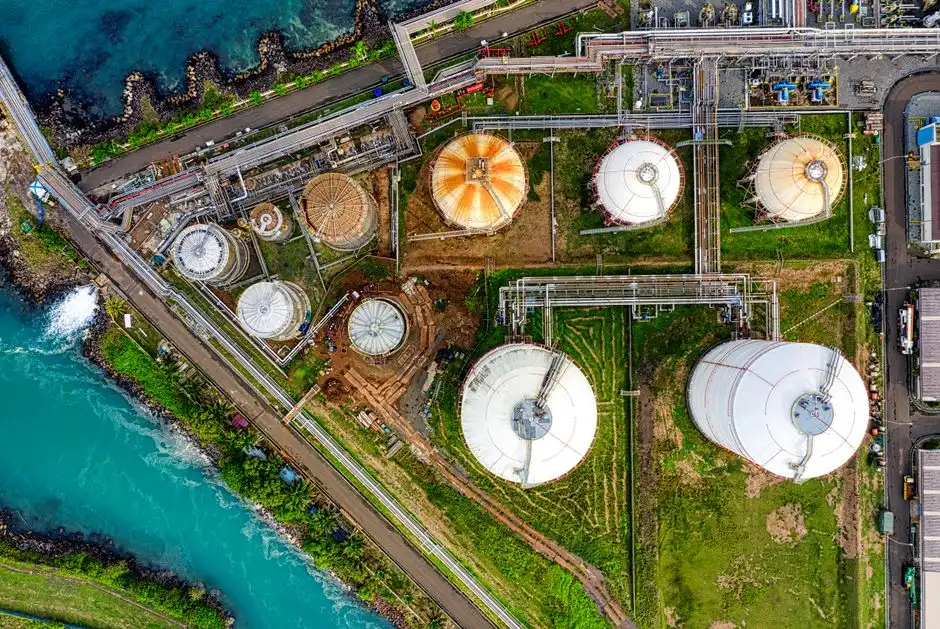
Oil and grease and TSS are the headline parameters for any EV or auto assembly plant, with the local pH envelope (typically 6–9) cited as the most common permit excursion in 40 CFR 403.5(b) enforcement actions. Stamping, e-coat, and plating lines add a dissolved-metals load that controls the chemical-precipitation stage: example site-specific local caps from a comparable US authority include Cu 0.60, Zn 1.50, Ni 1.14, Pb 0.16, Cd 0.03, total Cr 1.71, Cr6+ 0.44, and Ag 0.36 mg/L (source: Springfield, KY §52.065, 2025-003, passed 3-11-2025; example only — local limits vary by authority). For aluminum-intensive EV battery enclosures and extruded body panels, 40 CFR Part 467 — aluminum forming — binds on top of the assembly standard, and the oil and solvent loading from stamping lubricants and draw compounds typically drives Stage 3 sizing. Battery cell manufacturing rinse water adds fluoride, ammonia, and trace solvent loadings (NMP, carbonate solvents) that can push the design toward advanced oxidation in addition to biological polishing, particularly when the cell line sits inside a Part 465 metal-finishing categorical envelope.
| Pollutant | Source in the plant | Example local cap (mg/L) | Citation |
|---|---|---|---|
| Oil & grease | Stamping, machining, floor wash | 100 (typical local) | 40 CFR Part 433 + local limit |
| TSS | Paint booth, e-coat, parts wash | 200–300 (typical local) | 40 CFR Part 433 + local limit |
| pH | CIP, e-coat, plating rinse | 6.0–9.0 s.u. | 40 CFR 403.5(b); local envelope |
| Copper (Cu) | Wiring, plating line | 0.60 | Example from comparable SUO §52.065 |
| Zinc (Zn) | Galvanized body, plating | 1.50 | Example from comparable SUO §52.065 |
| Nickel (Ni) | Plating, battery contacts | 1.14 | Example from comparable SUO §52.065 |
| Lead (Pb) | Solder, historical fixtures | 0.16 | Example from comparable SUO §52.065 |
| Chromium, total / Cr6+ | Decorative plating, conversion coating | 1.71 / 0.44 | 40 CFR Part 465 + local limit |
| Fluoride, ammonia | Battery cell rinse, electrolyte cleanup | Site-specific | Local limit; may require AOP |
The design rule, repeated so it is hard to miss: the most stringent applicable number on any single pollutant controls the train. Oil and grease, total metals (Cu, Zn, Ni, Pb, Cr), TSS, and pH are the binding parameters for nearly every EV/auto profile; cyanide and chrome appear specifically when a plating line is on site.
The Default Pretreatment Train for an EV/Auto Plant
Six unit operations, in roughly this order, handle the vast majority of EV/auto wastewater streams that go to a POTW. Not every plant needs all six — the right subset is a function of the controlling pollutant — but this is the default train an engineer should defend in a permit application, then trim or expand. Stage 1 is equalization, sized to absorb pH, flow, and concentration swings from batch CIP and campaign changeovers under 40 CFR 403.5(a) and 40 CFR 403.8(f); the City of Springfield, OR may require a separate flow-equalization permit if that is the only pretreatment needed. Stage 2 is pH neutralization with a PLC-controlled automatic chemical dosing system, designed to hold the 6–9 envelope called out under 40 CFR 403.5(b) and the local limit. Stage 3 is a dissolved air flotation system for O&G and TSS, rated 4–300 m³/h across 13 standard models with automatic skimming, anchored to 40 CFR Part 433 plus the local TSS and O&G limit — oil and grease removal DAF is the dominant first physical-separation step for any plant that stamps, machines, or runs paint-shop parts wash.
| Stage | Unit operation | Controlling citation | Anchor spec |
|---|---|---|---|
| 1 — Equalization | Surges / batch CIP dampening | 40 CFR 403.5(a); 403.8(f) | Hours-to-days retention for batch EV lines |
| 2 — pH neutralization | PLC-controlled chemical dosing | 40 CFR 403.5(b); local pH envelope | 6–9 s.u. at the discharge point |
| 3 — O&G and TSS removal | Dissolved air flotation (DAF) | 40 CFR Part 433; local TSS/O&G | DAF line, 4–300 m³/h, automatic skimming |
| 4 — Dissolved metals | Chemical precipitation + lamella clarifier | 40 CFR Part 465; local metal caps | Lamella at 20–40 m/h surface loading; ~30% lower chemical consumption |
| 5 — Biological polishing | Activated sludge or MBR membrane bioreactor | 40 CFR Part 433; local BOD/COD | MBR delivers <1 μm effluent at ~60% smaller footprint |
| 6 — Polishing | Multimedia / carbon / RO | Local limit; reuse target | Add only when reuse, color, or trace organics drive a tighter cap |
Stage 4 is chemical precipitation followed by a HydropureWater lamella clarifier for dissolved metals (Cd, Cr, Cu, Ni, Pb, Zn), running at 20–40 m/h surface loading with roughly 30% lower chemical consumption than conventional basins. Stage 5 is biological polishing — a HydropureWater MBR membrane bioreactor for <1 μm effluent at ~60% smaller footprint than a conventional basin, recommended where reuse feeds paint shop rinse or battery cell wash; otherwise conventional activated sludge is acceptable. Stage 6 (multimedia or carbon) is added only where reuse, color, or trace organics drive a tighter local limit — for troubleshooting the membrane side of Stage 5, the MBR membrane troubleshooting playbook covers the nine field fixes that typically cut membrane downtime in half. For a non-EV/auto parallel stack, the parallel food & beverage pretreatment playbook walks the same six-stage logic for a different pollutant mix.
How to Pick the Right Subset of Unit Operations
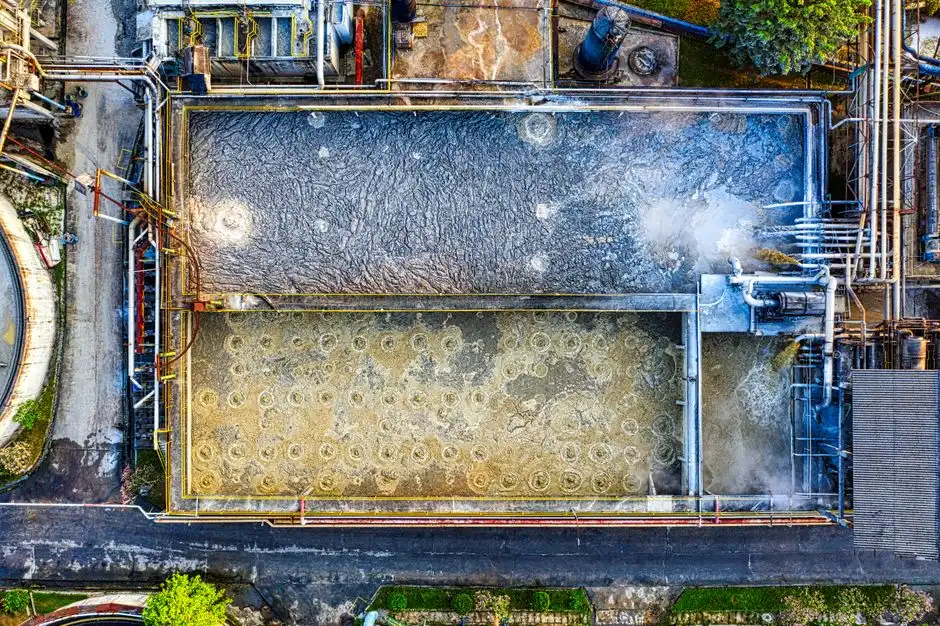
Four decision axes, walked in order, turn the unit-operation menu into a defensible train. Axis 1 is the controlling pollutant: O&G and TSS point to a dissolved air flotation system first; dissolved metals point to chemical precipitation followed by a HydropureWater lamella clarifier; high BOD/COD from stamping wash or paint-booth overflow pushes to biological polishing via a HydropureWater MBR membrane bioreactor; pH swings point to equalization plus a PLC-controlled automatic chemical dosing system. Axis 2 is SIU status: the federal categorical number (40 CFR Part 433, 467, or 465) is the floor; the local limit is the binding constraint; the design must still prevent pass-through and interference under 40 CFR 403.5(a) regardless of which number is lower (per EPA, 2026).
Axis 3 is flow pattern: batch EV assembly with long cycle times needs equalization sized for hours to days; continuous parts lines can run 4–8 hours of retention — over-sizing equalization is cheaper than a single pass-through excursion. Axis 4 is reuse: paint shop or battery cell rinse reuse targets justify MBR plus RO polishing; pure discharge-to-sewer can stay on DAF plus lamella plus conventional activated sludge. The City of Springfield, OR may issue a permit solely for flow equalization when that is the only pretreatment needed (source: springfield-or.gov, 2026), which is a useful fallback when the influent is already inside the local cap on every pollutant except peak flow.
The Permit Calendar a Springfield EV/Auto Plant Must Hit in 2026
Compliance does not end at startup, and the permit calendar is the part of a Springfield project that most often slips. The first milestone is the application itself: submit a Wastewater Discharge Permit Application at least 90 days before process water discharge to Springfield, OR Environmental Services; the same 90-day logic applies to the Springfield, MA Temporary Discharge Permit path and the Springfield, MO Chapter 120 SIU/CIU paperwork stack (source: springfield-or.gov, 2026). After issuance, a Baseline Monitoring Report (BMR) is owed at the point of categorical standard promulgation or new-discharge startup, then 90-day compliance reports on the schedule the controlling authority sets (per EPA, 2026). A 40 CFR 403.8(f) slug load control plan is typically required for any batch SIU and combines equalization capacity, flow and pH monitoring, and written operating procedures for batch releases — the plan has to be updated whenever the facility changes operations in a way that changes the potential for an accidental or slug discharge (source: ecode360.com Springfield, OR Article 3, 2023). Hazardous-waste notification under 40 CFR 403.12(p) fires when discharge exceeds 33 lb (15 kg) of any material classified as hazardous under 40 CFR 261; the notification must be made immediately and follow the controlling authority's spill-contact order, which in Springfield, OR routes to the Environmental Services Division at 541-726-3694 in the first instance (source: springfield-or.gov, 2026).
| Milestone | Driver | Window |
|---|---|---|
| Submit permit application | All three Springfields | ≥ 90 days before process discharge |
| Categorical compliance — existing source | 40 CFR Part 433 / 467 / 465; Springfield, OR Article 3 | 3 years from standard effective date |
| Categorical compliance — new source | Same; Springfield, OR Article 3 | ≤ 90 days from start of discharge |
| Baseline Monitoring Report (BMR) | 40 CFR 403.12 | At standard promulgation or new-discharge startup |
| 90-day compliance reports | 40 CFR 403.12 | On controlling authority's schedule |
| Slug load control plan | 40 CFR 403.8(f); local ordinance | Before first batch discharge; updated on operational change |
| 403.12(p) hazardous-waste notification | 40 CFR 261 trigger | Immediately on ≥ 33 lb / 15 kg discharge |
Frequently Asked Questions
Is an EV assembly plant an SIU in Springfield, OR?
Yes. Under 40 CFR 403.3(v), an EV assembly plant is an SIU by categorical-subject status because 40 CFR Part 433 applies, regardless of city or flow (per EPA, 2026). The same logic holds in Springfield, MA and Springfield, MO. The SIU status then triggers the BMR, 90-day compliance report, and slug load control plan obligations at every Springfield authority.
What are the local metal limits an auto plant must meet near Springfield, US?
Local limits vary by authority. For an example of a comparable US local cap used by a city the same size as one of the Springfields, the Springfield, KY §52.065 table lists Cu 0.60, Zn 1.50, Ni 1.14, Pb 0.16, Cd 0.03, total Cr 1.71, Cr6+ 0.44, and Ag 0.36 mg/L (source: Springfield, KY §52.065, 2025-003, passed 3-11-2025; example only). Each Springfield authority — MWMC Model SUO in OR, the Commission IPP in MA, Chapter 120 in MO — sets its own numeric caps, and the most stringent applicable number on each pollutant controls the design.
How long does the permit application take?
90 days before discharge is the default clock in Springfield, OR under Article 3 (Ord. 6457, 5/15/2023), with all pretreatment equipment required to be installed and in operating condition before the first discharge. Springfield, MA follows the same 90-day logic through the Commission's Wastewater Discharge Permit Application and Temporary Discharge Permit path, and Springfield, MO applies Chapter 120 to the same SIU/CIU paperwork stack.
When does a 40 CFR 403.12(p) hazardous-waste notification fire?
It fires when a discharge exceeds 33 lb (15 kg) of any material classified as hazardous under 40 CFR 261 (per EPA, 2026). The notification must be made immediately and follow the controlling authority's spill-contact order — for Springfield, OR that order is documented on the city's Industrial Pretreatment page and routes first to the Environmental Services Division at 541-726-3694.
Can an EV plant reuse wastewater for paint-shop rinse?
Yes, with MBR plus RO polishing. Reuse does not exempt the plant from the discharge permit — the reuse stream still has to meet any reuse-specific local limit on top of the categorical and local discharge limits (per EPA, 2026). Where reuse is the goal, the MBR path is sized for <1 μm effluent and a roughly 60% smaller footprint than a conventional basin, which is typically what tips the economics.