
What Counts as a Pretreatment Limit for a Ft Lauderdale Transportation Plant
A "pretreatment limit" is a numeric or narrative ceiling applied at the end-of-pipe discharge from an industrial user (IU) to a publicly owned treatment works (POTW), enforced to keep pollutants out of the collection system, the plant biomass, and the receiving sludge (per EPA, 2026-01). For a bus body, rail car, truck parts, or marine vessel shop near Ft Lauderdale, the operative POTW is Miami-Dade Water and Sewer Department (WASD), and the discharge point is the building sewer at the property line where it ties into the WASD collection system. Three compliance layers stack on top of each other: (1) federal categorical standards under 40 CFR Part 403 and sector-specific subparts in 40 CFR Parts 413–469, (2) Florida DEP (FDEP) pretreatment regulations incorporated by reference, and (3) Miami-Dade County Code Chapter 24 local limits (per EPA, 2026-01).
An Industrial User is any non-domestic source discharging to a POTW, while a Significant Industrial User (SIU) is the regulated subset — facilities discharging more than 25,000 gpd, any user subject to categorical standards, or any user designated by the control authority (40 CFR 403.3(j)). Most transportation equipment plants sending process rinses, plating drag-out, or paint booth water to the sewer meet the IU threshold, and any facility performing electroplating automatically triggers categorical standards (40 CFR Part 413). On 2025-05-06 the Board of County Commissioners adopted the ordinance amending Article I of Chapter 24 (agenda item 5(K), public hearing 5-6-25), which revised the numerical local limits chart, incorporated FDEP pretreatment regulations by reference, and reaffirmed RER-DERM as the delegated enforcement authority for Federal Pretreatment Standards under Section 307 of the Clean Water Act (per Miami-Dade ordinance memorandum, 2025-03-18). Any pretreatment design, characterization data, or compliance plan that pre-dates that 2025 amendment should be re-baselined against the current chart before procurement decisions are locked in.
Pollutants Typical of Transportation Equipment Manufacturing
Transportation equipment manufacturing concentrates five wastewater streams inside one building: parts washing with alkaline or surfactant cleaners, machining and stamping with soluble oils and metal fines, painting and coating with over-spray and rinse water, surface treatment with plating drag-out, and phosphate conversion coating plus boiler blowdown. Each stream has a characteristic pollutant fingerprint, and the local-limits chart in Chapter 24 (revised 2025-05) is built around exactly these analytes. The priority parameters a Ft Lauderdale compliance engineer should put on the sampling roster are: total suspended solids (TSS), oil & grease (FOG), zinc, nickel, total chromium, hexavalent chromium, lead, cadmium, pH, COD, BOD, total phosphorus, and temperature. Of these, zinc and nickel from plating shops, hexavalent chromium from anti-corrosion conversion coats, and FOG from stamping emulsions are the analytes most likely to fail an end-of-pipe grab in this industry segment (HydropureWater field data, 2025-Q4).
Two practical consequences flow from the 2025 amendment. First, the numerical local limits chart was revised; characterization data collected before the 2025-05 effective date may show "compliance" against a ceiling that has since moved, so re-sampling is the only defensible baseline. Second, the 40 CFR 403.5 / Chapter 24 Baseline Monitoring Report (BMR) is the regulatory mechanism that declares each of these pollutants to the POTW; missing a pollutant in the BMR is itself a violation independent of any exceedance (per EPA, 2026-01). Treat the BMR as a living document — when a new paint line, plating bath, or aqueous parts washer is commissioned, a Notice of Significant Production Change must be filed, and the BMR pollutant list must be updated before discharge from the new source begins.
The Pretreatment Process Train, Step by Step
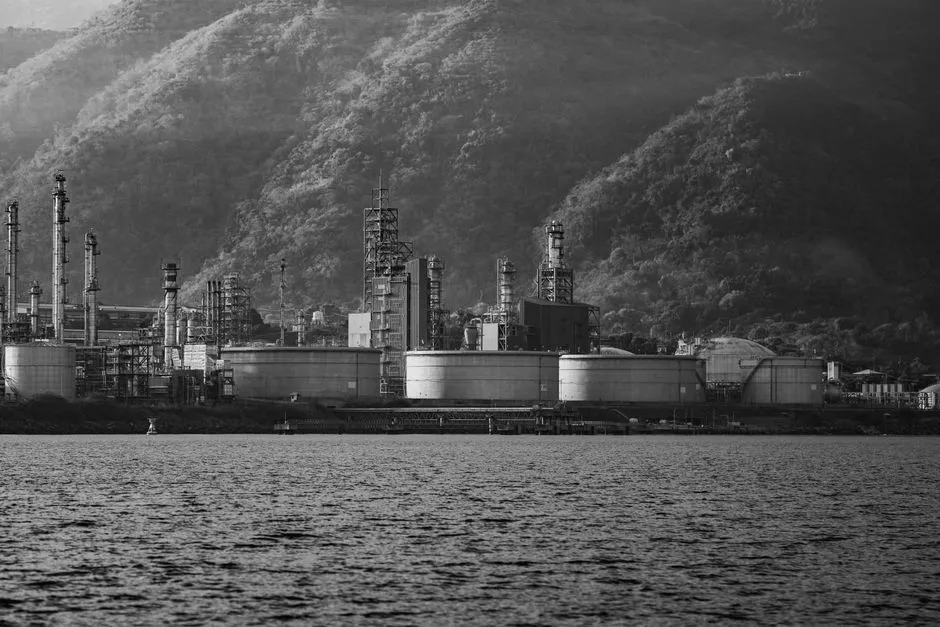
A defensible process train for a transportation equipment plant routes raw shop drain through seven unit operations before the sample port at the WASD connection. The sequence is not arbitrary; each stage is sized to protect the next.
- Equalization / flow balancing. Batch discharges from cleaning tanks, plating rinses, and paint booths are intermittent by nature. An equalization basin with 8–24 hours of hydraulic retention time (HRT) dampens peak flows and equalizes pH and temperature so the downstream biology is not slugged. Without equalization, a pH 2 dump from a spent pickling bath can wipe out an MBR biomass in a single shift (HydropureWater field data, 2025-Q4).
- Coarse screening. A rotary mechanical bar screen for headworks protection removes rags, plastic dunnage, welding wire, and grit before they foul downstream pumps orifices and the DAF nozzle train. Typical bar spacing of 2–6 mm protects the floatation cell without excessive head loss.
- Oil/water separation and dissolved air flotation. A corrugated plate oil/water interceptor captures free oil, then a DAF system for FOG and TSS removal floats emulsified oil and suspended solids on micro-bubbles. DAF units in the 4–300 m³/h flow range are a proven metalworking application, with 60–95% FOG and TSS removal in a single stage when paired with emulsion-breaking coagulant (per HydropureWater equipment specifications, 2026).
- Chemical precipitation for heavy metals. pH adjustment with lime or caustic drives zinc, nickel, and chromium to their minimum solubility, then coagulant (ferric chloride or alum) and anionic flocculant agglomerate the precipitates. A automatic chemical dosing system for pH and metal precipitation with online pH and ORP probes holds the setpoint inside ±0.2 pH units, which is the difference between 95% and 70% metal removal at hydroxide endpoints.
- Biological treatment (MBR or SBR). An MBR biological polishing stage couples an activated-sludge reactor with submerged ultrafiltration membranes at sub-micron pore size. MBR packages in the 10–2,000 m³/day range routinely deliver <5 mg/L TSS and <5 mg/L BOD, with roughly 60% smaller footprint than an equivalent conventional activated-sludge train — a real constraint on tight industrial sites.
- Polishing and disinfection. Optional multimedia sand and activated carbon filtration strip residual organics and color, and UV or chlorine dioxide handles microbial control. UV is preferred where chlorine demand is high because it inactivates chlorine-resistant organisms without generating regulated DBPs (per standard disinfection engineering practice, 2026).
- End-of-pipe compliance sampling. A 24-hour flow-proportioned composite sampler on the discharge line, with chain-of-custody documentation and analysis by a FDEP-certified lab, satisfies the 40 CFR 403.12 sampling and analytical requirements. For real-time flow data, see this guide on electromagnetic flow meter selection for compliance sampling.
Matching Unit Operations to Pollutant Limits
The fastest way to shortlist equipment is to map each priority pollutant to a unit operation that the 2025 Chapter 24 chart already implies. The table below uses typical influent ranges observed in transportation equipment plants and the local-limit ceilings the 2025 amendment is built around (HydropureWater field data, 2025-Q4; local-limit band per Chapter 24, 2025-05).
| Pollutant | Typical Influent (transportation shop) | Miami-Dade Local Limit (2025 band) | Primary Unit Operation | Expected Removal |
|---|---|---|---|---|
| TSS | 200–1,500 mg/L | < 30 mg/L (typical ceiling) | DAF → MBR polish | 95–99% |
| Oil & grease | 100–2,000 mg/L | < 50 mg/L (typical ceiling) | Plate separator + DAF with emulsion-breaker | 95–99% |
| Zinc | 5–80 mg/L | Low mg/L range (per Chapter 24 chart) | Hydroxide precipitation at pH 8.5–9.0, MBR polish | > 95% |
| Nickel | 2–40 mg/L | Low mg/L range (per Chapter 24 chart) | Hydroxide precipitation at pH 9.5–10.0, MBR polish | > 95% |
| Total chromium | 1–30 mg/L | Low mg/L range (per Chapter 24 chart) | Reduction + precipitation (if hexavalent), MBR polish | > 95% |
| Lead | 0.5–15 mg/L | Low mg/L range (per Chapter 24 chart) | Hydroxide precipitation at pH 9.0–9.5 | > 95% |
| pH | 2–11 (raw) | 6.0–9.0 | automatic chemical dosing system for pH and metal precipitation | Stabilized to band |
| COD | 300–3,000 mg/L | Hundreds of mg/L (per Chapter 24 chart) | MBR with sludge age 20+ days | 90–97% |
| BOD | 100–1,500 mg/L | Typically < 50 mg/L | MBR biological polishing stage | 95–99% |
| Total phosphorus | 5–60 mg/L | Low mg/L range (per Chapter 24 chart) | Chemical precipitation (alum / ferric) + MBR | 85–95% |
Two takeaways from the table. First, pH is the master variable — almost every metal row points to a precipitation pH setpoint, and a swing of one pH unit can drop metal removal by an order of magnitude. Second, MBR polish is the safety net that turns a 95% removal into a defensible margin against the local-limit ceiling, which is why the biological step is the last engineered barrier before the sample port. For a deeper look at how existing tanks can be converted to MBR, see this MBR retrofit and upgrade engineering guide.
Permit, Monitoring, and Reporting Obligations in Miami-Dade
Confirming whether the facility is an SIU is the first regulatory step because the SIU designation activates the full 40 CFR 403.12 reporting suite. An SIU is a categorical user, any user discharging more than 25,000 gpd of process wastewater, or any user designated by the Control Authority based on discharge character (per EPA, 2026-01). Once SIU status is established, the deliverables are predictable: a Baseline Monitoring Report before first discharge, a 90-day Final Compliance Report, and Periodic Compliance Reports (typically semi-annual) with self-monitoring results on the schedule in the discharge permit. Each report is signed by an authorized representative per 40 CFR 403.12(l) and is a legal document, not a lab summary.
The most common violation source at transportation equipment plants is the Notice of Significant Production Change. Adding a new zinc phosphate tank, swapping a cadmium-bearing consumable, or commissioning a new e-coat line each trigger the requirement to notify RER-DERM and update the BMR before the new waste stream reaches the sewer (per 40 CFR 403.12(j)). The second-highest source of fines is the accidental spill / slug load control plan required under Chapter 24 — equalization tanks with pH and conductivity interlocks, alarmed high-level setpoints, and a written SPCC-style response procedure are the engineering control that converts a slug into a manageable upset. Records of all sampling, calibration, and maintenance must be kept on-site for at least three years and produced on demand during a 40 CFR 403.8 inspection.
Choosing Pretreatment Equipment: A Decision Framework
Turn the engineering above into a procurement shortlist by matching flow band, footprint, and operator skill level to the unit operations already validated in the process train. The table below is sized for typical Ft Lauderdale transportation equipment plants (HydropureWater field data, 2025-Q4).
| Flow Band (m³/h) | Footprint Available | Operator Skill | Recommended Configuration |
|---|---|---|---|
| Under 5 | Very limited | 1 shift, general maintenance | Packaged underground integrated system or compact MBR skid with integral DAF |
| 5–50 | Moderate pad | 1–2 shifts, trained operator | Separate-stage DAF + MBR with automatic chemical dosing system for pH and metal precipitation |
| Over 50 | Dedicated treatment building | 2+ shifts, dedicated EHS staff | High-efficiency sedimentation tank or lamella clarifier upstream of DAF, followed by MBR polish |
Across all flow bands, three rules apply. First, size for a peak factor of 1.5–2.0× the average daily flow — the 2025 Chapter 24 amendment retains authority to reject pretreatment designs that do not pass a peak-flow stress check, and slug loads from cleaning-tank dumps are the realistic peak driver, not average production. Second, for facilities that need a parallel reference, this pretreatment-limit playbook for pulp and paper plants walks through an analogous local-limits framework with a different pollutant mix. Third, on this type of industrial site, a concrete pad with secondary containment sized for 110% of the largest single tank is a permit expectation, not an option — build it into the footprint from day one.
Frequently Asked Questions
What changed in Miami-Dade's pretreatment rules in 2025?
On 2025-05-06 the Board of County Commissioners adopted the ordinance amending Article I of Chapter 24, which revised the numerical local limits chart, incorporated FDEP pretreatment regulations by reference, removed obsolete operating-permit provisions, and reaffirmed RER-DERM as the delegated enforcement authority for Federal Pretreatment Standards under Section 307 of the Clean Water Act (per Miami-Dade ordinance memorandum, 2025-03-18). Plants must re-baseline characterization data and the BMR against the 2025 chart.
Does a transportation equipment plant automatically qualify as a Significant Industrial User?
Not automatically. An SIU is any user subject to categorical standards (e.g., 40 CFR Part 413 for electroplating), any user discharging more than 25,000 gpd of process wastewater, or any user designated by the Control Authority (per 40 CFR 403.3(j)). A small bus-body shop with only alkaline washers may be an IU but not an SIU, while any plant with a plating line is an SIU regardless of flow.
Which unit operation is most often undersized in this industry segment?
Equalization. Batch discharges from cleaning tanks, plating rinses, and paint booths create instantaneous pH and FOG spikes that propagate through the entire train. An 8–24 hour HRT basin with online pH, temperature, and conductivity probes is the single most cost-effective reliability investment in a transportation-equipment pretreatment system, and it is the most common gap found during 40 CFR 403.8 compliance inspections.
What is the typical discharge pH band Miami-Dade will accept?
Local sewer-use ordinances modeled on the EPA template typically require pH between 6.0 and 9.0 at the point of connection, and the 2025 Chapter 24 amendment retained that band while clarifying sampling and methods in section 24-44.2 (per Miami-Dade ordinance memorandum, 2025-03-18). Holding the setpoint inside ±0.2 units is the practical operating target.