What an Ion Exchange System Actually Needs From You
An ion exchange system is not a filter — it is an equilibrium between target ions in solution and fixed charged sites on a crosslinked polymer bead, balanced by mobile counterions (per waterandwastewater.com). That single fact controls every maintenance decision: the resin works because a high concentration of the original counterion can drive the equilibrium backward, which is why regeneration works. Forget that and you will over-regenerate, under-regenerate, or chase symptoms that are really design errors.
Maintenance failure modes cluster into three families, and each demands a different response: chemical attack on the resin (free chlorine and other oxidants progressively degrade the polymer backbone — this is the most commonly misdiagnosed failure and is routinely attributed to fouling); physical fouling (iron, manganese, natural organic matter, suspended solids plugging the bed and raising differential pressure); and operational mis-setpoints (wrong regenerant dose, wrong cycle frequency, wrong run length for the duty). Strong base anion resins regenerate inefficiently and are especially vulnerable to organic fouling, while weak base anion resins regenerate efficiently but cannot remove weakly ionized species like silica — so the maintenance intensity has to match the resin family, not the marketing brochure (per waterandwastewater.com).
Crosslink density is the specifier lever that matters most over a 5–10 year horizon. Higher crosslinking resists oxidative attack and bead fracture; lower crosslinking gives faster kinetics but more swelling and shorter mechanical life. A high-crosslink strong base anion will outlast a standard one in chlorinated feed, and the unit-cost premium is recovered in lost downtime. Maintenance bridges resin chemistry and a working plant — set the schedule to the chemistry, not to a generic checklist.
The Quarterly Ion Exchange Maintenance Schedule
The schedule below is built for a working plant and functions as a print-ready calendar for adapting pass/fail criteria to your resin manufacturer's data sheet. Record every reading — trend data is the only way to see fouling developing before the effluent tells you.
| Cadence | Task | Pass/Fail Trigger |
|---|---|---|
| Daily | Log service flow, ΔP across the bed, effluent conductivity (or target-ion-specific reading for nitrate/PFAS duty) | ΔP rising >10% week-over-week = fouling or channeling; conductivity trend break = exhaustion approaching |
| Weekly | Verify brine strength with hydrometer; check brine tank sediment; confirm acid/caustic concentration and neutralization tank pH within discharge permit | Brine outside ±5% of setpoint = regeneration quality at risk; pH outside permit range = halt discharge |
| Monthly | External visual on vessels (leaks, corrosion, salt creep); sample bed surface for fines accumulation | Visible fines = mechanical attrition — track against baseline; salt creep on carbon steel = coating repair needed |
| Quarterly | Pull resin sample from top, middle, bottom; send for total capacity, moisture content, bead integrity | Capacity loss >10% versus baseline = oxidant or organic attack; whole-bead integrity loss = replacement planning |
| Annually | Reconcile design capacity vs. actual throughput; audit regenerant consumption vs. salt-to-capacity ratio; re-baseline run length if feed water chemistry has changed | Salt/capacity ratio drifting >15% = overdose or underdrain issue; throughput drop >10% = resin aging |
| Mixed bed | Verify backwash/regeneration still achieves clean cation/anion hydraulic separation | Interface indistinct after backwash = density issue — replace resin or send offsite for regeneration |
| PFAS duty | Track spent-resin drum count against disposal contract; reconcile to influent loading | Drum accumulation >10% above forecast = feed spike or media channeling |
The single highest-value predictive task is the quarterly resin sample, because capacity loss is the leading indicator of oxidant damage or organic fouling long before the effluent shows it. Many sites treat mixed bed regeneration as a black box and avoid the hydraulic-separation headache by sending exhausted resin offsite or treating it as a consumable (per waterandwastewater.com). For PFAS duty, inventory accuracy is a maintenance task in itself: spent resin is typically single-use rather than regenerated, so disposal cost dominates the lifecycle and the drum count is a primary KPI. Stock resin and filter media supplies against a defined reorder point — specialty resin lead times can run weeks.
Resin Protection: Pre-Filtration and Feed-Water Quality
Protecting the resin from harmful constituents before they reach the vessel is the most cost-effective maintenance strategy. A design built on hardness and the target contaminant alone will under-deliver on capacity and over-deliver on trouble, because the parameters that damage resin — free chlorine and other oxidants, iron and manganese, natural organic matter, and suspended solids — are routinely left out of the feed specification (per waterandwastewater.com).
Residual free chlorine in the feed is a common cause of premature resin failure that gets misattributed to fouling. The fix is activated carbon prefiltration upstream of the ion exchange vessel, with periodic Cl₂ verification on the carbon effluent to catch exhausted carbon before it lets oxidant breakthrough reach the resin. Suspended solids, iron, and colloidal matter foul the bed mechanically and raise ΔP, which shortens run length and forces more frequent backwashing. A multi-media filter ahead of the softener or demineralizer protects the resin and, where ion exchange sits in a pretreatment train ahead of RO, protects downstream membranes from the turbidity spikes that would otherwise foul them. For softening duty where boiler feed or cooling makeup cannot tolerate a service interruption, an industrial twin-tank water softener provides continuous soft water across regenerations — essential where any hardness slip would scale a downstream heat exchanger.
Where ion exchange sits ahead of RO, the typical sequence is multimedia filter → ion exchange softener → RO, with consistent feed specs verified at each hand-off. The reverse osmosis design criteria downstream depend on that consistency — softened, low-turbidity feed lets the RO run at its design recovery without being derated for fouling.
Regeneration: How to Set Salt Dose, Cycle Time and Endpoint
Salt dose is the primary design decision for a softener (strong acid cation in sodium form) because it trades directly against capacity: a low salt dose regenerates the resin incompletely but uses the salt efficiently, while a high dose recovers more capacity per cubic foot of resin at a much worse salt-to-capacity ratio (per waterandwastewater.com). Operators who chase run length by cranking up the salt dose usually regret it on the brine discharge side, where sewer permits frequently cap chloride or total dissolved solids. Where brine discharge is restricted, the low-dose, larger-vessel configuration is the correct choice despite the higher capital cost — you are buying resin volume to buy back waste capacity.
Run length between regenerations is governed by total exchange capacity at the design ionic load, but selective removal duties (nitrate, perchlorate, PFAS) are typically contact-time-limited at trace concentration, so the binding constraint is empty bed contact time (EBCT), not capacity (per waterandwastewater.com). Sizing on capacity alone produces a vessel that passes contaminant at design flow despite having plenty of unused capacity — always verify EBCT when the target ion is present at trace concentration. As a rule of thumb, selective nitrate and PFAS duty usually needs an EBCT in the multi-minute range, not the seconds range that capacity sizing suggests.
Weak acid cation resins regenerate at close to stoichiometric efficiency and are far cheaper to operate where the water chemistry suits them — specifically where hardness is associated with bicarbonate alkalinity. A switch from strong acid cation to weak acid cation in a high-alkalinity feed can cut regenerant cost materially, but it is not a drop-in: the duty must match the chemistry, and the operating case is narrower than most specifiers realize. The same strong/weak trade-off applies on the anion side: strong base anion reaches silica and CO₂, but regenerates poorly and fouls on natural organic matter; weak base anion regenerates efficiently but cannot touch silica (per waterandwastewater.com).
Troubleshooting Ion Exchange Problems: Symptom, Cause, Fix
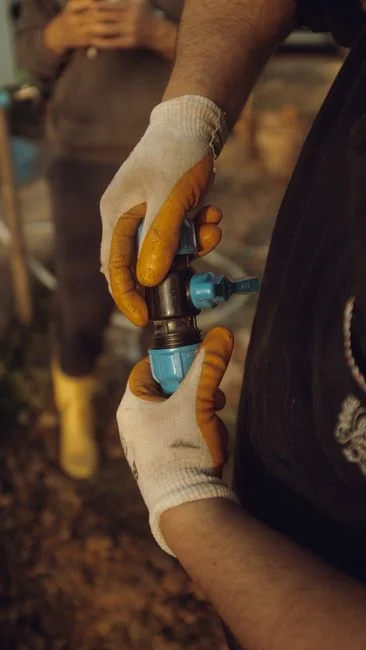
The following matrix serves as a diagnostic tool for comparing logged data against common operational issues. The fix column indicates whether the solution lies in the brine tank, the underdrain, or the resin sample; quantitative triggers are flagged where the source supports them.
| Symptom | Likely Cause | Fix |
|---|---|---|
| Hard water or target ion in effluent well before expected run end | Channeling from fouling, underdrain failure, or insufficient backwash | Inspect underdrain; increase backwash flow to 50–60% bed expansion; top-dress or replace resin |
| Gradual capacity loss between regenerations with no feed change | Oxidant attack — most often free chlorine — degrading the polymer backbone | Install/verify carbon prefilter; sample resin to confirm loss of capacity vs. loss of moisture content; capacity loss >10% per quarter is the trigger |
| Effluent target-ion concentration briefly exceeds influent near exhaustion | Selectivity-driven chromatographic displacement — classic case: nitrate on conventional strong base anion, which prefers sulfate | Switch to nitrate-selective resin (bulkier functional groups that reverse the affinity order); shorten run length; add continuous effluent monitoring with automatic lockout; or operate lead-lag with a fresh polishing bed |
| High ΔP, short run length, sludge on bed surface | Suspended solids, iron, or organic fouling | Install multi-media prefiltration; perform chemical clean with the resin manufacturer's recommended protocol; increase backwash frequency |
| Nitrate or PFAS slip at design flow despite unused capacity | Contact time, not capacity, is the binding constraint | Reduce service flow; add a polishing vessel; or add resin volume to meet EBCT — typical selective duty wants multi-minute EBCT |
| Rising salt or acid/caustic consumption per cubic meter treated | Overdosing, underdrain leak, or partially exhausted resin demanding more regenerant | Audit brine/regenerant concentration; check for underdrain breakthrough; sample resin; verify salt-to-capacity ratio against baseline |
Mitigations for selectivity-driven breakthrough include using a selective resin, maintaining a conservatively short run length, implementing continuous effluent monitoring with automatic lockout, blending, or using multiple vessels in a lead-lag arrangement so a partially exhausted bed is always polished by a fresh one (per waterandwastewater.com). Displacement failure is often missed by operators because the symptom — effluent higher than influent — is frequently mistaken for an instrument error rather than a resin selectivity effect.
Lifecycle Economics: When to Regenerate More vs. Replace Resin
Resin replacement is not a calendar event but is triggered by measured capacity loss versus design, loss of bead integrity (rising fines), or inability to meet effluent quality after the regeneration setpoints have been optimized (per waterandwastewater.com). For standard softening duty, strong acid cation resin typically delivers years of service. Weak base anion and especially PFAS-selective media have shorter effective lives, and in the PFAS case the media are commonly single-use — regenerating them would simply concentrate PFAS into a liquid waste with no straightforward disposal route, so spent PFAS resin is handled as a solid waste and disposal cost dominates the lifecycle (per waterandwastewater.com).
This reality shifts the maintenance plan. For a PFAS system, the primary KPIs are drum counts and disposal invoices rather than just effluent quality — the operator who tracks resin inventory against influent loading catches a media channeling problem weeks before the effluent does. Regenerant waste is a high-strength, high-salinity stream, and its disposal route frequently governs project viability. Sewer discharge may be limited by salinity or chloride caps, surface discharge is usually impossible, evaporation ponds and deep well injection are site-specific, and some jurisdictions restrict self-regenerating softeners outright. Establish the disposal route first, then set the salt dose and regeneration frequency to fit it (per waterandwastewater.com).
When evaluating whether to retire a mixed bed in favor of an electrochemical polishing step, the trade-off is direct: an EDI system eliminates regeneration wastewater and the neutralization tank, but ion exchange mixed beds still achieve higher purity and remain the right answer where ultra-low conductivity and resistivity are required. For ion exchange for electroplating wastewater specifically, the heavy-metal loading and rinse-water chemistry usually keep mixed bed polishing in the design — EDI handles the bulk deionization, and the mixed bed handles the final resistivity requirements.
Frequently Asked Questions
How often should I regenerate an industrial water softener?
Regenerate on capacity, not on a calendar. Track the throughput since the last regeneration against the design ionic load, and trigger the next cycle when the bed has reached
Frequently Asked Questions
How often should an ion exchange resin be regenerated?
Regeneration frequency is determined by the total ionic load of the influent water, the resin's total exchange capacity, and the desired endpoint for water quality. Systems typically trigger regeneration based on a preset volume of throughput (gallons or cubic meters) or when the effluent quality exceeds a specific conductivity or leakage threshold.
In standard industrial applications, regeneration cycles occur anywhere from once every 24 hours to once every 7 days. If a resin bed reaches exhaustion in less than 12 hours, the system is undersized for the current flow rate or influent concentration, leading to excessive operational costs and potential resin degradation.
What are the most common causes of ion exchange resin failure?
The primary cause of premature resin failure is chemical degradation, specifically oxidation from chlorine or chloramines, which breaks the polymer cross-linking and causes the resin beads to soften and collapse. Fouling by suspended solids, organics (tannins or humic acids), or metal precipitates (iron and manganese) is also a leading cause, as these substances mask active exchange sites.
Thermal degradation is another significant factor, occurring when resins are exposed to temperatures exceeding manufacturer limits, typically above 120°F (49°C) for cation resins or lower for anion resins, leading to a permanent loss of ion exchange capacity and physical bead fracturing.
When should ion exchange resin be replaced instead of regenerated?
Resin should be replaced when the operating capacity drops below 70-80% of its original manufacturer-rated capacity, or when the pressure differential across the vessel consistently exceeds 15-20 psi despite proper backwashing. If regeneration cycles have shortened by more than 30% compared to the initial startup baseline, the resin is likely exhausted beyond chemical recovery.
Additionally, if physical inspection reveals significant bead fragmentation (fines), clumping, or if the resin exhibits severe organic fouling that cannot be removed by standard caustic brine cleaning procedures, replacement is necessary to prevent flow channeling and pressure drop issues.
How do you troubleshoot nitrate breakthrough in an ion exchange system?
Nitrate breakthrough occurs when the resin bed becomes exhausted or when influent sulfate concentrations displace previously captured nitrates, a phenomenon known as "nitrate dumping." To troubleshoot, first verify the influent nitrate and sulfate levels; if sulfate concentrations exceed 200 mg/L, the system may require a higher brine dosage or a more selective resin.
Second, inspect the brine injection system to ensure the salt concentration is within the 10-15% range and that the contact time is sufficient. Finally, test the effluent for pH and conductivity; if the breakthrough is accompanied by a sudden spike in nitrates, check the resin bed for channeling or internal bypass leaks in the distribution headers.
What feed-water parameters damage ion exchange resin the most?
High levels of chlorine and chloramines are the most destructive, as they aggressively attack the divinylbenzene (DVB) cross-linking of the resin structure. Feed-water containing iron and manganese concentrations above 0.5 mg/L can cause rapid fouling, as these metals oxidize and coat the resin beads, rendering exchange sites inaccessible.
Additionally, high turbidity (exceeding 1 NTU) causes physical fouling by clogging the interstitial spaces between beads, while extreme pH levels (below 4 or above 10) can accelerate the hydrolysis of functional groups, significantly shortening the lifespan of the ion exchange media.